The Shifting Landscape of Truck Powertrains
For decades, the turbo-diesel engine was the undisputed king of the towing world. If you needed to pull a heavy fifth-wheel camper, a horse trailer, or a commercial equipment rig, a diesel powertrain was the only logical choice. However, the automotive industry is currently undergoing a seismic shift. As emissions regulations tighten and electrification technology matures, full hybrids and plug-in hybrid electric vehicles (PHEVs) are rapidly encroaching on diesel's historical monopoly over low-end torque and heavy-duty efficiency.
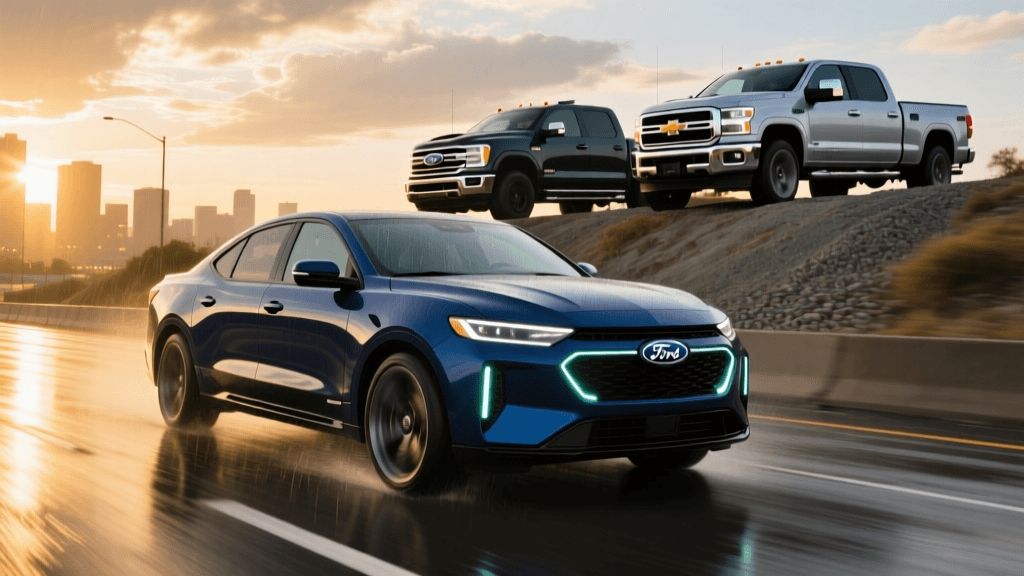
As we look toward the future of the truck market, the debate between hybrid and diesel powertrains is no longer just about current capabilities; it is about long-term viability, total cost of ownership, and impending regulatory changes. In this guide, we will compare the current benchmarks—the Ford F-150 PowerBoost hybrid and the Chevy Silverado 3.0L Duramax diesel—to determine which powertrain represents the smarter investment for the modern truck buyer.
The Torque War: Electric Motors vs. Turbo Diesels
The primary reason buyers choose diesel for towing is torque. Diesel engines rely on high compression ratios and turbocharging to generate massive twisting force at low RPMs, which is essential for getting heavy loads moving from a standstill. However, modern hybrid powertrains have effectively neutralized this advantage by integrating electric motors directly into the drivetrain.
According to the U.S. Department of Energy's Alternative Fuels Data Center, hybrid electric vehicles combine an internal combustion engine with one or more electric motors, using energy stored in batteries. In a truck application, this means the electric motor provides instant, zero-RPM torque before the turbocharger even begins to spool. The Ford F-150 3.5L PowerBoost, for example, pairs a twin-turbo V6 with a 35-kW electric motor integrated into the 10-speed transmission. The result is a staggering 570 lb-ft of torque available almost instantly, eclipsing the 495 lb-ft generated by the highly acclaimed Chevy Silverado 3.0L Duramax inline-six diesel.
Real-World Towing Efficiency and Range
When driving unladen, the efficiency gap between modern half-ton diesels and hybrids is surprisingly narrow. However, the 'towing penalty'—the percentage of fuel economy lost when hitching up a heavy trailer—differs significantly. Turbo-diesels are inherently more thermally efficient under heavy load, meaning their MPG drops by roughly 20% to 30% when towing. Traditional gas engines can lose up to 50% of their efficiency. Hybrids fall somewhere in the middle; while the electric motor assists heavily in stop-and-go traffic and on inclines, highway towing at 70 mph relies primarily on the gas engine, leading to a steeper efficiency drop than a diesel. Yet, the advent of regenerative braking on downhill grades allows hybrids to recapture energy that a diesel would simply waste as heat through the exhaust brake.
Data Comparison: F-150 PowerBoost vs. Silverado Duramax
To understand how these powertrains stack up on paper, we have compiled a direct comparison of the leading light-duty hybrid and diesel trucks on the market, alongside the now-discontinued Ram 1500 EcoDiesel for historical context.
| Feature | Ford F-150 3.5L PowerBoost | Chevy Silverado 3.0L Duramax | Ram 1500 3.0L EcoDiesel (RIP) |
|---|---|---|---|
| Powertrain Type | Full Hybrid (Twin-Turbo V6 + Electric Motor) | Turbo-Diesel Inline-6 | Turbo-Diesel V6 |
| Peak Torque | 570 lb-ft | 495 lb-ft | 480 lb-ft |
| Max Towing Capacity | 12,700 lbs | 13,300 lbs | 12,560 lbs |
| EPA Combined MPG | 23 MPG | 24 MPG | 24 MPG |
| DEF (AdBlue) Required | No | Yes | Yes |
| Pro-Grade Onboard Power | Yes (Pro Power Onboard up to 7.2kW) | No (Standard outlets only) | No |
The Industry Outlook: Why Half-Ton Diesels are Dying
From an industry perspective, the writing is on the wall for light-duty diesel engines. The primary catalyst for this shift is the tightening of global emissions standards. The Environmental Protection Agency (EPA) has implemented increasingly stringent regulations regarding nitrogen oxides (NOx) and particulate matter. To comply, diesel engines require complex, heavy, and expensive after-treatment systems, including Diesel Particulate Filters (DPF), Selective Catalytic Reduction (SCR), and Diesel Exhaust Fluid (DEF) injection.
The cost of engineering these systems for a half-ton truck is no longer economically viable for automakers. This reality was cemented when Stellantis officially discontinued the beloved Ram 1500 EcoDiesel. As noted by Car and Driver, the decision was driven by the need to allocate engineering budgets toward electrification and stricter emissions compliance. Industry analysts predict that GM's 3.0L Duramax will likely face a similar fate in the next generation of the Silverado 1500, leaving heavy-duty (2500/3500) segments as the final refuge for compression-ignition engines.
Total Cost of Ownership: DEF, AdBlue, and Hybrid Batteries
When evaluating the future of these trucks, Total Cost of Ownership (TCO) is a critical metric. Diesel owners are intimately familiar with the ongoing costs of emissions compliance. DEF fluid costs between $3.00 and $5.00 per gallon, and a heavy tower might go through several gallons a month. More concerning is the potential for DPF clogging if the truck is not driven at sustained highway speeds, leading to forced regeneration cycles or replacement costs that frequently exceed $3,000 out of warranty.
Conversely, hybrid trucks eliminate the need for DEF, DPFs, and complex turbo-diesel emissions plumbing. The primary concern for hybrid buyers is battery longevity. However, modern lithium-ion and nickel-metal hydride hybrid batteries are incredibly robust. Ford backs the F-150 PowerBoost hybrid components with an 8-year/100,000-mile warranty. Real-world data from fleet operators and the U.S. Department of Energy suggests that hybrid battery packs routinely last well past 150,000 miles before experiencing significant degradation. Even if a replacement is required out of warranty, the $2,000 to $4,000 cost is often offset by the thousands of dollars saved on diesel fuel premiums and DEF fluid over the vehicle's lifespan.
Future Trends: PHEVs and EREVs Taking Over
Looking ahead to 2025 and beyond, the industry is moving past simple full hybrids toward Plug-in Hybrids (PHEVs) and Extended-Range Electric Vehicles (EREVs). The upcoming Ram 1500 Ramcharger is a prime example. Utilizing a series-hybrid EREV layout, the Ramcharger uses a 3.6L V6 purely as an onboard generator to feed a massive battery pack and dual electric drive modules. This setup promises a targeted 14,000 lbs of towing capacity with the instantaneous, gearless torque of an EV, completely bypassing the need for a traditional transmission and diesel emissions gear. Similarly, the Toyota Tacoma i-FORCE MAX hybrid system proves that electrified torque is the future of the midsize and full-size truck segments.
The Verdict: The diesel engine is a masterpiece of 20th-century mechanical engineering, but the 21st century belongs to electrified torque. For 90% of truck buyers, a hybrid or upcoming PHEV offers superior daily drivability, better tech integration, and a more secure long-term ownership proposition.
Actionable Advice: Which Should You Buy?
If you are in the market for a towing-capable truck today, here is how you should approach your purchase based on your specific use case:
- Buy the Ford F-150 PowerBoost (or similar Hybrid) if: You use your truck as a daily driver, commute in stop-and-go traffic, tow a camper or boat on the weekends (under 10,000 lbs), and want the ability to power job-site tools or campsite appliances via onboard inverters. The lack of DEF and DPF maintenance makes it a superior lifestyle vehicle.
- Buy the Chevy Silverado 3.0L Duramax (or Heavy-Duty Diesel) if: You are a commercial operator or full-time RVer who tows loads exceeding 10,000 lbs across the country on a weekly basis. Diesel's superior thermodynamic efficiency under sustained, heavy highway loads still provides a tangible range advantage on long-haul routes where charging infrastructure or hybrid battery limitations might be a concern.
- Wait for PHEVs/EREVs if: You want the ultimate compromise. If you can wait for the rollout of vehicles like the Ram 1500 Ramcharger or the next-generation PHEV offerings from Ford and GM, you will gain the zero-RPM torque of an EV for daily driving and boat launches, backed by a gas generator for unlimited cross-country towing range.
Ultimately, the hybrid revolution in the truck segment is not just a fleeting trend; it is a permanent industry correction. As diesel fades from the light-duty showroom floor, electrified powertrains will carry the torch for American towing capability into the future.