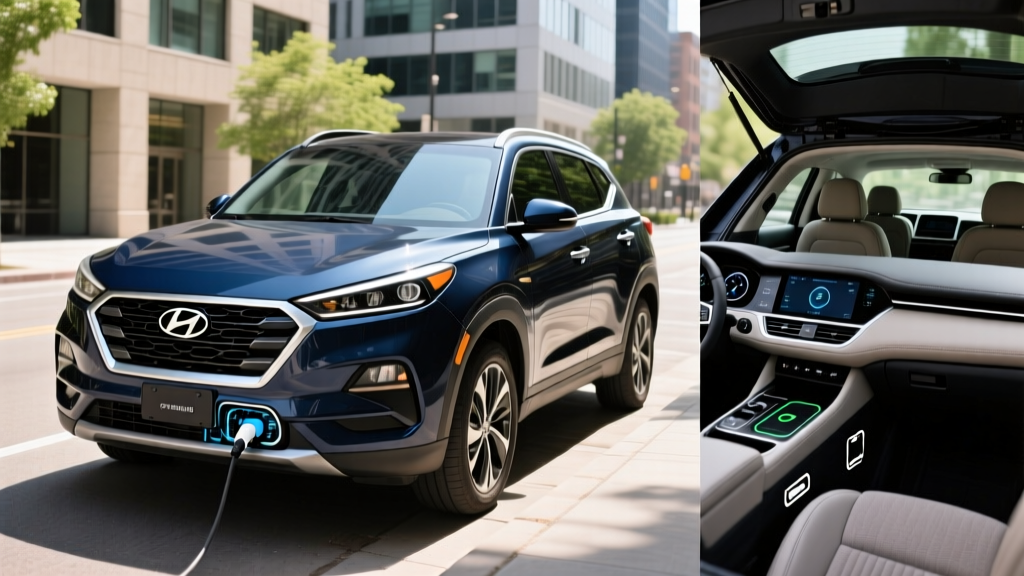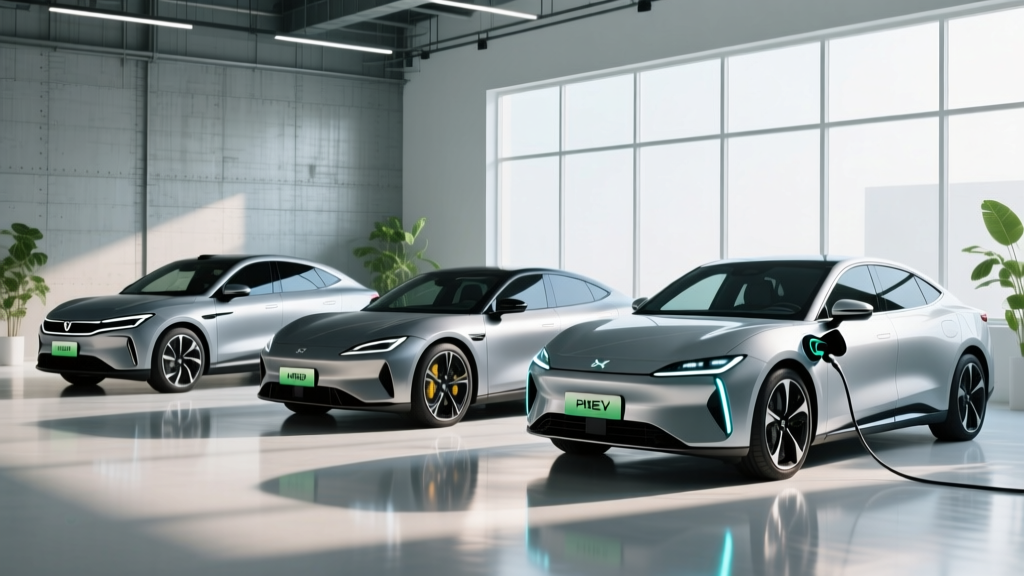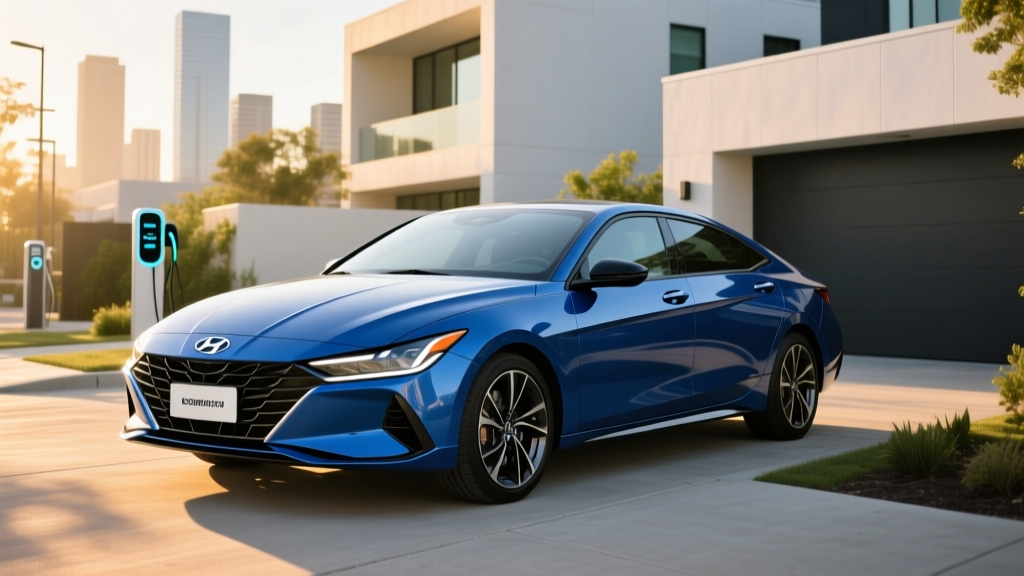
If you're researching the Elantra Hybrid Blue, you already know fuel economy is the headline. But the real question isn't just the EPA sticker number — it's what you'll actually see on your commute, how much you'll spend at the pump versus a plug-in alternative, and whether the hybrid system will hold up long-term. This guide covers the 2026 Hyundai Elantra Hybrid Blue trim with the exact numbers buyers need to make a confident decision.
EPA Fuel Economy vs Real-World MPG
The 2026 Elantra Hybrid Blue carries a 58 city / 52 highway / 54 combined MPG rating from the EPA. That city-dominant split is a hallmark of Toyota and Hyundai's parallel hybrid systems: the electric motor handles low-speed driving where gas engines are least efficient, while the gasoline engine takes over at highway speeds where aerodynamic drag dominates.
| Metric | City | Highway | Combined |
|---|---|---|---|
| EPA Estimate | 58 MPG | 52 MPG | 54 MPG |
| Real-World Expectation | 55–62 MPG | 47–52 MPG | 50–56 MPG |
Hybrids often exceed their EPA city estimate in stop-and-go traffic because regenerative braking recaptures energy that a gas car wastes as heat. Owners who drive primarily in urban conditions frequently report 58–62 MPG on the Elantra Hybrid Blue. Highway-heavy drivers should expect numbers closer to 47–50 MPG, especially above 70 mph where the 1.6L engine works harder against wind resistance.
According to fueleconomy.gov, the Elantra Hybrid Blue's combined rating places it among the top non-plug-in vehicles available, trailing only the Toyota Prius family in the compact sedan segment.
HEV vs PHEV: Which Elantra Hybrid Is Right for You?
Hyundai sells the Elantra as a conventional hybrid (HEV) — the Blue and Limited trims — and previously offered a plug-in hybrid variant. Understanding the distinction matters for your wallet and daily routine.
Conventional Hybrid (HEV)
How it works: A small battery (typically 1.3–1.6 kWh) charges through regenerative braking and the gas engine. You never plug it in.
Electric-only driving: Very short distances at low speed (under 1 mile typically).
Best for: Drivers without home charging access, apartment dwellers, high-mileage commuters.
Plug-In Hybrid (PHEV)
How it works: A larger battery (10–20 kWh) charges via a plug, providing 25–40 miles of electric-only range before the gas engine engages.
Electric-only driving: Full-speed highway-capable for the battery's range.
Best for: Drivers with reliable Level 2 home charging and commutes under 35 miles.
The Elantra Hybrid Blue is strictly a conventional HEV. There is no plug, no electric-only commute mode, and no need to think about charging infrastructure. You fill up at any gas station and the hybrid system handles the rest. For buyers considering the now-discontinued Elantra PHEV (last sold in the US for the 2023 model year), that variant offered approximately 29 miles of electric-only range from its 12.9 kWh battery — but required a Level 2 home charger to realize its full value.
Powertrain Specs: Engine, Motor, and Combined Output
| Component | Specification |
|---|---|
| Gasoline Engine | 1.6L 4-cylinder GDI (104 hp / 109 lb-ft) |
| Electric Motor | Permanent-magnet synchronous (32 kW / 43 hp / 125 lb-ft) |
| Combined System Output | 139 hp / 195 lb-ft torque |
| Transmission | 6-speed dual-clutch automatic (DCT) |
| Hybrid Battery | ~1.56 kWh lithium-ion polymer |
| 0–60 mph | ~8.5 seconds |
| Drivetrain | Front-wheel drive |
Hyundai uses a 6-speed dual-clutch transmission rather than the continuously variable transmission (CVT) found in the Toyota Prius. The DCT gives the Elantra Hybrid a more conventional, responsive feel during acceleration — shifts are perceptible and direct, without the rubber-band sensation some drivers dislike in CVTs. The trade-off is marginally lower efficiency in stop-and-go traffic, though Hyundai's calibration minimizes this gap.
At 139 combined horsepower, the Elantra Hybrid Blue is adequate for commuting and highway merging but not quick by modern standards. The 195 lb-ft of torque — a significant portion available instantly from the electric motor — makes city driving feel more responsive than the horsepower figure suggests.
Pricing and Tax Credit Eligibility
The 2026 Hyundai Elantra Hybrid Blue starts at an MSRP of approximately $26,250 (including destination). The higher Hybrid Limited trim adds features like leather seats, a larger infotainment screen, and additional ADAS features, pushing MSRP to roughly $30,500.
While the lack of a federal tax credit stings compared to a qualifying EV, the Elantra Hybrid Blue's lower purchase price partially offsets this. A comparable BEV like the Chevrolet Equus or Hyundai Kona Electric starts $8,000–$12,000 higher before credits, and those credits are subject to income caps ($150,000 single / $300,000 joint for new vehicles) and MSRP limits ($55,000 for sedans).
Battery Warranty, Reliability, and Replacement Cost
Hyundai's hybrid battery warranty is among the strongest in the industry, matching Toyota's coverage for hybrid components. The 1.56 kWh battery in the Elantra Hybrid Blue is far smaller than an EV's pack (typically 60–100 kWh), meaning lower replacement cost if failure occurs outside warranty. Industry estimates place out-of-warranty hybrid battery replacement at $2,000–$4,000 including labor — a fraction of the $8,000–$20,000+ an EV traction battery might cost.
Real-world reliability data favors Hyundai's hybrid system. The company has produced hybrid powertrains since the 2011 Sonata Hybrid, and the current-generation 1.6L system has no widespread failure patterns in NHTSA complaint databases. The DCT transmission has drawn occasional reports of low-speed hesitation in earlier model years, but software updates through the 2024–2026 models have largely addressed this.
Annual Fuel Cost and Ownership Economics
With a 12.4-gallon fuel tank and 54 MPG combined, the Elantra Hybrid Blue can travel approximately 670 miles between fill-ups. At the national average regular gasoline price of $3.25/gallon (early 2026), annual fuel cost for a driver covering 15,000 miles is roughly $903.
| Vehicle | Combined MPG | Annual Fuel Cost | 5-Year Fuel Cost |
|---|---|---|---|
| Elantra Hybrid Blue | 54 MPG | $903 | $4,515 |
| Elantra Gas (2.0L) | 33 MPG | $1,477 | $7,385 |
| Toyota Prius LE | 57 MPG | $855 | $4,275 |
| Honda Civic (2.0L) | 34 MPG | $1,434 | $7,170 |
The Elantra Hybrid Blue saves approximately $2,870 in fuel over five years compared to the gas-only Elantra 2.0L. Against the Prius, the gap narrows to roughly $240 over five years — a difference small enough that styling preference, driving feel, and feature content should drive the decision.
Who Should Buy the Elantra Hybrid Blue (and Who Shouldn't)
Choose the Elantra Hybrid Blue If:
- You drive 15,000+ miles annually and want to minimize fuel cost
- You live in an apartment or lack home charging access
- You want a sedan with a traditional trunk (14.2 cu ft) rather than a hatchback
- You prefer Hyundai's warranty coverage and infotainment system
- Your budget tops out around $28,000–$30,000
Look Elsewhere If:
- You have home Level 2 charging and a short commute — a PHEV or BEV eliminates most gas use
- You need maximum cargo space — the Prius hatchback offers 27 cu ft
- You want AWD — the Elantra Hybrid is FWD only; consider the Prius AWD or a hybrid SUV
- You want to qualify for the $7,500 federal EV tax credit
- You prioritize acceleration — 139 hp and an 8.5-second 0–60 time is modest
Frequently Asked Questions
How many MPG does the Elantra Hybrid Blue actually get?
The EPA rates it at 58 city / 52 highway / 54 combined. In real-world city and suburban driving, owners commonly see 55–62 MPG thanks to regenerative braking efficiency. Highway-only trips at 75+ mph may drop to 45–48 MPG. Cold weather (below 30°F) reduces fuel economy by approximately 5–10% due to increased engine warm-up time and battery efficiency loss.
Does the Elantra Hybrid Blue need to be plugged in?
No. The Elantra Hybrid Blue is a conventional hybrid (HEV). Its small battery charges entirely through regenerative braking and the gasoline engine. There is no plug, no charging cable, and no need for any electrical infrastructure.
Is the hybrid battery reliable and what does replacement cost?
Hyundai covers the hybrid battery for 10 years / 100,000 miles. Out-of-warranty replacement runs approximately $2,000–$4,000. Hybrid batteries in modern vehicles routinely last 150,000–200,000+ miles with normal use. The small 1.56 kWh pack undergoes shallow charge cycles (typically 40–80% state of charge), which dramatically extends cell life compared to an EV battery that cycles through wider ranges.
Does the Elantra Hybrid qualify for any tax credit?
The conventional Elantra Hybrid does not qualify for the federal §30D Clean Vehicle Credit, which requires plug-in capability (BEV or PHEV). Some states offer hybrid-specific rebates or HOV lane access — check your state's energy office or DMV. If tax credits are a priority, consider a qualifying BEV like the Hyundai Ioniq 6 or a PHEV like the Toyota Prius Prime.
Hybrid vs PHEV vs EV — which should I choose?
Choose a conventional hybrid (HEV) like the Elantra Hybrid Blue if you lack home charging, drive high annual mileage, and want maximum simplicity. Choose a PHEV if you have Level 2 home charging and a commute under 35 miles — you'll drive most days on electricity with gas backup. Choose a full BEV if you have reliable home charging, want zero tailpipe emissions, qualify for tax credits, and your daily driving stays within the vehicle's range.