The Short Answer: Yes, Mazda Makes Plug-In Hybrids
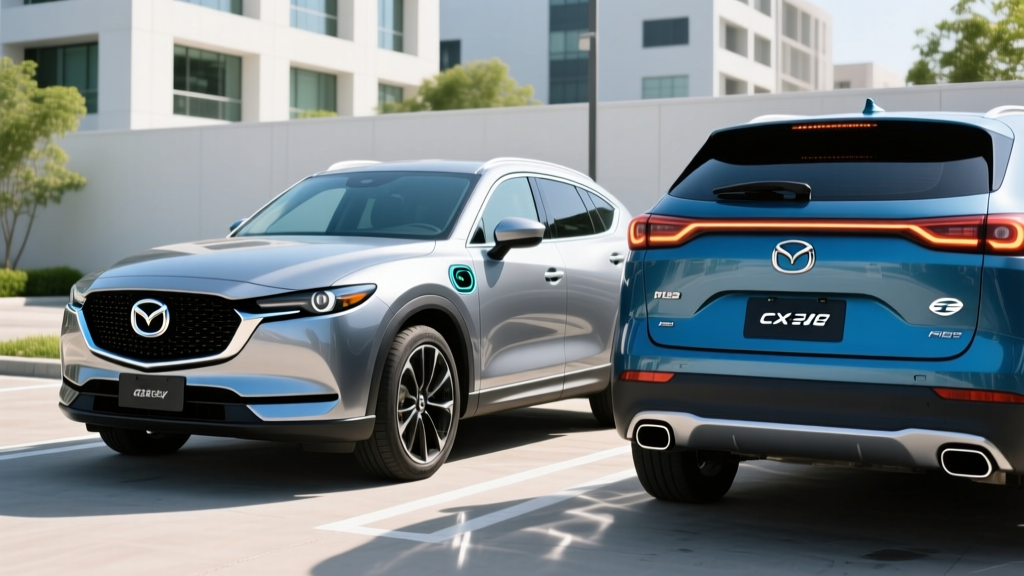
If you've been searching whether Mazda offers a hybrid, the answer is yes — but with an important distinction. For the 2026 model year, Mazda sells plug-in hybrid electric vehicles (PHEVs), not conventional hybrids (HEVs). The two models carrying Mazda's electrified torch are the CX-70 PHEV and the CX-90 PHEV, both built on Mazda's large-vehicle platform with an inline-six-based plug-in powertrain.
Mazda previously offered a mild-hybrid system on certain markets and a conventional hybrid version of the Mazda3 in Japan, but for US buyers in 2026, the CX-70 and CX-90 PHEVs represent the brand's entire hybrid lineup. Neither is a traditional "charge-itself" hybrid like a Toyota RAV4 Hybrid — both require plugging in to unlock their full efficiency and electric-only driving capability.
HEV vs. PHEV: What's the Difference?
| Feature | Conventional Hybrid (HEV) | Plug-In Hybrid (PHEV) |
|---|---|---|
| Plugs in to charge? | No — charges via regenerative braking and engine | Yes — plug in for electric-only miles |
| Electric-only range | 0–2 miles at low speed | 20–40+ miles typical |
| Battery size | 1–2 kWh | 15–30 kWh typical |
| Federal tax credit | None | Up to $7,500 (if eligible under §30D) |
| Mazda availability (2026) | Not offered in US | CX-70 PHEV, CX-90 PHEV |
2026 Mazda CX-70 PHEV: Specs, Range, and MPG
The CX-70 is Mazda's two-row midsize SUV, positioned as a more driver-focused alternative to the three-row CX-90. The PHEV variant pairs a 2.5-liter inline-four engine with an electric motor integrated into an 8-speed automatic transmission.
| Spec | Value |
|---|---|
| Combined Horsepower | 323 hp / 369 lb-ft torque |
| Engine | 2.5L 4-cylinder + electric motor |
| Battery Capacity | 17.8 kWh (usable) |
| EPA Electric-Only Range | 26 miles |
| EPA MPGe (EV mode) | 56 MPGe combined |
| EPA MPG (hybrid mode, gas) | 25 city / 27 hwy / 25 combined |
| Total Combined Range | ~440 miles |
| Level 2 Charge Time (0–100%) | ~2.5 hours at 7.2 kW |
| DC Fast Charging | Not available |
| 0–60 mph | ~6.3 seconds |
| Drivetrain | AWD standard |
| Base MSRP | $55,825 (Preferred Plus) |
| Battery Warranty | 8 years / 100,000 miles |
Real-World MPG vs. EPA Sticker
EPA says: 25 MPG combined in hybrid mode after the battery depletes; 56 MPGe in EV mode.
Real-world expectation: In city driving during mild weather, expect the CX-70 PHEV to exceed its EPA city estimate — plug-in hybrids recapture more energy through regenerative braking at lower speeds. Highway-only road trips at 75+ mph will drop fuel economy to roughly 23–24 MPG once the battery is depleted. Cold weather (below 30°F) can reduce electric-only range by 20–30%, cutting the 26-mile EV estimate to roughly 18–21 miles.
2026 Mazda CX-90 PHEV: The Three-Row Alternative
Need three rows? The CX-90 PHEV uses the same 2.5L plug-in powertrain in a larger body. The extra weight and aerodynamic drag reduce efficiency slightly, but the core proposition remains: short electric-only commutes with gas-engine flexibility for longer trips.
| Spec | Value |
|---|---|
| Combined Horsepower | 323 hp / 369 lb-ft torque |
| Battery Capacity | 17.8 kWh (usable) |
| EPA Electric-Only Range | 26 miles |
| EPA MPGe (EV mode) | 56 MPGe combined |
| EPA MPG (hybrid mode) | 24 city / 27 hwy / 25 combined |
| Total Combined Range | ~430 miles |
| Level 2 Charge Time | ~2.5 hours at 7.2 kW |
| DC Fast Charging | Not available |
| 0–60 mph | ~6.8 seconds |
| Base MSRP | $51,425 (Preferred Plus) |
| Battery Warranty | 8 years / 100,000 miles |
The CX-90 PHEV is the more established of the two, having launched for the 2024 model year. According to fueleconomy.gov, the CX-90 PHEV achieves its 26-mile EV range and 56 MPGe rating consistently across trims, as the powertrain is identical regardless of equipment level.
Charging: What Mazda PHEV Owners Need to Know
Both the CX-70 and CX-90 PHEV use a J1772 connector for Level 1 and Level 2 AC charging. Here's the critical detail: neither vehicle supports DC fast charging. This is typical for PHEVs — their smaller batteries don't require or benefit from high-power DC infrastructure.
| Charging Level | Power | Time (0–100%) | Where |
|---|---|---|---|
| Level 1 (120V household) | ~1.4 kW | ~12–14 hours | Standard outlet |
| Level 2 (240V home/public) | 7.2 kW | ~2.5 hours | Home wallbox, public L2 stations |
| DC Fast Charge | N/A | N/A | Not supported |
For most PHEV owners, a Level 2 home charger is the ideal setup. Plug in overnight, wake up to a full 26-mile electric buffer for your commute. A 240V Level 2 installation typically costs between $500 and $2,000 including equipment and electrician labor, depending on panel proximity and local permit requirements. Consult a licensed electrician for your specific home assessment.
KW vs. kWh reminder: The Mazda PHEVs accept up to 7.2 kW (kilowatts — the rate of power delivery). Their battery stores 17.8 kWh (kilowatt-hours — the total energy capacity). Think of kW as how fast water flows from a hose, and kWh as the size of the bucket.
Federal Tax Credit: Do Mazda PHEVs Qualify?
Under the IRS §30D Clean Vehicle Credit, qualifying new PHEVs can receive up to $7,500 — but eligibility depends on several requirements that change frequently.
2026 §30D Tax Credit Requirements
- Battery capacity: At least 7 kWh — both Mazda PHEVs qualify at 17.8 kWh
- MSRP cap: SUVs must be under $80,000 — all CX-70 and CX-90 PHEV trims fall below this threshold
- Buyer income cap: Modified AGI ≤ $150,000 (single) / $300,000 (joint)
- Battery component sourcing: A percentage of battery components must be manufactured or assembled in North America — this threshold increases annually
- Critical minerals: A percentage of critical minerals must be sourced from the US or free-trade-agreement partners
- Point-of-sale transfer: Eligible buyers can transfer the credit to the dealer at purchase for an immediate price reduction
The honest caveat: Battery sourcing and critical mineral requirements tighten each year. Whether a specific 2026 Mazda PHEV qualifies for the full $7,500, a partial credit, or no credit depends on the current-year supply chain certifications Mazda files with the IRS. Before purchasing, verify the exact credit amount on the IRS's clean vehicle credit page or with your tax professional. Never assume the full $7,500 applies without confirming.
Reliability, Battery Warranty, and Replacement Cost
Mazda PHEV Battery Warranty
Coverage: 8 years or 100,000 miles (whichever comes first)
What's covered: Battery capacity loss below a specified threshold (typically 70% of original capacity), defects in materials and workmanship
Replacement cost out of warranty: Estimated $8,000–$12,000 for the 17.8 kWh battery pack, based on comparable PHEV battery pricing. This figure may decrease as battery costs continue their long-term decline.
Mazda's hybrid system is relatively new to the US market, so long-term reliability data specific to the CX-70/CX-90 PHEV powertrain is still accumulating. However, Mazda as a brand has scored well in IIHS safety ratings, and the 2.5-liter inline-four engine at the heart of the PHEV system is a proven Mazda design that has been in production for years.
The electric motor and power electronics add fewer moving parts than a conventional transmission, which historically reduces long-term maintenance costs. PHEV batteries experience less stress than full EV batteries because they operate in a narrower state-of-charge window and are smaller, meaning fewer cells and lower thermal load. Most PHEV owners report minimal degradation over the first 5–7 years of ownership.
Mazda PHEV vs. Full EV vs. Gas Car: Which Fits You?
Choose a Mazda PHEV if:
- Your daily commute is under 25 miles and you can charge at home
- You take road trips several times a year and don't want to plan around charging stations
- You want to reduce fuel consumption without committing to full electric
- You value Mazda's interior quality and driving dynamics over maximum efficiency
Choose a full EV (BEV) if:
- You have reliable home charging and your daily driving is under 250 miles
- You want to eliminate gasoline entirely and minimize maintenance
- You want access to the full $7,500 federal credit with more qualifying models
- Long-term fuel savings are your top priority
Stick with a gas car if:
- You have no access to home or workplace charging
- Your budget is strictly under $40,000 and you need a three-row SUV
- You drive very low annual miles where fuel savings won't offset a higher purchase price
Pros: Mazda CX-70 / CX-90 PHEV
- 26 miles electric-only covers most daily commutes
- 323 hp provides confident acceleration and passing power
- Premium interior materials rival luxury competitors
- Standard AWD with no drivetrain compromise
- No range anxiety — gas engine covers long trips seamlessly
- Eligible for potential §30D tax credit (verify annually)
Cons: Mazda CX-70 / CX-90 PHEV
- Starting price above $51,000 — not a budget option
- No DC fast charging capability
- 25 MPG in hybrid mode is average, not class-leading
- Smaller EV range than rivals like the Toyota RAV4 Prime (42 mi)
- Only four-cylinder engine despite premium positioning
- No conventional hybrid (HEV) option for those without charging access
Competitor Comparison: Where Mazda PHEVs Stand
| Spec | Mazda CX-90 PHEV | Toyota RAV4 Prime | Hyundai Tucson PHEV |
|---|---|---|---|
| EV Range | 26 mi | 42 mi | 33 mi |
| Combined HP | 323 hp | 302 hp | 261 hp |
| Hybrid MPG | 25 combined | 38 combined | 35 combined |
| Battery | 17.8 kWh | 18.1 kWh | 13.8 kWh |
| Seating | 3 rows | 2 rows | 2 rows |
| Base MSRP | ~$51,425 | ~$44,500 | ~$39,500 |
| DC Fast Charge | No | No | No |
The Mazda's advantage is power and premium positioning — 323 hp and a near-luxury interior. The trade-off is efficiency: the RAV4 Prime delivers significantly better MPG in hybrid mode and 16 more miles of EV range. If you prioritize driving engagement and cabin quality, the Mazda wins. If pure efficiency and value matter more, the Toyota and Hyundai are stronger picks.
Frequently Asked Questions
Does Mazda make a conventional hybrid that doesn't need to be plugged in?
No. For the 2026 US market, Mazda only offers plug-in hybrids (PHEVs) — the CX-70 PHEV and CX-90 PHEV. Both must be plugged in to access their electric-only range. If you drive without ever plugging in, they function as heavier, less efficient gas vehicles. Mazda does not currently sell a conventional self-charging hybrid (HEV) in the United States.
How many MPG does the Mazda CX-90 PHEV get?
The EPA rates the CX-90 PHEV at 24 city / 27 highway / 25 combined MPG when operating in hybrid mode after the battery is depleted. In EV mode, it achieves 56 MPGe combined. Real-world city driving often exceeds the EPA city estimate thanks to regenerative braking, while sustained highway driving at high speeds may drop to 23–24 MPG.
How far can the Mazda CX-70 PHEV go on electric only?
The EPA rates the CX-70 PHEV at 26 miles of electric-only range. In real-world conditions, expect 20–26 miles depending on temperature, terrain, and driving style. Cold weather below freezing can reduce this to approximately 18–21 miles. This is enough for most daily commutes if you charge at home overnight.
Is the Mazda PHEV battery reliable and what does replacement cost?
Mazda covers the PHEV battery with an 8-year / 100,000-mile warranty against capacity loss below a defined threshold and manufacturing defects. Out-of-warranty replacement is estimated at $8,000–$12,000, though battery costs are trending downward. PHEV batteries generally experience less degradation than full EV batteries due to their smaller size and narrower charge-discharge cycles.
Does the Mazda CX-90 PHEV qualify for the $7,500 federal tax credit?
It may qualify for up to $7,500 under IRS §30D, depending on current-year battery sourcing and critical mineral requirements, which tighten annually. The CX-90 PHEV meets the MSRP cap (under $80,000) and battery capacity threshold (17.8 kWh). However, the exact credit amount varies — verify on irs.gov or with a tax professional before purchasing. Eligible buyers can transfer the credit to the dealer for a point-of-sale price reduction.
Can I charge a Mazda PHEV at a Tesla Supercharger?
No. Mazda PHEVs use a J1772 connector for AC charging and do not support DC fast charging of any kind. Tesla Superchargers are DC fast chargers using NACS or CCS connectors. You can charge at any public Level 2 J1772 station, which is the standard for non-Tesla public AC charging across the US.
Hybrid vs. PHEV vs. EV — which should I buy?
If you can charge at home and your commute is under 25 miles, a PHEV like the Mazda CX-70 or CX-90 gives you electric daily driving with gas-engine backup for road trips. If you want zero gasoline use and have predictable driving under 250 miles, a full EV (BEV) offers lower running costs and less maintenance. If you have no charging access at all, a conventional HEV (not offered by Mazda in the US) or an efficient gas car is the practical choice.
Sources: EPA fuel economy data from fueleconomy.gov, IRS Clean Vehicle Credit rules from irs.gov, and Mazda USA official specifications. All pricing and tax credit information reflects 2026 model year data and is subject to change. Confirm eligibility with your dealer and tax professional before purchasing.