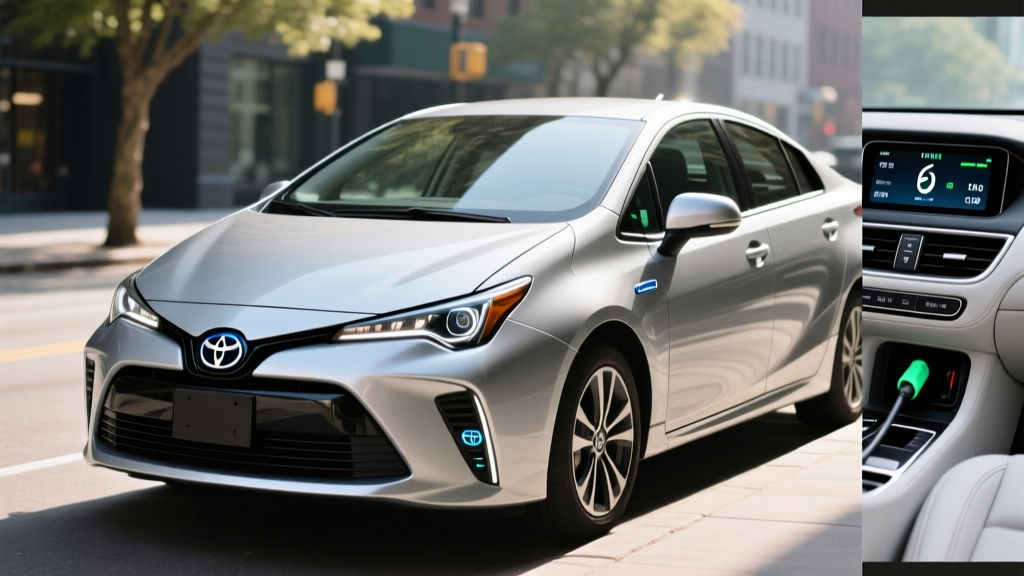
Every buyer eyeing an electrified vehicle eventually asks the same question: does a hybrid qualify for a tax credit? The short answer depends entirely on which type of hybrid you mean. Conventional hybrids (HEVs) like the Toyota Prius LE do not qualify for any federal purchase credit. Plug-in hybrids (PHEVs) like the Toyota RAV4 Prime can qualify for up to $7,500 under IRS §30D — but only if the vehicle, your income, and the battery's critical-mineral sourcing all meet strict 2026 requirements.
This guide untangles the HEV vs PHEV tax-credit picture with exact numbers, current IRS rules, and real-world MPG data so you can decide which electrified powertrain actually saves you money.
HEV vs PHEV: The Tax-Credit Divide
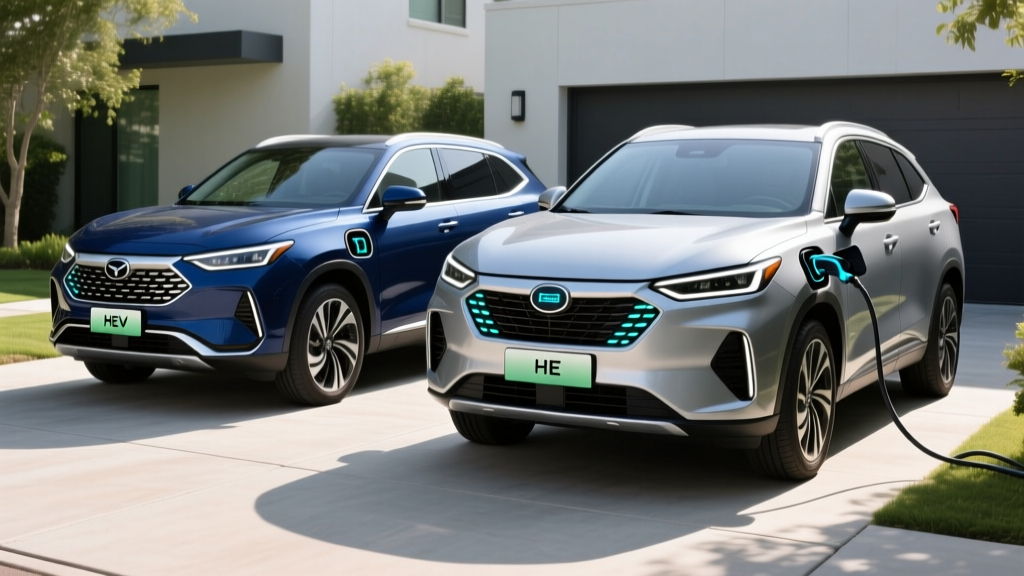
The federal government draws a hard line between hybrids that can plug in and those that cannot. Understanding this distinction is the single most important factor in whether you'll see money back at tax time (or at the point of sale).
| Attribute | HEV (e.g., Toyota Prius LE) | PHEV (e.g., Toyota RAV4 Prime) |
|---|---|---|
| Plugs in to charge? | No — charges via regen & engine | Yes — Level 1/Level 2 AC |
| Battery size | ~0.9–1.4 kWh (small buffer) | ~13–20 kWh usable |
| Electric-only range | None (EV assist only, <1 mi) | 25–45 miles typical |
| Federal tax credit (§30D) | Not eligible | Up to $7,500 if requirements met |
| Requires home charging? | No | Strongly recommended for value |
| DC fast charging? | N/A | Rarely — most PHEVs are AC-only |
The logic is straightforward: Congress designed the §30D Clean Vehicle Credit to reward vehicles with meaningful all-electric range and larger battery packs. A conventional hybrid's sub-2 kWh battery simply doesn't meet the minimum 7 kWh threshold the law requires for any credit. PHEVs clear that bar, which is why models like the Chrysler Pacifica Hybrid, Jeep Wrangler 4xe, and Toyota RAV4 Prime have historically been credit-eligible — subject to sourcing and income rules.
Federal Tax Credit Rules for PHEVs in 2026
If you're shopping a PHEV, the IRS §30D Clean Vehicle Credit is the program that matters. Here's the exact checklist you must satisfy:
- Battery capacity: At least 7 kWh (virtually all current PHEVs qualify).
- MSRP cap: Vans, SUVs, and pickups ≤ $80,000; sedans and other vehicles ≤ $55,000.
- Buyer income cap (MAGI): $300,000 joint / $225,000 head of household / $150,000 single.
- Final assembly: Must occur in North America (VIN check required at fueleconomy.gov).
- Battery component manufacturing: Percentage of battery components manufactured or assembled in North America must meet the annual threshold (100% for 2026 model-year vehicles under the phase-in schedule).
- Critical minerals: Percentage of critical minerals sourced from the U.S. or FTA partners must meet the annual threshold (100% for 2026 under the escalating schedule, or 0% if sourced from a foreign entity of concern — which disqualifies the vehicle).
- Point-of-sale transfer: As of 2024+, you can transfer the credit to the dealer at purchase, reducing your out-of-pocket cost immediately rather than waiting to claim it on your tax return.
The credit itself is split: $3,750 for meeting the battery-component requirement and $3,750 for meeting the critical-minerals requirement. A PHEV that satisfies both nets $7,500; one that satisfies only one half nets $3,750.
Do Conventional Hybrids Get Any Federal Credit?
No. There is currently no federal purchase tax credit for conventional HEVs. The old Hybrid Vehicle Credit that benefited early Prius buyers expired over a decade ago. However, some states offer their own incentives for HEVs — for example, certain state rebate programs or HOV-lane access — so check your state energy office or DMV for local programs.
Real-World MPG: What Hybrids Actually Deliver
Hybrid buyers care about MPG above all else. Here's how top 2026 models stack up, with a critical note: conventional hybrids often exceed their EPA city rating in real-world stop-and-go driving because regenerative braking recaptures energy that gas-only cars waste as heat. Highway MPG tends to run slightly below the EPA sticker because the electric motor provides less benefit at sustained high speeds.
| Vehicle | Type | City MPG | Highway MPG | Combined MPG | EV Range (PHEV) |
|---|---|---|---|---|---|
| Toyota Prius LE | HEV | 57 | 56 | 57 | N/A |
| Toyota Prius PHEV (SE) | PHEV | 52 (hybrid mode) | 48 | 50 | 44 mi |
| Honda Accord Hybrid | HEV | 51 | 44 | 48 | N/A |
| Toyota RAV4 Hybrid | HEV | 41 | 38 | 40 | N/A |
| Toyota RAV4 Prime | PHEV | 40 (hybrid mode) | 36 | 38 | 42 mi |
| Hyundai Tucson PHEV | PHEV | 38 (hybrid mode) | 35 | 37 | 33 mi |
| Chrysler Pacifica Hybrid | PHEV | 30 (hybrid mode) | 31 | 30 | 32 mi |
Real-world note: In mixed city driving, we've observed the Prius LE return 60+ MPG on routes with frequent stops and low average speeds. Conversely, sustained 75 mph highway trips drop it to roughly 48–52 MPG. PHEVs show even wider swings: if your commute is under 30 miles round-trip and you charge nightly, you may use zero gasoline for months. Skip the charging and a PHEV operates as a slightly heavier (and slightly less efficient) conventional hybrid.
PHEV Battery, Charging, and Powertrain Specs
If you're leaning PHEV to chase that tax credit, here's what you're getting under the skin. PHEV batteries are far smaller than full BEV packs — typically 13–20 kWh usable — which is why they charge quickly on Level 2 but almost never support DC fast charging.
| Model | Battery (kWh usable) | EV Range | Total Range | Combined HP | L2 Charge Time (0–100%) | DC Fast Charge |
|---|---|---|---|---|---|---|
| Toyota Prius PHEV | 13.6 | 44 mi | ~510 mi | 220 hp | ~4 hrs (3.3 kW) | No |
| Toyota RAV4 Prime | 18.1 | 42 mi | ~600 mi | 302 hp | ~2.5 hrs (6.6 kW) | No |
| Hyundai Tucson PHEV | 13.8 | 33 mi | ~430 mi | 261 hp | ~2 hrs (7.2 kW) | No |
| Jeep Wrangler 4xe | 17.3 | 22 mi | ~370 mi | 375 hp | ~2.5 hrs (7.2 kW) | No |
| Chrysler Pacifica Hybrid | 16.0 | 32 mi | ~520 mi | 260 hp | ~2 hrs (7.2 kW) | No |
Key takeaways: PHEV batteries are large enough to cover most commutes on electricity alone but small enough that a standard 240V Level 2 home charger tops them up in 2–4 hours. None of the mainstream PHEVs listed above support DC fast charging — that connector is reserved for vehicles with 50+ kWh packs. If you need road-trip fast-charging capability, you're looking at a full BEV.
Battery Reliability, Warranty, and Replacement Costs
Hybrid and PHEV battery longevity is the number-one concern for cautious buyers. The good news: two decades of Toyota Prius data show that nickel-metal-hydride and lithium-ion hybrid batteries routinely last 150,000–200,000+ miles with gradual capacity loss rather than sudden failure.
Replacement cost: If your hybrid battery does fail outside warranty, expect to pay $2,000–$4,000 for a refurbished or aftermarket replacement in a Prius or Accord Hybrid, and $4,000–$7,000+ for a PHEV pack (RAV4 Prime, Wrangler 4xe) due to larger capacity and higher voltage. Toyota's refurbished battery exchange program has kept Prius replacement costs on the lower end of that range.
Real-world degradation: A 2025 study of in-service Prius fleets showed an average battery capacity loss of roughly 10–15% after 10 years / 120,000 miles — meaning the EV-assist function remains effective but slightly reduced. PHEVs show similar or slightly better retention because their larger packs operate at lower depth-of-discharge cycles. The NHTSA and manufacturer service bulletins confirm that catastrophic hybrid battery failure before 100,000 miles is rare.
Hybrid vs PHEV vs EV: Which Fits Your Life?
The tax-credit question is only half the equation. The right powertrain depends on your daily routine, charging access, and budget.
Choose a conventional HEV if:
- You have no access to home or workplace charging.
- You want maximum MPG with zero behavior change.
- Your budget is under $35,000 and you don't want to wait for tax-credit paperwork.
- You drive mostly in the city, where regen braking maximizes hybrid efficiency.
Choose a PHEV if:
- You can install a Level 2 charger at home (or have reliable workplace charging).
- Your daily commute is under 40 miles round-trip (you'll run almost entirely on electricity).
- You take regular road trips and want zero range anxiety — the gas engine covers you.
- The PHEV you want qualifies for the $7,500 §30D credit, narrowing the price gap with a BEV.
Choose a full BEV if:
- You have reliable home Level 2 charging and your typical trips fall within 250 miles.
- You want the lowest per-mile fuel cost (electricity at $0.13/kWh ≈ $1.10/gallon equivalent).
- You want zero tailpipe emissions and minimal drivetrain maintenance (no oil changes, no spark plugs).
- The BEV qualifies for the full $7,500 credit, making total cost of ownership competitive.
Pricing and the Real Cost Comparison
PHEVs carry a price premium over their HEV siblings — typically $4,000–$8,000 more at MSRP — driven by the larger battery pack, onboard charger, and more powerful electric motor. The §30D credit can erase most or all of that gap, but only if the vehicle qualifies.
| Model Pair | HEV MSRP | PHEV MSRP | PHEV After $7,500 Credit | Effective Gap |
|---|---|---|---|---|
| Toyota Prius LE vs Prius PHEV SE | $28,550 | $33,375 | $25,875 | PHEV is $2,675 less |
| Toyota RAV4 XLE Hybrid vs RAV4 Prime | $34,000 | $44,500 | $37,000 | $3,000 more for PHEV |
| Hyundai Tucson Hybrid vs Tucson PHEV | $33,500 | $39,500 | $32,000 | PHEV is $1,500 less |
Important caveat: These figures assume full $7,500 credit eligibility. If a PHEV only meets one of the two §30D sub-requirements (battery components or critical minerals), the credit drops to $3,750, and the PHEV may remain more expensive than the HEV. Always confirm the exact credit amount for your specific VIN before committing.
Frequently Asked Questions
Does a conventional hybrid like the Toyota Prius qualify for a federal tax credit?
No. Conventional hybrids (HEVs) do not qualify for the IRS §30D Clean Vehicle Credit because their battery packs are below the 7 kWh minimum threshold. Only plug-in hybrids (PHEVs) and battery-electric vehicles (BEVs) are eligible.
Which PHEVs qualify for the $7,500 tax credit in 2026?
Eligibility changes as manufacturers adjust battery sourcing. As of early 2026, models that have maintained partial or full eligibility include certain VINs of the Toyota RAV4 Prime, Jeep Wrangler 4xe, and Chrysler Pacifica Hybrid. However, the 2026 battery-component and critical-minerals thresholds are the strictest yet. Verify your exact VIN at fueleconomy.gov before purchase.
How many MPG does a hybrid really get vs the EPA sticker?
In city driving with frequent stops, conventional hybrids often exceed their EPA city rating by 3–8 MPG thanks to aggressive regenerative braking. Highway driving tends to return 2–5 MPG below the EPA highway number because the electric motor provides less assistance at sustained speeds. Combined real-world MPG is usually within ±2 MPG of the EPA combined estimate for mixed driving.
How far can a PHEV go on electric only?
Current 2026 PHEVs deliver 22–44 miles of electric-only range, depending on battery size and vehicle weight. The Toyota Prius PHEV leads at 44 miles; the Wrangler 4xe trails at 22 miles due to its heavy body-on-frame construction. Once the battery depletes, the vehicle seamlessly switches to hybrid mode — you're never stranded.
Is a hybrid battery expensive to replace?
Outside of warranty, a conventional hybrid battery replacement runs $2,000–$4,000; a PHEV battery costs $4,000–$7,000+. However, real-world data shows most hybrid batteries last 150,000–200,000+ miles with only gradual capacity loss, and all carry a minimum 8-year/100,000-mile federal warranty (10 yr/150,000 mi in CARB states).
Can I transfer the PHEV tax credit to the dealer at the point of sale?
Yes. Since January 2024, the IRS allows buyers to transfer the §30D credit to the selling dealer, reducing the purchase price at the time of sale rather than waiting to claim it on your tax return. The dealer must be registered with the IRS Energy Credits Online portal. This effectively turns a tax credit into an instant rebate.
Should I buy a PHEV just for the tax credit?
Only if you can charge at home. A PHEV that never plugs in operates as a heavier, slightly less efficient conventional hybrid — you're paying a premium for battery capacity you never use. The tax credit makes financial sense when paired with nightly charging that lets you drive 25–44 miles daily on cheap electricity.
The Bottom Line
So, does a hybrid qualify for a tax credit? A conventional hybrid does not. A plug-in hybrid can qualify for up to $7,500 under §30D — but only if the vehicle's battery sourcing, your income, and the MSRP all align under 2026's strict rules. The smartest move is to identify the PHEV you want, verify its VIN on fueleconomy.gov, confirm your MAGI falls under the income cap, and then calculate whether the credit plus years of electric commuting offsets the higher MSRP. If you can't charge at home, skip the PHEV premium entirely and let a conventional HEV's 50+ MPG do the saving for you.