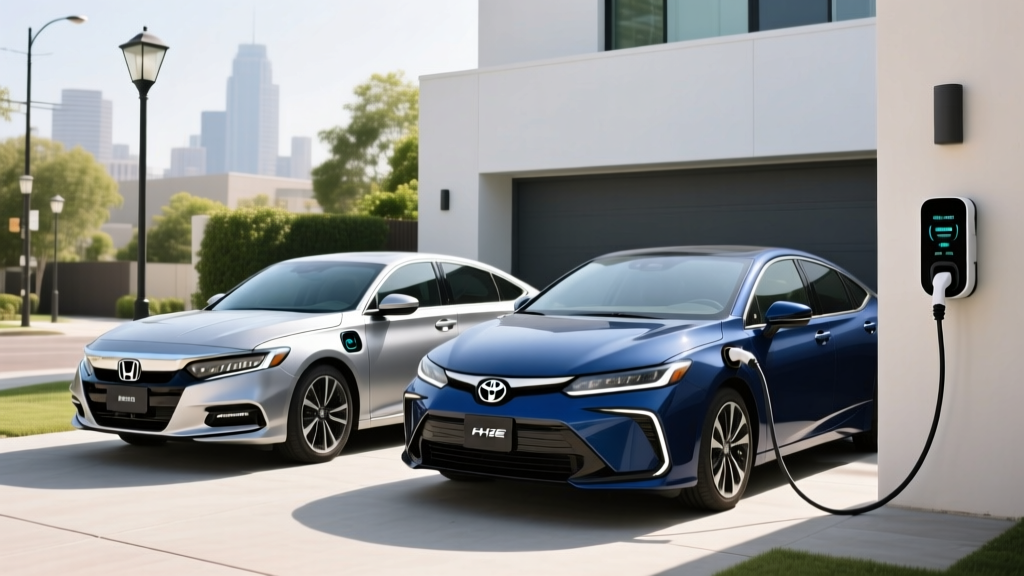
If you've been shopping for an electrified vehicle, you've likely encountered two very different badges on the lot: Hybrid and Plug-In Hybrid. The short answer to the question on everyone's mind — does a hybrid car need to be plugged in? — depends entirely on which type you're looking at. A conventional hybrid (HEV) never needs a plug. A plug-in hybrid (PHEV) doesn't require one to operate, but you'll miss most of its value if you skip the cord.
This guide cuts through the marketing to explain exactly how each powertrain works, what real-world fuel economy looks like, what the battery warranties actually cover, and which type fits your driving life in 2026.
HEV vs PHEV: The Plug Question, Answered Clearly
Conventional hybrids and plug-in hybrids share a basic architecture — an internal combustion engine paired with one or more electric motors and a battery pack — but they diverge sharply in battery size, electric capability, and how they refuel.
| Feature | Conventional Hybrid (HEV) | Plug-In Hybrid (PHEV) |
|---|---|---|
| Needs to be plugged in? | No — charges via regenerative braking & engine | No, but should be for electric-only driving |
| Battery size | 0.6 – 2.0 kWh | 13 – 25+ kWh (usable) |
| Electric-only range | None (motor assists only) | 25 – 50+ miles (EPA) |
| Refueling | Gas station only | Gas station + Level 1/Level 2 plug |
| DC fast charging | N/A | Rare; some 2025–2026 models support it |
| Federal tax credit (§30D) | No | Up to $7,500 (if eligible) |
| Typical price premium over gas model | $1,000 – $3,000 | $5,000 – $12,000 |
The key takeaway: a conventional hybrid like the Toyota RAV4 Hybrid or Honda CR-V Hybrid generates all its electricity internally. You drive it exactly like a gas car — fill up at the pump, no cords, no apps, no charging anxiety. A PHEV like the Toyota RAV4 Prime or Jeep Wrangler 4xe carries a much larger battery that unlocks 25–50 miles of electric-only driving, but only if you plug it in at home or at a public charger. Unplugged, a PHEV still drives as a conventional hybrid — just a heavier, less efficient one.
How Many MPG Does a Hybrid Get? Real EPA Data
Hybrid fuel economy varies widely by vehicle class and powertrain tuning. Here are EPA figures for some of the most popular 2026 hybrid and PHEV models, sourced from fueleconomy.gov:
| Model (2026) | Type | City MPG | Highway MPG | Combined MPG | PHEV Elec. Range | Combined MPGe (PHEV) |
|---|---|---|---|---|---|---|
| Toyota Prius | HEV | 57 | 56 | 57 | — | — |
| Toyota Prius Prime | PHEV | 52 (hybrid mode) | 48 | 50 | 44 mi | 127 MPGe |
| Toyota RAV4 Hybrid | HEV | 41 | 38 | 40 | — | — |
| Toyota RAV4 Prime (PHEV) | PHEV | 40 (hybrid mode) | 36 | 38 | 42 mi | 94 MPGe |
| Honda CR-V Hybrid | HEV | 43 | 36 | 40 | — | — |
| Ford Escape PHEV | PHEV | 42 (hybrid mode) | 37 | 40 | 37 mi | 105 MPGe |
| Hyundai Tucson PHEV | PHEV | 35 (hybrid mode) | 33 | 34 | 33 mi | 80 MPGe |
Real-World MPG vs. EPA Sticker: What to Actually Expect
Conventional hybrids routinely exceed their EPA city estimates in stop-and-go driving, because regenerative braking recovers more energy at lower speeds. On the Prius, real-world city drivers often report 58–62 MPG. Highway driving is the opposite story: at 75+ mph, aerodynamic drag dominates and the electric motor contributes less, so expect 2–5 MPG below the sticker on long freeway trips.
For PHEVs, the MPG number is almost meaningless without context. If your commute is 30 miles round-trip and you charge nightly, you may burn zero gasoline for months. If you never plug in, you're driving a heavy hybrid and will see fuel economy 10–15% below a purpose-built HEV. The EPA's combined MPG for a PHEV blends charge-depleting (electric) and charge-sustaining (hybrid) driving — a useful comparison metric, but not a personal forecast.
PHEV Battery Size, Charging Time, and Electric-Only Range
Plug-in hybrids carry battery packs between 13 and 25+ kWh (usable capacity), substantially smaller than a full EV's 60–100+ kWh pack but large enough for meaningful electric-only driving. Here's what that translates to at the plug:
| Model (2026) | Usable Battery (kWh) | Electric Range (EPA) | Level 1 Charge (120V) | Level 2 Charge (240V) | DC Fast Charge |
|---|---|---|---|---|---|
| Toyota Prius Prime | 13.6 kWh | 44 mi | ~4 hrs | ~2.3 hrs (3.3 kW) | No |
| Toyota RAV4 Prime | 18.1 kWh | 42 mi | ~5.5 hrs | ~2.5 hrs (6.6 kW) | No |
| Ford Escape PHEV | 14.4 kWh | 37 mi | ~4.5 hrs | ~2 hrs (6.6 kW) | No |
| Hyundai Tucson PHEV | 13.8 kWh | 33 mi | ~4 hrs | ~1.8 hrs (7.2 kW) | No |
| Jeep Wrangler 4xe | 17.3 kWh | 22 mi | ~5 hrs | ~2 hrs (7.2 kW) | No |
Real-world electric range caveat: PHEV electric range drops 15–30% in cold weather (below 40°F) due to cabin heating loads and reduced battery efficiency. Highway driving at 70+ mph also cuts range vs. the EPA's mixed-cycle test. A RAV4 Prime rated at 42 miles may deliver 30–35 miles in winter or sustained highway use.
Most PHEVs do not support DC fast charging. The onboard chargers max out at 3.3–7.2 kW on Level 2, meaning a full charge takes 1.5–4 hours on a 240V outlet or home charger. This is fine for overnight top-ups but impractical for mid-day replenishment on road trips. A handful of newer PHEV platforms (notably some European models) have begun adding DC capability, but it remains the exception in the US market.
Powertrain Specs: Engine + Motor Combined Output
Hybrid powertrains combine a gasoline engine with electric motor(s), and the total system horsepower is what matters at the wheels. Here's how the popular models stack up:
- Toyota Prius: 2.0L 4-cyl + electric motor — 196 combined HP (HEV); 220 HP (Prime PHEV). 0–60 mph in ~7.0 seconds (HEV), ~6.6 sec (Prime).
- Toyota RAV4 Hybrid: 2.5L 4-cyl + dual electric motors (AWD) — 219 combined HP. 0–60 in ~7.4 seconds.
- Toyota RAV4 Prime: 2.5L 4-cyl + dual motors — 302 combined HP. 0–60 in 5.7 seconds (quickest RAV4 ever sold).
- Honda CR-V Hybrid: 2.0L 4-cyl + dual motors — 204 combined HP. 0–60 in ~7.6 seconds.
- Ford Escape PHEV: 2.5L 4-cyl + electric motor — 210 combined HP (FWD only).
- Jeep Wrangler 4xe: 2.0L turbo 4-cyl + dual motors — 375 combined HP, 470 lb-ft torque. 0–60 in ~6.0 seconds.
The RAV4 Prime and Wrangler 4xe illustrate why some buyers choose PHEVs purely for performance: the electric motor fills the torque gap at low RPM, producing acceleration that would otherwise require a much larger (and thirstier) engine.
Pricing, Tax Credits, and Total Cost Considerations
Hybrids carry a modest price premium over their gas-only siblings, while PHEVs demand a significantly larger upfront investment. Here's where pricing stands for 2026 models:
| Model | Base MSRP | §30D Federal Credit | Effective Price (est.) |
|---|---|---|---|
| Toyota Prius (HEV) | $29,445 | $0 | $29,445 |
| Toyota Prius Prime (PHEV) | $34,595 | Up to $3,750* | ~$30,845 |
| Toyota RAV4 Hybrid | $33,425 | $0 | $33,425 |
| Toyota RAV4 Prime | $44,915 | Up to $3,750* | ~$41,165 |
| Honda CR-V Hybrid | $35,395 | $0 | $35,395 |
| Ford Escape PHEV | $40,400 | Up to $3,750* | ~$36,650 |
| Jeep Wrangler 4xe | $51,790 | Up to $3,750* | ~$48,040 |
*Credit amounts are estimates based on current IRS §30D rules. Actual credit depends on battery sourcing, critical mineral content, buyer income caps ($150K single / $300K joint AGI), MSRP caps ($55K cars / $80K SUVs/trucks), and manufacturer eligibility. Credits may be applied at point of sale. Consult IRS.gov and a tax professional before purchasing.
Conventional hybrids do not qualify for the §30D New Clean Vehicle Credit — the battery packs are too small to meet the minimum capacity threshold (7 kWh). Some PHEVs qualify for partial or full credits, but the battery-sourcing and critical-mineral requirements have narrowed eligibility considerably since 2023. Always verify current eligibility on the IRS clean vehicle credit page before committing.
Battery Warranty, Lifespan, and Replacement Cost
Hybrid battery longevity is one of the most researched — and most misunderstood — topics among buyers. Here are the facts:
Hybrid Battery Warranty Standards (2026)
- Federal minimum (EPA/CARB states): 8 years / 100,000 miles for hybrid battery and emissions components
- CARB states (CA, NY, MA, and others): 10 years / 150,000 miles
- Toyota: 10 years / 150,000 miles (nationwide, all 50 states)
- Honda: 8 years / 100,000 miles (non-CARB); 10 years / 150,000 miles (CARB states)
- Ford: 8 years / 100,000 miles
- Hyundai/Kia: 10 years / 100,000 miles
Warranty covers capacity loss below a defined threshold (typically 60–70% of original capacity) and manufacturing defects.
In practice, modern hybrid batteries — particularly Toyota's nickel-metal-hydride (NiMH) packs and newer lithium-ion designs — routinely last 150,000–200,000+ miles with minimal degradation. The battery management system (BMS) keeps the pack within a narrow state-of-charge window (roughly 40–80%), which dramatically extends cycle life compared to full EVs that regularly charge to 100%.
If a replacement is needed out of warranty, costs break down as follows:
- Toyota Prius HEV: $2,000 – $3,500 (remanufactured); $3,500 – $4,500 (new OEM)
- Toyota RAV4 Hybrid: $3,000 – $5,000
- PHEV battery packs: $5,000 – $9,000+ depending on capacity and model
For context, a hybrid battery replacement is comparable in cost to a major transmission repair on a conventional vehicle — significant, but not the $15,000–$25,000 EV battery replacements that dominate headlines. Independent hybrid shops now offer refurbished packs at 40–50% below OEM pricing.
Hybrid vs PHEV vs Full EV: Which Fits Your Life?
Choose a Conventional Hybrid (HEV) If:
- You don't have access to home or workplace charging
- You want maximum MPG with zero behavior change
- Your budget is tight and you want a $1,000–$3,000 premium over gas
- You drive mostly city miles where regen braking shines
- You want the simplest ownership experience — no apps, no cords
Choose a Plug-In Hybrid (PHEV) If:
- You have reliable Level 1 or Level 2 charging at home
- Your daily commute is under 40 miles round-trip (within electric range)
- You want electric daily driving but gas flexibility for road trips
- You want to offset the PHEV premium with a federal tax credit
- You live in a region with expensive gasoline (CA, NY, HI)
Choose a Full EV (BEV) If:
- You have home Level 2 charging and rarely drive more than 250 miles in a day
- You want zero tailpipe emissions and the lowest per-mile fuel cost
- You want minimal maintenance (no oil changes, no engine air filters, fewer moving parts)
- You qualify for the full $7,500 federal credit and applicable state rebates
- You're comfortable planning DC fast-charging stops on road trips
The PHEV is often called the "bridge" vehicle — and that framing is accurate. If you can charge at home and your commute is short, a PHEV operates as an EV 80–90% of the time. But on a 500-mile road trip, you simply fill up at a gas station and keep driving, no charging-app detour required. The trade-off is complexity: you maintain both an engine (oil changes, filters) and a large battery pack, and the upfront cost is meaningfully higher.
Hybrid/PHEV Pros
- HEVs require no charging infrastructure
- Best-in-class city MPG (Prius: 57 city)
- PHEVs deliver silent, electric daily commuting
- Gas backup eliminates range anxiety on road trips
- Proven long-term reliability (Toyota hybrid system: 25+ years of refinement)
- PHEVs may qualify for §30D federal credit
Hybrid/PHEV Cons
- HEVs offer no electric-only driving
- PHEVs are heavy and less efficient than HEVs when battery is depleted
- PHEV premium ($5K–$12K) takes years to recoup at the pump
- Most PHEVs lack DC fast charging
- Two powertrains = two systems to maintain
- HEVs don't qualify for federal EV tax credits
Frequently Asked Questions
Does a regular hybrid need to be plugged in at all?
No. Conventional hybrids (HEVs) charge their small battery packs entirely through regenerative braking and the gasoline engine. There is no plug, no charging port, and no way to plug one in even if you wanted to. You fuel a hybrid exactly like a gas car — at the pump.
Can I drive a PHEV without ever plugging it in?
Yes, but you shouldn't. A PHEV with a depleted battery operates as a conventional hybrid, using the engine and regen braking to move the car. However, you'll get worse fuel economy than a purpose-built HEV (because you're hauling 300–500 lbs of unused battery), and you'll have paid a substantial price premium for electric capability you're not using. The EPA's PHEV comparison tool shows the fuel-economy penalty clearly.
How long do hybrid batteries last before needing replacement?
Modern hybrid batteries are designed to last the life of the vehicle under normal use. Toyota's hybrid system, in particular, has demonstrated 200,000+ mile battery life in large fleet samples. The BMS keeps the battery in a partial state of charge (never fully full, never fully empty), which is the single most important factor in lithium-ion and NiMH longevity. Failures before 150,000 miles are rare and typically covered under the 8–10 year warranty.
Do hybrids cost more to maintain than gas cars?
Slightly, in some areas, and less in others. Hybrids still need oil changes, brake fluid, and coolant service. However, regenerative braking dramatically extends brake pad life — many hybrid owners report 80,000–100,000+ miles on original brake pads. There's no starter motor or alternator to replace (the hybrid motor/generator handles both functions). Net maintenance cost is roughly comparable to a conventional car, with the added risk of an eventual hybrid battery replacement.
Are hybrid cars reliable compared to gas-only vehicles?
Yes. Toyota's hybrid powertrain is consistently among the most reliable in the industry, with fewer moving parts in the drivetrain (no conventional transmission, no starter, no alternator). IIHS and consumer reliability surveys from Consumer Reports and J.D. Power regularly rank the Prius, RAV4 Hybrid, and Camry Hybrid at or near the top of their segments. Honda's hybrid system has shown similar reliability in the CR-V and Accord.
What happens if the hybrid battery dies while driving?
The car won't suddenly stop. If the hybrid battery fails, the vehicle's computer will illuminate a warning light and limit performance ("limp mode"), but the gasoline engine can still drive the wheels directly in most hybrid architectures. You'll have reduced power and fuel economy, but you can drive to a service location. In a PHEV, a traction battery failure is more disruptive since the vehicle relies more heavily on electric assist, but the same fail-safe principles apply.
Is a PHEV worth it if I only have a standard 120V outlet?
It can be. Level 1 charging (120V, ~1.4 kW) adds roughly 4–5 miles of electric range per hour of charging. If you park for 10+ hours overnight, that's 40–50 miles of replenishment — enough to fully recharge most PHEV batteries. It's slow, but for a short-commute driver who plugs in every night, Level 1 is often sufficient. A dedicated 240V Level 2 charger ($500–$1,500 installed) cuts charge time to 1.5–3 hours and is recommended if your daily driving approaches the vehicle's electric range limit.