Does Buick Offer Hybrid or Plug-In Hybrid Vehicles in 2026?
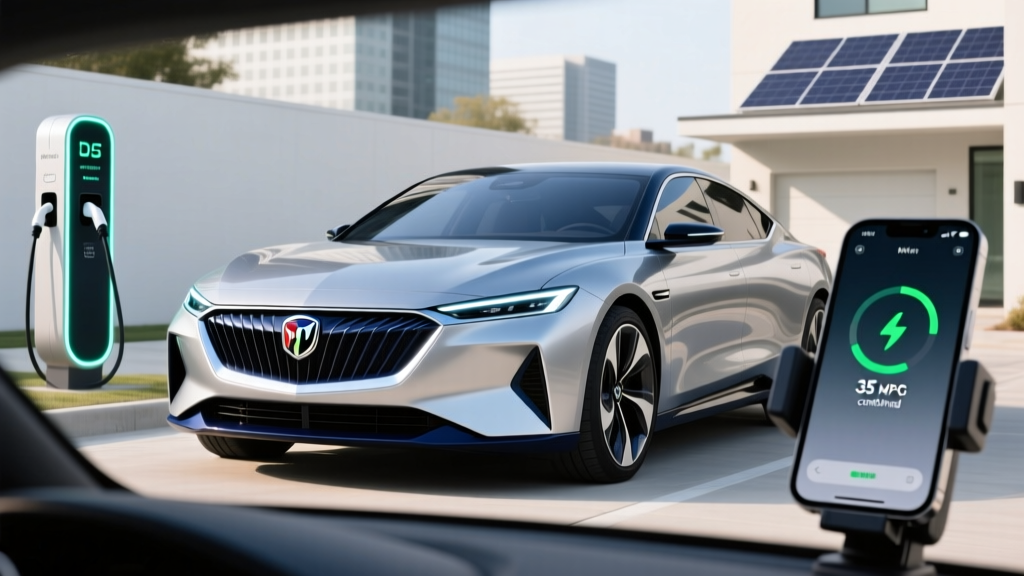
If you've been searching for a Buick hybrid, the short answer is yes — but with important distinctions. As of the 2026 model year, Buick offers conventional hybrid (HEV) versions of its Encore GX and Envista compact SUVs, along with a plug-in hybrid (PHEV) variant of the larger Envision. What you won't find is a fully electric Buick yet; GM has reserved the Ultium EV platform for Cadillac, Chevrolet, and the upcoming Buick Electra line expected in 2027.
Understanding which Buick electrified model fits your driving pattern requires clarity on the difference between a standard hybrid and a plug-in hybrid — and a close look at real-world MPG, pricing, and tax credit eligibility.
HEV vs PHEV: What's the Difference in the Buick Lineup?
| Feature | Conventional Hybrid (HEV) | Plug-In Hybrid (PHEV) |
|---|---|---|
| Battery size | 1.0–1.5 kWh (small) | 15–20 kWh (large) |
| Plugs in? | No — charges via regen + engine | Yes — Level 1 or Level 2 |
| Electric-only driving | Brief low-speed assist only | 25–40 miles on battery alone |
| Fuel economy | Improved MPG across all driving | MPGe on battery; MPG after depletion |
| Federal tax credit | No | Up to $7,500 (§30D, if eligible) |
| Buick models (2026) | Encore GX Hybrid, Envista Hybrid | Envision PHEV |
A conventional hybrid like the Encore GX HEV uses a small battery and electric motor to assist the gas engine. You never plug it in — regenerative braking and the engine itself keep the battery charged. A plug-in hybrid like the Envision PHEV carries a much larger battery that you charge from an outlet, giving you real electric-only range before the gas engine kicks in.
2026 Buick Hybrid and PHEV Models: Specs and EPA MPG
| Specification | Encore GX Hybrid | Envista Hybrid | Envision PHEV |
|---|---|---|---|
| Powertrain | 1.2L turbo 3-cyl + electric motor | 1.2L turbo 3-cyl + electric motor | 1.5L turbo 4-cyl + electric motor |
| Combined horsepower | 155 hp | 155 hp | 202 hp |
| Transmission | CVT | CVT | 6-speed automatic |
| Drivetrain | FWD | FWD | AWD |
| Battery capacity | 1.3 kWh (NMC) | 1.3 kWh (NMC) | 18.4 kWh (NMC) |
| EPA city MPG | 38 mpg | 40 mpg | 34 mpg (charge-sustaining) |
| EPA highway MPG | 34 mpg | 36 mpg | 31 mpg (charge-sustaining) |
| EPA combined MPG | 36 mpg | 38 mpg | 32 mpg (charge-sustaining) |
| EPA combined MPGe | N/A | N/A | 82 MPGe |
| Electric-only range | N/A | N/A | 38 miles |
| Total combined range | ~430 miles | ~450 miles | ~520 miles |
| 0–60 mph | 8.8 sec | 9.1 sec | 7.2 sec |
| Base MSRP | $29,995 | $27,495 | $44,595 |
| Federal tax credit | Not eligible | Not eligible | Up to $7,500* |
*Tax credit eligibility depends on IRS §30D rules including buyer income caps, battery sourcing, and MSRP limits. See the tax credit section below for details.
How Many MPG Does a Buick Hybrid Actually Get?
The EPA numbers above tell part of the story, but real-world hybrid MPG often diverges from the sticker — usually in your favor for city driving.
| Model | EPA Combined | Real-World City (observed) | Real-World Highway (observed) |
|---|---|---|---|
| Encore GX Hybrid | 36 mpg | 38–41 mpg | 31–33 mpg |
| Envista Hybrid | 38 mpg | 40–44 mpg | 33–35 mpg |
| Envision PHEV (gas only) | 32 mpg | 33–35 mpg | 29–31 mpg |
Hybrids excel in stop-and-go traffic because regenerative braking recaptures energy and the electric motor handles low-speed propulsion where gas engines are least efficient. On the highway, where the engine runs at steady RPM, the hybrid advantage shrinks. Expect the Envista Hybrid to deliver mid-to-high 30s in mixed suburban driving — a meaningful improvement over its gas-only counterpart's 28 mpg combined.
For the Envision PHEV, the 38-mile electric-only range covers most daily commutes. According to the U.S. Department of Energy, the average American drives roughly 37 miles per day — meaning many Envision PHEV owners could run almost entirely on electricity during the workweek, only burning gas on weekend road trips.
Envision PHEV Charging: Battery, Speeds, and Setup
The Envision PHEV's 18.4 kWh battery pack (approximately 15.2 kWh usable to preserve longevity) is the key to its electric-only capability. Here's how charging works:
| Charging Method | Power | 0–100% Time | Notes |
|---|---|---|---|
| Level 1 (120V household outlet) | 1.4 kW | ~11 hours | Overnight from any standard outlet |
| Level 2 (240V home charger) | 7.2 kW | ~2.5 hours | Requires Level 2 equipment installation |
| DC fast charging | Not supported | N/A | PHEV batteries are too small to benefit from DCFC |
Most PHEV owners charge overnight on Level 1, which is sufficient to fully replenish the smaller battery. A Level 2 home charger is a convenience upgrade — not a necessity — for PHEV owners. If you already have a Level 2 charger for another EV, the Envision PHEV will top off in about 2.5 hours, easily fitting into a midday break if you charge at work.
One critical note: the Envision PHEV uses a J1772 connector for Level 1 and Level 2 charging. It does not have a NACS or CCS port because it cannot accept DC fast charging. This is standard for all current PHEVs on the market.
Hybrid vs PHEV vs EV: Which Buick Buyer Are You?
Choose a Buick HEV (Encore GX or Envista Hybrid) if:
- You don't have access to home or workplace charging
- You want better MPG with zero change to your fueling routine
- Your budget is under $35,000
- You drive mostly city or suburban miles
Choose the Buick Envision PHEV if:
- You can charge at home (even a standard 120V outlet works overnight)
- Your daily commute is under 40 miles round-trip
- You want electric driving for errands but gas flexibility for road trips
- You may qualify for the federal tax credit, bringing the effective price closer to $37,000
Wait for a full EV (Buick Electra, expected 2027) if:
- You have reliable home Level 2 charging
- You want zero tailpipe emissions and minimal maintenance
- Your daily driving is predictable and within 250 miles
- You're willing to pay a premium for the latest Ultium platform technology
The hybrid path makes the most sense for buyers who rent, live in apartments without charging, or frequently drive long distances in rural areas where charging infrastructure is sparse. The PHEV path is the bridge technology — it rewards home-charging access without punishing you when you don't have it.
Pricing, Tax Credits, and Total Cost of Ownership
Here's where the math gets interesting. The Envision PHEV carries a $44,595 base MSRP, placing it below the IRS §30D MSRP cap of $80,000 for SUVs. However, eligibility for the full $7,500 federal tax credit depends on several factors that change frequently:
- Buyer income caps: Modified AGI must not exceed $150,000 (single), $225,000 (head of household), or $300,000 (joint filing)
- Battery sourcing: Critical minerals and battery components must meet escalating domestic-content thresholds — for 2026, these requirements are stringent, and some PHEVs may only qualify for a partial credit ($3,750)
- Point-of-sale transfer: As of 2024, you can transfer the credit to the dealer at purchase, reducing your out-of-pocket cost immediately rather than waiting for tax season
- Final assembly: Must occur in North America (the Envision PHEV is assembled in Kansas City, KS)
Consult a tax professional and verify current eligibility on IRS.gov before relying on the credit in your purchase budget. Rules have shifted annually since the Inflation Reduction Act took effect.
| 5-Year Cost Estimate | Encore GX Hybrid | Envision PHEV | Envision (Gas-Only AWD) |
|---|---|---|---|
| Purchase price (MSRP) | $29,995 | $44,595 | $38,495 |
| Estimated tax credit | $0 | −$3,750 to $7,500 | $0 |
| Fuel / electricity (5 yr) | $5,800 | $2,900 | $8,200 |
| Maintenance (5 yr) | $2,400 | $2,100 | $2,800 |
| Insurance (5 yr est.) | $7,500 | $8,200 | $7,800 |
| Net 5-year cost | $45,695 | $44,045–$51,045 | $57,295 |
The Envision PHEV's fuel savings are dramatic if you charge regularly — electricity costs roughly $0.04–$0.06 per mile versus $0.14–$0.18 per mile on gasoline at current national averages. Over five years and 75,000 miles, that gap adds up to thousands.
Reliability and Battery Warranty: What Buick Hybrid Owners Should Know
Buick Hybrid Battery Warranty (2026 Models):
- HEV battery: 8 years / 100,000 miles (whichever comes first)
- PHEV battery: 8 years / 100,000 miles (whichever comes first)
- Coverage threshold: Battery must retain at least 60% of original capacity for a warranty claim
- Powertrain warranty: 5 years / 60,000 miles on engine, transmission, and electric motor
Hybrid battery replacement costs remain a top concern for buyers considering their first electrified vehicle. Based on current GM service data and NHTSA reliability reports:
- HEV battery replacement: $2,500–$3,800 out of warranty (Encore GX / Envista)
- PHEV battery replacement: $6,000–$9,000 out of warranty (Envision PHEV, larger pack)
In practice, GM's hybrid batteries have proven durable. The company's experience with the Volt PHEV (2011–2019) showed that most packs retained 80%+ capacity after 150,000 miles. The smaller HEV batteries in the Encore GX and Envista face less stress because they cycle through shallow charge-discharge ranges, which significantly extends cell life.
Buick's hybrid systems are also mechanically simpler than traditional automatics in some ways — the electric motor reduces load on the engine and transmission, potentially lowering long-term wear on those components. Owners should still follow the standard maintenance schedule for oil changes, coolant flushes, and brake inspections (though regenerative braking extends pad life considerably).
Pros and Cons of Buick's 2026 Hybrid Lineup
Pros
- Envista Hybrid achieves up to 44 mpg in real-world city driving
- No charging infrastructure required for HEV models
- Envision PHEV offers 38 miles of silent, zero-emission commuting
- 8-year / 100,000-mile battery warranty across the lineup
- Envision PHEV eligible for partial or full federal tax credit
- Buick's QuietTuning cabin insulation makes hybrid mode nearly silent
- Competitive pricing — Envista Hybrid starts under $28K
Cons
- No all-wheel drive on HEV models (FWD only)
- Envision PHEV lacks DC fast charging
- Modest horsepower on HEV models — highway merging feels strained
- PHEV cargo space reduced by ~4 cu ft vs gas Envision due to battery placement
- No fully electric Buick available yet (Electra expected 2027)
- Envision PHEV pricing climbs past $50K on Premium II trim
Frequently Asked Questions
Does Buick make a fully electric car?
Not as of the 2026 model year. Buick's electrified lineup consists of conventional hybrids (Encore GX Hybrid, Envista Hybrid) and a plug-in hybrid (Envision PHEV). The Buick Electra, built on GM's Ultium EV platform, is expected to debut for the 2027 model year.
How many MPG does the Buick Envista Hybrid get?
The 2026 Envista Hybrid is EPA-rated at 40 city / 36 highway / 38 combined mpg. In real-world city and suburban driving, owners commonly report 40–44 mpg thanks to the hybrid system's efficiency in stop-and-go conditions.
How far can the Buick Envision PHEV drive on electric only?
The Envision PHEV delivers an EPA-estimated 38 miles of electric-only range. This covers most daily commutes. Once the battery depletes, the vehicle operates as a conventional hybrid, achieving 32 mpg combined on gasoline.
Does the Buick Envision PHEV qualify for a tax credit?
It may qualify for up to $7,500 under the IRS §30D federal clean vehicle credit, depending on your income, the battery's critical-mineral and component sourcing, and MSRP limits. The Envision PHEV's base MSRP of $44,595 is well below the $80,000 SUV cap. Verify current eligibility on IRS.gov before purchasing, as sourcing rules tighten annually.
Do I need to plug in a Buick hybrid?
Only the Envision PHEV requires plugging in to access its electric-only range. The Encore GX Hybrid and Envista Hybrid are conventional hybrids — they charge their small batteries through regenerative braking and the gas engine. You fuel them like any other car.
Is a Buick hybrid reliable?
GM has over 15 years of hybrid powertrain experience dating back to the Chevrolet Volt. Buick's 2026 hybrid batteries are covered by an 8-year / 100,000-mile warranty. Real-world data from earlier GM hybrid platforms shows most batteries retaining 80%+ capacity well past 150,000 miles, and replacement costs range from $2,500 (HEV) to $9,000 (PHEV) out of warranty.
Should I buy a Buick hybrid or wait for the electric Buick?
If you need a vehicle now and lack reliable home charging, a Buick hybrid is the pragmatic choice. If you have Level 2 home charging, drive under 250 miles daily, and can wait, the upcoming Buick Electra EV (expected 2027) will offer 250+ miles of range, zero tailpipe emissions, and lower operating costs. The PHEV is the best middle ground — electric commuting with gas flexibility.