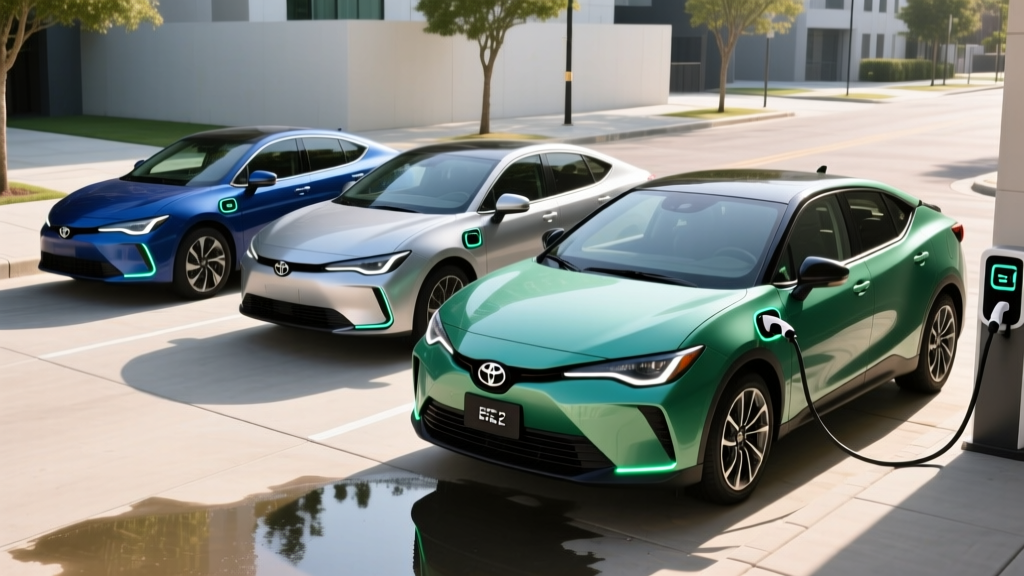
If you're shopping for a more efficient vehicle but aren't ready to commit to a full battery-electric car, you've likely landed on the same question thousands of buyers search every month: do you need to charge a hybrid car? The answer depends entirely on which type of hybrid you choose — and the distinction matters more than most dealership brochures let on.
There are two fundamentally different architectures on the market in 2026: the conventional hybrid (HEV), which never needs to be plugged in, and the plug-in hybrid (PHEV), which can operate as a short-range EV before its gasoline engine kicks in. Understanding which one fits your driving habits, home-charging situation, and budget is the difference between saving thousands at the pump and paying a premium for battery capacity you never use.
HEV vs PHEV: The Charging Question, Settled
Before comparing specific models, let's establish the mechanical difference that determines whether you'll ever touch a charging cable.
| Feature | Conventional Hybrid (HEV) | Plug-in Hybrid (PHEV) |
|---|---|---|
| Needs to be plugged in? | No — never | Optional, but recommended |
| Battery size | 0.6–1.6 kWh (small) | 13–26 kWh (large) |
| Electric-only driving | None (EV assist only, <1 mi at low speed) | 25–50 miles typical |
| Charging hardware | None | J1772 / NACS port, Level 1 or Level 2 |
| DC fast charging | N/A | Rare — most PHEVs are Level 2 only |
| Runs without charging? | Yes — always | Yes — operates as a conventional hybrid |
| Federal tax credit (§30D) | Not eligible | Up to $7,500 (varies by model/sourcing) |
| Typical price premium over gas model | $1,500–$3,000 | $5,000–$12,000 |
A conventional hybrid's battery is tiny — usually under 1.5 kWh — and serves as a buffer. The gasoline engine and regenerative braking keep it charged. You drive it exactly like a gas car: fill up at the station, turn the key (or press the button), and go. The hybrid system simply makes the engine work less, burning less fuel in the process.
A PHEV carries a much larger battery pack — typically 13 to 26 kWh — paired with a more powerful electric motor. Plug it into a standard 120V wall outlet (Level 1) and you'll add roughly 4–5 miles of range per hour. Use a 240V Level 2 home charger and most PHEVs fully recharge in 2–4 hours. If you never plug it in, the PHEV still works — it just operates as a heavier, slightly less efficient conventional hybrid, and you've paid thousands extra for battery capacity sitting idle.
Top Hybrid MPG Ratings: 2026 EPA Data
Whether you choose an HEV or PHEV, fuel economy is the primary purchase driver. Below are the EPA-rated figures for some of the highest-volume hybrid models sold in the U.S. for the 2026 model year.
| Model | Type | City MPG | Highway MPG | Combined MPG | Combined MPGe (PHEV) |
|---|---|---|---|---|---|
| Toyota Prius (LE) | HEV | 57 | 56 | 57 | — |
| Toyota Prius Prime | PHEV | 52 (hybrid mode) | 48 (hybrid mode) | 50 (hybrid mode) | 127 MPGe |
| Honda CR-V Hybrid | HEV | 43 | 36 | 40 | — |
| Toyota RAV4 Prime | PHEV | 40 (hybrid mode) | 36 (hybrid mode) | 38 (hybrid mode) | 94 MPGe |
| Ford Maverick Hybrid | HEV | 42 | 33 | 37 | — |
| Hyundai Tucson PHEV | PHEV | 35 (hybrid mode) | 33 (hybrid mode) | 34 (hybrid mode) | 80 MPGe |
| Jeep Wrangler 4xe | PHEV | 20 (hybrid mode) | 20 (hybrid mode) | 20 (hybrid mode) | 49 MPGe |
Source: fueleconomy.gov (EPA). MPGe reflects electric+gas operation when the PHEV battery is charged. Hybrid-mode MPG applies when the battery is depleted.
PHEV Electric-Only Range and Charging Times
If you're considering a PHEV, the electric-only range is arguably the most important spec — it determines how much of your daily driving can happen without burning a drop of gasoline.
| Model | Battery (kWh usable) | EV Range (EPA miles) | Level 1 Charge (120V) | Level 2 Charge (240V) | DC Fast Charge |
|---|---|---|---|---|---|
| Toyota Prius Prime | 10.9 kWh | 44 mi | ~11 hours (0–100%) | ~4 hours | No |
| Toyota RAV4 Prime | 14.9 kWh | 42 mi | ~12 hours | ~2.5 hours | No |
| Hyundai Tucson PHEV | 11.2 kWh | 33 mi | ~10 hours | ~3.5 hours | No |
| Jeep Wrangler 4xe | 15.0 kWh | 22 mi | ~13 hours | ~3 hours | No |
| Ford Escape PHEV | 11.2 kWh | 37 mi | ~10 hours | ~3.5 hours | No |
| BMW X5 xDrive50e | 22.0 kWh | 38 mi | ~16 hours | ~4.5 hours | No |
A few patterns emerge from this data. First, no mainstream 2026 PHEV supports DC fast charging. This is a deliberate engineering trade-off: adding DC fast-charge hardware increases cost, weight, and complexity for a battery that holds less energy than a single session at a Tesla Supercharger would deliver to a full EV. Level 2 charging at home is the intended use case — plug in overnight, wake up to a full battery.
Second, the usable battery capacity in most PHEVs sits between 11 and 15 kWh. That's roughly one-sixth the size of a typical long-range EV battery. It's enough for a 25–44 mile commute but requires daily charging discipline to maximize value.
Total combined range (electric + gasoline tank) for most PHEVs exceeds 450 miles, eliminating range anxiety entirely. The Toyota RAV4 Prime, for example, delivers 42 miles electric + approximately 480 miles of total range with a full tank.
Powertrain Specs: What's Under the Hood
Hybrid and PHEV powertrains pair a gasoline engine with one or more electric motors. The combined output often exceeds what the gas engine alone produces, giving hybrids surprisingly strong acceleration alongside their efficiency.
| Model | Engine | Combined HP | 0–60 mph | Drivetrain |
|---|---|---|---|---|
| Toyota Prius (LE) | 2.0L 4-cyl + 2 motors | 194 hp | 7.2 sec | FWD |
| Toyota Prius Prime | 2.0L 4-cyl + 2 motors | 220 hp | 6.6 sec | FWD |
| Honda CR-V Hybrid | 2.0L 4-cyl + 2 motors | 204 hp | 7.6 sec | AWD |
| Toyota RAV4 Prime | 2.5L 4-cyl + 3 motors | 302 hp | 5.7 sec | AWD |
| Ford Maverick Hybrid | 2.5L 4-cyl + 1 motor | 191 hp | 7.8 sec | FWD |
| Jeep Wrangler 4xe | 2.0L turbo 4-cyl + 2 motors | 375 hp / 470 lb-ft | 6.0 sec | 4WD |
The RAV4 Prime and Wrangler 4xe deserve special mention: their PHEV powertrains produce 302 and 375 horsepower respectively, making them the quickest variants in their model lineups. This is a common PHEV advantage — the electric motor provides instant torque that supplements (and in some cases replaces) the turbo lag of the gas engine.
Pricing, Tax Credits, and Total Cost of Ownership
Hybrids carry a modest price premium over their gas-only counterparts. PHEVs carry a larger one — but may qualify for federal tax credits that close the gap significantly.
Conventional Hybrids (HEV): No Federal Tax Credit
Under current IRS §30D rules, conventional hybrids do not qualify for the federal clean vehicle credit. The credit is reserved for plug-in vehicles (PHEVs and BEVs) with battery capacities of at least 7 kWh. A typical HEV battery at 1.0 kWh falls far short.
The payoff for an HEV comes purely from fuel savings. At $3.40/gallon and 15,000 miles/year, a 57 MPG Prius saves roughly $1,100 annually compared to a 30 MPG gas compact — paying off the ~$2,000 hybrid premium in under two years.
Plug-in Hybrids (PHEV): Up to $7,500 Federal Credit
Qualifying PHEVs may be eligible for up to $7,500 under §30D, but the rules are stringent and model-specific. The credit is split into two halves:
- $3,750 — Battery components: Must be manufactured or assembled in North America (percentage thresholds increase yearly).
- $3,750 — Critical minerals: Must be sourced from the U.S. or a free-trade-agreement partner (percentage thresholds increase yearly).
Additional eligibility requirements:
- MSRP caps: Vans/SUVs/pickups ≤ $80,000; sedans/other ≤ $55,000
- Buyer income caps: AGI ≤ $300,000 (joint), $225,000 (head of household), $150,000 (single)
- Final assembly: Must occur in North America
- Point-of-sale transfer: Eligible buyers can transfer the credit to the dealer at purchase for an immediate price reduction
As of 2026, PHEVs that have qualified for at least partial credit include the Toyota RAV4 Prime, Jeep Wrangler 4xe, and Chrysler Pacifica PHEV — but battery-sourcing requirements tighten each year, and eligibility can change mid-year. Always verify current status on fueleconomy.gov's tax credit tracker before purchasing.
Battery Longevity, Warranty, and Replacement Cost
Hybrid battery replacement cost is consistently the top concern among buyers. The good news: two decades of real-world data show that hybrid batteries are remarkably durable, and federal law mandates substantial warranty coverage.
| Model | Battery Warranty | Estimated Replacement Cost (out of warranty) | Chemistry |
|---|---|---|---|
| Toyota Prius (HEV) | 10 yr / 150,000 mi | $2,500–$3,500 | NiMH (LE) / Li-ion (XLE+) |
| Toyota Prius Prime (PHEV) | 10 yr / 150,000 mi | $5,000–$7,000 | Lithium-ion |
| Honda CR-V Hybrid | 8 yr / 100,000 mi (10/150k CARB) | $3,000–$4,500 | Lithium-ion |
| Toyota RAV4 Prime (PHEV) | 10 yr / 150,000 mi | $7,000–$9,500 | Lithium-ion |
| Ford Maverick Hybrid | 8 yr / 100,000 mi | $3,000–$4,500 | Lithium-ion |
| Jeep Wrangler 4xe (PHEV) | 8 yr / 100,000 mi | $8,000–$12,000 | Lithium-ion (NMC) |
In practice, hybrid battery failures before 150,000 miles are uncommon. Toyota's NiMH packs in earlier Prius generations have documented lifespans exceeding 200,000 miles. Modern lithium-ion hybrid batteries benefit from conservative state-of-charge windows — the vehicle's battery management system never allows a full 0% or 100% charge, which dramatically slows degradation.
PHEV batteries face slightly more stress due to larger daily charge-discharge cycles, but their larger capacity means each cycle is shallower as a percentage of total capacity. Real-world data from fleet operators and sources like Consumer Reports show PHEV battery degradation of 8–12% over the first 100,000 miles — reducing a 42-mile EV range to roughly 37 miles, not a catastrophic loss.
If you do face an out-of-warranty replacement, note that refurbished and aftermarket hybrid batteries are increasingly available for 40–60% less than OEM dealer pricing. Independent hybrid shops in major metro areas now offer replacement services at lower labor rates.
Hybrid vs PHEV vs EV: Which Should You Choose?
The right electrified vehicle depends on three variables: your daily mileage, your home-charging access, and your willingness to adapt fueling habits.
| Choose This If… | HEV | PHEV | Full EV (BEV) |
|---|---|---|---|
| You can't charge at home | ✅ Best choice | ❌ Wastes battery investment | ❌ Public charging only is costly & slow |
| Your commute is under 40 miles round-trip | ✅ Good | ✅ Ideal — most driving on electricity | ✅ Excellent |
| You take frequent 300+ mile road trips | ✅ Seamless | ✅ Seamless (gas backup) | ⚠️ Requires DC fast-charging planning |
| You want the lowest possible fuel cost | ⚠️ Still burning gas | ✅ Near-zero fuel if you charge daily | ✅ Lowest per-mile energy cost |
| You want zero maintenance mindset | ✅ Just add gas | ⚠️ Gas + plug-in routine | ⚠️ Must plan charging |
| You want the lowest purchase price | ✅ Smallest premium | ⚠️ Higher upfront, credit may offset | ❌ Highest upfront |
| You want maximum tax incentives | ❌ None | ✅ Up to $7,500 | ✅ Up to $7,500 |
- Choose an HEV if you lack home charging, want a no-behavior-change upgrade from a gas car, and value simplicity.
- Choose a PHEV if you can charge at home (even a 120V outlet), your daily driving is under 40 miles, and you still want the freedom to road-trip without route planning.
- Choose a BEV if you have reliable home Level 2 charging, want the lowest per-mile cost, and your road trips are infrequent or along well-served DC fast-charging corridors.
Pros and Cons at a Glance
Hybrid (HEV) Pros
- No plug-in required — zero behavior change
- 50+ MPG combined in top models
- Lowest upfront premium ($1,500–$3,000)
- Proven long-term reliability (20+ year track record)
- Excellent city MPG (often beats EPA sticker)
- No charging infrastructure needed
Hybrid (HEV) Cons
- Still 100% dependent on gasoline
- No federal tax credit
- No electric-only driving mode
- Higher long-term fuel cost vs. PHEV/BEV
- Limited performance upside (194 hp typical)
Plug-in Hybrid (PHEV) Pros
- 25–50 miles electric-only for daily commuting
- Up to $7,500 federal tax credit (model-dependent)
- Gas engine eliminates range anxiety on trips
- Strong performance (300+ hp in several models)
- Works as a regular hybrid if you forget to charge
Plug-in Hybrid (PHEV) Cons
- $5,000–$12,000 price premium over gas equivalent
- Wasted investment if you never plug in
- No DC fast charging — overnight Level 2 required
- Heavier than HEV — lower MPG in hybrid mode
- Tax credit eligibility uncertain, changes yearly
- More complex powertrain (two full systems)
Frequently Asked Questions
Do you need to charge a hybrid car?
Not a conventional hybrid (HEV). Vehicles like the Toyota Prius, Honda CR-V Hybrid, and Ford Maverick Hybrid charge their own small batteries through regenerative braking and the gasoline engine. You never plug them in. Plug-in hybrids (PHEVs) can be charged by plugging in, which unlocks their electric-only range — but they'll still operate on gasoline alone if you skip charging.
How many MPG does a hybrid get in the real world?
The EPA rates the 2026 Toyota Prius LE at 57 MPG combined. In real-world mixed city/highway driving, expect 54–62 MPG depending on conditions — city-heavy routes favor hybrids and often exceed the sticker, while sustained 80 MPH highway driving may drop to 48–52 MPG. Cold weather reduces MPG by roughly 5–10% due to reduced engine efficiency and increased cabin heating demand.
How far can a PHEV go on electric only?
Current PHEVs range from 22 miles (Jeep Wrangler 4xe) to 44 miles (Toyota Prius Prime) on EPA-rated electric-only range. Real-world results depend heavily on speed and temperature: highway driving at 70+ mph can reduce EV range by 20–30%, and cold weather below 40°F can cut it by 25–35% due to cabin heating demands and reduced battery efficiency.
Is a hybrid reliable, and what does battery replacement cost?
Hybrids from Toyota and Honda have among the best long-term reliability records in the industry, with hybrid battery packs routinely lasting 150,000–200,000+ miles. Federal law mandates an 8-year/100,000-mile battery warranty (10 years/150,000 miles in CARB states). Out-of-warranty replacement costs range from $2,500 for a Prius HEV to $12,000 for a Wrangler 4xe PHEV. Refurbished batteries are available for 40–60% less.
Does a hybrid qualify for any tax credit?
Conventional hybrids (HEVs) do not qualify for the federal §30D clean vehicle credit. Only plug-in vehicles — PHEVs and BEVs — are eligible. Qualifying PHEVs may receive up to $7,500, subject to MSRP caps ($55,000 for cars, $80,000 for SUVs/trucks), buyer income limits ($150,000–$300,000 depending on filing status), and battery component/mineral sourcing requirements. Verify eligibility on IRS.gov before purchasing.
Can I install a Level 2 charger for my PHEV at home?
Yes. Most PHEVs charge fully on a standard 120V outlet overnight (Level 1, ~4–5 miles per hour of charging). For faster charging, a 240V Level 2 home station (3.3–7.2 kW) will fully recharge most PHEVs in 2–4 hours. Installation typically costs $500–$2,000 depending on panel capacity and wiring distance. Since PHEV batteries are small, even a basic 16-amp Level 2 unit (3.8 kW) is sufficient — no need for the 48-amp units that full EVs benefit from.
For the latest EPA ratings and tax credit eligibility, consult fueleconomy.gov and irs.gov. Specifications reflect 2026 model year data available at time of publication and are subject to change.