Why Toyota's Hybrid Lineup Still Dominates in 2026
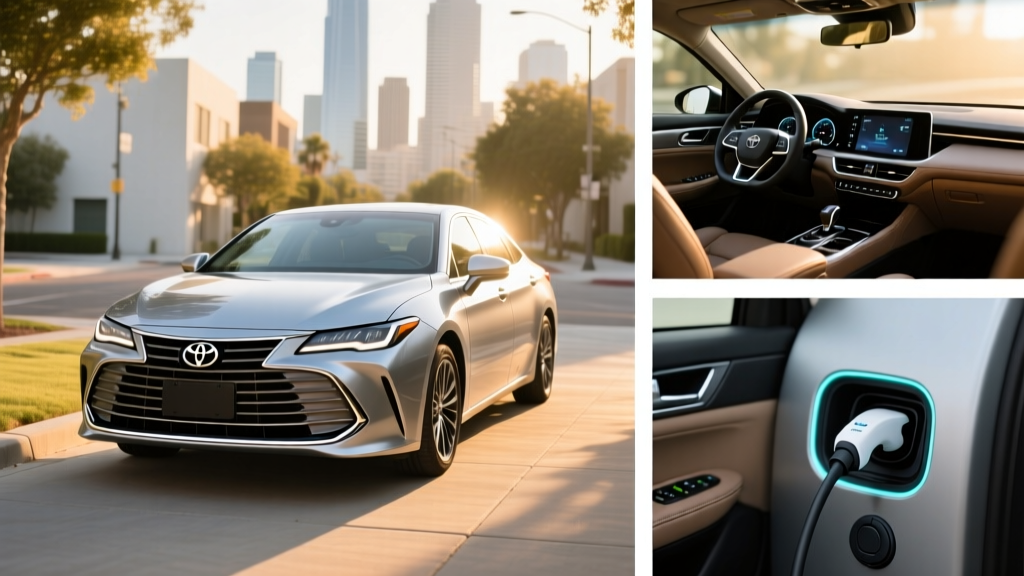
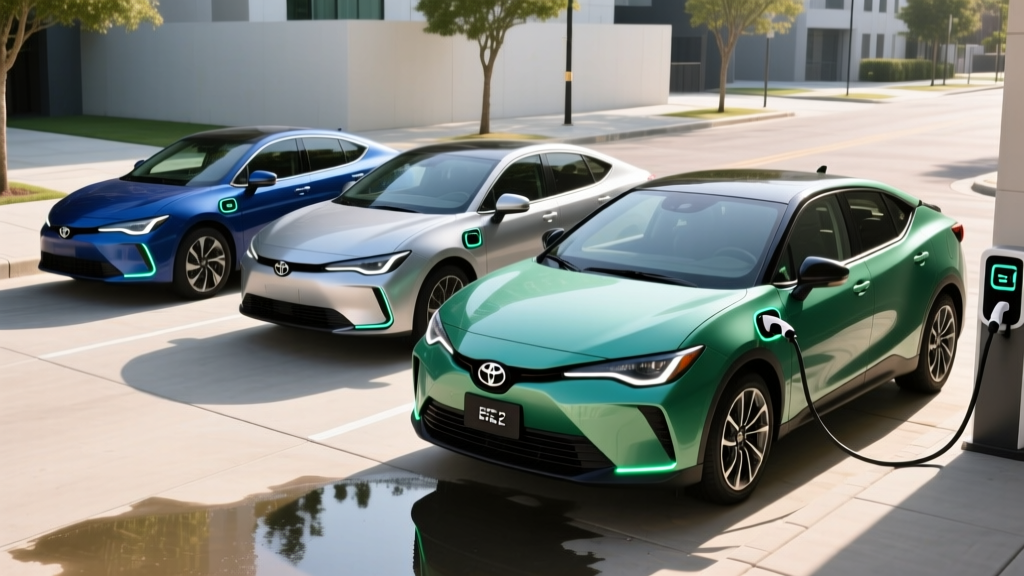
Toyota has built more hybrid vehicles than any other automaker — over 25 million globally since the original Prius debuted. For 2026, the Toyota hybrid lineup spans sedans, SUVs, and minivans across two distinct powertrain types: conventional hybrids (HEVs) that never need plugging in, and plug-in hybrids (PHEVs) that deliver meaningful electric-only range before the gas engine engages. If you've been searching for cars hybrid toyota options, this guide breaks down every current model with the exact EPA figures, pricing, and ownership data you need to decide.
Toyota's fifth-generation hybrid system powers most 2026 models with improved efficiency and smoother electric-motor integration. The result? The Corolla Hybrid achieves up to 53 MPG combined, while the RAV4 Prime PHEV delivers 42 miles of electric-only driving. Let's map the full lineup.
HEV vs. PHEV: Understanding Toyota's Two Hybrid Types
Before comparing models, it's critical to understand the difference between Toyota's conventional hybrids and plug-in hybrids. They serve different use cases and have different charging requirements.
HEV vs. PHEV at a Glance
| Feature | Conventional Hybrid (HEV) | Plug-In Hybrid (PHEV) |
|---|---|---|
| Plugs in? | No — charges via regenerative braking and engine | Yes — plugs into Level 1 or Level 2 charger |
| Electric-only range | ~1 mile at low speed | 25–42 miles (model dependent) |
| Battery size | 0.9–1.6 kWh | 13.6–18.1 kWh |
| DC fast charging? | N/A | No (Level 2 AC only) |
| Federal tax credit | Not eligible | Up to $7,500 (if eligible under §30D) |
| Best for | Drivers without home charging access | Drivers with home charging and short commutes |
The key distinction: a conventional Toyota HEV like the Camry Hybrid generates all its own electricity. You fuel it with gas and drive — the hybrid system simply makes the gas engine far more efficient. A Toyota PHEV like the RAV4 Prime has a larger battery you charge from the grid, enabling genuine electric-only commutes before operating as a standard hybrid.
2026 Toyota Hybrid Cars: Full Lineup with EPA MPG
Here's every Toyota hybrid car and crossover available for the 2026 model year, with EPA data sourced from fueleconomy.gov.
| Model | Type | City MPG | Hwy MPG | Combined | HP | Base MSRP |
|---|---|---|---|---|---|---|
| Corolla Hybrid LE (AWD) | HEV | 53 | 46 | 50 | 138 | $24,950 |
| Prius LE | HEV | 57 | 56 | 57 | 196 | $29,445 |
| Prius Prime SE (PHEV) | PHEV | 127 MPGe | — | 52 (gas only) | 220 | $34,445 |
| Camry Hybrid LE | HEV | 53 | 50 | 52 | 225 | $30,195 |
| Crown (Hybrid MAX) | HEV | 41 | 38 | 40 | 340 | $42,345 |
| RAV4 Hybrid XLE | HEV | 41 | 38 | 40 | 219 | $33,895 |
| RAV4 Prime (PHEV) | PHEV | 94 MPGe | — | 38 (gas only) | 302 | $44,665 |
| Highlander Hybrid LE | HEV | 36 | 35 | 36 | 243 | $42,290 |
| Sienna (HEV standard) | HEV | 36 | 36 | 36 | 245 | $38,885 |
Note: MPGe (miles per gallon equivalent) measures electric-mode efficiency for PHEVs. Once the battery depletes, the combined gas-only MPG applies. Source: EPA fueleconomy.gov.
Prius Prime and RAV4 Prime: Electric-Only Range and Charging
Toyota's two PHEV models — the Prius Prime and RAV4 Prime — are where plug-in capability matters most. Here's how they perform as electric vehicles before the gas engine takes over.
PHEV Electric-Only Range (EPA)
| Model | Battery (kWh) | EV Range (mi) | Total Range (mi) | Level 2 Charge Time | DC Fast Charge |
|---|---|---|---|---|---|
| Prius Prime SE | 13.6 kWh (NMC) | 44 | ~510 | ~4 hours (240V) | Not available |
| Prius Prime XSE | 13.6 kWh (NMC) | 40 | ~490 | ~4 hours (240V) | Not available |
| RAV4 Prime SE | 18.1 kWh (NMC) | 42 | ~600 | ~2.5 hours (240V/32A) | Not available |
Real-world electric range caveat: Expect 10–20% less electric-only range in cold weather (below 40°F) and at sustained highway speeds above 65 mph. The Prius Prime's 44-mile EPA rating typically yields 35–38 miles on the highway in winter conditions. For city commuting in moderate temperatures, most owners report matching or slightly exceeding the EPA figure thanks to regenerative braking at low speeds.
Neither Toyota PHEV supports DC fast charging. The onboard charger maxes out at 3.3 kW (Prius Prime) or 6.6 kW (RAV4 Prime) on Level 2 AC power. This is standard for PHEVs — the batteries are small enough that overnight Level 2 charging at home is the intended use case. A standard 120V Level 1 outlet will fully charge the Prius Prime in roughly 10 hours, which works fine for overnight top-ups.
Real-World MPG: What Toyota Hybrid Owners Actually Report
Toyota's conventional hybrids have a well-documented real-world advantage: they often exceed their EPA city ratings in stop-and-go driving because regenerative braking recaptures energy that gas cars waste as heat. Highway driving is where hybrids lose their edge — the electric motor provides less benefit at sustained speed.
Based on owner-reported data aggregated by fueleconomy.gov's My MPG feature, here's how Toyota hybrids perform outside the lab:
| Model | EPA Combined | Real-World Avg (Owner) | City Driving | Highway Driving |
|---|---|---|---|---|
| Corolla Hybrid | 50 MPG | 48–54 MPG | 52–58 MPG | 42–47 MPG |
| Prius LE | 57 MPG | 53–60 MPG | 58–64 MPG | 48–54 MPG |
| Camry Hybrid | 52 MPG | 48–55 MPG | 52–58 MPG | 44–49 MPG |
| RAV4 Hybrid | 40 MPG | 37–42 MPG | 40–45 MPG | 34–38 MPG |
The pattern is consistent: city driving pushes real-world MPG above the EPA combined figure, while highway-heavy commutes pull it below. If your daily driving is 80% urban, a Toyota hybrid will likely outperform its sticker rating.
Toyota Hybrid Battery Warranty, Lifespan, and Replacement Cost
Battery Warranty Coverage
All 2026 Toyota hybrids and PHEVs carry a hybrid battery warranty of 10 years or 150,000 miles (whichever comes first) in all 50 states. This applies to both the conventional HEV traction battery and the larger PHEV battery pack. Toyota's hybrid system components (inverter, control module, electric motors) are covered under the same 10-year/150,000-mile warranty.
This is one of the strongest hybrid battery warranties in the industry, and it reflects Toyota's two decades of hybrid system refinement.
How long do Toyota hybrid batteries actually last? Toyota's nickel-metal hydride (NiMH) and lithium-ion (NMC chemistry) hybrid batteries have demonstrated excellent longevity in fleet data. The conventional HEV batteries — which operate in a narrow state-of-charge window (roughly 40–80%) to minimize stress — routinely last 150,000–200,000+ miles before meaningful degradation. Many first-generation Prius taxis exceeded 300,000 miles on the original battery.
The PHEV batteries in the Prius Prime and RAV4 Prime undergo deeper charge cycles but are still engineered for a 15-year service life under normal use. Toyota's battery management system actively manages temperature and charge limits to prevent accelerated degradation.
Replacement cost if out of warranty:
- Conventional HEV battery (Corolla, Camry, Prius, RAV4 Hybrid): $2,000–$4,000 for a new OEM replacement. Refurbished units from authorized recyclers run $1,000–$2,000.
- PHEV battery (Prius Prime, RAV4 Prime): $5,000–$8,000 for a new OEM pack, given the larger capacity (13.6–18.1 kWh).
These are worst-case scenarios. The vast majority of Toyota hybrid owners will never replace a hybrid battery during their ownership period.
Tax Credits and Incentives for Toyota Hybrids in 2026
This is where the HEV vs. PHEV distinction has direct financial consequences.
Conventional Toyota Hybrids (HEV): The Corolla Hybrid, Prius, Camry Hybrid, RAV4 Hybrid, Highlander Hybrid, Sienna, and Crown do not qualify for the federal §30D Clean Vehicle Credit. These vehicles cannot be plugged in, so they fall outside the IRS definition of a qualified plug-in electric vehicle. Some states and utilities offer modest hybrid incentives (typically $250–$1,000), but there is no federal purchase credit.
Toyota Plug-In Hybrids (PHEV): The Prius Prime and RAV4 Prime may qualify for up to $7,500 under the federal §30D Clean Vehicle Credit, but eligibility depends on several conditions that change based on battery sourcing rules. As of 2026, the key requirements include:
- Buyer income caps: Modified AGI must not exceed $150,000 (single), $225,000 (head of household), or $300,000 (joint filing)
- MSRP caps: The vehicle MSRP must not exceed $55,000 for sedans (Prius Prime) or $80,000 for SUVs/vans (RAV4 Prime)
- Battery component and critical mineral sourcing: Phase-in requirements for North American assembly and sourcing may reduce the credit to $3,750 or eliminate it depending on the model year's supply chain compliance
- Point-of-sale transfer: Eligible buyers can apply the credit as a down payment reduction at the dealer rather than waiting for a tax refund
Always verify current eligibility on IRS.gov's clean vehicle credit page before purchasing, as battery sourcing rules have shifted annually since the Inflation Reduction Act took effect.
Toyota Hybrid vs. PHEV vs. Full EV: Which Is Right for You?
Decision Framework
Choose a Toyota HEV (Corolla Hybrid, Camry Hybrid, RAV4 Hybrid) if:
- You cannot install a home charger (apartment, street parking, no garage)
- You want maximum MPG with zero behavior change — just fill up with gas
- Your budget is under $35,000 and you don't qualify for PHEV tax credits
- You drive a mix of city and highway and want proven reliability
Choose a Toyota PHEV (Prius Prime, RAV4 Prime) if:
- You have home charging access (Level 2 preferred, Level 1 workable)
- Your daily commute is under 40 miles round-trip (you'll rarely use gas)
- You want to drive electric most days but need gas flexibility for road trips
- You may qualify for the $3,750–$7,500 federal tax credit
Choose a full BEV (like the Toyota bZ4X or a competitor) if:
- You have reliable home and/or workplace charging
- You want zero tailpipe emissions and minimal maintenance (no oil changes, fewer moving parts)
- Your daily driving is under 250 miles and you're comfortable planning DC fast-charge stops on road trips
- You want to maximize the federal tax credit and reduce per-mile fuel cost to $0.03–$0.05/mi
The RAV4 Prime occupies a sweet spot many buyers overlook: 42 miles of electric range covers most daily driving, 302 combined horsepower makes it the quickest RAV4 Toyota sells, and the 600-mile total range eliminates range anxiety entirely. If you can charge at home and qualify for the credit, the effective price gap between the RAV4 Hybrid and RAV4 Prime narrows significantly.
Pros and Cons of Toyota's 2026 Hybrid Lineup
Pros
- Class-leading fuel economy across every segment (57 MPG Prius, 52 MPG Camry)
- 10-year/150,000-mile hybrid battery warranty — best in the industry
- No charging infrastructure needed for HEV models
- Proven long-term reliability with 25+ years of hybrid production
- RAV4 Prime's 302 HP makes it genuinely quick (0-60 in 5.7 seconds)
- PHEV models eligible for up to $7,500 federal credit (if sourcing rules met)
- Strong resale value — Toyota hybrids depreciate slower than gas counterparts
Cons
- No DC fast charging on PHEV models — Level 2 only
- PHEV battery reduces cargo space slightly vs. HEV counterparts
- RAV4 Prime demand often exceeds supply, leading to dealer markups
- HEV models not eligible for any federal purchase credit
- Crown Hybrid MAX prioritizes power (340 HP) over efficiency (40 MPG)
- Infotainment in lower trims still uses smaller screens than competitors
- AWD hybrid system adds weight, slightly reducing highway MPG vs. FWD
Frequently Asked Questions
How many MPG does the best Toyota hybrid get?
The 2026 Toyota Prius LE achieves the highest EPA rating in the lineup at 57 MPG combined (57 city / 56 highway). The Corolla Hybrid LE AWD follows at 50 MPG combined, and the Camry Hybrid LE delivers 52 MPG combined. In real-world city driving, owners frequently report exceeding these EPA figures by 3–5 MPG thanks to regenerative braking efficiency in stop-and-go traffic.
How far can the Toyota RAV4 Prime go on electric only?
The EPA rates the RAV4 Prime at 42 miles of electric-only range. In real-world conditions, expect 35–42 miles depending on temperature, speed, and terrain. Cold weather (below freezing) and highway speeds above 70 mph reduce the range to roughly 30–35 miles. For most daily commutes under 40 miles round-trip, RAV4 Prime owners report using gasoline only on weekend road trips.
Do Toyota conventional hybrids need to be plugged in?
No. Toyota's conventional hybrids (HEVs) — including the Corolla Hybrid, Camry Hybrid, standard Prius, RAV4 Hybrid, Highlander Hybrid, Sienna, and Crown — never require plugging in. The hybrid battery charges through regenerative braking and the gasoline engine. You fuel them exactly like a conventional gas car. Only the Prius Prime and RAV4 Prime (PHEVs) benefit from plug-in charging.
Is a Toyota hybrid battery expensive to replace?
Out-of-warranty replacement for a Toyota HEV traction battery costs $2,000–$4,000 for a new OEM unit, or $1,000–$2,000 for a certified refurbished battery. PHEV batteries (Prius Prime, RAV4 Prime) cost $5,000–$8,000 due to their larger capacity. However, Toyota's 10-year/150,000-mile hybrid battery warranty covers most owners, and real-world data shows these batteries routinely lasting 150,000–200,000+ miles. Battery replacement is far less common than buyers fear.
Does any Toyota hybrid qualify for the $7,500 federal tax credit?
Only Toyota's plug-in hybrids — the Prius Prime and RAV4 Prime — are potentially eligible for the federal §30D Clean Vehicle Credit (up to $7,500). Conventional Toyota hybrids do not qualify because they cannot be plugged in. Even for PHEVs, eligibility depends on buyer income limits (up to $300,000 joint AGI), vehicle MSRP caps, and battery component/critical mineral sourcing requirements that shift annually. Check current rules at IRS.gov before purchasing.
Toyota hybrid vs. full EV — which saves more money?
It depends on your charging access and driving patterns. A Toyota HEV like the Corolla Hybrid at 50 MPG costs roughly $0.08–$0.10 per mile in fuel (at $3.50/gallon). A full EV charged at home at $0.13/kWh costs $0.03–$0.05 per mile. Over 5 years and 75,000 miles, the EV saves $2,000–$4,500 in fuel. However, if you lack home charging and must rely on public DC fast chargers at $0.35–$0.48/kWh, your per-mile cost rises to $0.10–$0.14 — eliminating the fuel savings advantage. For buyers without reliable home charging, the Toyota HEV remains the most cost-efficient electrified option.