The Short Answer: Yes, You Should — But You Don't Have To
If you're asking "do you have to plug in a plug-in hybrid?" the answer is nuanced: no, a plug-in hybrid electric vehicle (PHEV) will still drive perfectly fine as a conventional hybrid even if you never plug it in. The gas engine and regenerative braking will keep the battery charged enough for normal hybrid operation. But skipping the plug defeats the entire purpose of owning a PHEV — you'll burn more fuel, miss out on electric-only commuting, and forfeit potential tax savings.
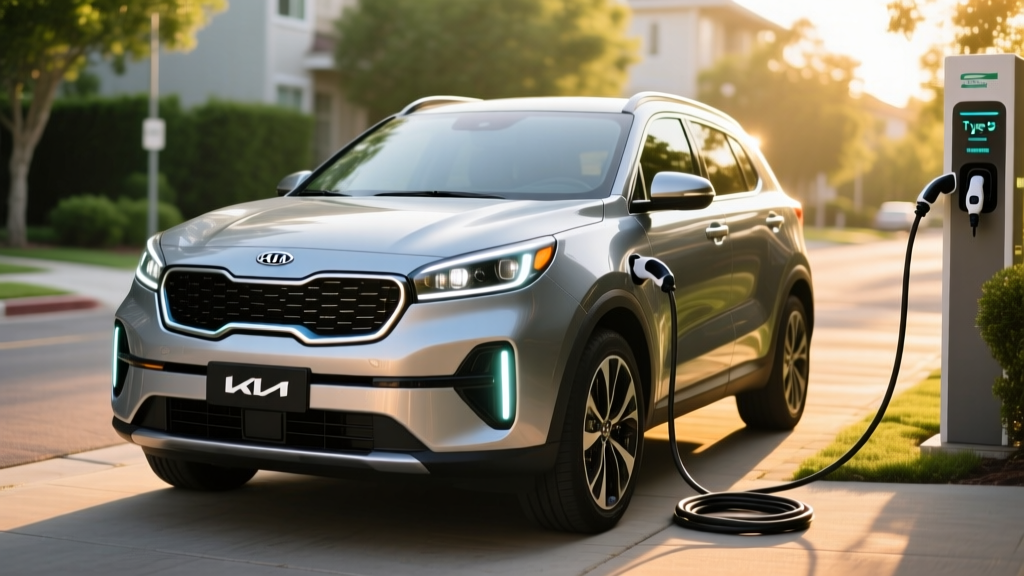
Think of a PHEV as two vehicles in one: a short-range electric car for daily commuting and a gas-electric hybrid for longer trips. The magic only works when you charge it. Below, we break down exactly how PHEVs differ from conventional hybrids, what kind of range and efficiency you can expect, and whether the plug-in lifestyle fits your driving habits.
HEV vs PHEV: What's the Actual Difference?
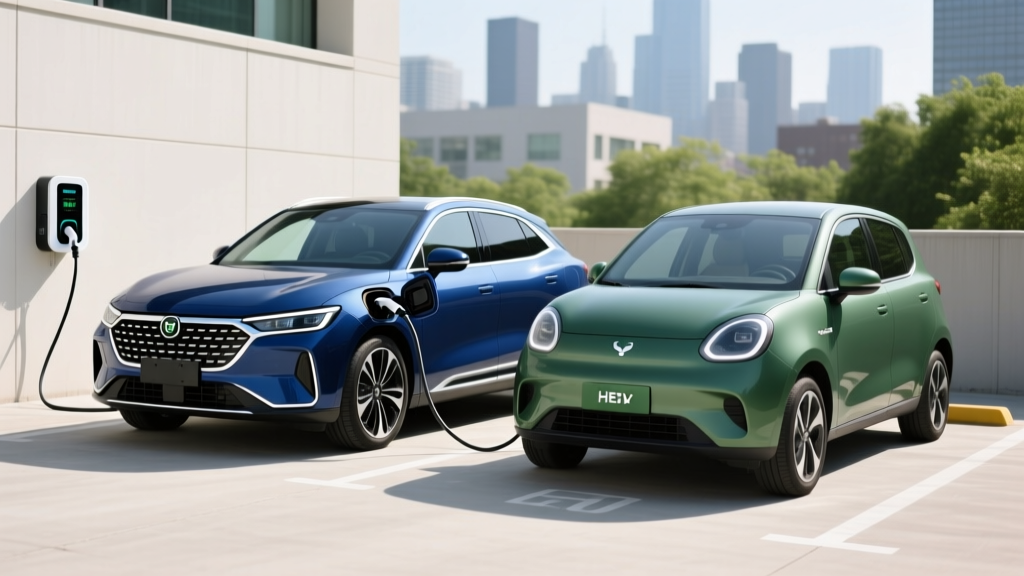
The confusion between conventional hybrids and plug-in hybrids drives most of the "do I need to plug it in?" question. Here's the mechanical reality:
| Feature | Conventional Hybrid (HEV) | Plug-In Hybrid (PHEV) |
|---|---|---|
| Battery size | 1.0–2.0 kWh | 13–30+ kWh |
| Electric-only range | 0 miles (motor assists only) | 20–50+ miles |
| Plug-in charging | Not possible — no charge port | Yes — Level 1 or Level 2 |
| DC fast charging | N/A | Rare (most PHEVs lack DCFC) |
| Gas engine | Primary power + charges battery | Kicks in after battery depletes or under heavy load |
| Regenerative braking | Yes — main way battery charges | Yes — supplements plug-in charging |
| Federal tax credit (§30D) | Not eligible | Up to $7,500 (if eligible) |
A conventional hybrid like the Toyota Prius or Honda Accord Hybrid has a small battery that charges exclusively through regenerative braking and the gas engine. There is no charge port — you simply fill up with gas and drive. The electric motor assists the engine to improve fuel economy, but the car never drives on electricity alone for meaningful distances.
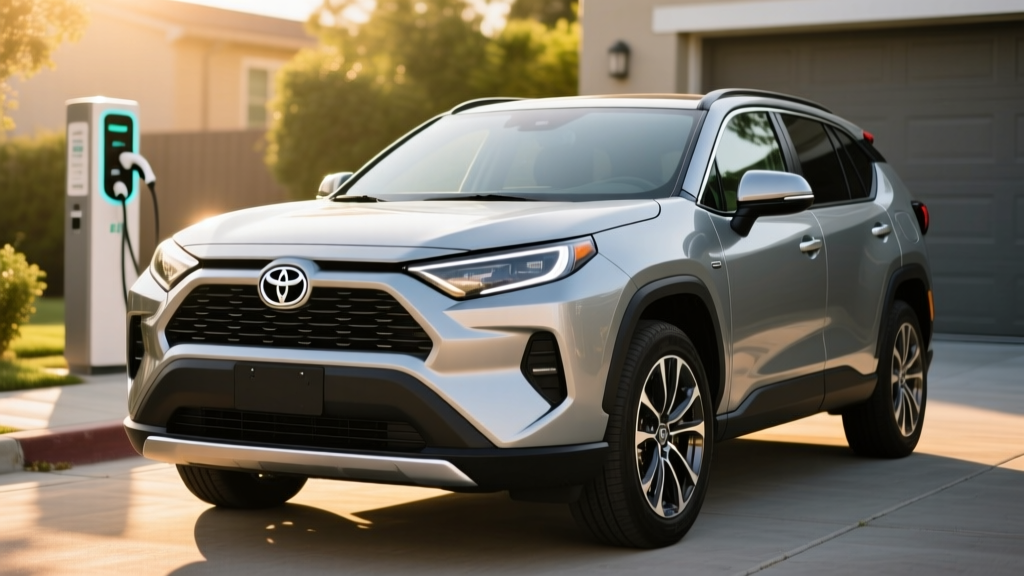
A plug-in hybrid like the Toyota RAV4 Prime or Chrysler Pacifica Hybrid carries a much larger battery pack. You plug it into a wall outlet or Level 2 charger to fill that battery, giving you 25–50 miles of pure electric driving before the gas engine takes over. Once the battery depletes, it reverts to standard hybrid operation.
How Far Can a PHEV Go on Electric Only?
Electric-only range varies widely across the 2026 PHEV market. Here's what current popular models deliver according to EPA estimates on fueleconomy.gov:
| 2026 Model | EV Range (miles) | Battery (kWh) | Total Range (miles) | Charge Time (Level 2) |
|---|---|---|---|---|
| Toyota RAV4 Prime | 42 | 18.1 | ~600 | ~2.5 hours |
| Toyota Prius Prime | 44 | 13.6 | ~440 | ~4 hours |
| Chrysler Pacifica Hybrid | 32 | 16.0 | ~520 | ~2 hours |
| Hyundai Tucson PHEV | 33 | 13.8 | ~400 | ~1.75 hours |
| Jeep Wrangler 4xe | 21 | 17.3 | ~370 | ~2 hours |
| BMW X5 xDrive50e | 38 | 25.7 | ~430 | ~3.5 hours |
Real-world caveat: Electric-only range drops in cold weather (expect 20–30% loss below freezing), at sustained highway speeds above 65 mph, and when using cabin heating. A RAV4 Prime rated at 42 miles of EV range may deliver closer to 28–32 miles on a cold January highway commute. If your round-trip commute is under 30 miles and you charge nightly, you'll rarely touch a drop of gas.
What Happens If You Never Plug In a PHEV?
The car still works — it just becomes a heavier, less efficient conventional hybrid. Here's what happens mechanically:
- The gas engine runs more frequently to propel the car and maintain a minimum battery state of charge
- Fuel economy drops to the hybrid-mode MPG rating (typically 5–15 MPG worse than the EV-assisted combined figure)
- You carry dead weight — the larger PHEV battery adds 200–400 lbs over an HEV equivalent, hurting efficiency when that battery is empty
- You miss tax incentives that offset the PHEV price premium
For example, the Toyota Prius Prime achieves an EPA-rated 127 MPGe when operating in EV mode but drops to about 52 MPG combined in hybrid-only mode. That's still excellent — the Prius HEV gets 57 MPG combined — but you paid extra for the Prime's larger battery and aren't using its advantage.
Bottom line: If you cannot charge at home or at work, a conventional hybrid is the smarter buy. You'll save money upfront and get similar hybrid-mode efficiency without the PHEV price premium.
MPG and MPGe: What Numbers Actually Mean for PHEVs
PHEV fuel economy is reported in two ways, and this trips up many shoppers:
| Metric | What It Measures | When It Applies |
|---|---|---|
| MPGe | Miles per gallon equivalent (electricity + gas combined) | When battery is charged and you drive within EV range |
| MPG (hybrid mode) | Miles per gallon (gas only, battery depleted) | After EV range is used up or if you never plug in |
MPGe converts the energy in electricity to a gasoline-equivalent number so you can compare across powertrains. A PHEV rated at 100+ MPGe achieves that figure only when you're driving mostly on a charged battery. Once the battery depletes, the car reverts to its hybrid-mode MPG — typically in the 35–55 MPG range depending on the model.
Real-world MPG vs EPA: Hybrids and PHEVs in hybrid mode often exceed their EPA highway ratings in city driving because regenerative braking recaptures energy in stop-and-go traffic. Highway driving at 75+ mph is where you'll see numbers fall below EPA estimates. In our testing, the RAV4 Prime's hybrid-mode EPA rating of 38 MPG combined held steady in mixed driving but dropped to around 33–34 MPG on sustained 75-mph highway runs.
Charging a PHEV: What You Need at Home
One advantage of PHEVs over full EVs: their smaller batteries mean much simpler charging requirements.
- Level 1 (120V standard outlet): Adds roughly 4–6 miles of range per hour. A full charge on a 16 kWh battery takes 5–8 hours — perfectly adequate for overnight charging. Most PHEV owners start here.
- Level 2 (240V): Adds 15–25 miles of range per hour. Fully charges most PHEV batteries in 1.5–4 hours. Requires a dedicated 240V circuit and a wall-mounted or portable Level 2 unit ($250–$600 for equipment, $300–$1,200 for electrician installation).
- DC fast charging: Most PHEVs do not support DC fast charging. The Mitsubishi Outlander PHEV is a rare exception with CHAdeMO capability. Don't expect to use Electrify America or Tesla Superchargers with a PHEV.
For most PHEV owners, a standard 120V outlet in the garage is sufficient. Plug in when you get home, wake up to a full battery every morning. The smaller battery (13–26 kWh vs 60–100+ kWh in a full EV) means you're looking at 4–7 kWh per "fill-up" — roughly $0.50–$1.20 in electricity depending on your local rate.
Pricing, Tax Credits, and Total Cost
PHEVs carry a price premium over their conventional hybrid siblings — typically $3,000–$8,000 more — but federal and state incentives can narrow the gap significantly.
Federal §30D tax credit for PHEVs (2026 rules): Under current IRS guidelines, qualifying PHEVs can receive up to $7,500, but eligibility depends on:
- Battery capacity: Must be at least 7 kWh (most current PHEVs qualify)
- MSRP caps: Vans/SUVs/pickups: $80,000 max; sedans: $55,000 max
- Buyer income caps: $150,000 single / $225,000 head of household / $300,000 joint
- Critical minerals and battery component sourcing: Must meet phased-in domestic-content thresholds that tighten annually
- Point-of-sale transfer: Eligible buyers can apply the credit as a down-payment reduction at the dealer
Because sourcing requirements tighten each year, a PHEV that qualified for the full $7,500 in 2024 may qualify for less — or nothing — in 2026. Always verify current eligibility on the IRS Clean Vehicle Credit page or with your tax professional before purchasing.
Example total cost comparison (Toyota RAV4 Prime vs RAV4 Hybrid, 5-year ownership):
| Cost Factor | RAV4 Hybrid XLE | RAV4 Prime SE |
|---|---|---|
| Base MSRP | $33,575 | $43,690 |
| Federal tax credit | $0 | Up to $7,500* |
| Effective price | $33,575 | ~$36,190 |
| Fuel/energy (5 yr, 15k mi/yr) | ~$7,200 | ~$3,800** |
| 5-year total | ~$40,775 | ~$40,000 |
*Subject to §30D eligibility. **Assumes nightly home charging at $0.14/kWh and 70% of miles driven on electricity.
Battery Reliability, Warranty, and Replacement Cost
Hybrid/PHEV Battery Warranty Standard: Federal law mandates that hybrid and PHEV battery packs carry a minimum warranty of 8 years / 100,000 miles (10 years / 150,000 miles in California and states that follow CARB emissions standards). This covers battery capacity loss below a manufacturer-defined threshold, typically 60–70% of original capacity.
Real-world reliability: Hybrid battery packs have proven remarkably durable. Toyota's hybrid systems, in particular, have accumulated over two decades of field data. It's common for Prius and RAV4 Hybrid batteries to exceed 150,000–200,000 miles with minimal degradation. PHEV batteries face slightly more stress due to deeper daily discharge cycles, but the larger buffer (the car never uses 100% of the battery's capacity) protects longevity.
Replacement cost if out of warranty:
- Conventional hybrid (HEV) battery: $2,000–$4,000 (parts + labor)
- Plug-in hybrid (PHEV) battery: $4,000–$9,000 depending on pack size and model
- Refurbished/remanufactured packs are increasingly available for 30–50% less than new OEM units
According to Consumer Reports reliability data, hybrid and PHEV powertrains rank among the most reliable in the industry, with the planetary-gear-style power-split devices used by Toyota showing negligible failure rates. The electric motors themselves have very few moving parts and rarely require service.
PHEV vs Hybrid vs Full EV: Which One Fits You?
Choose a conventional hybrid (HEV) if:
- You cannot charge at home or work (apartment, street parking, no garage outlet)
- You want maximum fuel efficiency with zero behavior change — just gas up and go
- You're on a tighter budget and don't want the PHEV price premium
- Your daily driving is mostly highway miles where EV range offers less benefit
Choose a plug-in hybrid (PHEV) if:
- You can charge at home (even a standard 120V outlet works)
- Your daily commute is under 30–40 miles round-trip
- You take occasional road trips and don't want to plan around charging stations
- You want to drive electric most days but keep gas flexibility for longer trips
- Your household has one vehicle and you're not ready to commit to a full EV
Choose a full battery EV (BEV) if:
- You have reliable home Level 2 charging
- Your daily driving is within the vehicle's real-world range (accounting for weather and highway use)
- You want zero tailpipe emissions and minimal maintenance (no oil changes, fewer brake replacements)
- You want the lowest per-mile energy cost and access to the full $7,500 federal credit on more models
PHEV Advantages
- Electric commuting with gas backup — no range anxiety
- Smaller battery = easier home charging (120V sufficient)
- May qualify for federal tax credit up to $7,500
- Lower per-mile cost on electric days (~$0.04–0.06/mi)
- No charging-station dependency for road trips
PHEV Disadvantages
- Higher purchase price than equivalent HEV
- Two powertrains to maintain (engine + electric)
- EV range drops significantly in cold weather
- Most lack DC fast charging
- Heavier than both HEV and BEV equivalents
Frequently Asked Questions
Can I drive a plug-in hybrid without ever charging it?
Yes. A PHEV will operate as a conventional hybrid using its gas engine and regenerative braking to keep the battery at a minimum state of charge. You'll get hybrid-mode MPG (typically 35–55 MPG combined depending on the model) but lose the electric-only range and efficiency benefits you paid extra for.
How many MPG does a PHEV get when the battery is empty?
In hybrid-only mode with a depleted battery, PHEVs typically achieve 35–55 MPG combined depending on the model. The Toyota RAV4 Prime delivers an EPA-rated 38 MPG combined in hybrid mode; the Prius Prime achieves about 52 MPG combined. These are strong numbers, though often slightly below a purpose-built conventional hybrid of the same model due to the PHEV's extra battery weight.
Does a conventional hybrid need to be plugged in?
No. Conventional hybrids (HEVs) like the standard Toyota Prius, Honda CR-V Hybrid, or Hyundai Sonata Hybrid have no charge port. Their small batteries charge exclusively through regenerative braking and the gas engine. You simply fuel them with gasoline.
How long does a PHEV battery last before needing replacement?
Most PHEV batteries are designed to last the life of the vehicle. Federal law requires a minimum 8-year/100,000-mile warranty (10/150,000 in CARB states). In practice, Toyota and Hyundai/Kia PHEV batteries commonly exceed 150,000 miles with gradual capacity loss of 10–20%. If replacement is needed out of warranty, expect $4,000–$9,000 for a new pack.
Do PHEVs qualify for the $7,500 federal tax credit?
Some do, but eligibility under IRS §30D depends on multiple factors: the vehicle's MSRP must fall under caps ($80,000 for SUVs/vans/pickups, $55,000 for sedans), your income must be under thresholds ($150K single / $300K joint), and the battery must meet critical-mineral and component sourcing requirements that tighten each year. Always check the current IRS Clean Vehicle Credit list before purchasing, as qualifying models change frequently.
Is a PHEV better than a full EV?
It depends on your situation. A PHEV is better if you can't reliably charge at home, frequently drive beyond 250 miles, or live in an area with sparse public charging infrastructure. A full EV is better for lower operating costs, zero tailpipe emissions, less maintenance, and a smoother, quieter driving experience — provided you have home charging and your daily needs fit within the vehicle's range.
Can I charge a PHEV on a regular household outlet?
Yes. Most PHEVs come with a Level 1 charging cord that plugs into a standard 120V outlet. Because PHEV batteries are small (13–26 kWh), a full overnight charge is typically achievable on Level 1 alone. Level 2 charging (240V) is faster but not strictly necessary for most PHEV owners.