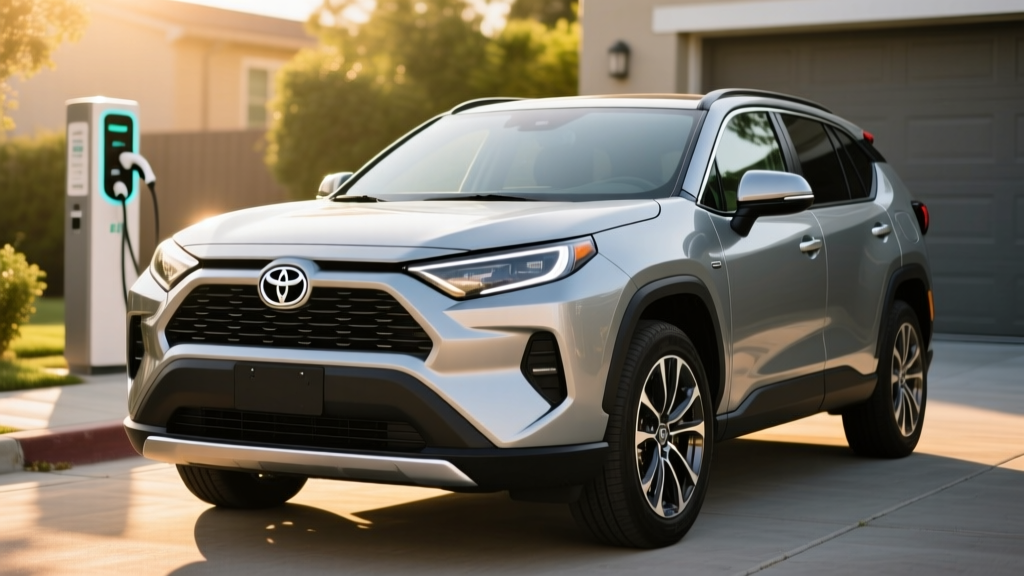
If you are searching for a 2026 RAV4 Hybrid for sale, you are looking at one of the best-selling hybrid vehicles in America — and for good reason. The RAV4 Hybrid pairs Toyota's proven series-parallel hybrid system with a practical compact SUV footprint, delivering real-world fuel economy that routinely beats its EPA estimates in city driving. For 2026, Toyota continues to refine the formula with updated tech, standard all-wheel drive across all trims, and the choice between a conventional hybrid (HEV) and a plug-in hybrid variant known as the RAV4 Prime (PHEV).
This guide covers everything a buyer needs: exact MPG figures, powertrain output, pricing by trim, battery warranty details, and a clear framework for deciding whether the HEV, the PHEV, or a full battery-electric vehicle (BEV) is the right move for your driving pattern.
2026 RAV4 Hybrid HEV vs. RAV4 Prime PHEV: What's the Difference?
Toyota sells two electrified RAV4 variants, and confusing them is the most common buyer mistake. Here is the critical distinction:
RAV4 Hybrid (HEV)
- No plug required. The battery charges itself through regenerative braking and the gas engine.
- 1.6 kWh battery (not plug-in capable).
- 219 combined horsepower from a 2.5L 4-cylinder engine plus front and rear electric motors.
- EPA 41 MPG combined (41 city / 38 highway) for most trims with AWD.
- Starting MSRP approximately $33,000.
RAV4 Prime (PHEV)
- Plugs in. Charges via a standard J1772 connector (Level 1 or Level 2).
- 18.1 kWh usable battery enabling electric-only driving.
- 302 combined horsepower — the most powerful RAV4 in the lineup.
- 42 miles EPA electric-only range, then operates as a hybrid at 38 MPG combined.
- Starting MSRP approximately $44,500.
The HEV is the volume seller and the simpler ownership proposition. The Prime is for drivers with home charging access who want to eliminate gas use on short commutes while keeping gas-engine range for road trips. We will cover both in detail below.
Fuel Economy: EPA MPG and Real-World Expectations
Fuel economy is the headline reason buyers choose the RAV4 Hybrid. According to fueleconomy.gov, the 2026 RAV4 Hybrid AWD earns the following EPA ratings:
| Drivetrain | City MPG | Highway MPG | Combined MPG |
|---|---|---|---|
| RAV4 Hybrid AWD (most trims) | 41 | 38 | 41 |
| RAV4 Hybrid Woodland Edition AWD | 38 | 35 | 37 |
| RAV4 Prime PHEV (charge-depleting) | 94 MPGe | 84 MPGe | 94 MPGe |
| RAV4 Prime PHEV (charge-sustaining / hybrid mode) | 40 | 36 | 38 |
Real-World MPG vs. the EPA Sticker
Toyota's hybrid system excels in stop-and-go traffic, where the electric motor handles low-speed propulsion and regenerative braking recaptures energy. In real-world city driving, many owners report 43–45 MPG on the HEV — exceeding the EPA city estimate. Highway driving at 75+ mph tells a different story: expect 35–37 MPG as aerodynamic drag overwhelms the hybrid system's advantages.
Cold weather reduces MPG by roughly 5–10% in winter months due to cabin heating demands and reduced battery efficiency. If you live in a northern climate, plan on 37–39 MPG combined from December through February.
Powertrain and Performance Specs
The RAV4 Hybrid is not a performance vehicle, but the instant torque from its electric motors gives it responsive acceleration around town. Here is the full powertrain breakdown:
| Specification | RAV4 Hybrid (HEV) | RAV4 Prime (PHEV) |
|---|---|---|
| Engine | 2.5L inline-4 Atkinson cycle | 2.5L inline-4 Atkinson cycle |
| Combined Horsepower | 219 hp | 302 hp |
| 0–60 mph | 7.4 seconds | 5.7 seconds |
| Drivetrain | AWD (electronic rear motor) | AWD (electronic rear motor) |
| Transmission | eCVT | eCVT |
| Towing Capacity | 1,750 lbs | 1,750 lbs |
| Battery Capacity | 1.6 kWh (NiMH) | 18.1 kWh (Li-ion) |
| EPA Combined Range | ~580 miles | ~600 miles (EV + gas) |
The Prime's 302 hp makes it genuinely quick — 5.7 seconds to 60 mph is sports-sedan territory from a decade ago, in a compact SUV. The HEV's 7.4-second run is adequate for merging and passing, if unremarkable.
RAV4 Prime PHEV: Electric-Only Range and Charging
If you are considering the RAV4 Prime, electric-only range and charging logistics are the deciding factors.
Electric-Only Range
The 2026 RAV4 Prime delivers an EPA-rated 42 miles of electric-only range on a full charge. In real-world conditions:
- Mild weather, city/suburban driving: 40–44 miles — the Prime's regen system is efficient at lower speeds.
- Highway at 70 mph: 32–36 miles — higher speeds drain the battery faster.
- Cold weather (below 32°F): 28–34 miles — cabin heating and reduced battery output cut range by 15–25%.
For commuters with a round trip under 40 miles and home charging, the Prime can operate as a de facto EV on weekdays, using zero gasoline. The gas engine remains available for weekend road trips with no range anxiety.
Charging the RAV4 Prime
The Prime uses a J1772 connector for AC charging. It does not support DC fast charging — a notable limitation compared to some competitors.
| Charging Level | Power | 0–100% Charge Time | Notes |
|---|---|---|---|
| Level 1 (120V household outlet) | 1.4 kW | ~12 hours | Trickle charge; adequate for overnight if battery is not fully depleted |
| Level 2 (240V, 16A) | 3.3 kW (standard onboard charger) | ~5.5 hours | Standard on most trims |
| Level 2 (240V, 32A) | 6.6 kW (optional onboard charger) | ~2.5 hours | Available on XSE Premium and above |
The 6.6 kW onboard charger is a worthwhile upgrade if you can install a Level 2 home charger — it cuts charge time in half and ensures a full battery every morning even if you plug in late.
Pricing, Trims, and Tax Credit Eligibility
Here is what you can expect to pay when shopping for a 2026 RAV4 Hybrid for sale. Prices are approximate MSRP and exclude destination charges:
RAV4 Hybrid (HEV) Trims
- LE: ~$33,000 — base trim with Toyota Safety Sense 3.0, 8-inch touchscreen, wireless Apple CarPlay/Android Auto
- XLE: ~$35,500 — adds blind-spot monitoring, dual-zone climate, Smart Key
- XLE Premium: ~$37,500 — SofTex seats, moonroof, power liftgate
- SE: ~$38,000 — sport-tuned suspension, 19-inch wheels
- Woodland Edition: ~$37,000 — TRD-tuned suspension, all-terrain tires, roof rails
- XSE: ~$39,500 — sport styling, 12.3-inch display
- Limited: ~$42,000 — leather, premium audio, panoramic roof
RAV4 Prime (PHEV) Trims
- SE: ~$44,500
- XSE: ~$48,000
- XSE Premium: ~$51,500 (includes 6.6 kW charger option)
Does the RAV4 Hybrid or Prime Qualify for a Federal Tax Credit?
This is where buyer confusion runs high. Under current IRS §30D rules:
- RAV4 Hybrid (HEV): Does NOT qualify for the §30D New Clean Vehicle Credit. Conventional hybrids without plug-in capability are excluded.
- RAV4 Prime (PHEV): Must meet battery capacity (≥7 kWh ✓), MSRP cap ($80,000 for SUVs ✓), buyer income limits ($150K single / $300K joint), and critical mineral/battery component sourcing requirements. The Prime's credit eligibility has fluctuated as sourcing rules tighten annually. Check the IRS qualified vehicle list at the time of purchase — eligibility can change mid-year.
- Credit amount: Up to $7,500 if both critical mineral and battery component requirements are met; $3,750 if only one is satisfied.
- Point-of-sale transfer: As of 2024, the credit can be transferred to the dealer at purchase for an immediate price reduction, rather than waiting for a tax refund.
Bottom line: the HEV gets no federal credit. The Prime may qualify for up to $7,500, but verify current sourcing compliance before signing. Some states offer additional hybrid or PHEV rebates — check your state energy office or utility for local programs.
Reliability and Battery Replacement Cost
Toyota's hybrid system is among the most proven in the industry, with over two decades of real-world data from the Prius, Camry Hybrid, and RAV4 Hybrid lineages. The IIHS typically rates the RAV4 highly for crashworthiness, and Toyota's hybrid components have a strong longevity record.
Hybrid Battery Lifespan and Replacement
The most common buyer question: "How long will the hybrid battery last, and what does it cost to replace?"
- Expected lifespan: Toyota's hybrid batteries routinely last 150,000–200,000+ miles. Many first-generation Prius batteries exceeded 200,000 miles without replacement.
- Warranty coverage: 10 years / 150,000 miles in all states. If the battery degrades below a defined capacity threshold within this period, Toyota replaces it at no cost.
- Out-of-warranty replacement cost: Approximately $2,500–$4,500 for the HEV battery pack (NiMH, smaller capacity). The Prime's larger lithium-ion pack runs $6,000–$9,000 if replacement is needed beyond warranty.
- Refurbished options: Third-party refurbished hybrid batteries are available for $1,000–$2,000 (HEV) and can extend vehicle life economically for high-mileage owners.
For context, a conventional gas vehicle's transmission replacement often costs $3,000–$5,000 — in the same range as a hybrid battery swap. The hybrid system also eliminates the alternator, starter motor, and traditional braking wear (regen handles most deceleration), offsetting long-term maintenance costs.
Who Should Buy the RAV4 Hybrid vs. a PHEV or Full EV?
Choosing between the HEV, PHEV, and a battery-electric vehicle depends on your driving pattern, charging access, and budget. Here is a practical decision framework:
Choose the RAV4 Hybrid (HEV) if:
- You lack access to home or workplace charging (apartment, street parking).
- You want maximum simplicity — no plug, no charging apps, no behavior change.
- Your budget is under $40,000.
- You drive a mix of city and highway and want 40+ MPG without thinking about it.
Choose the RAV4 Prime (PHEV) if:
- You have reliable Level 2 home charging (garage or driveway).
- Your daily commute is under 40 miles round-trip.
- You want EV-like daily driving with gas-engine freedom for road trips.
- You can potentially capture the $7,500 federal credit, narrowing the price gap with the HEV.
Choose a Full EV (e.g., Tesla Model Y, Hyundai Ioniq 5) if:
- You drive 30,000+ miles/year and want to eliminate gas entirely.
- You have home charging and access to DC fast-charging networks for road trips.
- You want the lowest per-mile fuel cost (~$0.04–$0.06/mile on home electricity vs. ~$0.10–$0.12/mile for the HEV on gas).
- You are willing to accept higher upfront cost and plan for long-term ownership.
RAV4 Hybrid (HEV) — Pros
- 41 MPG combined EPA; often exceeds in city driving
- No charging infrastructure needed
- Standard AWD on every trim
- Strong resale value and proven reliability
- 10-year / 150,000-mile hybrid battery warranty
- Competitive pricing from ~$33,000
RAV4 Hybrid (HEV) — Cons
- No federal tax credit eligibility
- CVT drone under hard acceleration
- 1,750-lb towing limit (below some competitors)
- Woodland Edition sacrifices 4 MPG for off-road tires
- Interior materials lag behind Hyundai/Kia rivals at similar price points
Frequently Asked Questions
How many MPG does the 2026 RAV4 Hybrid get?
The 2026 RAV4 Hybrid AWD is EPA-rated at 41 city / 38 highway / 41 combined for most trims. The Woodland Edition with all-terrain tires drops to 37 combined. Real-world city MPG often reaches 43–45, while sustained highway driving at 75+ mph yields 35–37 MPG.
How far can the RAV4 Prime go on electric only?
The RAV4 Prime delivers 42 miles of EPA-rated electric-only range. Expect 40–44 miles in mild city driving, 32–36 miles on the highway, and 28–34 miles in freezing temperatures. Once the battery depletes, the Prime operates as a conventional hybrid at 38 MPG combined.
Does the RAV4 Hybrid need to be plugged in?
No. The RAV4 Hybrid (HEV) charges its small 1.6 kWh battery through regenerative braking and the gasoline engine. You never plug it in. Only the RAV4 Prime (PHEV) requires plug-in charging to access its electric-only range.
Is the RAV4 Hybrid reliable, and what does battery replacement cost?
Toyota's hybrid system has a two-decade track record of strong reliability. The hybrid battery is warrantied for 10 years / 150,000 miles. Out-of-warranty HEV battery replacement costs approximately $2,500–$4,500; the Prime's larger battery runs $6,000–$9,000. Most hybrid batteries last 150,000–200,000+ miles before significant degradation.
Does the 2026 RAV4 Hybrid qualify for any tax credit?
The conventional RAV4 Hybrid (HEV) does not qualify for the federal §30D tax credit. The RAV4 Prime (PHEV) may qualify for up to $7,500, depending on battery component and critical mineral sourcing compliance, buyer income limits ($150K single / $300K joint), and the vehicle's MSRP falling under the $80,000 SUV cap. Always verify eligibility on the IRS qualified vehicles list at the time of purchase.
Should I buy the RAV4 Hybrid or a full electric SUV?
If you have home charging, a sub-40-mile commute, and want zero gas on weekdays, the RAV4 Prime bridges the gap well. If you want zero tailpipe emissions and the lowest per-mile cost, a full EV like the Tesla Model Y or Hyundai Ioniq 5 makes sense — provided you accept DC fast-charging dependency on road trips. If you have no charging access or want the simplest ownership experience, the RAV4 Hybrid HEV is the most practical choice.