What Is a Hybrid Vehicle? The Plain-English Definition
At its core, the definition of a hybrid vehicle is any automobile that pairs a gasoline internal-combustion engine with one or more electric motors and a battery pack to move the wheels. The electric side recovers energy that a pure gas car would waste — mainly through regenerative braking — and uses it to assist acceleration, enable electric-only driving at low speeds, or shut the engine off entirely when stopped. The result is measurably better fuel economy, particularly in stop-and-go city driving, without requiring any change in how you refuel.
But that single definition now covers two very different architectures that buyers regularly confuse. In 2026, the term "hybrid" encompasses:
- Conventional hybrids (HEVs) — small batteries (typically 1–2 kWh), self-charging via the engine and regen, no plug, no external charging required.
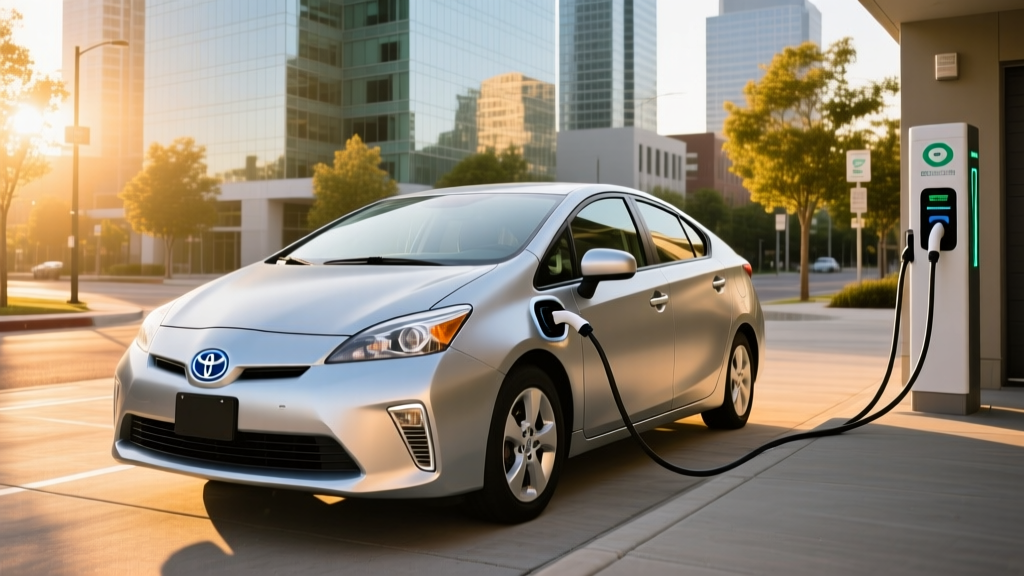
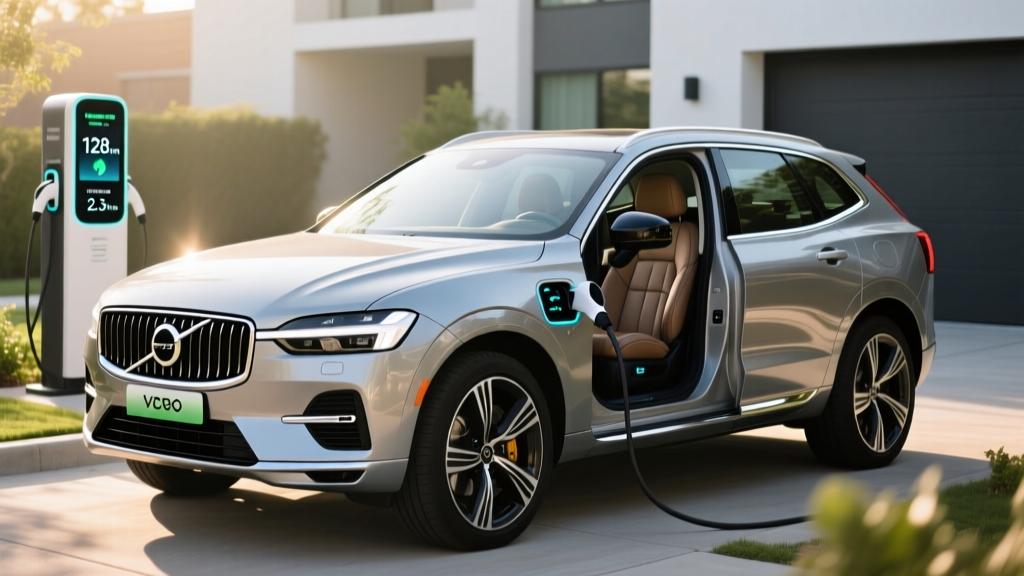
- Plug-in hybrids (PHEVs) — larger batteries (12–25+ kWh), a charge port for Level 2 AC and sometimes DC fast charging, and a meaningful electric-only driving range before the gas engine takes over.
Conflating the two is the single most common mistake in hybrid shopping. Below, we define each precisely, then put real numbers behind the comparison.
HEV vs PHEV: The Definition That Actually Matters
Conventional Hybrid (HEV): A vehicle that cannot be plugged in. The battery is charged exclusively by the gasoline engine and regenerative braking. Electric assist is brief and supplemental. You drive it exactly like a gas car — just fill up at the pump.
Plug-in Hybrid (PHEV): A vehicle with a larger battery and a charge port. You can (and should) plug it in to unlock 25–50 miles of electric-only range. Once that range is depleted, it operates like a conventional hybrid.
The practical implication is enormous. A PHEV owner who charges nightly and commutes under 40 miles may burn gasoline only on weekend road trips. An HEV owner never plugs in but still sees a 25–40% fuel economy improvement over an equivalent gas-only model.
| Attribute | RAV4 Hybrid (HEV) | RAV4 Prime (PHEV) |
|---|---|---|
| Powertrain | 2.5L I-4 + 2 electric motors | 2.5L I-4 + 2 higher-output motors |
| Combined Horsepower | 219 hp | 302 hp |
| Battery (usable) | ~1.6 kWh, NiMH | 18.1 kWh, lithium-ion |
| Electric-Only Range | ~1 mile at low speed | EPA 42 miles |
| EPA Combined MPG / MPGe | 39 MPG combined | 94 MPGe (EV mode) / 38 MPG (hybrid mode) |
| Total Range | ~580 miles | ~600 miles combined |
| Charge Port | None | J1772 Level 2 (no DCFC) |
| Level 2 Charge Time (0–100%) | N/A | ~2.5 hours at 6.6 kW |
| 0–60 mph | 7.4 sec | 5.7 sec |
| Starting MSRP (2026) | ~$34,500 | ~$45,500 |
Source: fueleconomy.gov and Toyota USA specifications.
Fuel Economy: Real-World MPG vs the EPA Sticker
The EPA test cycle tends to understate city fuel economy for hybrids and overstate highway fuel economy — the opposite of most gas cars. That's because hybrids recapture the most energy during low-speed braking, where regenerative braking is most effective, and lose their advantage at steady 75–80 mph cruising where the engine does all the work.
| Model | City MPG | Highway MPG | Combined MPG | PHEV EV Range |
|---|---|---|---|---|
| Toyota Prius (HEV) | 57 | 56 | 57 | — |
| Toyota Prius Prime (PHEV) | — | — | 52 MPG / 127 MPGe | 44 mi |
| Honda Accord Hybrid | 51 | 44 | 48 | — |
| Ford Escape PHEV | — | — | 40 MPG / 105 MPGe | 37 mi |
| Hyundai Tucson PHEV | — | — | 35 MPG / 80 MPGe | 33 mi |
| Toyota RAV4 Hybrid | 41 | 38 | 39 | — |
Source: fueleconomy.gov. MPGe figures apply only while operating on battery charge; once depleted, the combined MPG column applies.
Real-world reconciliation: Owners of the Prius HEV routinely report 60+ MPG in warm-weather city driving, beating the EPA sticker. Highway-heavy commutes at 75 mph typically return 45–50 MPG. For PHEVs, the "combined MPG" figure is highly dependent on how often you plug in — a Prius Prime owner who charges twice daily and drives 30 miles may go months without visiting a gas station.
Powertrain Architecture: How the Engine and Motor Cooperate
Most 2026 hybrids use one of three configurations:
- Series-parallel (power-split) — used by Toyota and Ford. A planetary gearset blends engine and motor power seamlessly. This is the architecture behind the Prius's legendary efficiency.
- Parallel-dominant — used by Hyundai/Kia. The engine and motor both drive the wheels through a conventional automatic transmission. Stronger highway passing power, slightly lower city MPG.
- Series-dominant — used by Honda's e:HEV system. The engine mostly acts as a generator; the electric motor drives the wheels almost all the time, with the engine engaging directly only at highway cruising speeds.
The distinction matters for driving feel. Series-dominant and series-parallel systems feel more EV-like (instant torque, quiet low-speed operation), while parallel-dominant systems feel closer to a conventional automatic.
Battery Warranty, Lifespan, and Replacement Cost
Federal mandate: Hybrid and PHEV batteries sold in the US must carry a minimum warranty of 8 years / 100,000 miles. In CARB states (California and states adopting CARB rules), that extends to 10 years / 150,000 miles.
Toyota, Honda, Hyundai, and Kia all meet or exceed these thresholds. Toyota's hybrid battery warranty is 10 years / 150,000 miles nationwide on current models.
Real-world battery longevity for modern hybrids is strong. The Prius, now in its sixth generation, has a well-documented track record: first-generation NiMH packs routinely lasted 150,000–200,000 miles before meaningful capacity loss, and today's lithium-ion packs are more durable still. Consumer Reports' 2025 reliability data shows hybrids as a group outperform both pure gas cars and full EVs in long-term trouble-free ownership, largely because the hybrid system eliminates the conventional starter motor and alternator — two common failure points.
Replacement cost if out of warranty:
- HEV battery (Prius, Accord Hybrid): $2,000–$4,000 for a new OEM pack; refurbished packs run $1,000–$2,000.
- PHEV battery (RAV4 Prime, Prius Prime): $6,000–$10,000 due to larger capacity.
For context, a conventional automatic transmission replacement on a gas car often costs $3,500–$5,500 — and hybrids don't have one.
Pricing, Tax Credits, and the §30D PHEV Loophole
Here's where many buyers get surprised: conventional hybrids (HEVs) do not qualify for the federal §30D clean vehicle tax credit. The IRS requires a minimum battery capacity and plug-in capability. Only PHEVs and full BEVs are eligible, and even then, eligibility is narrowing in 2026 due to critical-mineral sourcing rules, MSRP caps ($55,000 sedans, $80,000 SUVs/trucks/vans), and buyer income limits ($150k single / $300k joint / $225k head of household).
- Vehicle must have a charge port and ≥7 kWh battery.
- Final assembly in North America (VIN check required).
- Battery components and critical minerals must meet phased-in domestic-sourcing thresholds.
- MSRP must fall under the statutory cap for the vehicle class.
- Buyer AGI must fall under income limits.
- Credit can be taken at point of sale (dealer transfer) or claimed on Form 8936.
Verify current eligibility at irs.gov or via the DOE's fueleconomy.gov tax center. Rules change annually.
For 2026, PHEVs that have recently qualified for the full $7,500 credit include the Jeep Wrangler 4xe, Chrysler Pacifica Hybrid, and select configurations of the Toyota RAV4 Prime — but always confirm the specific VIN before purchase, as sourcing-rule changes have disqualified several previously-eligible models.
Hybrid vs PHEV vs EV: Which Definition Fits Your Life?
Choose a conventional hybrid (HEV) if:
- You have no access to home or workplace charging.
- You want EV-like city efficiency with zero behavioral change.
- Your budget is under $40,000 and you want the lowest total cost of ownership.
Choose a plug-in hybrid (PHEV) if:
- You can install a Level 2 charger at home and commute under 40 miles daily.
- You want electric daily driving but need road-trip flexibility without route-planning.
- You want to claim the §30D tax credit but aren't ready for a full BEV.
Choose a full battery-electric vehicle (BEV) if:
- You have reliable home Level 2 charging and your typical trips are under 250 miles.
- You want the lowest per-mile energy cost (~$0.04/mi on home electricity vs ~$0.12/mi on gas for a hybrid).
- You want to eliminate oil changes, spark plugs, and transmission fluid forever.
Pros and Cons: Honest Trade-offs
Pros of Hybrids (HEV & PHEV)
- 25–40% better fuel economy vs gas equivalent (HEV)
- Zero range anxiety — gas stations everywhere
- Strong reliability record; simpler than gas-only drivetrains in many ways
- PHEVs offer EV-like commuting without long-trip planning
- Regenerative braking reduces brake wear significantly
Cons of Hybrids (HEV & PHEV)
- HEVs ineligible for federal §30D tax credit
- PHEVs carry a $5,000–$12,000 price premium over HEV equivalents
- PHEV efficiency collapses if you never plug in (you're just hauling dead battery weight)
- Still requires oil changes, spark plugs, and emissions-system maintenance
- Heavier than gas-only equivalents, increasing tire wear
Frequently Asked Questions
How many MPG does a hybrid actually get in real driving?
The EPA sticker is a solid starting point but understates city driving for most hybrids. A Toyota Prius HEV (EPA 57 combined) commonly returns 60–65 MPG in warm-weather city driving, dropping to 45–50 MPG on sustained 75-mph highway runs. Expect about 10% lower MPG in freezing temperatures due to the engine running more often for cabin heat.
How far can a PHEV go on electric only?
Current 2026 PHEVs offer 25–50 miles of EPA-rated electric-only range. The Prius Prime leads sedans at 44 miles; the RAV4 Prime leads compact SUVs at 42 miles. Real-world electric range drops roughly 15–25% in cold weather due to cabin heating loads and reduced battery output.
Does a hybrid need to be plugged in?
No. A conventional hybrid (HEV) has no charge port and charges its battery internally via the engine and regenerative braking. Only a plug-in hybrid (PHEV) has a charge port — and while it can be driven without ever plugging in, doing so defeats the entire economic case for paying the PHEV premium.
Is a hybrid reliable, and what does battery replacement cost?
Modern hybrids are among the most reliable vehicles sold. Toyota's hybrid system in particular has two decades of proven durability. Hybrid battery warranties are federally mandated at 8 years / 100,000 miles (10/150k in CARB states), and replacement cost runs $2,000–$4,000 for HEVs and $6,000–$10,000 for PHEVs — a rare out-of-pocket expense given typical battery lifespan exceeds 150,000 miles.
Does a hybrid qualify for any tax credit?
Conventional hybrids (HEVs) do not qualify for the federal §30D credit. Plug-in hybrids (PHEVs) with ≥7 kWh batteries and North American final assembly may qualify for up to $7,500, subject to 2026 MSRP caps, buyer income limits, and battery-sourcing requirements. Always verify the specific VIN at fueleconomy.gov before purchase.
Hybrid vs PHEV vs EV — which should I buy?
If you can't charge at home, buy an HEV. If you can charge at home and commute under 40 miles but take occasional long road trips, buy a PHEV. If you can charge at home, drive under 250 miles daily, and want the lowest running cost, buy a BEV. The "best" powertrain is the one that matches your charging access and driving pattern — not the one with the most impressive spec sheet.