Quick Verdict: A Stylish, Efficient Hybrid Crossover That Doesn't Need a Plug
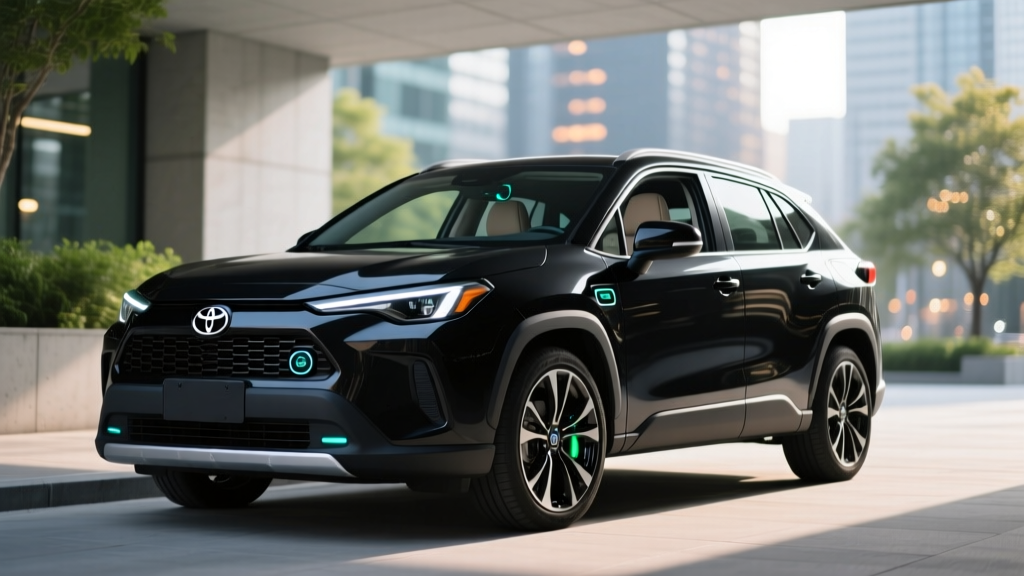
The 2025 Toyota Corolla Cross Hybrid Nightshade Edition occupies a specific niche: buyers who want the practicality of a compact crossover, the fuel-sipping efficiency of a hybrid, and the blacked-out aesthetics of Toyota's Nightshade package — all without ever plugging in. This is a conventional hybrid electric vehicle (HEV), not a plug-in hybrid (PHEV). It charges its own small battery through regenerative braking and the gasoline engine, meaning your routine at the gas station is the only "refueling" you'll do, just far less often.
With an EPA-estimated 42 MPG combined, standard electronic all-wheel drive, and a 196-horsepower powertrain, the Corolla Cross Hybrid Nightshade delivers meaningful efficiency gains over its gas-only sibling while adding visual attitude. Here's everything you need to know about real-world economy, reliability, warranty coverage, and whether this HEV — or a PHEV or full EV — is the right call for your garage.
HEV vs. PHEV: What the Corolla Cross Hybrid Actually Is
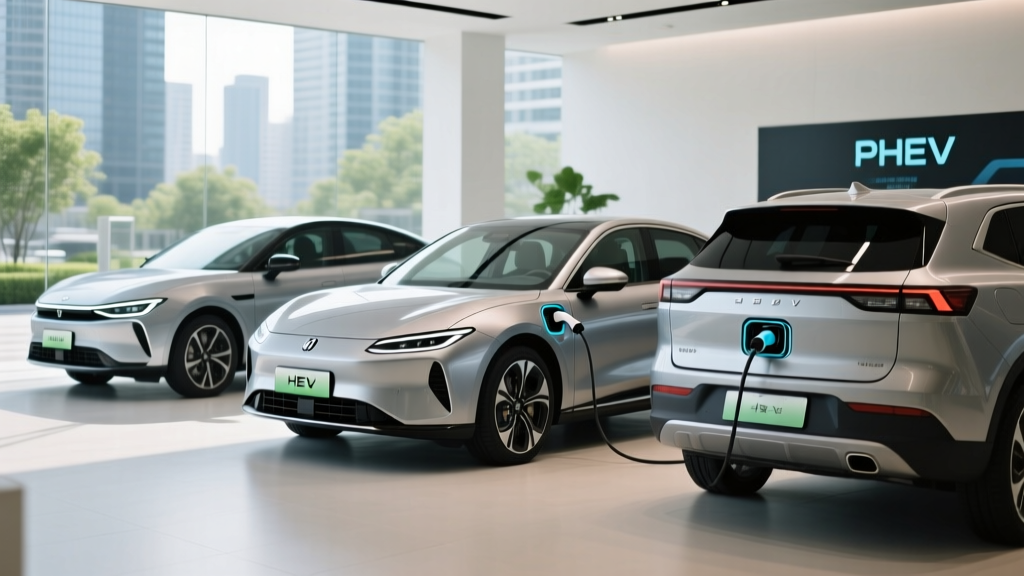
Before diving into specs, it's critical to understand what you're buying. The Corolla Cross Hybrid is a conventional hybrid (HEV). It pairs a gasoline engine with one or more electric motors and a small battery pack that recharges through regenerative braking and engine power. You never plug it in. There is no electric-only driving range to manage.
| Feature | HEV (Corolla Cross Hybrid) | PHEV (e.g., RAV4 Prime) | BEV (e.g., bZ4X) |
|---|---|---|---|
| Plug-in charging required? | No | Yes (for EV range) | Yes (always) |
| Electric-only range | None (motor assists engine) | 25–42 miles typical | 200–350+ miles |
| Battery size | ~1.3 kWh (self-charging) | 13–18 kWh | 60–100+ kWh |
| Federal tax credit (§30D) | Not eligible | Up to $7,500 (if eligible) | Up to $7,500 (if eligible) |
| Gas engine? | Yes (primary) | Yes (backup) | No |
| Home charging install needed? | No | Recommended (Level 2) | Essential (Level 2) |
If you were hoping for electric-only commuting with a gas backup, you want a PHEV like the Toyota RAV4 Prime. If you want zero tailpipe emissions and are ready to charge at home, a BEV is the path. The Corolla Cross Hybrid is for drivers who want maximum simplicity: no plugs, no range management, just dramatically better fuel economy than a gas-only car.
Fuel Economy: EPA Ratings and Real-World MPG
The headline number is strong. According to fueleconomy.gov, the 2025 Toyota Corolla Cross Hybrid (all trims, including Nightshade) carries the following EPA estimates:
| Driving Cycle | EPA Estimate |
|---|---|
| City | 45 MPG |
| Highway | 38 MPG |
| Combined | 42 MPG |
Real-World MPG: What to Actually Expect
Hybrids typically exceed their EPA city rating in stop-and-go driving because regenerative braking recaptures energy that a gas car wastes as heat. Expect 44–48 MPG in urban commuting. Highway driving is the opposite story: at sustained 70–80 MPH speeds, aerodynamic drag dominates and the electric motor provides less benefit. Plan on 35–38 MPG on long highway trips. In cold weather (below 30°F), expect a 5–10% economy dip as the engine runs more frequently for cabin heat and the battery is less efficient.
Over a 12-gallon tank, 42 MPG combined translates to roughly 504 miles of range — enough for most drivers to visit the gas station once every two to three weeks.
Powertrain: 196 HP with Standard Electronic AWD
The Corolla Cross Hybrid uses Toyota's fifth-generation hybrid system, pairing a 2.0-liter four-cylinder Atkinson-cycle engine with two motor-generators (one front, one rear) through an electronically controlled continuously variable transmission (eCVT). The rear motor provides electronic all-wheel drive (AWD) without a mechanical driveshaft — it activates on demand for traction.
| Specification | Value |
|---|---|
| Engine | 2.0L 4-cylinder Atkinson-cycle |
| Combined system horsepower | 196 HP |
| Front motor | Permanent-magnet synchronous |
| Rear motor (AWD) | 40 HP (on-demand) |
| Transmission | eCVT |
| Drivetrain | Electronic AWD (standard) |
| 0–60 MPH (est.) | ~7.8 seconds |
| Hybrid battery | ~1.3 kWh, lithium-ion (self-charging) |
| Towing capacity | Not rated for towing |
The 196 HP figure is a meaningful step up from the gas-only Corolla Cross (169 HP), and the electric motor's instant torque makes the hybrid feel noticeably quicker off the line, even though the 0–60 time is merely adequate. The eCVT is smooth but can drone under hard acceleration — a characteristic of all Toyota hybrids. For daily commuting and highway merging, the powertrain is composed and unobtrusive.
Nightshade Edition: What You Get (and What It Costs)
The Nightshade Edition is an appearance package layered onto the Corolla Cross Hybrid's XSE trim. It doesn't change the powertrain, fuel economy, or technology — it's purely aesthetic. Here's what distinguishes it:
- Black 18-inch alloy wheels
- Blacked-out badges, mirror caps, door handles, and roof rails
- Dark-tinted rear privacy glass
- Black shark-fin antenna
- Available in Wind Chill Pearl, Jet Black, or Barcelona Red Metallic with a black roof
| Trim | Starting MSRP | Notes |
|---|---|---|
| S | ~$29,350 | Base hybrid trim |
| SE | ~$30,700 | Sport-tuned suspension, alloy wheels |
| XSE | ~$32,100 | SofTex seats, heated front seats, power liftgate |
| Nightshade Edition | ~$33,000 | XSE + blacked-out styling package |
Destination charges add approximately $1,350. At roughly $33,000 before options, the Nightshade sits at the top of the Corolla Cross Hybrid lineup but remains well below competitors like the Honda CR-V Hybrid Sport Touring (~$40,000) or the Kia Sportage Hybrid SX-Prestige (~$38,000).
Federal Tax Credit Eligibility
Because the Corolla Cross Hybrid is a conventional HEV — not a plug-in hybrid or battery electric vehicle — it does not qualify for the federal §30D Clean Vehicle Credit. That credit (up to $7,500) is reserved for new PHEVs and BEVs that meet battery-sourcing, MSRP, and buyer-income requirements under current IRS rules.
Some states offer their own incentives for hybrid vehicles, but these vary widely and change frequently. Check your state's energy or environmental agency for current programs. If a tax credit is a priority, you'll need to look at PHEV or BEV alternatives.
Battery Warranty, Reliability, and Replacement Cost
Hybrid battery longevity is consistently the top concern for first-time hybrid buyers. Here's what Toyota provides and what real-world data shows:
Toyota Hybrid Battery Warranty
- Hybrid battery: 10 years / 150,000 miles (whichever comes first)
- Hybrid system components (inverter, motor-generators, eCVT): 8 years / 100,000 miles
- Bumper-to-bumper: 3 years / 36,000 miles
- Powertrain (engine): 5 years / 60,000 miles
Toyota's 10-year/150,000-mile hybrid battery warranty applies in all 50 states and is among the best in the industry. The warranty covers the battery if it drops below a specified capacity threshold or fails entirely.
Real-World Reliability
Toyota's hybrid system is one of the most proven powertrains in automotive history, with over 25 years of continuous refinement since the original Prius. The Corolla Cross Hybrid uses the fifth-generation system, which is simpler and more robust than earlier iterations. Independent reliability data from sources like Consumer Reports consistently rates Toyota hybrids among the most dependable vehicles in their segments.
The hybrid battery in this vehicle is small (~1.3 kWh) and operates within a narrow state-of-charge window (roughly 40–80%), which dramatically reduces degradation compared to the deep cycling a full EV battery experiences. Many Toyota hybrid owners report 200,000+ miles on the original battery without significant capacity loss.
Battery Replacement Cost
If the hybrid battery does eventually need replacement outside of warranty, expect to pay between $2,000 and $4,000 for a new OEM battery pack, including labor. Refurbished or reconditioned packs can be found for $1,000–$2,000. Given the 10-year warranty coverage and the battery's proven durability, replacement is uncommon for most original owners.
Who Should Buy This — and Who Should Look Elsewhere
Choose the Corolla Cross Hybrid Nightshade If:
- You want 40+ MPG without changing your refueling habits
- You don't have access to home or workplace charging (apartment, street parking)
- You want standard AWD for snow or rain without a fuel-economy penalty
- You prefer a compact crossover footprint that's easy to park in the city
- You value Toyota's long-term reliability track record
- You like the Nightshade's blacked-out styling without paying luxury-brand prices
Look at a PHEV Instead If:
- You have a short commute (under 30 miles) and home charging — a PHEV like the RAV4 Prime lets you drive most days on electricity alone
- You want to qualify for the $7,500 federal tax credit
- You want to reduce your gasoline consumption to near-zero on daily drives
Look at a Full EV Instead If:
- You have reliable Level 2 home charging and want zero tailpipe emissions
- Your daily driving is under 250 miles and you want the lowest per-mile "fuel" cost
- You want access to HOV lanes (available in many states for BEVs and some PHEVs, not HEVs)
Pros
- 42 MPG combined EPA — excellent for an AWD crossover
- No plug-in required; zero lifestyle change from a gas car
- 196 HP is a solid upgrade over the gas-only model
- 10-year/150,000-mile hybrid battery warranty
- Nightshade styling stands out in a conservative segment
- Sub-$34,000 MSRP undercuts most hybrid crossover competitors
- Standard Toyota Safety Sense 3.0 (adaptive cruise, lane-keeping, auto emergency braking)
Cons
- No federal tax credit eligibility (HEV, not PHEV/BEV)
- Cargo space (25.5 cu ft behind rear seats) is tight for the class
- eCVT drone under hard acceleration
- Rear-seat legroom is below-average for a compact crossover
- No DC fast charging (not applicable — it's an HEV)
- Infotainment screen is functional but not class-leading in resolution or speed
Frequently Asked Questions
How many MPG does the 2025 Corolla Cross Hybrid Nightshade get?
The EPA rates it at 45 MPG city, 38 MPG highway, and 42 MPG combined. In real-world city driving, many owners report 44–48 MPG thanks to regenerative braking. Highway-only trips at 75+ MPH typically yield 35–38 MPG.
Does the Corolla Cross Hybrid need to be plugged in?
No. This is a conventional hybrid (HEV). The battery recharges through regenerative braking and the gasoline engine. You never plug it in — you simply fill up at the gas station, less frequently than a non-hybrid car.
How far can it drive on electric power alone?
The Corolla Cross Hybrid cannot drive on electric power alone for any meaningful distance. The electric motor assists the gas engine during acceleration and low-speed maneuvers, but the engine is always the primary power source. If you want electric-only driving, you need a PHEV or a full EV.
Does it qualify for any tax credit?
No. The federal §30D Clean Vehicle Credit applies only to plug-in hybrids (PHEVs) and battery electric vehicles (BEVs). As a conventional hybrid, the Corolla Cross Hybrid is not eligible. Check your state's incentives — some states offer rebates for efficient vehicles, but these vary and change frequently.
Is the hybrid battery reliable, and what does replacement cost?
Toyota's hybrid batteries are among the most reliable in the industry, with a proven track record spanning 25+ years. The battery is covered by a 10-year/150,000-mile warranty. If replacement is needed outside of warranty, expect $2,000–$4,000 for a new OEM pack. Most original owners never need to replace the hybrid battery.
How does the Nightshade Edition differ mechanically from other trims?
It doesn't. The Nightshade is an appearance package on the XSE trim. The 196 HP hybrid powertrain, AWD system, 42 MPG combined rating, and all mechanical components are identical across every Corolla Cross Hybrid trim. You're paying for blacked-out wheels, badges, and trim pieces.
Hybrid vs. PHEV vs. EV — which should I choose?
Choose an HEV (like this Corolla Cross Hybrid) if you want better fuel economy with zero lifestyle changes and no charging access. Choose a PHEV (like the RAV4 Prime) if you have home charging and a short commute — you'll drive most days on electricity but keep the gas engine for road trips. Choose a BEV (like the Hyundai Ioniq 5) if you have reliable home charging, want the lowest operating cost, and are ready to plan around charging on long trips.
Is the Corolla Cross Hybrid good in snow?
The standard electronic AWD system provides solid traction in light to moderate snow and rain. The rear electric motor engages automatically when front-wheel slip is detected. However, ground clearance is modest (around 6.5 inches), so deep snow will be a limitation. Pair it with dedicated winter tires for the best cold-weather performance.