Quick Verdict: The Efficiency Sweet Spot for Compact SUV Buyers
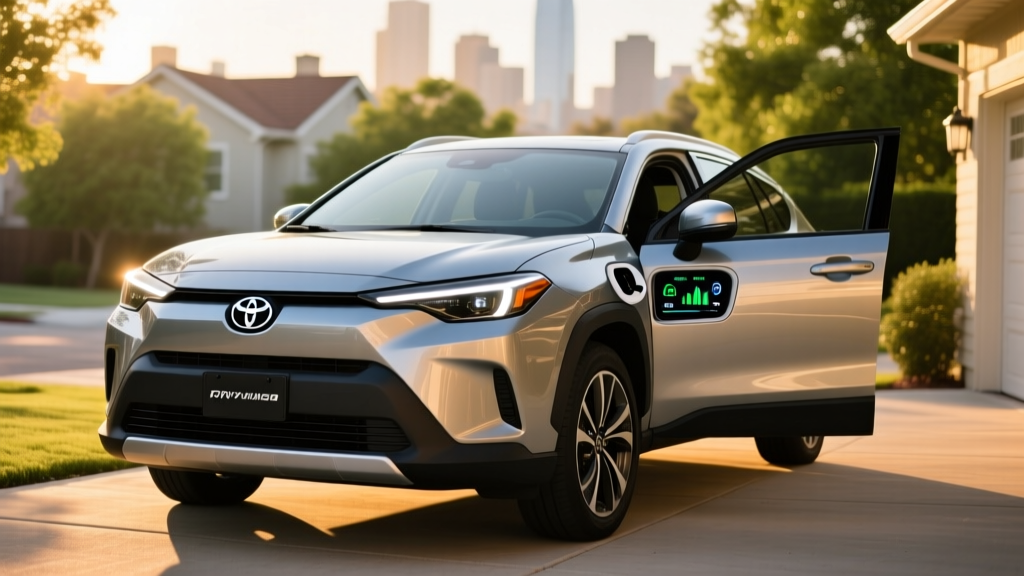
If you've been searching for Corolla Cross Hybrid miles per gallon data before pulling the trigger on Toyota's smallest hybrid SUV, you're asking the right question. The 2026 Corolla Cross Hybrid delivers an EPA-estimated 45 city / 38 highway / 42 combined MPG — numbers that make it one of the most fuel-efficient all-wheel-drive compact crossovers on the market. But as any hybrid owner will tell you, EPA stickers only tell half the story.
This guide breaks down what you'll actually see at the pump, how the AWD-i powertrain generates its 196 combined horsepower, whether any tax credits apply, and how the Corolla Cross Hybrid stacks up against plug-in hybrids and full EVs for your specific driving pattern.
Corolla Cross Hybrid MPG: EPA Estimates vs. Real-World Results
| Driving Condition | EPA Estimate | Real-World Expectation |
|---|---|---|
| City | 45 MPG | 43–48 MPG |
| Highway (65–70 mph) | 38 MPG | 35–39 MPG |
| Combined | 42 MPG | 39–44 MPG |
| Cold Weather (below 35°F) | — | 36–40 MPG combined |
Like all Toyota hybrids using the fourth-generation Toyota Hybrid System (THS), the Corolla Cross Hybrid actually tends to exceed its EPA city estimate in stop-and-go driving. Regenerative braking recaptures energy that a conventional car wastes as heat, and the electric motor handles low-speed propulsion where gasoline engines are least efficient. In dense urban traffic with frequent stops, owners regularly report 46–48 MPG on the trip computer.
Highway driving is where the story flips. At sustained 70+ mph speeds, the 2.0-liter four-cylinder engine carries most of the load with less assistance from the electric motors. Aerodynamic drag also works against the crossover body shape. Expect 35–38 MPG on long interstate trips — still excellent for an AWD vehicle, but noticeably lower than the city figure.
Cold weather introduces a 5–10% efficiency penalty. The engine runs more frequently to generate cabin heat (this hybrid lacks a heat pump, which is reserved on Toyota's EV and PHEV models), and the battery's charge/discharge efficiency drops in freezing temperatures. If you live in northern climates, budget for roughly 36–40 MPG combined during winter months.
HEV vs. PHEV vs. EV: Which Powertrain Fits Your Life?
The Corolla Cross Hybrid is a conventional hybrid (HEV) — meaning it does not plug in. The 1.3 kWh nickel-metal hydride (NiMH) traction battery charges exclusively through regenerative braking and the gasoline engine. There is no electric-only driving mode of meaningful distance, no charging port, and no range to manage beyond what's in the fuel tank.
How the Corolla Cross Hybrid Compares to Alternatives
| Factor | Corolla Cross Hybrid (HEV) | Typical PHEV (e.g., RAV4 Prime) | Full EV (e.g., bZ4X) |
|---|---|---|---|
| Plug-in Required? | No | Yes (for EV range) | Yes (always) |
| Electric-Only Range | ~1 mile (low speed) | 35–42 miles | 220–252 miles |
| Fuel/Charging Infra Needed | Gas stations only | Gas + home Level 2 ideal | Home or public charging |
| City MPG / MPGe | 45 MPG | 94 MPGe (electric) / 38 MPG (gas) | 114 MPGe |
| Federal Tax Credit | Not eligible (§30D) | Up to $7,500* | Up to $7,500* |
| Starting MSRP (2026) | ~$30,050 | ~$44,500 | ~$38,500 |
*§30D credit eligibility depends on buyer income, vehicle MSRP caps, and battery component/critical mineral sourcing. See IRS.gov for current rules.
The Corolla Cross Hybrid is right for you if: You lack access to home or workplace charging, you want a simple ownership experience with zero plug-in routine, and your priority is reducing fuel costs without changing your refueling habits.
Look at a PHEV instead if: You have a garage or driveway where you can install a Level 2 charger, your daily commute is under 40 miles round-trip (covering most days on electricity alone), and you still want gas-engine flexibility for road trips.
Go full EV if: You have reliable home charging, your daily driving is under 200 miles, you want to eliminate gasoline entirely, and you want access to the full federal tax credit.
Powertrain Deep Dive: 196 HP AWD-i System
| Specification | 2026 Corolla Cross Hybrid |
|---|---|
| Engine | 2.0L 4-cylinder Atkinson cycle |
| Engine Output | 150 hp / 139 lb-ft torque |
| Front Electric Motor | 83 kW (111 hp) |
| Rear Electric Motor (AWD-i) | 30 kW (40 hp) |
| Combined Net Horsepower | 196 hp |
| Traction Battery | 1.3 kWh NiMH (sealed) |
| Transmission | eCVT (planetary gearset) |
| Drivetrain | Electronic AWD (AWD-i) |
| 0–60 mph | ~7.5 seconds |
| Towing Capacity | 1,760 lbs |
The AWD-i system is worth understanding because it differs fundamentally from mechanical AWD. There is no driveshaft connecting the front and rear axles. Instead, a dedicated 30 kW rear electric motor powers the rear wheels when the system detects slip, during hard acceleration, or through corners. This means the rear axle engages only when needed, eliminating the parasitic drivetrain losses that reduce fuel economy in traditional AWD systems.
The result is a compact crossover that delivers AWD traction in rain and light snow while returning FWD-rivaling fuel economy. The 0–60 mph time of approximately 7.5 seconds puts it comfortably ahead of the non-hybrid Corolla Cross (which runs closer to 9.0 seconds) and makes highway merging effortless.
One note on the eCVT: this is not a belt-and-pulley continuously variable transmission like those in some competitors. Toyota's eCVT uses a planetary gearset that seamlessly blends engine and motor power. It's proven exceptionally reliable — there are no belts to wear, no cones to degrade, and no fluid under the same stress as conventional CVTs.
Pricing, Trims, and Tax Credit Eligibility
The 2026 Toyota Corolla Cross Hybrid is available in three trims, all with AWD-i as standard:
| Trim | MSRP | Key Features |
|---|---|---|
| S | $30,050 | 8" touchscreen, TSS 3.0, 17" alloy wheels |
| SE | $32,200 | SofTex seats, heated front seats, wireless CarPlay |
| XSE | $34,350 | JBL audio (9 speakers), power liftgate, 18" wheels |
Federal Tax Credit Status
- §30D New Clean Vehicle Credit: NOT eligible. The Corolla Cross Hybrid is a conventional HEV, not a plug-in vehicle. The federal credit applies only to BEVs and PHEVs with sufficient battery capacity.
- §25C Energy Efficient Home Improvement Credit: NOT applicable — this credit covers home energy upgrades, not vehicles.
- State Incentives: A handful of states offer rebates or HOV-lane access for hybrids, but these vary widely. Check your state's energy office or DMV for current programs.
- Fuel Savings as Offset: At 42 MPG vs. a comparable gas-only AWD crossover at 28 MPG, you'll save approximately $550–$750 per year in fuel (15,000 miles/year, $3.40/gallon). Over 5 years, that's $2,750–$3,750 — effectively a built-in rebate.
Battery Warranty, Lifespan, and Replacement Costs
Toyota Hybrid Battery Warranty
Coverage: 10 years / 150,000 miles (whichever comes first)
What's Covered: The hybrid traction battery and all hybrid-system components (inverter, electric motors, control modules)
Capacity Threshold: Toyota warrants the battery against defects and abnormal degradation. Unlike EV batteries, hybrid NiMH packs are not rated to a specific State of Health percentage — the warranty covers functional failure.
Transferable: Yes, the warranty transfers to subsequent owners automatically.
The longevity question matters because hybrid battery replacement is the single biggest worry for prospective buyers. Here's what the data shows:
Toyota's NiMH hybrid batteries have an exceptionally strong track record. The Prius, which uses similar chemistry and management, routinely sees original batteries lasting 200,000+ miles. The Corolla Cross Hybrid's battery is relatively small (1.3 kWh) and operates in a narrow state-of-charge window — typically between 40% and 80% — which dramatically reduces cell stress. Toyota's battery management system never allows full depletion or full charge, which is the key to NiMH longevity.
If the battery does eventually need replacement outside of warranty, expect the following costs (2026 estimates):
| Replacement Option | Estimated Cost |
|---|---|
| New OEM battery (dealer) | $2,500–$3,500 |
| Remanufactured battery | $1,500–$2,200 |
| Individual cell module replacement | $500–$1,000 |
For context, the Corolla Cross Hybrid's battery is far smaller and less expensive than an EV pack. A full EV battery replacement can cost $8,000–$20,000+. The hybrid's modest 1.3 kWh system is one of its least expensive components to service if the need ever arises — and statistically, it rarely does within the vehicle's useful life.
Reliability, Safety, and Ownership Costs
Toyota's hybrid powertrain is among the most proven in the automotive industry, with over 25 years of continuous refinement since the original 1997 Prius. The Corolla Cross Hybrid inherits this lineage, and early reliability data from the model's introduction aligns with Toyota's strong historical performance.
Key reliability advantages specific to this powertrain:
- No conventional starter motor: The hybrid system starts the engine via the MG1 motor-generator, eliminating a common failure point.
- No alternator: The DC-DC converter handles 12V system charging — solid-state, no brushes to wear.
- Regenerative braking: Extends brake pad life significantly. Many Toyota hybrid owners report 80,000+ miles on original brake pads.
- eCVT durability: The planetary gearset design has no belts, cones, or clutch packs to fail.
On the safety front, the Corolla Cross Hybrid comes standard with Toyota Safety Sense 3.0, which includes pre-collision braking with pedestrian detection, lane departure alert with steering assist, full-speed adaptive cruise control, and automatic high beams. The vehicle has earned strong marks from IIHS and the NHTSA.
Who Should Buy the Corolla Cross Hybrid?
Choose the Corolla Cross Hybrid If:
- You live in an apartment or street-park and cannot install a charger
- Your commute is mixed city/highway with heavy stop-and-go segments
- You want AWD capability for rain and light snow without the fuel penalty
- You plan to keep the vehicle 8–12 years and want proven long-term reliability
- Your budget is $30,000–$35,000 and you want to minimize ongoing fuel costs
Look Elsewhere If:
- You have home charging and want electric-only daily driving → consider a PHEV like the RAV4 Prime
- You want to eliminate gasoline entirely → consider a BEV like the Hyundai Ioniq 5 or Toyota bZ4X
- You need more cargo space → the Corolla Cross offers 25.5 cu ft behind the rear seats, which trails the RAV4 Hybrid
- You want a federal tax credit → only plug-in vehicles qualify under current §30D rules
Pros
- 42 MPG combined is exceptional for an AWD crossover
- City MPG often exceeds EPA estimate
- 10-year/150,000-mile hybrid battery warranty
- Standard AWD-i with no fuel-economy penalty
- 196 hp provides confident highway merging
- Proven THS reliability with low maintenance costs
Cons
- No federal tax credit eligibility
- Cargo space (25.5 cu ft) trails RAV4 Hybrid
- Highway MPG drops to mid-30s at 70+ mph
- No plug-in or electric-only driving mode
- Cold weather reduces efficiency by 5–10%
- Modest towing capacity (1,760 lbs)
Frequently Asked Questions
How many MPG does the Corolla Cross Hybrid get?
The EPA rates the 2026 Corolla Cross Hybrid at 45 city / 38 highway / 42 combined MPG. In real-world city driving with frequent stops, many owners see 46–48 MPG thanks to regenerative braking. Highway driving at 70+ mph typically yields 35–38 MPG. Combined real-world results range from 39–44 MPG depending on your driving mix.
Does the Corolla Cross Hybrid need to be plugged in?
No. The Corolla Cross Hybrid is a conventional hybrid (HEV), not a plug-in hybrid (PHEV). Its 1.3 kWh battery charges exclusively through regenerative braking and the gasoline engine. You refuel at gas stations exactly as you would with any conventional car — there is no charging port and no plug-in routine.
Does the Corolla Cross Hybrid qualify for a federal tax credit?
No. The IRS §30D New Clean Vehicle Credit applies only to plug-in electric vehicles (BEVs and PHEVs) with battery capacities of at least 7 kWh. The Corolla Cross Hybrid's 1.3 kWh NiMH battery does not meet this threshold. However, the fuel savings of $550–$750 per year vs. a comparable gas-only AWD crossover partially offset the lack of a credit. Check your state for any local hybrid incentives.
How long will the hybrid battery last and what does replacement cost?
Toyota warrants the hybrid battery for 10 years / 150,000 miles. Based on decades of Prius and RAV4 Hybrid data, these NiMH packs routinely last 200,000+ miles. The battery operates in a narrow 40–80% state-of-charge window, which minimizes cell stress. If replacement is eventually needed, a new OEM battery costs approximately $2,500–$3,500, while a remanufactured unit runs $1,500–$2,200.
Hybrid vs. PHEV vs. EV — which is right for me?
Choose the Corolla Cross Hybrid (HEV) if you can't charge at home and want a seamless, gas-station-only experience with strong fuel economy. Choose a PHEV (like the RAV4 Prime) if you have home charging and want 35–42 miles of electric-only commuting with gas flexibility for road trips. Choose a full EV (like the Ioniq 5 or bZ4X) if you have reliable charging access, drive under 200 miles daily, and want to eliminate gasoline and access the federal tax credit.
Is the Corolla Cross Hybrid good in snow?
The AWD-i system provides solid traction in light to moderate snow. The rear electric motor engages automatically when front-wheel slip is detected, and the hybrid system's low-speed electric torque helps with smooth starts on slippery surfaces. It's not a substitute for a dedicated off-road SUV in deep snow, but for typical winter commuting with snow tires, it performs well.
How does Corolla Cross Hybrid fuel economy compare to the gas-only version?
The gas-only 2026 Corolla Cross AWD is EPA-rated at 29 city / 32 highway / 30 combined MPG. The hybrid's 42 MPG combined represents a 40% improvement — roughly 12 fewer gallons per 1,000 miles driven, or about $40–$50 saved per 1,000 miles at current fuel prices.
Sources: EPA Fuel Economy, Toyota Corolla Cross Hybrid Official Specs, IRS §30D Credit Rules.