The Ford Fusion Hybrid in 2026: A Fuel-Sipping Sedan That Still Delivers
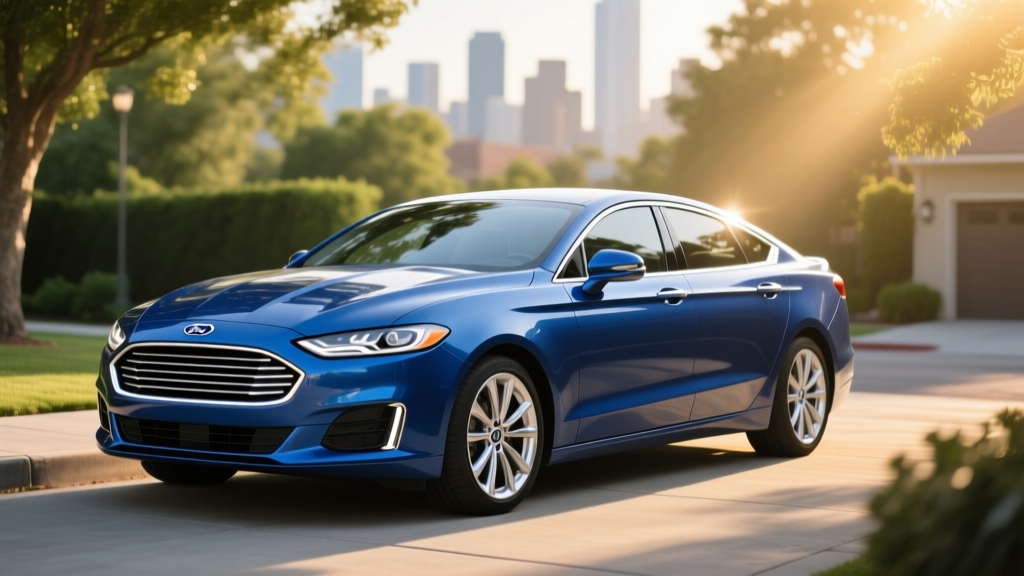
The Ford Fusion Hybrid was discontinued after the 2020 model year, but it remains one of the most popular used hybrid sedans on the road. With a loyal owner base and strong fuel economy numbers, it continues to draw buyers searching for efficient daily transportation without the commitment of a full electric vehicle. If you're researching Ford Fusion Hybrid fuel consumption — whether you already own one or are shopping the used market — this guide covers the real-world MPG data, hybrid system specs, battery longevity, and how it stacks up against today's alternatives.
Let's establish the facts: the Fusion Hybrid is a conventional hybrid electric vehicle (HEV), not a plug-in hybrid. It does not plug into a charger, it has no electric-only driving range, and its battery recharges exclusively through regenerative braking and the gasoline engine. Ford did offer a separate plug-in variant called the Fusion Energi (PHEV), which we'll address in the comparison section below.
Ford Fusion Hybrid Fuel Consumption: EPA Ratings vs. Real-World MPG
The final-generation Ford Fusion Hybrid (2019–2020 model years) carries EPA fuel economy ratings that remain competitive even against newer hybrid sedans. Here's the official breakdown from fueleconomy.gov:
| Driving Cycle | EPA Rating |
|---|---|
| City | 43 MPG |
| Highway | 41 MPG |
| Combined | 42 MPG |
These numbers apply to the 2019 and 2020 models equipped with the 1.1 kWh lithium-ion battery pack and Ford's fourth-generation hybrid powertrain. Earlier generations (2013–2018) used a slightly different system and carry EPA combined ratings of 42 MPG (2013–2016) and 42 MPG (2017–2018), so the difference across model years is marginal.
Cold weather affects hybrid fuel consumption. In temperatures below 35°F, expect a 5–10% drop in MPG as the engine runs more frequently to maintain cabin heat and battery temperature. This is normal for all hybrids and does not indicate a problem.
HEV vs. PHEV: Fusion Hybrid vs. Fusion Energi Explained
Ford sold two electrified Fusion variants, and buyers frequently confuse them. Here's the critical distinction:
| Specification | Fusion Hybrid (HEV) | Fusion Energi (PHEV) |
|---|---|---|
| Powertrain Type | Conventional Hybrid | Plug-in Hybrid |
| Plugs In to Charge? | No | Yes (Level 1/Level 2) |
| Electric-Only Range | None (motor assists engine) | 26 miles (2019–2020 EPA) |
| Battery Capacity | 1.1 kWh (Li-ion) | 7.6 kWh usable (Li-ion) |
| Total Range | ~600+ miles | ~490 miles (electric + gas) |
| EPA Combined MPG | 42 MPG | 42 MPG (gas) / 103 MPGe (electric) |
| Combined Horsepower | 195 HP | 195 HP |
| Trunk Space | 12.0 cu ft | 8.2 cu ft (battery intrusion) |
The Fusion Energi (PHEV) was designed for drivers with access to home or workplace charging who wanted to complete short commutes on electricity alone. Its 26-mile electric-only range covers many daily round trips, after which the gasoline engine takes over seamlessly. However, the larger battery pack ate into trunk space — a real tradeoff if cargo room matters to you.
The standard Fusion Hybrid (HEV) requires no behavior change. You fuel it like any gasoline car and the hybrid system handles the rest. There is no plug, no charging routine, and no range planning. For most buyers, this simplicity is the primary appeal.
Powertrain and Performance Specifications
| Specification | Value |
|---|---|
| Engine | 2.0L Atkinson-cycle 4-cylinder |
| Engine Power | 141 HP @ 6,000 RPM |
| Electric Motor Power | 118 HP (88 kW) |
| Combined Net Horsepower | 195 HP |
| Transmission | eCVT (electronic continuously variable) |
| Drivetrain | Front-wheel drive |
| 0–60 MPH | ~7.8 seconds |
| Battery Type | Lithium-ion, 1.1 kWh |
| Fuel Tank Capacity | 13.5 gallons |
| Total Driving Range (est.) | ~567–630 miles |
The eCVT in the Fusion Hybrid is not a traditional belt-and-pulley CVT. It uses a planetary gearset to blend engine and motor power, which eliminates the "rubber-band" feel that some drivers dislike in conventional CVTs. Acceleration is linear and adequate for highway merging, though this is a comfort-oriented sedan, not a performance car.
Battery Warranty, Lifespan, and Replacement Cost
Battery degradation is a common concern for used hybrid buyers. In practice, the Fusion Hybrid's 1.1 kWh battery is small and operates within a conservative state-of-charge window — Ford's battery management system never fully charges or fully depletes the pack. This strategy dramatically extends cycle life.
Data from owner reports and fleet usage suggests that Fusion Hybrid batteries typically retain 90%+ of original capacity after 150,000 miles. Complete failures before 200,000 miles are uncommon. If replacement becomes necessary, expect these costs:
- New OEM battery from Ford: $2,500–$3,500 (parts only, varies by model year)
- Refurbished/aftermarket battery: $1,200–$2,000
- Installation labor: $300–$600 at an independent hybrid specialist
- Total replacement cost: $1,500–$4,100 depending on source and shop
Many independent hybrid repair shops now offer cell-level reconditioning for $800–$1,500, replacing only degraded modules rather than the entire pack. This is a cost-effective option for out-of-warranty vehicles.
Pricing and Tax Credit Eligibility in 2026
Because Ford discontinued the Fusion Hybrid after 2020, all available examples are on the used market. Pricing as of early 2026:
- 2019–2020 Fusion Hybrid (SE/Titanium): $14,000–$21,000 depending on mileage, condition, and trim
- 2017–2018 Fusion Hybrid: $11,000–$16,000
- 2013–2016 Fusion Hybrid: $8,000–$13,000
Used EV tax credit (IRS §25E): Under current IRS rules, you may qualify for a used clean vehicle tax credit of up to $4,000 (or 30% of the sale price, whichever is less) when purchasing a qualifying used hybrid or PHEV from a licensed dealer. Key eligibility requirements include:
- Sale price must be $25,000 or less
- Vehicle must be at least 2 model years old
- Buyer income caps: $75,000 (single), $112,500 (head of household), $150,000 (joint)
- Vehicle must have a battery capacity of at least 7 kWh (this excludes the standard Fusion Hybrid at 1.1 kWh, but the Fusion Energi PHEV qualifies)
- Must purchase from a licensed dealer (private-party sales do not qualify)
- Credit is non-refundable and can be transferred to the dealer as a point-of-sale discount
This is an important distinction: the conventional Fusion Hybrid (HEV) does not qualify for the §25E used clean vehicle credit because its battery is below the 7 kWh threshold. The Fusion Energi (PHEV), with its 7.6 kWh usable battery, does qualify if other criteria are met. Always confirm eligibility with a tax professional before purchase.
Fusion Hybrid vs. Today's Alternatives: What Should You Buy?
The Fusion Hybrid occupies a specific niche in 2026. Here's a decision framework based on your situation:
- You want 42+ MPG with zero plug-in routine or behavior change
- Your budget is $12,000–$20,000 and you want a spacious midsize sedan
- You lack reliable home or workplace charging access
- You want proven reliability with a simple, well-understood hybrid system
- You can charge at home (Level 1 or Level 2) and have a short commute (<26 miles round trip)
- You want some electric-only driving without full EV range commitment
- You may qualify for the $4,000 §25E used clean vehicle credit
- You have home Level 2 charging and want to eliminate gasoline entirely
- You qualify for the $7,500 §30D new clean vehicle credit
- You want the latest ADAS features and over-the-air updates
- Your budget allows $35,000+ after incentives
- You want a new vehicle with full factory warranty and the latest safety tech
- You value the newest infotainment and driver-assist systems
- Your budget is $28,000–$38,000
For context, the 2026 Toyota Camry Hybrid achieves an EPA-estimated 52 MPG combined (LE trim), surpassing the Fusion Hybrid by 10 MPG. If maximum fuel economy is your priority and you're buying new, the current Camry Hybrid is the efficiency leader in this segment. The Fusion Hybrid's advantage is its lower used-market price and comfortable ride quality.
Reliability Ratings and Ownership Costs
The Fusion Hybrid benefits from Ford's mature hybrid technology, which traces back to the 2005 Escape Hybrid. By the 2019–2020 model years, the system was in its fourth generation with well-documented reliability. IIHS gave the 2020 Fusion good ratings across crash-test categories when equipped with specific headlights.
Common maintenance items for the Fusion Hybrid include:
- Engine oil changes: Every 7,500–10,000 miles (the engine runs less than in a gas car, so intervals are longer)
- Brake pads: Often last 80,000–120,000 miles due to regenerative braking handling most deceleration
- Coolant flush: Every 100,000 miles for both engine and inverter cooling circuits
- Hybrid battery air filter: Clean or replace every 30,000–50,000 miles (often overlooked — a clogged filter causes battery overheating and reduced MPG)
Insurance costs for the Fusion Hybrid are typically 5–10% lower than comparable gasoline midsize sedans, reflecting the vehicle's moderate power output and safety record. Annual insurance averages $1,200–$1,600 depending on your state and driving history.
Frequently Asked Questions
How many MPG does the Ford Fusion Hybrid actually get?
The EPA rates the 2019–2020 Fusion Hybrid at 43 city / 41 highway / 42 combined MPG. In real-world driving, owners typically see 44–47 MPG in city traffic and 37–40 MPG on the highway. Your combined average will likely fall between 40 and 44 MPG depending on your driving mix.
Does the Ford Fusion Hybrid need to be plugged in?
No. The Fusion Hybrid is a conventional hybrid (HEV) and does not plug in. The battery recharges through regenerative braking and the gasoline engine. Only the Fusion Energi (PHEV) variant has a charging port.
How far can the Fusion Energi go on electric power alone?
The 2019–2020 Fusion Energi has an EPA-rated 26 miles of electric-only range. This is sufficient for many daily commutes but falls short of newer PHEVs like the Toyota RAV4 Prime (42 miles) or the current Chrysler Pacifica PHEV (32 miles).
Is the Fusion Hybrid battery expensive to replace?
A new OEM replacement battery costs $2,500–$3,500, plus $300–$600 in labor. Refurbished packs run $1,200–$2,000. However, Fusion Hybrid batteries rarely fail before 200,000 miles due to the conservative charge-discharge strategy Ford's battery management system employs. Most owners never replace the hybrid battery.
Does the Ford Fusion Hybrid qualify for any tax credit?
The conventional Fusion Hybrid (HEV) does not qualify for the federal §25E used clean vehicle credit because its battery is below the 7 kWh minimum. The Fusion Energi (PHEV) may qualify for up to $4,000 under §25E if purchased from a dealer for $25,000 or less and you meet income requirements. Consult a tax professional to confirm your eligibility.
How does the Fusion Hybrid compare to the Toyota Camry Hybrid?
The current Toyota Camry Hybrid achieves 52 MPG combined versus the Fusion's 42 MPG — a 10 MPG advantage. However, used Fusion Hybrids cost $12,000–$20,000 versus $28,000+ for a new Camry Hybrid. If you prioritize lowest cost of entry, the Fusion wins. If you want maximum MPG and a new-car warranty, the Camry Hybrid is the stronger choice.