Quick Verdict: The Corolla Cross Hybrid at a Glance
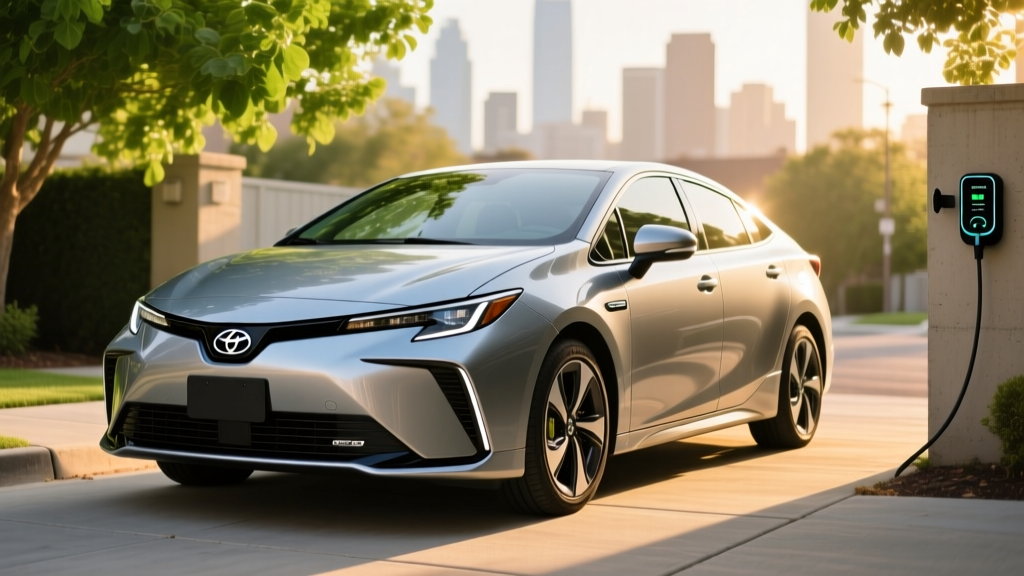
The Toyota Corolla Cross Hybrid occupies a narrow but valuable lane: a compact crossover that delivers genuine SUV utility with fuel economy that embarrasses many sedans. For 2026, Toyota continues to offer the Corolla Cross exclusively as a conventional hybrid (HEV) — there is no plug-in hybrid (PHEV) variant and no full-electric version in the U.S. lineup. That distinction matters, because buyers searching for the Corolla Cross Hybrid interior and specs sometimes confuse this model with Toyota's plug-in offerings like the RAV4 Prime. The Corolla Cross Hybrid never needs to be plugged in; it generates and recovers all its own electricity.
With an EPA combined rating of 42 MPG, standard electronic all-wheel drive, and a starting MSRP near $29,000, the Corolla Cross Hybrid is one of the most efficient AWD crossovers you can buy. Below, we break down the interior layout, real-world fuel economy, powertrain specs, battery longevity, and who should consider this hybrid over a PHEV or full EV.
Corolla Cross Hybrid Interior: Space, Materials, and Tech
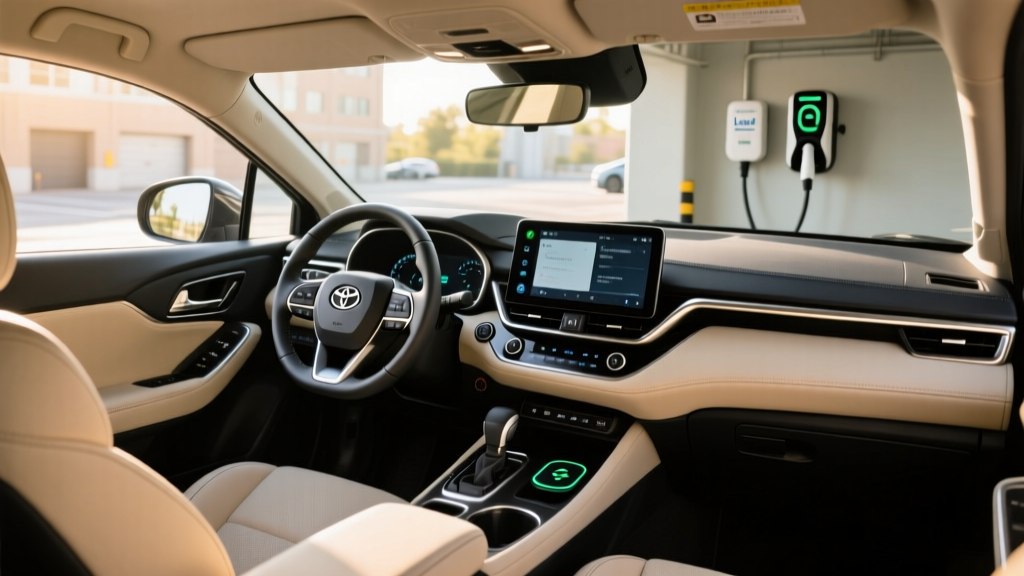
The Corolla Cross Hybrid interior is built around the same TNGA-C platform architecture as the Corolla sedan, but raised for crossover duty. The result is an upright seating position and a slightly commanding view of the road, though the overall footprint remains compact. Here is what you get across the trim lineup:
Seating and Cargo
The cabin accommodates five passengers, though the rear bench is best suited for two adults on longer trips. Front seats in the XLE and XSE trims feature Toyota's SofTex synthetic leather upholstery, while the base S trim uses cloth. Heated front seats are standard on XLE and above. Rear legroom measures approximately 32.8 inches — adequate for children and average-height adults, but tight compared to the RAV4 Hybrid's 40.1 inches.
Cargo volume behind the rear seats is rated at 25.5 cubic feet, expanding to roughly 57.3 cubic feet with the 60/40 split rear seats folded. That's enough for a week's groceries or two large suitcases, but it trails the RAV4 Hybrid (37.5 cu ft behind the rear row) and Honda CR-V Hybrid (36.3 cu ft). The hybrid battery pack is mounted under the rear seats, preserving cargo floor height — a packaging advantage over some competitors that sacrifice under-floor storage.
Infotainment and Connectivity
All 2026 Corolla Cross Hybrid trims come equipped with Toyota's latest multimedia system on an 8-inch touchscreen (the base S trim retains a 7-inch display on some configurations). Wireless Apple CarPlay and Android Auto are standard across the lineup. The XSE trim adds a 10.5-inch digital instrument cluster, while lower trims use a 7-inch multi-information display. A six-speaker audio system is standard; the available nine-speaker JBL premium system is reserved for the XSE with the Premium Audio package.
USB-C ports are provided for front and rear passengers (two front, two rear on XLE/XSE). A Qi-compatible wireless charging pad is standard on XLE and above. The physical climate control knobs — a holdover from the pre-refresh design — are a practical advantage for drivers who prefer tactile adjustments over touchscreen menus.
Visibility and Build Quality
The Corolla Cross Hybrid's greenhouse is relatively upright, providing good outward visibility. The rear quarter windows are generous, and the rearview camera offers a wide-angle lens. Build quality is consistent with Toyota's compact-car standards: soft-touch materials on the dashboard and door uppers, hard plastics on the lower door panels and center console sides. Panel gaps are tight, and the cabin is notably quiet at highway speeds thanks to acoustic-laminated front glass.
HEV vs. PHEV: Why the Corolla Cross Is a Conventional Hybrid
One of the most common questions from buyers researching the Corolla Cross Hybrid is whether it can be plugged in. It cannot. Understanding the difference between a conventional hybrid (HEV) and a plug-in hybrid (PHEV) is essential before making a purchase decision.
| Feature | Conventional Hybrid (HEV) | Plug-In Hybrid (PHEV) |
|---|---|---|
| Plug-in charging? | No — self-charging via engine and regenerative braking | Yes — can charge from a wall outlet or public charger |
| Electric-only range | Less than 1 mile at very low speeds | Typically 20–45 miles on battery alone |
| Battery size | ~1.0–1.6 kWh (small, buffers energy) | ~13–20 kWh (large enough for EV-mode driving) |
| Federal tax credit (§30D) | Not eligible | Up to $7,500 if sourcing/income/MSRP rules met |
| Best for | Drivers without home charging access; high-mileage commuters | Drivers with home charging and short daily commutes |
| Toyota example | Corolla Cross Hybrid, RAV4 Hybrid | RAV4 Prime (PHEV) |
The Corolla Cross Hybrid uses a small traction battery (approximately 1.3 kWh, nickel-metal hydride) that acts as an energy buffer. The electric motor assists the gasoline engine during acceleration and captures energy during braking, but the vehicle cannot drive meaningful distances on electricity alone. This is a deliberate engineering choice: it keeps cost, weight, and complexity down while still delivering substantial fuel savings.
Fuel Economy: EPA Ratings and Real-World MPG
The Corolla Cross Hybrid's headline number is its EPA fuel economy rating. According to fueleconomy.gov, the 2026 Corolla Cross Hybrid (all trims, AWD) is rated at:
| Cycle | EPA Rating | Real-World Expectation |
|---|---|---|
| City | 45 MPG | 46–50 MPG (hybrids often exceed EPA in stop-and-go) |
| Highway | 38 MPG | 35–38 MPG (sustained 70+ mph reduces regen benefit) |
| Combined | 42 MPG | 40–44 MPG depending on driving mix |
Why real-world city MPG often beats the EPA sticker: Conventional hybrids like the Corolla Cross Hybrid thrive in stop-and-go traffic, where regenerative braking constantly replenishes the small battery and the engine shuts off at stops. If your commute is predominantly urban, expect to see 46 MPG or higher consistently. Highway driving is the hybrid's weaker scenario — at sustained speeds above 65 mph, the gasoline engine does most of the work, and the electric motor's contribution diminishes.
Cold-weather impact: In sub-freezing temperatures, expect a 5–10% reduction in fuel economy. The engine must run more frequently to provide cabin heat (the Corolla Cross Hybrid does not use a heat pump, which is a feature reserved for full EVs and some PHEVs). Winter fuel economy of 37–39 MPG combined is typical in northern climates.
Powertrain Specs: Horsepower, Engine, and AWD System
The 2026 Corolla Cross Hybrid pairs a 2.0-liter four-cylinder Atkinson-cycle gasoline engine with Toyota's fifth-generation hybrid transaxle and a separate rear-mounted electric motor for electronic all-wheel drive (AWD-e). Here are the key figures:
| Specification | Value |
|---|---|
| Engine | 2.0L 4-cylinder Atkinson-cycle |
| Engine horsepower | 150 hp @ 6,000 rpm |
| Front electric motor | Integrated in hybrid transaxle |
| Rear electric motor (AWD-e) | 40 hp (rear axle) |
| Net combined system output | 196 hp |
| Transmission | Electronic continuously variable (eCVT) |
| Drivetrain | Electronic AWD (AWD-e), standard on all trims |
| 0–60 mph | ~7.5 seconds (est.) |
| Towing capacity | Not rated for towing |
| Curb weight | ~3,350 lbs |
The AWD-e system is worth explaining: the rear electric motor engages automatically when the front wheels lose traction — during hard acceleration, on wet roads, or in light snow. Unlike mechanical AWD systems, there is no driveshaft connecting the front and rear axles. This keeps weight down and eliminates drivetrain parasitic loss during normal cruising, which contributes to the strong highway fuel economy. However, the rear motor's 40 hp output means the AWD-e system is designed for traction enhancement, not off-road capability or performance driving.
Pricing, Trims, and Tax Credit Eligibility
The 2026 Corolla Cross Hybrid is offered in three trims. Pricing below reflects manufacturer MSRP before destination charges:
| Trim | MSRP (approx.) | Key Features |
|---|---|---|
| S Hybrid | $29,350 | 7-inch touchscreen, cloth seats, Toyota Safety Sense 3.0, LED headlights |
| XLE Hybrid | $31,550 | 8-inch touchscreen, SofTex seats, heated front seats, wireless charging, dual-zone climate |
| XSE Hybrid | $33,500 | Sport-tuned suspension, 18-inch alloy wheels, 10.5-inch digital cluster, available JBL audio |
Federal tax credit status: The Corolla Cross Hybrid does not qualify for the IRS §30D Clean Vehicle Credit. That credit (up to $7,500) is reserved for plug-in electric vehicles — battery-electric vehicles (BEVs) and plug-in hybrids (PHEVs) that meet battery sourcing, critical mineral, MSRP cap, and buyer income requirements. Because the Corolla Cross Hybrid is a conventional HEV with no plug-in capability, it is ineligible. For current §30D rules, consult the IRS guidance on qualified plug-in electric drive vehicles.
State-level incentives: Some states offer rebates or HOV lane access for conventional hybrids, though these programs have become less common as incentives shift toward plug-in vehicles. Check your state's energy office or department of environmental quality for current programs, as these vary by jurisdiction and change frequently.
Battery Warranty, Reliability, and Replacement Cost
Reliability track record: Toyota's hybrid system — now in its fifth generation — has accumulated over 25 years of real-world data since the original Prius launched in Japan in 1997. The Corolla Cross Hybrid uses a proven eCVT transaxle with no traditional gears or belts to wear out. The Atkinson-cycle 2.0L engine operates under less thermal stress than a conventional engine because the electric motor handles peak acceleration loads. Based on historical data from Toyota's hybrid fleet, the traction battery is designed to last the life of the vehicle under normal use.
Battery chemistry note: Unlike many competitors that have moved to lithium-ion packs, the Corolla Cross Hybrid uses a nickel-metal hydride (NiMH) traction battery. NiMH is less energy-dense than lithium-ion, but it is extremely durable, tolerant of temperature extremes, and inexpensive to manufacture. For a small-buffer HEV application where energy density is less critical, NiMH remains a pragmatic choice.
Replacement cost if out of warranty: Should the hybrid battery require replacement after the 10-year/150,000-mile warranty expires, expect a cost of approximately $2,000–$3,500 for a refurbished or new OEM battery pack, plus labor. This is significantly less than EV battery replacement ($8,000–$20,000+) because the Corolla Cross Hybrid's pack is small (~1.3 kWh). Independent hybrid specialists in most metro areas can perform the swap, often at lower cost than a dealership.
According to IIHS, the Corolla Cross has performed well in crash testing, and Toyota Safety Sense 3.0 — standard on all trims — includes pre-collision braking with pedestrian detection, lane departure alert with steering assist, full-speed-range adaptive cruise control, and lane tracing assist. These are SAE Level 2 driver-assistance features, meaning the driver must remain fully engaged and hands-on at all times.
Corolla Cross Hybrid vs. Full EV vs. PHEV: Which Is Right for You?
Choose the Corolla Cross Hybrid (HEV) if:
- You lack access to home or workplace charging (apartment, street parking, no garage outlet)
- You drive 15,000+ miles per year and want consistent fuel savings without changing habits
- You want AWD capability for snow/rain without the cost premium of a PHEV or EV
- Your budget is under $35,000 and you don't want to wait for a plug-in model
Choose a PHEV (like the RAV4 Prime) if:
- You can install a Level 2 home charger and your daily commute is under 40 miles
- You want to drive on electricity most days but need gas flexibility for road trips
- You qualify for the §30D federal tax credit (income, MSRP, and sourcing rules apply)
Choose a full EV (like the Hyundai Ioniq 5 or Tesla Model Y) if:
- You have reliable home Level 2 charging
- You want zero tailpipe emissions and the lowest per-mile fuel cost
- Your daily driving is under 250 miles and you're comfortable planning DC fast-charging stops on road trips
- You want access to the full $7,500 federal credit (if eligible) and state EV rebates
Pros and Cons
- 42 MPG combined EPA — best-in-class for AWD compact crossovers
- Standard AWD-e on every trim (no FWD-only base model)
- 10-year/150,000-mile hybrid battery warranty
- Proven, low-complexity powertrain with strong reliability data
- Sub-$30K starting price for S Hybrid trim
- Good outward visibility and quiet cabin at highway speeds
- Toyota Safety Sense 3.0 standard across all trims
- Rear seat legroom is tight for taller adults (32.8 in.)
- Cargo volume (25.5 cu ft) trails RAV4 Hybrid and CR-V Hybrid
- No plug-in option — cannot access §30D federal tax credit
- Base S trim uses smaller 7-inch screen; no premium audio option
- Not rated for towing
- Highway MPG (38) is less impressive than city (45)
- Modest 196 hp — adequate but not quick for highway merging
Frequently Asked Questions
How many MPG does the Corolla Cross Hybrid get?
The EPA rates the 2026 Corolla Cross Hybrid at 45 MPG city, 38 MPG highway, and 42 MPG combined. In real-world city driving, many owners report 46–50 MPG thanks to regenerative braking. Highway-heavy trips at 70+ mph will yield closer to 35–38 MPG.
Does the Corolla Cross Hybrid need to be plugged in?
No. The Corolla Cross Hybrid is a conventional hybrid (HEV), not a plug-in hybrid (PHEV). It charges its own small battery through the gasoline engine and regenerative braking. You fuel it like any other gas car — there is no charging port.
Is the Corolla Cross Hybrid reliable, and what does battery replacement cost?
Toyota's hybrid system has over 25 years of proven reliability. The hybrid battery is covered by a 10-year/150,000-mile warranty. If replacement is ever needed out of warranty, expect $2,000–$3,500 — far less than an EV battery swap because the pack is only ~1.3 kWh.
Does the Corolla Cross Hybrid qualify for a federal tax credit?
No. The IRS §30D Clean Vehicle Credit applies only to plug-in electric vehicles (BEVs and PHEVs). The Corolla Cross Hybrid is a conventional hybrid and is not eligible. Some states may offer hybrid-specific rebates — check your state's energy office for current programs.
How does the Corolla Cross Hybrid interior compare to the RAV4 Hybrid?
The Corolla Cross Hybrid is a class smaller. It offers 25.5 cu ft of cargo space vs. the RAV4 Hybrid's 37.5 cu ft, and 32.8 inches of rear legroom vs. 40.1 inches. The Corolla Cross Hybrid is better suited for singles, couples, or small families who prioritize fuel economy and a lower purchase price over interior volume.
Can the Corolla Cross Hybrid tow a trailer?
Toyota does not rate the Corolla Cross Hybrid for towing. If you need a hybrid crossover with towing capacity, the RAV4 Hybrid is rated for up to 1,750 lbs, and the RAV4 Prime PHEV for up to 1,750 lbs as well.
What is the Corolla Cross Hybrid's 0–60 mph time?
Toyota does not publish an official 0–60 time for the Corolla Cross Hybrid. Independent testing and estimates place it at approximately 7.5 seconds with the full 196 hp system output. This is adequate for highway merging and everyday driving but not sporty.
Sources: fueleconomy.gov (EPA fuel economy data), irs.gov (§30D Clean Vehicle Credit rules), iihs.org (safety ratings). Always verify current-year pricing and incentive eligibility with official manufacturer and government sources before purchasing.