The Only Plug-In Hybrid AWD Minivan: Quick Verdict
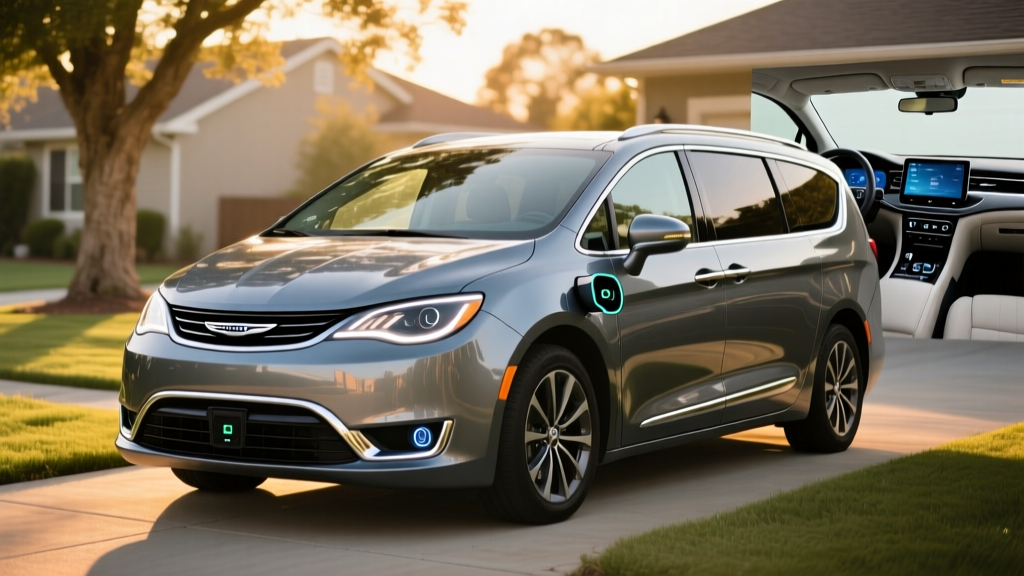
The Chrysler Pacifica Hybrid remains a singular proposition in the US market: it is the only plug-in hybrid minivan available with all-wheel drive, combining roughly 32 miles of electric-only range with the cargo-hauling practicality families demand. For the 2026 model year, Chrysler continues to position the Pacifica Hybrid as a bridge vehicle for households that want daily electric commuting without surrendering the option of a 450-mile road trip without stopping to charge.
But the Pacifica Hybrid's dual personality comes with trade-offs. Its AWD system is only available on gas-only trims — a critical distinction buyers frequently miss. The plug-in hybrid variant is front-wheel drive only. If you need all-wheel drive and plug-in hybrid efficiency in a minivan, you are currently out of luck. This guide breaks down exactly what the Pacifica Hybrid delivers, where it falls short, and whether it beats a full EV or conventional hybrid for your household.
Pacifica Hybrid Powertrain and Performance Specs
The Pacifica Hybrid pairs a 3.6-liter Pentastar V6 engine operating on the Atkinson cycle with a dual-motor electric drive system integrated into a continuously variable transmission (eVT). The combined system output is 260 horsepower — adequate for a loaded minivan but not quick by modern standards.
| Spec | Value |
|---|---|
| Combined System Power | 260 hp |
| Engine | 3.6L V6 Atkinson-cycle + dual electric motors |
| Transmission | eVT (electrically variable transmission) |
| Drivetrain | Front-wheel drive (AWD not available on PHEV) |
| Battery Capacity (usable) | 16 kWh (lithium-ion NMC) |
| EPA Electric-Only Range | 32 miles |
| EPA Total Range (gas + electric) | 520 miles |
| EPA MPGe (electric mode) | 82 MPGe combined |
| 0-60 mph | ~7.5 seconds |
| Towing Capacity | Not rated (PHEV); gas AWD rated 3,600 lbs |
The 16 kWh battery pack is mounted under the second-row floor, which preserves Stow 'n Go seating in the third row but eliminates the ability to fold the second-row seats into the floor — a notable cargo-flexibility penalty versus the gas-only Pacifica. Second-row seats in the Hybrid are removable but not stowable.
Fuel Economy: EPA MPG and Real-World Expectations
Understanding the Pacifica Hybrid's efficiency requires splitting it into two operating modes: electric (charge-depleting) and hybrid (charge-sustaining). Here is the full EPA breakdown from fueleconomy.gov:
| Mode | City | Highway | Combined |
|---|---|---|---|
| Electric-only (MPGe) | — | — | 82 MPGe |
| Hybrid (gasoline, MPG) | 29 | 30 | 30 MPG |
Real-world expectations: The 30 MPG combined rating in hybrid mode is solid for a 4,800-pound minivan. In practice, city-heavy driving with frequent regenerative braking can push the hybrid-mode figure slightly higher — some owners report 31-33 MPG in suburban stop-and-go conditions. Highway driving at 75+ mph will drop this to roughly 26-28 MPG, as the V6 works harder without regen assistance.
The 32-mile electric-only range is realistic for moderate-temperature suburban driving. In winter conditions (below 32°F), expect that range to contract to roughly 22-26 miles as cabin heating draws from the battery and cold reduces cell efficiency. If your daily round-trip commute is under 30 miles and you charge nightly, you may burn gasoline only on longer weekend trips.
Charging the Pacifica Hybrid: Times, Levels, and Limitations
The Pacifica Hybrid's 16 kWh battery charges exclusively via AC power — there is no DC fast-charging capability, which is typical for PHEVs in this class. Here is what to expect:
| Level | Power (kW) | 0-100% Time | Notes |
|---|---|---|---|
| Level 1 (120V household) | ~1.4 kW | ~14 hours | Included cord; adequate for overnight |
| Level 2 (240V home/public) | ~7.2 kW | ~2 hours | Recommended for daily use |
| DC Fast Charge | N/A | N/A | Not supported |
A Level 2 home charger is strongly recommended. With a 240V outlet (NEMA 14-50 or hardwired wall unit), a full charge takes roughly two hours — meaning you can easily recharge during a midday break if your schedule allows. The included Level 1 cord works for overnight charging if your daily electric mileage is under 25 miles, but a full Level 1 recharge from empty takes 14 hours, which is impractical for daily full-battery cycles.
The charge port uses a standard J1772 connector, compatible with virtually all public Level 2 stations in the US. Home Level 2 charger installation typically costs $500-$1,500 including equipment and electrician labor, depending on panel proximity and local permit requirements.
HEV vs PHEV vs EV: Which Minivan Fits Your Family?
Buyers cross-shopping the Pacifica Hybrid often ask whether a conventional hybrid (HEV), plug-in hybrid (PHEV), or full battery-electric vehicle (BEV) makes more sense. Here is the decision framework specific to minivan shoppers:
Choose the Pacifica Hybrid (PHEV) if:
- Your daily driving is under 30 miles round-trip and you can charge at home nightly
- You take road trips of 200+ miles several times per year and want zero range anxiety
- You need minivan cargo space and sliding doors but want to minimize fuel costs on school runs
- You lack reliable access to public DC fast chargers on your common routes
Choose a Full EV (e.g., Kia EV9, Tesla Model X) if:
- You have home Level 2 charging and your longest regular trip is under 250 miles
- You want zero gasoline purchases, zero oil changes, and minimal drivetrain maintenance
- You prioritize performance and one-pedal driving over maximum cargo volume
Choose the Gas-Only Pacifica (with available AWD) if:
- You cannot install a home charger (apartment, street parking)
- You need all-wheel drive for snow-belt climates
- You need second-row Stow 'n Go seating for frequent cargo reconfiguration
- Your annual mileage is low enough that fuel savings won't offset the PHEV price premium
The conventional hybrid (HEV) comparison is less relevant here because Chrysler does not offer a non-plug-in hybrid Pacifica — the choice is PHEV or gas-only. Competitors like the Toyota Sienna are offered exclusively as a conventional HEV (36 MPG combined, no plug, no electric-only range to speak of beyond a mile or two at low speed). The Sienna HEV is the better pick if you want hybrid efficiency without ever plugging in, and it offers AWD.
Pricing, Trims, and Federal Tax Credit Eligibility
The 2026 Chrysler Pacifica Hybrid starts at approximately $51,095 for the Select trim (including destination), with the Pinnacle trim reaching roughly $58,095. These prices represent a significant premium over the gas-only Pacifica, which starts around $41,000.
| Trim | MSRP | Key Features |
|---|---|---|
| Select | ~$51,095 | Leatherette seats, Uconnect 5, power liftgate |
| Pinnacle | ~$58,095 | Nappa leather, 360° camera, premium audio |
Federal §30D Tax Credit Status
Under current IRS §30D rules, the Pacifica Hybrid's eligibility for the up-to-$7,500 federal tax credit depends on meeting three concurrent requirements: critical minerals sourcing, battery component manufacturing, and buyer income limits. As of the 2026 tax year, the Pacifica Hybrid's battery sourcing has historically not met the full critical-minerals threshold required for the complete $7,500 credit. Buyers may qualify for a partial credit ($3,750) if the battery-component requirement is met but the critical-minerals requirement is not — this varies by production batch and model year.
- Buyer income cap: Modified AGI must not exceed $150,000 (single), $225,000 (head of household), or $300,000 (joint)
- MSRP cap: Vans and SUVs capped at $80,000 — the Pacifica Hybrid clears this easily
- Point-of-sale transfer: Eligible buyers can transfer the credit to the dealer at purchase, reducing the out-of-pocket price immediately
Important: Tax credit eligibility changes frequently as sourcing supply chains shift. Consult a tax professional or check the fueleconomy.gov tax credit page for the latest status before purchasing.
Battery Warranty, Reliability, and Replacement Cost
The Pacifica Hybrid's high-voltage battery is covered by Chrysler's standard hybrid battery warranty: 10 years or 100,000 miles (whichever comes first) in most states, extended to 10 years or 150,000 miles in California Air Resources Board (CARB) states. The warranty guarantees the battery will retain a minimum capacity threshold — typically 70% of original capacity — throughout the coverage period.
• Coverage: 10 years / 100,000 miles (150,000 in CARB states)
• Capacity threshold: ~70% state of health
• Hybrid system components (e-motors, inverter): 8 years / 100,000 miles
• 12V auxiliary battery: 3 years / 36,000 miles (standard warranty)
Reliability track record: The Pacifica Hybrid has had a mixed reliability history. Early model years (2017-2019) experienced recalls related to the high-voltage battery system, including a notable recall for potential battery cell failure that could cause a loss of propulsion. Chrysler addressed these with software updates and battery pack replacements under warranty. More recent model years (2022-present) have shown improved reliability, though the Pacifica Hybrid still trails the Toyota Sienna in long-term dependability surveys from Consumer Reports and J.D. Power.
Battery replacement cost: Out of warranty, a full high-voltage battery replacement for the Pacifica Hybrid runs approximately $8,000-$12,000 including parts and labor. However, individual module replacement (if only specific cells have degraded) can reduce this to $2,000-$4,000 at a qualified hybrid service center. Given the 10-year warranty and the relatively modest 16 kWh pack size, catastrophic battery failure costs are less severe than in larger full-EV packs.
Pros, Cons, and Ownership Reality
Pros
- 32 miles electric-only covers most school-run commutes gasoline-free
- 520-mile total range eliminates road-trip charging anxiety
- Minivan practicality: sliding doors, 3 rows, family-friendly
- 30 MPG hybrid mode beats gas-only Pacifica by ~10 MPG
- Level 2 charging in ~2 hours is fast for a PHEV
- Strong 10-year/100,000-mile battery warranty
Cons
- AWD is NOT available on the Hybrid — FWD only
- No second-row Stow 'n Go (seats remove but don't fold into floor)
- No DC fast charging — long road trips rely entirely on gasoline
- $51K+ starting price is steep for a minivan
- Partial or no federal tax credit depending on sourcing
- Average reliability ratings versus Sienna HEV
- Towing not rated on PHEV trim
Frequently Asked Questions
How many MPG does the Chrysler Pacifica Hybrid get?
The Pacifica Hybrid achieves an EPA-rated 30 MPG combined (29 city / 30 highway) when operating in hybrid mode after the battery is depleted. In electric-only mode, it earns 82 MPGe combined. Real-world city driving with regenerative braking can yield 31-33 MPG, while sustained highway driving at 75+ mph typically drops to 26-28 MPG.
How far can the Pacifica Hybrid go on electric only?
The EPA rates the Pacifica Hybrid at 32 miles of electric-only range. In real-world conditions, expect 28-32 miles in mild weather with moderate driving, dropping to 22-26 miles in freezing temperatures when cabin heating draws additional power. Once the battery depletes, the V6 engine engages seamlessly and the vehicle continues as a conventional hybrid.
Is there a Chrysler Pacifica Hybrid with AWD?
No. The Pacifica Hybrid (PHEV) is front-wheel drive only. Chrysler offers AWD exclusively on gas-only Pacifica trims. If AWD is essential for your climate, you must choose the gas-only Pacifica (no plug-in capability) or look at the Toyota Sienna (HEV with available AWD, but no plug-in option).
Is the Pacifica Hybrid reliable, and what does a battery replacement cost?
Reliability has improved in recent model years after early recalls for battery system issues. The battery is warrantied for 10 years/100,000 miles (150,000 in CARB states). Out-of-warranty full battery replacement costs approximately $8,000-$12,000, though module-level repairs can be $2,000-$4,000. Overall reliability still trails the Toyota Sienna in major surveys.
Does the Pacifica Hybrid qualify for a federal tax credit?
Eligibility for the federal §30D credit (up to $7,500) depends on current battery sourcing requirements. The Pacifica Hybrid has historically qualified for a partial credit ($3,750) rather than the full amount due to critical-minerals sourcing limitations. Buyer income caps ($150K single / $300K joint) and the $80,000 MSRP cap for vans also apply. The credit can be transferred to the dealer at point of sale. Verify current eligibility on irs.gov before purchasing, as sourcing rules update periodically.
How does the Pacifica Hybrid compare to the Toyota Sienna?
The Sienna is a conventional hybrid (HEV) — no plug, no meaningful electric-only range — but achieves 36 MPG combined versus the Pacifica Hybrid's 30 MPG in gas mode. The Sienna offers AWD, better reliability ratings, and a lower starting price (~$40,000). The Pacifica Hybrid wins on electric-only daily driving (32 miles plug-in), which can reduce gasoline consumption to near zero for short-commute families who charge nightly. If you can plug in, the Pacifica Hybrid saves more fuel; if you cannot, the Sienna HEV is the more efficient and reliable choice.