If you've been searching for a Chevy plug-in hybrid, the landscape in 2026 requires some careful navigation. Chevrolet's electrification strategy has shifted significantly over the past few years, and understanding exactly what Chevy currently offers — and what qualifies as a true plug-in hybrid (PHEV) versus a conventional hybrid (HEV) or mild-hybrid system — is essential before you visit a dealer.
This guide breaks down Chevy's current hybrid and electrified lineup, clarifies which models you can actually plug in, and helps you determine whether a Chevy hybrid, a competitor's PHEV, or a full battery-electric vehicle (BEV) is the right move for your driving needs.
Chevy's Electrified Lineup in 2026: What's Actually Available
Chevrolet's current hybrid and electrified vehicle roster is narrower than many buyers expect. Here's what's in showrooms for the 2026 model year:
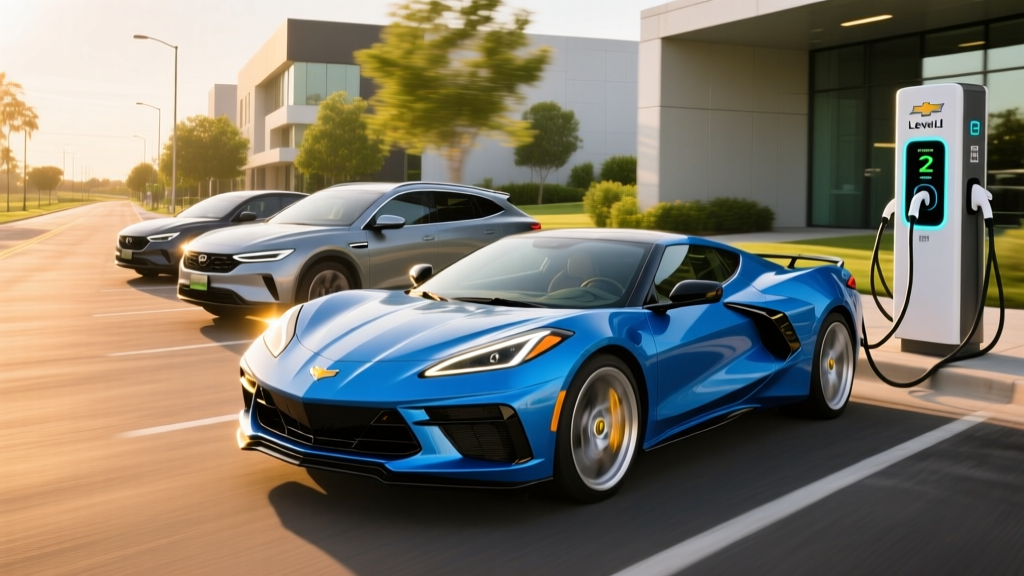
- Corvette E-Ray: A performance-oriented mild hybrid with a small battery and electric front axle — not a plug-in.
- Silverado Hybrid (mild-hybrid assist): Available on select trims with a 48-volt system for stop-start and torque fill — not a plug-in.
- Chevrolet Equinox EV and Blazer EV: Full battery-electric vehicles (BEVs), not hybrids.
- Chevrolet Silverado EV: Full BEV pickup — not a hybrid.
The critical takeaway: Chevrolet does not currently sell a mainstream plug-in hybrid (PHEV) in the U.S. market for 2026. The Volt, Chevy's iconic PHEV, was discontinued after the 2019 model year. If you want a Chevy you can plug in for electric-only driving, you're looking at their full EV lineup — not a hybrid.
HEV vs PHEV vs Mild Hybrid: Understanding the Differences
| Feature | Mild Hybrid (MHEV) | Conventional Hybrid (HEV) | Plug-In Hybrid (PHEV) |
|---|---|---|---|
| Plug-in charging | No | No | Yes |
| Electric-only range | None | None (assist only) | 20–45 miles typical |
| Battery size | 0.5–2 kWh | 1–2 kWh | 12–25 kWh |
| Gas engine | Yes (primary) | Yes (primary) | Yes (backup/combined) |
| Example (Chevy) | Corvette E-Ray | None current | None current (Volt discontinued) |
| Federal tax credit | No | No | Potential (§30D) |
This distinction matters because many shoppers searching for a "Chevy plug-in" may conflate the Corvette E-Ray's hybrid badge with a true PHEV. The E-Ray cannot drive on electricity alone for meaningful distances, and you never plug it in. It uses a 1.9 kWh lithium-ion battery primarily for all-wheel-drive traction and performance boost.
Corvette E-Ray: Chevy's Current Hybrid — Specs and Reality
The 2026 Corvette E-Ray pairs a 6.2L LT2 V8 (495 hp) with a front-axle electric motor (160 hp) for a combined 655 horsepower. It's the quickest Corvette Chevrolet has ever built — 0-60 mph in approximately 2.5 seconds — but it's a performance hybrid, not an efficiency play.
| Spec | 2026 Corvette E-Ray |
|---|---|
| Powertrain | 6.2L V8 + front electric motor (AWD) |
| Combined HP | 655 hp |
| Battery | 1.9 kWh lithium-ion |
| Plug-in capable | No (charges via regen/engine) |
| Electric-only mode | Stealth Mode: ~4 miles at low speed (limited) |
| EPA MPG (combined) | ~19 MPG (est. based on prior year) |
| 0-60 mph | ~2.5 seconds |
| Starting MSRP | ~$111,795 (1LZ coupe) |
| Federal tax credit | Not eligible (mild hybrid, no plug-in) |
The E-Ray's "Stealth Mode" allows brief electric-only propulsion at low speeds — useful for leaving a neighborhood quietly — but this is not a commuter-friendly electric range. You'll visit the gas station, not a charger.
Chevy's Full EV Options: If You Want to Plug In
If plug-in capability is your priority, Chevrolet's 2026 battery-electric lineup is where you'll find it. These are not hybrids — they run entirely on electricity with no gasoline backup:
| Model | EPA Range | Battery | Max DC Charge | Starting MSRP |
|---|---|---|---|---|
| Equinox EV (2LT) | ~319 mi | ~85 kWh (NMC) | 150 kW | ~$34,900 |
| Blazer EV (2LT) | ~293 mi | ~102 kWh (NMC) | 190 kW | ~$44,600 |
| Silverado EV (4WT) | ~390 mi | ~200 kWh (NMC) | 350 kW | ~$55,000 |
According to fueleconomy.gov, the Equinox EV delivers an estimated 95 MPGe combined, making it one of the most efficient electric crossovers in its class. For buyers who want Chevy branding and plug-in capability, these BEVs are the current path — but they come with the charging infrastructure considerations that full EVs require.
PHEV Alternatives: What to Consider Beyond Chevy
If you specifically want a plug-in hybrid — the ability to drive 25-40 miles on electricity alone, then switch to a gasoline engine for longer trips — you'll need to look beyond Chevrolet's 2026 showroom. Here are the PHEV benchmarks in key segments:
| Model | Electric Range | Combined MPG (gas) | Battery | MSRP |
|---|---|---|---|---|
| Toyota RAV4 Prime | 42 mi | 38 MPG | 18.1 kWh | ~$44,500 |
| Hyundai Tucson PHEV | 33 mi | 35 MPG | 13.8 kWh | ~$38,500 |
| Jeep Wrangler 4xe | 21 mi | 20 MPG | 17.3 kWh | ~$51,000 |
| Ford Escape PHEV | 37 mi | 40 MPG | 14.4 kWh | ~$39,000 |
These PHEVs offer the best of both worlds: daily electric commuting with gas-engine freedom for road trips. Most charge on Level 2 (240V) in 2-3 hours. None offer DC fast charging, which is typical for PHEVs given their smaller batteries.
Tax Credits and Incentives: What Qualifies in 2026
Federal tax credit eligibility under IRS §30D has specific requirements that affect both PHEVs and BEVs:
- Vehicle MSRP cap: $80,000 for SUVs/pickups/vans; $55,000 for sedans
- Buyer income cap: $300,000 joint / $225,000 head of household / $150,000 single
- Battery sourcing: Critical minerals and battery components must meet phased-in domestic/free-trade requirements (percentages increase annually)
- Credit amount: Up to $7,500 ($3,750 for critical minerals + $3,750 for battery components)
- Point-of-sale transfer: Eligible buyers can transfer the credit to the dealer for an upfront price reduction
- Minimum battery capacity: 7 kWh for PHEVs and BEVs
For Chevy's current lineup: The Equinox EV and Blazer EV may qualify for partial or full credits depending on the buyer's income and current battery-sourcing compliance. The Corvette E-Ray, as a mild hybrid without plug-in capability, does not qualify. Always verify eligibility with a tax professional and the IRS's updated qualified vehicles list before purchasing, as sourcing requirements tighten each year.
Battery Warranties, Reliability, and Replacement Costs
Hybrid and PHEV battery warranties are federally mandated to cover at least 8 years or 100,000 miles (10 years/150,000 miles in California and states adopting CARB standards). This applies to all new hybrids, PHEVs, and BEVs sold in the U.S.
For Chevy's current electrified vehicles:
- Corvette E-Ray: The 1.9 kWh hybrid battery carries an 8-year/100,000-mile warranty. Given its small size and mild-hybrid use (shallow cycling), degradation concerns are minimal. Replacement cost if out of warranty: estimated $2,000–$4,000 based on comparable mild-hybrid systems.
- Chevy BEVs (Equinox EV, Blazer EV, Silverado EV): Battery warranty covers 8 years/100,000 miles with a capacity retention threshold of 70%. Full battery replacement costs vary enormously — $15,000–$30,000+ depending on pack size — but catastrophic failure within the warranty period is covered.
Real-world data from the discontinued Chevy Volt (PHEV) showed excellent battery longevity, with many examples exceeding 150,000 miles on the original pack with minimal degradation. PHEV batteries generally experience less stress than BEV packs because they cycle through a narrower state-of-charge window, preserving cycle life.
Who Should Choose a Chevy Electrified Vehicle — And Who Shouldn't
Choose a Chevy BEV (Equinox EV, Blazer EV) if:
- You have reliable home Level 2 charging (240V)
- Your daily commute is under 250 miles round-trip
- You want zero tailpipe emissions and the lowest per-mile fuel cost
- You're comfortable planning DC fast-charging stops on road trips
Look at a competitor's PHEV if:
- You want electric commuting but no range anxiety on long trips
- You lack consistent home charging access
- You frequently drive 300+ miles in a day through areas with sparse charging
- You want a compact or midsize SUV with plug-in capability (Chevy doesn't offer this)
The Corvette E-Ray makes sense if:
- You want a performance sports car with AWD and hybrid efficiency gains
- Fuel economy is a secondary concern to 655 hp and 2.5-second 0-60 times
- You understand it's a mild hybrid — not a plug-in vehicle
Frequently Asked Questions
Does Chevrolet make a plug-in hybrid in 2026?
No. Chevrolet discontinued the Volt PHEV after 2019 and does not currently offer a plug-in hybrid in its U.S. lineup. Chevy's electrified options are either mild hybrids (Corvette E-Ray) or full battery-electric vehicles (Equinox EV, Blazer EV, Silverado EV).
How many MPG does the Corvette E-Ray get?
The Corvette E-Ray returns approximately 19 MPG combined. It is a performance mild hybrid, not designed for fuel efficiency. The electric front axle provides AWD traction and performance boost, not meaningful fuel savings.
Can I plug in the Corvette E-Ray to charge it?
No. The E-Ray's 1.9 kWh battery charges exclusively through regenerative braking and the gasoline engine. There is no charge port. This is a defining characteristic of mild hybrids versus plug-in hybrids.
What Chevy electric vehicle has the best range?
The 2026 Chevrolet Silverado EV with the max-range battery offers an EPA-estimated ~390 miles of range, making it the longest-range Chevy available. The Equinox EV offers ~319 miles at a significantly lower price point.
Does any Chevy qualify for the $7,500 federal tax credit?
Potentially. The Equinox EV and Blazer EV may qualify for partial or full §30D credits depending on your income, the vehicle's MSRP, and current battery-sourcing compliance. Credit eligibility changes as sourcing rules tighten annually. Verify on the IRS qualified vehicles list and consult a tax professional before relying on credit amounts in your purchase decision.
Is a PHEV or full EV better for someone without home charging?
A PHEV is generally the better choice if you lack home charging. You can fuel up at any gas station and still benefit from electric-only driving when you do have access to charging. A full EV without home charging means relying entirely on public infrastructure, which adds time and cost to daily ownership.
What is the battery replacement cost for a Chevy EV?
Full BEV battery replacement ranges from approximately $15,000 to $30,000+ depending on pack size (85 kWh to 200 kWh). However, batteries are warranted for 8 years/100,000 miles at minimum 70% capacity retention, and real-world degradation data suggests most packs will last well beyond the warranty period with gradual, manageable capacity loss rather than sudden failure.
The Bottom Line on Chevy Plug-In Options
Chevrolet's 2026 lineup forces a clear choice: go full electric with a BEV, or accept that Chevy doesn't compete in the PHEV space. If plug-in hybrid capability — electric commuting with gasoline backup — is your priority, you'll find excellent options from Toyota, Hyundai, Ford, and Jeep. If you're committed to the Chevy brand and want to plug in, the Equinox EV at ~$34,900 with ~319 miles of range represents one of the most affordable long-range electric crossovers on the market, and it may qualify for federal incentives that narrow the gap with PHEV competitors.
The key is matching the vehicle to your actual driving pattern. Daily commuters with home charging are well-served by a BEV. Frequent long-distance drivers without reliable charging access are better served by a competitor's PHEV. And if you're shopping for a 655-hp AWD sports car, the Corvette E-Ray is in a class of one — just don't expect to plug it in.