The 2025 Chevy Equinox RS: Hybrid or Electric?
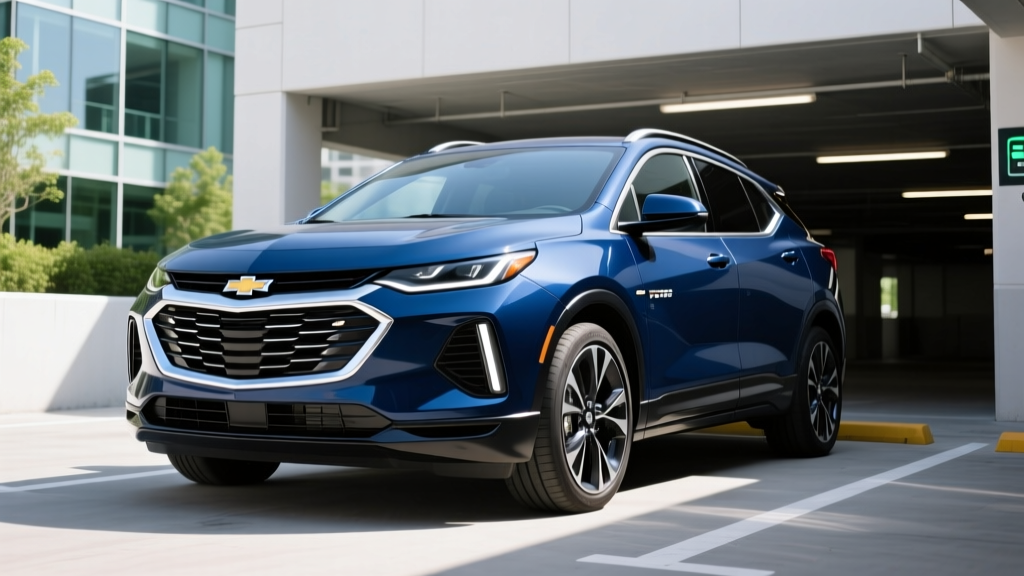
If you've been searching for the 2025 Chevy Equinox RS hybrid price, here's the essential clarification upfront: Chevrolet does not offer a hybrid or plug-in hybrid version of the 2025 Equinox. The current-generation Equinox (redesigned for 2025) is available in two distinct powertrain forms:
- Gas-only (ICE): A 1.5L turbocharged four-cylinder across LS, LT, RS, and Activ trims
- Fully electric (Equinox EV): A battery-electric vehicle (BEV) offered in LT, RS, and Launch Edition trims — but notably, the EV lineup uses different trim availability in some model years
The Equinox RS trim for 2025 is available as a gas-powered model. The Equinox EV is a separate vehicle built on GM's Ultium platform and does not share the RS badge in all configurations for 2025. This guide breaks down exactly what you can buy, what it costs, and whether a hybrid alternative from Chevy might serve you better.
2025 Chevy Equinox (Gas RS) vs Equinox EV: Side-by-Side Specs
| Specification | 2025 Equinox RS (Gas) | 2025 Equinox EV 3RS (if available) / 2LT |
|---|---|---|
| Powertrain | 1.5L Turbo I4 | Ultium BEV (FWD or AWD e-AWD) |
| Horsepower | 175 hp | 213 hp (FWD) / 288 hp (AWD) |
| EPA Range / Fuel Economy | ~26 city / 31 hwy / 28 combined MPG | ~315–319 mi EPA range (FWD); ~285–290 mi (AWD) |
| Efficiency (MPGe) | N/A | ~109 MPGe combined (FWD) |
| Battery / Fuel Tank | 15.6 gal fuel tank | 85 kWh usable (NMC, Ultium) |
| Charging (DC Fast) | N/A | ~150 kW peak; 10–80% in ~30 min |
| Level 2 Charging | N/A | 11.5 kW onboard; ~9.5 hrs (0–100%) |
| 0–60 mph | ~8.5 sec (est.) | ~8.0 sec (FWD) / ~6.5 sec (AWD) |
| Base MSRP (RS trim) | ~$33,400 (RS gas) | ~$43,400 (EV 2LT); RS EV pricing varies by MY |
| Federal Tax Credit (§30D) | None | Up to $7,500 (subject to sourcing/income rules) |
| Drivetrain Warranty | 5 yr / 60,000 mi | 8 yr / 100,000 mi (battery & powertrain) |
Sources: fueleconomy.gov, Chevrolet Equinox EV specs. Pricing reflects approximate MSRP at launch; confirm with dealer for current model-year availability.
Fuel Economy and Real-World MPG: Gas Equinox RS
For the gas-powered 2025 Equinox RS with the 1.5L turbo, the EPA rates this SUV at approximately:
| Driving Condition | EPA Estimate | Real-World Expectation |
|---|---|---|
| City | 26 MPG | 24–27 MPG (turbo engines can vary with driving style) |
| Highway | 31 MPG | 28–32 MPG (steady cruising can exceed EPA) |
| Combined | 28 MPG | 26–29 MPG |
The 1.5L turbocharged engine uses a continuously variable transmission (CVT), which helps city efficiency but can feel sluggish under hard acceleration. Front-wheel drive is standard; all-wheel drive drops highway MPG by roughly 1–2 MPG across the board.
For comparison, a compact hybrid SUV like the Toyota RAV4 Hybrid achieves an EPA-estimated 41 MPG combined — roughly 46% better fuel economy than the gas Equinox RS. This is the gap that drives many buyers to search for a hybrid Equinox that doesn't currently exist.
Equinox EV Efficiency: MPGe and Real-World Range
The Equinox EV replaces MPG with MPGe (miles per gallon equivalent), which converts electricity consumption into a gasoline-equivalent metric. The FWD Equinox EV achieves approximately 109 MPGe combined, translating to roughly 31–33 kWh per 100 miles of driving.
The Equinox EV supports DC fast charging at up to 150 kW peak. However, as with all EVs, peak rate is not sustained rate. The charge curve tapers significantly above 80% state of charge (SoC). A 10–80% session takes approximately 30 minutes at a capable 150+ kW charger. Charging from 80–100% can add another 20–25 minutes due to cell-balancing and taper. For daily driving, charging to 80% is recommended for long-term battery health.
Hybrid vs PHEV vs EV: Which Chevy Fits Your Life?
Since Chevrolet does not offer a hybrid or PHEV Equinox, buyers cross-shopping electrified compact SUVs face a decision tree. Here's how to navigate it:
| Factor | Gas Equinox RS | Equinox EV (BEV) | Competitor Hybrid (e.g., RAV4 Hybrid, CR-V Hybrid) |
|---|---|---|---|
| Home Charging Access | Not needed | Essential (Level 2 strongly recommended) | Not needed |
| Daily Commute <40 mi | Adequate | Excellent (charge overnight, rarely visit gas station) | Excellent MPG, no plug needed |
| Frequent Road Trips >300 mi | Easy refueling | Requires DC fast-charging planning; 30-min stops | Easy refueling, 450+ mi range |
| Cold Climate (sub-freezing) | No range penalty | 20–30% range loss; preconditioning helps | Minimal MPG impact |
| Upfront Cost | ~$33,400 | ~$33,400–$43,400 (after potential $7,500 credit) | ~$32,000–$38,000 |
| Fuel/Energy Cost per Mile | ~$0.12–$0.15/mi | ~$0.04–$0.06/mi (home charging) | ~$0.08–$0.10/mi |
| Maintenance | Oil changes, transmission, exhaust | Minimal (no oil, fewer moving parts) | Oil changes, but less brake wear (regen) |
Choose the gas Equinox RS if: You lack reliable home charging, frequently drive 300+ miles in rural areas with sparse DC charging infrastructure, or want the lowest upfront cost without tax-credit qualification concerns.
Choose the Equinox EV if: You can install a Level 2 home charger, your daily driving is under 100 miles, you qualify for the federal tax credit, and you want the lowest per-mile operating cost.
Choose a competitor hybrid (RAV4, CR-V, Tucson) if: You want hybrid-level efficiency (38–41 MPG combined) without plugging in, and you want a proven hybrid powertrain with 10+ years of reliability data.
Pricing Breakdown and Federal Tax Credit Eligibility
2025 Equinox RS (Gas) Pricing
The gas-powered Equinox RS starts at approximately $33,400 MSRP (FWD), with AWD adding roughly $1,800. Fully loaded with packages, an RS can reach $38,000–$40,000. No federal tax credit applies to conventional gas vehicles.
2025 Equinox EV Pricing
The Equinox EV lineup starts with the 2LT at approximately $33,400 (after GM's significant price repositioning for the 2025 model year, before any incentives). Higher trims (3LT, RS if available for the model year) range from $36,000 to $43,400 MSRP. The top-end 3RS AWD can approach $43,400–$46,000 before incentives.
Federal Tax Credit (§30D) — Key Rules for 2025–2026
The Equinox EV is assembled in North America (Ramos Arizpe, Mexico, and later Spring Hill, Tennessee), which is a positive for §30D eligibility. However, the full $7,500 credit depends on several requirements that change periodically:
- MSRP Cap: SUVs must be priced at or below $80,000 — the Equinox EV easily qualifies
- Buyer Income Cap: Modified AGI must not exceed $150,000 (single), $225,000 (head of household), or $300,000 (joint filers)
- Battery Sourcing: Critical minerals and battery components must meet escalating domestic-content thresholds. For 2025–2026, these requirements are stringent and may reduce the credit to $3,750 or $0 depending on the specific VIN's supply chain
- Point-of-Sale Transfer: Eligible buyers can transfer the credit to the dealer at purchase, reducing the purchase price immediately rather than waiting for a tax refund
- FEOC Restriction: Vehicles with battery components from a "foreign entity of concern" (primarily Chinese-sourced materials) may be disqualified entirely
Always verify current eligibility at irs.gov and check the specific VIN at fueleconomy.gov before purchasing. Tax rules are subject to change, and eligibility is VIN-specific.
Battery Warranty, Reliability, and Long-Term Costs
Gas Equinox RS
The gas Equinox carries GM's standard powertrain warranty of 5 years / 60,000 miles. The 1.5L turbo engine is a newer-generation powertrain for this application, so long-term reliability data is still accumulating. The previous-generation Equinox (2018–2024) with the same engine family showed average reliability in J.D. Power and Consumer Reports surveys. There is no hybrid battery to replace.
Equinox EV
Ultium batteries use NMC (nickel manganese cobalt) chemistry, which offers high energy density but is more sensitive to sustained high-SoC storage and extreme heat than LFP chemistry. Best practices for longevity include:
- Charge to 80% for daily use; reserve 100% for road trips
- Use preconditioning before DC fast charging (reduces cell stress)
- Avoid leaving the vehicle at 100% SoC for extended periods in hot weather
Battery replacement cost (out of warranty): While Ultium pack pricing has not been widely published for consumer replacement, industry estimates for an ~85 kWh pack place out-of-warranty replacement in the $12,000–$18,000 range, including labor. This is a worst-case scenario; most packs are expected to outlast the vehicle with proper care. Data from GM's earlier Bolt EV (which used a different cell format) showed minimal degradation complaints relative to units sold.
Chevy's Hybrid Gap: Alternatives to Consider
Chevrolet currently does not offer any hybrid or PHEV compact SUV. The Malibu Hybrid was discontinued, and the Equinox has never received a hybrid variant. If hybrid efficiency is your priority, consider these alternatives:
| Model | Type | EPA Combined MPG | Starting MSRP (approx.) |
|---|---|---|---|
| Toyota RAV4 Hybrid | HEV | 39–41 MPG | ~$32,000 |
| Honda CR-V Hybrid | HEV | 37–40 MPG | ~$34,000 |
| Hyundai Tucson Hybrid | HEV | 37–38 MPG | ~$33,000 |
| Toyota RAV4 Prime | PHEV | 38 MPG + 42 mi electric | ~$44,000 |
| Ford Escape PHEV | PHEV | 39 MPG + 37 mi electric | ~$40,000 |
Among these, the Toyota RAV4 Prime (PHEV) offers the most compelling bridge between electric and gas driving: 42 miles of electric-only range covers most commutes, and it still achieves 38 MPG combined once the battery is depleted. It also qualifies for a partial federal tax credit depending on current sourcing rules.
Frequently Asked Questions
Is there a 2025 Chevy Equinox hybrid?
No. Chevrolet does not offer a hybrid (HEV) or plug-in hybrid (PHEV) version of the 2025 Equinox. The Equinox is available as a gas-only model (1.5L turbo, ~28 MPG combined) or as the fully electric Equinox EV (up to ~319 miles EPA range).
How much does the 2025 Chevy Equinox RS cost?
The gas-powered Equinox RS starts at approximately $33,400 MSRP (FWD). The Equinox EV in higher trims ranges from $36,000 to $46,000 depending on configuration and model-year availability of the RS badge on the EV.
Does the Equinox EV qualify for the $7,500 federal tax credit?
Possibly. The Equinox EV is North American-assembled and under the MSRP cap, but the full $7,500 credit depends on battery-critical-mineral sourcing, buyer income limits, and FEOC restrictions. Some VINs may qualify for $3,750 or the full $7,500; others may not qualify at all. Verify at irs.gov and fueleconomy.gov before purchasing.
What is the real-world range of the Equinox EV?
The EPA rates the FWD Equinox EV at approximately 315–319 miles. In real-world highway driving, expect 260–280 miles. In cold weather (below freezing), range can drop to 220–255 miles without preconditioning.
Should I wait for a hybrid Equinox or buy something else?
Chevrolet has not announced a hybrid Equinox. If hybrid efficiency is essential, the Toyota RAV4 Hybrid (41 MPG combined) or Honda CR-V Hybrid (40 MPG combined) are proven alternatives. If you can charge at home, the Equinox EV offers lower per-mile costs and zero tailpipe emissions.
How long will the Equinox EV battery last?
GM warranties the Ultium battery for 8 years / 100,000 miles with a minimum capacity retention threshold. Industry data suggests modern NMC packs with active thermal management typically retain 85–90% capacity after 100,000 miles when properly maintained. Out-of-warranty replacement is estimated at $12,000–$18,000.