The Corvette Goes Hybrid — and All-Wheel-Drive
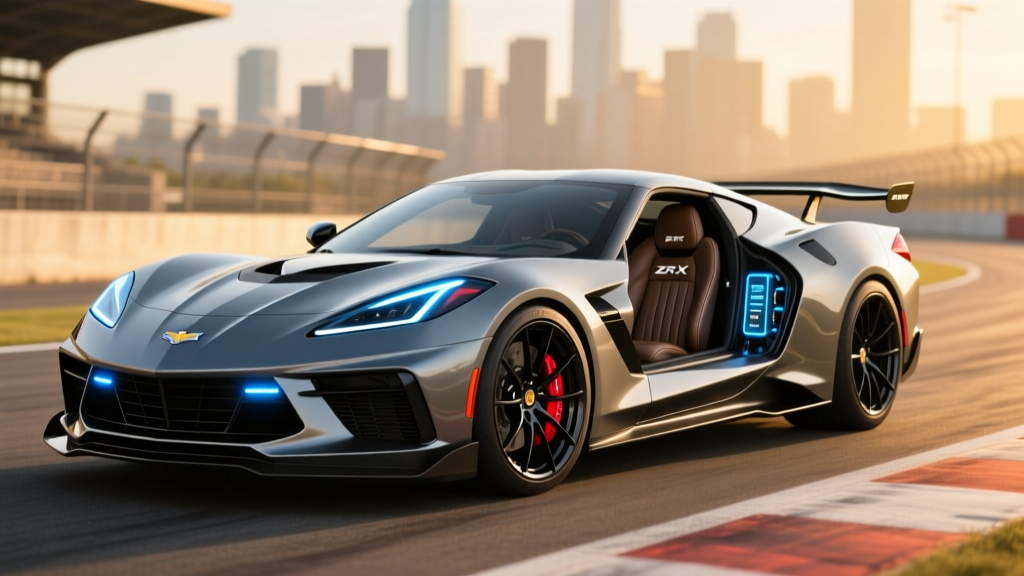
Chevrolet confirmed the 2026 Corvette ZR1x as the first all-wheel-drive Corvette, using a hybrid powertrain that pairs the ZR1's twin-turbocharged 5.5-liter LT7 V8 with an electric motor-driven front axle. The result: an estimated 1,200+ combined horsepower, sub-2.5-second 0–60 mph times, and a performance-hybrid architecture that prioritizes traction and launch grip over plug-in electric range.
This is not a plug-in hybrid (PHEV). The ZR1x uses a conventional hybrid (HEV) system — specifically, a performance-oriented torque-fill and AWD architecture similar in concept to the Ferrari SF90's front-axle electric motors or the Porsche 918 Spyder, though without the large plug-in battery. The front axle is driven entirely by electric motors, while the rear wheels receive power from the twin-turbo V8 through a traditional drivetrain.
Hybrid Powertrain: Twin-Turbo V8 Meets Electric Front Axle
The ZR1x's powertrain is a two-part system:
| Component | Specification |
|---|---|
| Rear Powertrain | 5.5L Twin-Turbo V8 (LT7), ~1,064 HP (rear wheels) |
| Front Axle | Electric motor-driven AWD system (estimated 150–200 HP front) |
| Combined Output | Estimated 1,200+ HP (system combined) |
| Hybrid Type | Conventional HEV (not plug-in) |
| Battery Pack | Small lithium-ion (estimated 1.5–2.5 kWh), self-charging via regen/ICE |
| Electric-Only Range | None / negligible (not a PHEV) |
| 0–60 mph | Estimated sub-2.5 seconds (AWD launch advantage) |
| Drivetrain | AWD (electric front / ICE rear) |
The small battery pack charges through regenerative braking and direct engine-driven generation — you will never plug this car in. The electric front axle serves three purposes: instant torque-fill during acceleration, all-wheel-drive traction for hard launches, and torque-vectoring capability through corners. This is a performance hybrid, not an efficiency hybrid.
Fuel Economy: What MPG Can You Expect?
Official EPA fuel economy figures for the 2026 Corvette ZR1x have not yet been released. However, we can project based on the existing ZR1 (rear-wheel-drive, same LT7 engine) and the hybrid system's characteristics.
| Metric | ZR1 (RWD, EPA) | ZR1x (AWD HEV, Estimated) |
|---|---|---|
| City MPG | ~14 MPG | ~14–16 MPG |
| Highway MPG | ~22 MPG | ~20–22 MPG |
| Combined MPG | ~17 MPG | ~16–18 MPG |
Real-world expectation: The hybrid system may offer marginal city MPG improvement through regenerative braking and electric torque-fill at low speeds, reducing the engine's load during stop-and-go driving. However, the added weight of the front-axle electric motors, battery pack, and AWD hardware (estimated 200–300 lbs over the ZR1) will offset some of those gains, especially on the highway where the electric system contributes less. Expect real-world combined driving to land in the 15–17 MPG range for mixed use, and lower during aggressive driving — which, let's be honest, is the point of this car.
For context, the EPA's fueleconomy.gov lists the current ZR1 at roughly 14/22/17 MPG (city/highway/combined). The ZR1x will be in the same neighborhood — this is a supercar, not a Prius.
Pricing, Trims, and Tax Credit Eligibility
Chevrolet has not announced official MSRP for the 2026 Corvette ZR1x. Based on the ZR1's starting price of approximately $174,995 (2025 1LZ coupe) and the added complexity of the AWD hybrid system, industry estimates place the ZR1x starting price in the $190,000–$210,000 range before options and destination charges.
| Trim (Estimated) | Starting MSRP | Federal Tax Credit |
|---|---|---|
| ZR1x 1LZ (Coupe) | ~$190,000–$200,000 | Not eligible |
| ZR1x 3LZ (Coupe) | ~$205,000–$215,000 | Not eligible |
| ZR1x Convertible | ~$200,000–$220,000 | Not eligible |
Why No Federal Tax Credit?
The IRS §30D New Clean Vehicle Credit applies only to plug-in electric vehicles (BEVs and PHEVs) with a battery capacity of at least 7 kWh. The Corvette ZR1x's conventional hybrid system has a much smaller battery (estimated 1.5–2.5 kWh) and no plug-in capability. It does not qualify for the federal credit, regardless of buyer income or MSRP caps.
Some states may offer their own incentives for hybrid vehicles, though these are increasingly rare as state programs shift toward full EVs. Check your state's energy or DMV website for current programs.
Hybrid Battery Warranty and Reliability
Battery Replacement Cost
Because the ZR1x uses a small HEV battery (estimated 1.5–2.5 kWh), replacement cost — should it ever be needed outside warranty — is expected to be significantly lower than a full EV battery replacement. For reference, GM's small hybrid battery packs in other applications (like the Cadillac CT5-V Blackwing's mild-hybrid system or earlier eAssist systems) have replacement costs in the $2,000–$5,000 range. This is a fraction of the $10,000–$20,000+ that large BEV or PHEV battery replacements can cost.
Reliability Outlook
The LT7 twin-turbo V8 is a development of the C8 ZR1's proven architecture, and GM's hybrid AWD technology has precedent in the Cadillac CT6 Plug-In and the GMC Hummer EV's e4WD system (though those are PHEV/BEV). The ZR1x's electric front axle is new territory for the Corvette specifically, but the underlying motor and inverter technology is established within GM's portfolio.
The primary reliability question marks are the integration complexity — managing thermal loads from a 1,064 HP V8 alongside high-output electric motors in a compact chassis — and long-term durability of the front-axle drive units under repeated hard-launch conditions. Early adopters should expect close dealer attention during the first model year.
Who Should Choose the ZR1x — and Who Shouldn't?
✓ Choose the ZR1x If...
- You want the fastest-accelerating Corvette ever built
- AWD traction matters for your climate or launch-style driving
- You want supercar performance without plug-in charging logistics
- You already own or have access to a garage (no charging needed)
- Budget is $200K+ and you want a flagship C8 variant
✗ Look Elsewhere If...
- You want electric-only commuting or plug-in capability
- Fuel economy is a priority (expect 15–17 MPG combined)
- You need federal tax credit eligibility
- You prefer a lighter, RWD-purist driving experience (the ZR1 is ~200 lbs lighter)
- Your budget is under $180K
Hybrid vs. PHEV vs. Full EV — Which Fits You?
| Factor | HEV (ZR1x) | PHEV | BEV (Full EV) |
|---|---|---|---|
| Plug In Required? | No | Yes (for EV range) | Yes |
| Electric-Only Range | None | 20–50 mi typical | 250–400+ mi |
| Federal Tax Credit | No | Up to $7,500* | Up to $7,500* |
| Performance Torque-Fill | Excellent | Excellent | Instant (best) |
| Home Charging Needed? | No | Recommended | Essential |
* §30D credit eligibility depends on MSRP caps, buyer income limits, battery sourcing requirements, and point-of-sale transfer rules. See IRS.gov for current-year rules.
What the ZR1x Means for Corvette's Future
The ZR1x represents Chevrolet's first step toward an electrified Corvette lineup without committing to a full battery-electric platform. The hybrid AWD architecture preserves the V8 character that defines the Corvette while solving the traction limitations that have always constrained rear-wheel-drive supercars during hard launches. It's a bridge technology — one that Ferrari (296 GTB, SF90), Lamborghini (Revuelto), and Porsche (918 Spyder before it) have already validated in the hypercar segment.
Whether this architecture eventually leads to a full-electric Corvette remains an open question at GM. For now, the ZR1x is a statement: the Corvette can adopt electrification for performance gains without abandoning internal combustion. For buyers who aren't ready for a fully electric supercar but want the traction and torque-fill benefits of hybrid technology, the ZR1x occupies a unique position in the American performance car market.
Frequently Asked Questions
How many MPG does the 2026 Corvette ZR1x hybrid get?
Official EPA figures are not yet published. Based on the ZR1's EPA ratings and the ZR1x's added weight and hybrid system, expect approximately 14–16 MPG city, 20–22 MPG highway, and 16–18 MPG combined. Real-world aggressive driving will reduce these numbers. The hybrid system's primary purpose is performance, not fuel economy.
Can the Corvette ZR1x drive on electric power only?
No. The ZR1x is a conventional hybrid (HEV), not a plug-in hybrid (PHEV). The front electric axle assists the V8 during acceleration and provides AWD traction, but the vehicle cannot operate in a pure electric mode for any meaningful distance. The small battery recharges through regenerative braking and the engine.
Does the 2026 Corvette ZR1x qualify for any tax credit?
No. The ZR1x does not qualify for the federal §30D New Clean Vehicle Credit because it is not a plug-in vehicle and its battery capacity is well below the 7 kWh minimum threshold. It also exceeds the MSRP cap ($80,000 for sedans, $80,000 for SUVs/pickups/vans — sports cars fall under the sedan cap). Some state-level hybrid incentives may exist but are increasingly rare.
Is the ZR1x hybrid system reliable, and what does battery replacement cost?
GM's hybrid battery warranty is expected to be 8 years / 100,000 miles. The small HEV battery pack should have replacement costs in the $2,000–$5,000 range if needed out of warranty — far less than a full EV battery. The electric front-axle motors add complexity, but the underlying technology is established within GM's portfolio. First-year models may see teething issues typical of new powertrain architectures.
How is the ZR1x different from the standard ZR1?
The ZR1x adds an electric motor-driven front axle for all-wheel drive, a small hybrid battery pack, and an estimated 150–200 additional horsepower from the electric system. The result is AWD traction (vs. RWD on the ZR1), faster 0–60 times through improved launch grip, and a slightly higher curb weight (estimated 200–300 lbs more). The rear powertrain — the twin-turbo LT7 V8 — is shared with the ZR1.
When will the 2026 Corvette ZR1x be available?
Chevrolet has confirmed the ZR1x for the 2026 model year. Exact on-sale timing has not been announced, but industry expectations point to late 2025 or early 2026 for first deliveries. Allocation is expected to be limited, particularly in the first model year.