Quick Verdict: A Proven First-Gen Hybrid Bargain
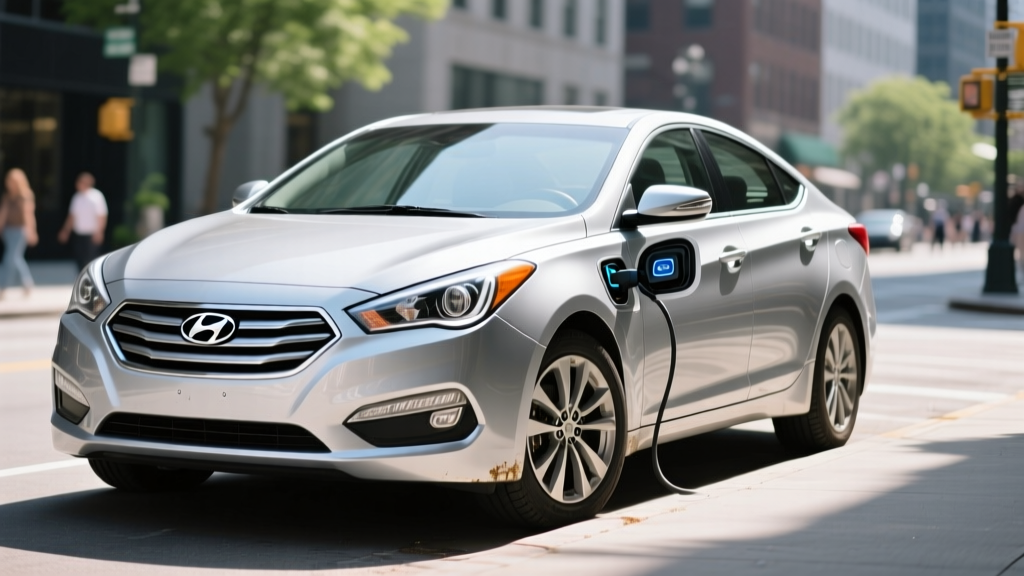
The 2014 Hyundai Sonata Hybrid is a conventional hybrid electric vehicle (HEV) — not a plug-in — that pairs a 2.4-liter four-cylinder engine with an electric motor for an EPA-rated 36 MPG combined. In 2026, well-maintained examples trade between $7,000 and $12,000 depending on mileage and condition, making it one of the more affordable entry points into hybrid ownership. The Sonata Hybrid doesn't require any plug-in charging; it recovers energy through regenerative braking and the gasoline engine. For buyers who want lower fuel costs without changing their refueling habits, this midsize sedan still holds up — but battery age and hybrid-system reliability demand careful inspection before purchase.
| Spec | Value |
|---|---|
| Powertrain | 2.4L I4 + electric motor (HEV, no plug) |
| Combined Horsepower | 206 hp (net system output) |
| Engine Output | 159 hp @ 6,000 rpm |
| Electric Motor Output | 47 hp (35 kW) |
| Hybrid Battery | 1.4 kWh lithium-polymer (Li-Poly) |
| Transmission | 6-speed automatic |
| EPA Fuel Economy (City / Hwy / Combined) | 36 / 40 / 36 MPG |
| Fuel Tank | 18.5 gallons |
| Total Driving Range | ~666 miles (EPA combined) |
| 0–60 mph | ~8.5 seconds |
| Original MSRP (2014) | $26,000 (base) – $30,550 (Limited) |
| Typical 2026 Used Price | $7,000 – $12,000 |
| Hybrid Battery Warranty (Original) | 10 years / 100,000 miles |
HEV vs. PHEV: What the 2014 Sonata Hybrid Actually Is
Hyundai sold two electrified Sonata variants over the years, and buyers frequently confuse them. The 2014 Sonata Hybrid is strictly a conventional hybrid (HEV). It has no plug, no electric-only driving mode of meaningful distance, and no external charging capability. The small 1.4 kWh lithium-polymer battery charges exclusively through regenerative braking and the gasoline engine.
Hyundai did not introduce a Sonata Plug-in Hybrid (PHEV) until the 2016 model year. That later PHEV variant offered approximately 27 miles of electric-only range from a 9.8 kWh battery and could charge via a standard J1772 Level 2 connector. If you're searching for a Sonata you can plug in, you need a 2016–2020 model — not this 2014 version.
| Feature | 2014 Sonata Hybrid (HEV) | 2016–2020 Sonata Plug-in Hybrid (PHEV) |
|---|---|---|
| Plug-in Charging | No | Yes (J1772 Level 2) |
| Battery Capacity | 1.4 kWh | 9.8 kWh |
| Electric-Only Range | Not applicable | ~27 miles (EPA) |
| Needs a Home Charger? | No | Yes, for full benefit |
| Federal Tax Credit (at launch) | None | Up to $4,543 (expired) |
Fuel Economy: EPA Ratings vs. Real-World MPG
| Driving Condition | EPA MPG |
|---|---|
| City | 36 MPG |
| Highway | 40 MPG |
| Combined | 36 MPG |
The EPA rates the 2014 Sonata Hybrid at 36 MPG combined, with 36 city and 40 highway. Note that the city and combined figures are identical — a quirk of Hyundai's hybrid system tuning in this generation, which relies more heavily on the gasoline engine at low speeds than competitors like the Toyota Camry Hybrid or Ford Fusion Hybrid.
In real-world driving, owners report a wide spread. According to aggregated data from FuelEconomy.gov user estimates, actual combined MPG ranges from about 30 to 41 MPG depending on driving style, climate, and terrain. Heavy city traffic with frequent stops tends to yield mid-to-upper 30s, while sustained highway driving at 75+ mph can drop fuel economy to the low 30s. Cold-weather operation (below 40°F) typically reduces MPG by 5–10% as the engine runs longer to warm the cabin and the battery operates less efficiently.
Compared to the non-hybrid 2014 Sonata (2.4L, rated at 24 city / 35 highway / 28 combined), the hybrid delivers roughly 29% better combined fuel economy. At 12,000 miles per year and $3.40/gallon, that difference saves approximately $530 annually in fuel costs.
Powertrain and Driving Impressions
The 2014 Sonata Hybrid combines a 159-hp 2.4-liter Theta II four-cylinder engine with a 47-hp (35 kW) electric motor sandwiched between the engine and the 6-speed automatic transmission. Total system output is 206 horsepower. Unlike Toyota's planetary-gear hybrid system (which uses an e-CVT), Hyundai opted for a traditional stepped automatic, which gives the Sonata Hybrid a more familiar shift feel but sacrifices some low-speed electric-motor assist smoothness.
The result is adequate acceleration — 0 to 60 mph in roughly 8.5 seconds — and a driving experience that feels like a conventional sedan most of the time. The electric motor provides a modest torque fill at low rpm, but the transition between electric assist and gasoline-only driving can be slightly abrupt compared to the Camry Hybrid's seamless blending. At highway speeds, the Sonata Hybrid cruises quietly, though the 2.4L engine becomes vocal under hard acceleration.
Hybrid Battery Health, Lifespan, and Replacement Cost
Original Hybrid Battery Warranty: 10 years / 100,000 miles (original owner, states with California emissions rules); 10 years / 100,000 miles nationwide for Hyundai's hybrid battery. This warranty has expired for virtually all 2014 examples by 2026, unless the vehicle has exceptionally low mileage and a transferable provision applies.
Battery Chemistry: Lithium-polymer (Li-Poly), 1.4 kWh total capacity.
The 2014 Sonata Hybrid's lithium-polymer battery pack is compact — just 1.4 kWh — because it doesn't need to store significant energy for electric-only driving. Its job is to buffer regenerative braking energy and assist the gasoline engine during acceleration. This smaller size means less thermal stress per cell and, in practice, reasonable longevity.
Based on owner reports and hybrid specialist data, the 2014 Sonata Hybrid battery typically lasts 120,000 to 160,000 miles before significant capacity loss triggers a check-hybrid-system warning. Some units have exceeded 180,000 miles without replacement. The lithium-polymer chemistry Hyundai used here has proven more durable than the nickel-metal hydride (NiMH) packs in older hybrid designs, though it is not immune to degradation from sustained high-heat exposure or frequent deep cycling.
If the hybrid battery fails out of warranty, replacement costs in 2026 run approximately $2,000 to $3,500 for a refurbished or aftermarket pack (installed), or $3,500 to $5,000+ for a new OEM battery through a Hyundai dealer. Independent hybrid battery shops can often replace individual modules rather than the entire pack for $800–$1,500, depending on how many cells have degraded.
Pre-purchase tip: Before buying any 2014 Sonata Hybrid, have a qualified technician perform a hybrid battery health check using an OBD-II scanner that reads battery state-of-health (SoH) and individual cell voltage variance. Cell imbalance exceeding 0.3V between modules is a warning sign of impending failure.
Reliability, Safety, and Common Issues
The 2014 Sonata Hybrid carries an average reliability reputation. The Theta II 2.4L engine in this generation was subject to Hyundai's extended warranty coverage for connecting-rod bearing failures (a class-action settlement extended coverage to 120,000 miles for affected engines). Before purchasing, verify whether the specific VIN had any engine recall or settlement-related repair completed.
Other common issues reported by owners include:
- Hybrid system cooling fan failure: The battery cooling fan can accumulate debris, leading to reduced battery cooling and eventual hybrid system warnings. Clean the fan intake (located behind the rear seat) periodically.
- Brake actuator wear: The regenerative braking system uses an electro-hydraulic actuator that can develop faults past 100,000 miles. Replacement runs $800–$1,500.
- 12V auxiliary battery drain: Like all hybrids, the Sonata has a standard 12V battery that can die if the car sits unused for weeks. This is separate from the hybrid traction battery and is a $150–$200 replacement.
The NHTSA gave the 2014 Sonata (including the Hybrid) an overall 5-star safety rating. The IIHS rated it "Good" in most crash tests, though it earned an "Acceptable" rating in the small-overlap front test — a common result for vehicles designed before that test was introduced.
Tax Credits and Used Pricing in 2026
The 2014 Hyundai Sonata Hybrid never qualified for the federal EV tax credit because it is a conventional hybrid (HEV), not a plug-in vehicle. Under current IRS §30D rules, only battery electric vehicles (BEVs) and plug-in hybrids (PHEVs) with sufficient battery capacity and compliant battery sourcing are eligible. Conventional hybrids like this Sonata do not meet the plug-in requirement.
For the Used Clean Vehicle Credit (IRC §25A, up to $4,000), the vehicle must be a BEV or PHEV — again, conventional hybrids are excluded. There is no federal tax incentive for purchasing a used HEV in 2026.
Some states offer their own hybrid incentives, but these are increasingly rare and typically target new plug-in vehicles. Check your state's energy or DMV website for any residual programs.
As for pricing, expect to pay:
- $7,000–$9,000 for examples with 120,000+ miles or cosmetic issues
- $9,000–$11,000 for well-maintained models with 80,000–120,000 miles
- $11,000–$13,000 for low-mileage (under 70,000 miles) Limited-trim examples with documented hybrid battery health
Who Should Buy the 2014 Sonata Hybrid (and Who Shouldn't)
Pros
- Low purchase price for a hybrid midsize sedan
- No plug-in charging needed — works with any gas station
- Spacious cabin and large trunk (14.4 cu ft)
- Proven lithium-polymer battery with 120k+ mile typical lifespan
- 36 MPG combined saves ~$530/yr vs. non-hybrid Sonata
Cons
- No federal or state tax credits available
- Hybrid battery warranty has expired on nearly all examples
- Theta II engine has known bearing-wear history — verify VIN recall status
- City MPG lags behind Toyota Camry Hybrid (41 city)
- 6-speed automatic less smooth than competitor e-CVT systems
Choose the 2014 Sonata Hybrid if: You want a budget-friendly hybrid sedan under $12,000, don't want to install a home charger, drive 10,000–15,000 miles per year, and can verify hybrid battery health before purchase.
Choose a plug-in hybrid (PHEV) instead if: You have home charging access, a short commute (under 30 miles), and want electric-only daily driving. Consider a 2016–2020 Sonata PHEV or a Toyota Prius Prime.
Choose a full EV instead if: You want maximum fuel savings, zero tailpipe emissions, access to HOV lanes, and qualify for the federal used-EV tax credit (up to $4,000 on qualifying used BEVs under $25,000).
Choose a gas-only car instead if: You drive very few miles per year (under 6,000), where the hybrid fuel savings won't offset potential battery replacement costs.
Frequently Asked Questions
How many MPG does the 2014 Hyundai Sonata Hybrid get?
The EPA rates it at 36 city / 40 highway / 36 combined MPG. Real-world owners typically see 30–41 combined depending on driving conditions. Highway-heavy driving at high speeds tends to produce lower numbers, while stop-and-go city traffic leverages regenerative braking for better results.
Does the 2014 Sonata Hybrid need to be plugged in?
No. This is a conventional hybrid (HEV), not a plug-in hybrid. The battery charges automatically through regenerative braking and the gasoline engine. You refuel only at gas stations, just like a standard car.
How far can it drive on electric power alone?
The 2014 Sonata Hybrid cannot drive any meaningful distance on electric power alone. The 1.4 kWh battery provides brief electric-motor assist at low speeds but does not support an EV-only driving mode. If you want electric-only range, look at the 2016+ Sonata Plug-in Hybrid (27 miles EV range) or a full BEV.
Is the hybrid battery reliable, and what does replacement cost?
The lithium-polymer hybrid battery typically lasts 120,000–160,000 miles. The original 10-year/100,000-mile warranty has expired for nearly all 2014 examples. Replacement costs $2,000–$3,500 for a refurbished pack or $3,500–$5,000+ for a new OEM unit. Individual module replacement at a hybrid specialist can cost $800–$1,500.
Does the 2014 Sonata Hybrid qualify for any tax credit?
No. Conventional hybrids (HEVs) are not eligible for the federal §30D Clean Vehicle Credit or the Used Clean Vehicle Credit. These credits require plug-in capability (BEV or PHEV). No federal tax incentive applies to this vehicle in 2026.
How does it compare to the Toyota Camry Hybrid?
The contemporary 2014 Camry Hybrid is rated at 41 city / 38 highway / 40 combined — notably better in city driving due to Toyota's more sophisticated e-CVT system and larger electric motor contribution. The Camry Hybrid also has a stronger long-term reliability reputation, though it typically commands $2,000–$4,000 more on the used market. If city MPG is your priority, the Camry Hybrid wins. If budget is the constraint, the Sonata Hybrid offers solid value.