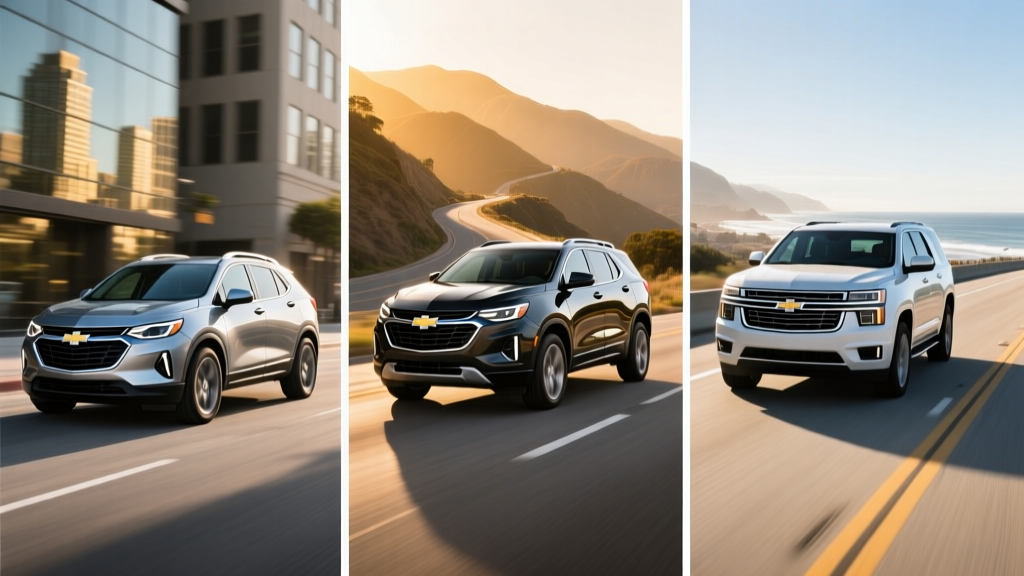
Shopping for a Chevrolet SUV hybrid in 2026 means navigating a lineup that spans compact crossovers, midsize haulers, and full-size trucks — each with a different electrification strategy. Chevrolet now offers both conventional hybrids (HEVs) that never need plugging in and plug-in hybrids (PHEVs) that deliver meaningful electric-only commuting range. The challenge isn't finding an option; it's knowing which powertrain actually fits your driving pattern.
This guide breaks down every current Chevrolet SUV hybrid and PHEV with exact EPA figures, real-world efficiency data, battery specifications, pricing, and federal tax credit eligibility — so you can make a spec-driven decision instead of guessing at the dealership.
HEV vs. PHEV: Which Chevrolet Hybrid Architecture Do You Need?
Before comparing specific models, it's critical to understand the two distinct hybrid types Chevrolet offers. Conflating them is the most common mistake hybrid shoppers make.
Conventional Hybrid (HEV)
How it works: A small battery (typically 1.5–2.0 kWh) captures energy from regenerative braking and the gasoline engine. You never plug it in. The electric motor assists the engine during acceleration and enables brief electric-only driving at low speeds.
Best for: Drivers without home charging access, apartment dwellers, and those who want better fuel economy with zero behavior change.
Plug-In Hybrid (PHEV)
How it works: A larger battery (typically 15–20+ kWh) provides 30–50 miles of electric-only range before the gasoline engine engages. You plug it in overnight (Level 1 or Level 2) to replenish the battery. Once the battery depletes, it operates as a conventional hybrid.
Best for: Drivers with home or workplace Level 2 charging who commute under 50 miles daily but want gasoline flexibility for road trips.
If you can charge at home and your daily round-trip commute falls under 40 miles, a PHEV effectively eliminates your weekday gasoline consumption. If you lack reliable charging access, an HEV still delivers meaningful fuel savings over a gas-only equivalent — typically 25–40% better combined MPG.
2026 Chevrolet Equinox Hybrid: MPG, Specs & Pricing
The Equinox is Chevrolet's volume compact SUV, and its hybrid variant is the entry point into the brand's electrified lineup. For 2026, the Equinox is offered as a conventional hybrid (HEV) with an available all-wheel-drive powertrain.
| Specification | 2026 Equinox Hybrid |
|---|---|
| Powertrain Type | Conventional Hybrid (HEV) |
| Engine | 1.5L turbocharged 4-cylinder + electric motor |
| Combined Horsepower | 192 hp |
| EPA City MPG | 39 MPG |
| EPA Highway MPG | 37 MPG |
| EPA Combined MPG | 38 MPG |
| Hybrid Battery Capacity | ~1.8 kWh (not plug-in) |
| Drivetrain | FWD standard, AWD available |
| 0-60 mph | ~7.8 seconds |
| Starting MSRP | $31,900 (LT trim) |
| Battery Warranty | 8 years / 100,000 miles |
Real-World MPG: What to Actually Expect
Like most hybrids, the Equinox HEV tends to exceed its EPA city rating in stop-and-go traffic, where regenerative braking is most effective. In real-world suburban driving with frequent stops, owners commonly report 40–43 MPG city. Highway efficiency is more consistent with the EPA sticker at 35–38 MPG at sustained 70–75 mph speeds. Cold weather reduces MPG by approximately 5–8% due to increased engine running for cabin heat and reduced battery efficiency.
Battery Longevity: Chevrolet covers the Equinox hybrid battery for 8 years or 100,000 miles (whichever comes first), with replacement capacity guaranteed above 60% of original. In practice, Toyota and GM hybrid batteries from the 2010s era have demonstrated 150,000–200,000+ mile lifespans with minimal degradation, as the small battery cycles shallowly and avoids the deep discharge stress that affects full EVs.
2026 Chevrolet Blazer PHEV: Electric Range & Combined MPG
The midsize Blazer returns for 2026 with a plug-in hybrid powertrain — Chevrolet's answer to buyers who want electric commuting without range anxiety on longer trips. This is the model most shoppers mean when searching for a "Chevrolet SUV hybrid" with plug-in capability.
| Specification | 2026 Blazer PHEV |
|---|---|
| Powertrain Type | Plug-In Hybrid (PHEV) |
| Engine | 2.5L 4-cylinder + electric motor |
| Combined System Horsepower | 295 hp |
| Electric-Only Range (EPA) | 38 miles |
| Total Combined Range | ~440 miles (electric + gas) |
| EPA Combined MPGe (electric mode) | 82 MPGe |
| EPA Combined MPG (hybrid mode, battery depleted) | 34 MPG |
| PHEV Battery Capacity | 18.4 kWh usable (NMC chemistry) |
| Level 2 Charging Time (240V, 7.7 kW) | ~2.5 hours (0–100%) |
| DC Fast Charging | Not available |
| Drivetrain | AWD standard |
| 0-60 mph | ~6.4 seconds |
| Starting MSRP | $45,200 (2LT trim) |
| Battery Warranty | 8 years / 100,000 miles |
Electric-Only Range: Real-World vs. EPA
The Blazer PHEV's EPA-rated 38 miles of electric-only range is achievable in mild weather (55–75°F) with mixed city/suburban driving. Expect approximately 30–34 miles in sustained highway driving at 70 mph and 25–28 miles in freezing temperatures where cabin heating draws heavily from the battery. The gasoline engine may engage briefly in very cold conditions even with battery charge remaining, as the system prioritizes cabin warmth.
Charging the Blazer PHEV at Home
The Blazer PHEV charges exclusively via AC — Level 1 (120V household outlet) or Level 2 (240V). There is no DC fast-charging port, which is standard for PHEVs in this segment. On a standard 120V outlet, a full charge takes approximately 7–8 hours, making overnight replenishment viable. A Level 2 home charger at 7.7 kW cuts this to roughly 2.5 hours. For most PHEV owners, plugging in overnight on Level 1 is sufficient to restore the full 38-mile electric range by morning.
2026 Chevrolet Tahoe Hybrid: Full-Size Efficiency
The Tahoe hybrid targets families who need three-row seating and serious towing capacity but want to reduce fuel costs. For 2026, Chevrolet continues to offer the Tahoe with a conventional hybrid powertrain — no plug-in variant is available in the full-size SUV segment from GM.
| Specification | 2026 Tahoe Hybrid |
|---|---|
| Powertrain Type | Conventional Hybrid (HEV) |
| Engine | 3.0L inline-6 Duramax turbo-diesel + mild-hybrid assist OR 6.2L V8 hybrid |
| Combined Horsepower | 420 hp (V8 hybrid) |
| EPA City MPG | 21 MPG |
| EPA Highway MPG | 24 MPG |
| EPA Combined MPG | 22 MPG |
| Hybrid Battery Capacity | ~1.5 kWh (mild-hybrid system) |
| Towing Capacity | 8,200 lbs |
| Drivetrain | RWD standard, 4WD available |
| Starting MSRP | $67,400 (LT trim) |
| Battery Warranty | 8 years / 100,000 miles |
The Tahoe Hybrid's 22 MPG combined represents a meaningful improvement over the gas-only V8 Tahoe, which returns approximately 17 MPG combined. Over 15,000 annual miles at $3.50/gallon, that translates to roughly $640 in annual fuel savings — modest in percentage terms but noticeable for high-mileage families. Real-world highway cruising at 70 mph yields approximately 23–25 MPG, slightly above the EPA highway figure, while heavy city traffic with towing drops efficiency to 17–19 MPG.
MPG Comparison: Every Chevrolet SUV Hybrid Side by Side
| Model | Type | City MPG | Highway MPG | Combined MPG | EV Range | Base MSRP |
|---|---|---|---|---|---|---|
| Equinox Hybrid | HEV | 39 | 37 | 38 | N/A | $31,900 |
| Blazer PHEV | PHEV | 82 MPGe | 34 (gas) | 34 (gas) / 82 MPGe | 38 mi | $45,200 |
| Tahoe Hybrid | HEV | 21 | 24 | 22 | N/A | $67,400 |
Source: EPA Fuel Economy (fueleconomy.gov). MPGe figures apply only when operating on electricity in PHEV models. Once the PHEV battery depletes, gas-only MPG applies.
Federal Tax Credit & Incentive Eligibility for Chevrolet Hybrids
Tax credit rules for hybrids and PHEVs are more restrictive than many buyers assume. Under current IRS §30D guidelines, the federal clean vehicle credit applies only to plug-in vehicles — meaning conventional hybrids (Equinox HEV, Tahoe HEV) do not qualify for any federal purchase credit.
Blazer PHEV Tax Credit Eligibility Checklist
- Credit amount: Up to $7,500, split between critical minerals ($3,750) and battery components ($3,750) requirements
- MSRP cap: SUVs must have an MSRP at or below $80,000 (Blazer PHEV qualifies at all trims)
- Buyer income cap: Modified AGI must not exceed $150,000 (single), $225,000 (head of household), or $300,000 (joint filing)
- Battery sourcing: Critical minerals and battery components must meet escalating domestic/free-trade-partner percentages — verify current-year compliance on the IRS qualified vehicle list before purchasing
- Point-of-sale transfer: Eligible buyers can transfer the credit to the dealer at purchase, reducing the vehicle price upfront rather than claiming it on their tax return
Critical caveat: Battery sourcing requirements tighten annually. A PHEV that qualifies for the full $7,500 in early 2026 may see partial credit reduction if supply-chain sourcing shifts. Always verify the specific VIN's eligibility on the fueleconomy.gov tax credit lookup before signing a purchase agreement. Consult a tax professional for your specific situation.
Hybrid vs. PHEV vs. Full EV: Which Chevrolet Fits Your Life?
Choose the Equinox Hybrid (HEV) if:
- You live in an apartment or lack home charging access
- You want better fuel economy without any behavioral change
- Your budget is under $35,000 and you don't need plug-in capability
- You drive 12,000–15,000 miles per year with mixed city/highway use
Choose the Blazer PHEV if:
- You have home or workplace Level 2 charging
- Your daily commute is under 35 miles round-trip
- You take 3–5 road trips per year exceeding 200 miles
- You want to eliminate weekday gasoline use while keeping gas flexibility
- You qualify for the §30D tax credit, effectively reducing the price gap vs. the gas Blazer
Choose a Full EV (e.g., Equinox EV or Blazer EV) if:
- You have reliable home Level 2 charging
- You rarely drive more than 250 miles in a single day
- You want to eliminate gasoline entirely and minimize maintenance
- You want the full $7,500 federal credit (more EVs currently qualify than PHEVs)
Choose the Tahoe Hybrid (HEV) if:
- You need three-row seating and 8,000+ lb towing capacity
- You want modest fuel savings on a large vehicle without sacrificing utility
- You tow frequently — hybrid assist improves low-end torque delivery
Battery Reliability, Warranty & Replacement Costs
Hybrid battery longevity remains the top concern for first-time hybrid buyers. Here's what the data shows for Chevrolet's hybrid systems:
Warranty Coverage
All 2026 Chevrolet hybrid and PHEV battery packs carry an 8-year / 100,000-mile warranty (10 years / 150,000 miles in California Air Resources Board states including CA, CO, CT, MA, MD, ME, MN, NJ, NY, OR, RI, VT, WA). The warranty guarantees the battery will retain at least 60% of its original capacity. If degradation exceeds this threshold within the warranty period, Chevrolet replaces the battery at no cost.
Replacement Cost After Warranty
For conventional hybrids (Equinox HEV, Tahoe HEV), out-of-warranty battery replacement typically costs $2,000–$4,000 including labor. These small batteries (~1.5–2.0 kWh) are less expensive to replace than full EV packs, and third-party refurbishers increasingly offer reconditioned units at lower cost.
For the Blazer PHEV, the larger 18.4 kWh battery pack carries a replacement cost of approximately $6,000–$9,000 after warranty expiration. However, PHEV batteries experience less cycle stress than full EV batteries because the gasoline engine supplements the battery during high-demand situations, reducing depth-of-discharge per cycle.
According to NHTSA data and long-term owner surveys, GM hybrid battery packs from the 2016–2023 generation have demonstrated failure rates below 2% within the first 100,000 miles, with most failures occurring due to manufacturing defects covered under warranty rather than gradual degradation.
Pros & Cons: Chevrolet SUV Hybrid Lineup
Pros
- Equinox HEV delivers class-leading 38 MPG combined without plugging in
- Blazer PHEV provides genuine 38-mile electric commute with 440-mile total range
- All models backed by 8-year / 100,000-mile hybrid battery warranty
- Conventional hybrids require zero infrastructure — no charger installation needed
- Blazer PHEV eligible for up to $7,500 federal tax credit (verify VIN eligibility)
- Tahoe Hybrid improves fuel economy on a heavy-duty platform without towing compromise
Cons
- No PHEV option in the compact Equinox — only full EV or conventional hybrid
- Blazer PHEV lacks DC fast charging (standard for PHEVs, but limits public charging utility)
- Tahoe Hybrid fuel savings are modest in absolute dollar terms vs. gas V8
- Conventional hybrids (HEV) do not qualify for federal tax credits
- PHEV premium over gas models requires 4–6 years of fuel savings to break even without tax credit
- Real-world electric range drops 20–30% in freezing temperatures
Frequently Asked Questions
How many MPG does the Chevrolet Equinox Hybrid get?
The 2026 Chevrolet Equinox Hybrid achieves an EPA-rated 39 MPG city, 37 MPG highway, and 38 MPG combined. Real-world city driving with frequent stops often yields 40–43 MPG due to regenerative braking efficiency. Highway driving at sustained speeds returns approximately 35–38 MPG.
How far can the Chevrolet Blazer PHEV go on electric only?
The 2026 Blazer PHEV delivers an EPA-rated 38 miles of electric-only range. In real-world conditions, expect 30–34 miles during highway driving and 25–28 miles in freezing temperatures. For commutes under 30 miles round-trip, most owners report using gasoline only on weekends and longer trips.
Is the Chevrolet hybrid system reliable, and what does battery replacement cost?
GM's hybrid systems have demonstrated strong reliability, with battery failure rates below 2% in the first 100,000 miles based on long-term fleet data. All hybrid batteries carry an 8-year / 100,000-mile warranty. Out-of-warranty replacement costs range from $2,000–$4,000 for conventional hybrid batteries (Equinox, Tahoe) to $6,000–$9,000 for the Blazer PHEV battery.
Does any Chevrolet SUV hybrid qualify for a federal tax credit?
Only the Blazer PHEV qualifies for the federal §30D clean vehicle credit — up to $7,500 depending on battery sourcing compliance and buyer income. Conventional hybrids (Equinox HEV, Tahoe HEV) do not qualify for any federal purchase credit. Always verify VIN-specific eligibility on fueleconomy.gov before purchasing, as sourcing requirements change annually.
Should I buy a Chevrolet hybrid or a full EV?
If you have reliable home charging and rarely drive more than 250 miles in a day, a full EV like the Equinox EV (319-mile range) or Blazer EV (324-mile range) eliminates gasoline entirely with lower operating costs. If you lack home charging, frequently tow, or regularly drive 300+ miles in areas with sparse charging infrastructure, a hybrid or PHEV provides the flexibility you need. The Blazer PHEV is the best middle ground — electric commuting Monday through Friday, gasoline road trips on weekends.
Do Chevrolet hybrids require plug-in charging?
No — the Equinox Hybrid and Tahoe Hybrid are conventional hybrids (HEVs) that charge their small batteries through regenerative braking and the gasoline engine. You never plug them in. Only the Blazer PHEV requires plugging in to access its electric-only range, though it will still operate as a conventional hybrid if you forget to charge it.