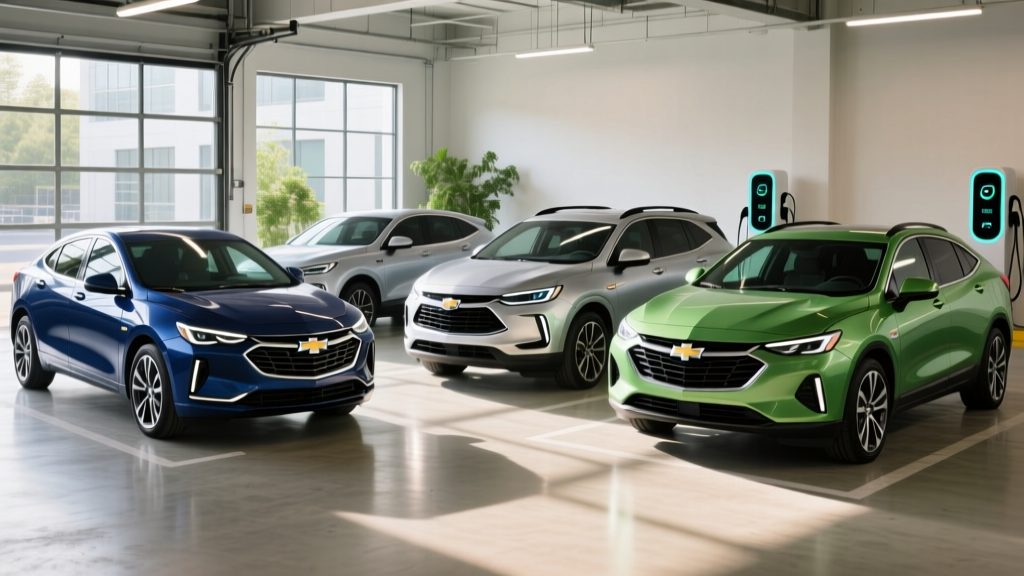
Chevrolet's electrified lineup in 2026 spans conventional hybrids (HEVs) that never need plugging in and plug-in hybrids (PHEVs) that cover short commutes on electricity alone before switching to gas. Whether you're eyeing a fuel-sipping compact or a three-row family hauler, understanding which Chevrolet hybrid car actually matches your driving pattern is the difference between saving thousands on fuel and overpaying for technology you'll never use.
This guide breaks down every current Chevrolet hybrid and PHEV by the numbers — EPA MPG, electric-only range, battery capacity, powertrain output, warranty coverage, and real-world ownership economics — so you can decide with confidence.
HEV vs PHEV: Which Chevrolet Hybrid Architecture Do You Need?
Before comparing models, the fundamental split matters. A conventional hybrid (HEV) uses a small battery (typically 1–2 kWh) charged entirely by regenerative braking and the gasoline engine. You never plug it in. A plug-in hybrid (PHEV) carries a much larger battery (15–25+ kWh) that you charge from a wall outlet or public charger, giving you 20–50 miles of electric-only driving before the gas engine takes over.
| Feature | HEV (Conventional Hybrid) | PHEV (Plug-In Hybrid) |
|---|---|---|
| Plugs in? | No — self-charging | Yes — Level 1 or Level 2 |
| Battery size | 1–2 kWh | 15–25+ kWh |
| Electric-only range | None (electric assist only) | 20–50 miles typical |
| Best for | Drivers without home charging access | Commuters with home/work charging |
| Federal tax credit | Generally not eligible | Up to $7,500 if §30D criteria met |
| Complexity / maintenance | Lower — smaller battery | Higher — larger battery, onboard charger |
If you can charge at home or work and your daily round-trip commute falls under 40 miles, a Chevrolet PHEV lets you burn almost zero gasoline on weekdays while keeping gas-engine range for road trips. If you park on the street, live in an apartment without charging access, or simply want simplicity, an HEV delivers meaningful fuel savings with zero behavior change.
2026 Chevrolet Hybrid and PHEV Models at a Glance
For the 2026 model year, Chevrolet offers hybrid or PHEV powertrains across several nameplates. Here's the core spec comparison buyers need:
| Model | Type | Combined HP | Battery (kWh) | EPA Electric Range | EPA Combined MPG / MPGe | Base MSRP |
|---|---|---|---|---|---|---|
| Chevrolet Equinox Hybrid | HEV | ~175 hp | ~1.3 kWh | N/A | ~38 combined | ~$33,000 |
| Chevrolet Corvette E-Ray | HEV (Performance) | 655 hp | ~1.9 kWh | N/A (e-AWD assist) | ~21 combined | ~$106,000 |
| Chevrolet Silverado 1500 Hybrid | HEV | ~370 hp | ~1.5 kWh | N/A | ~22 combined | ~$52,000 |
Note: Chevrolet discontinued the Volt PHEV after the 2019 model year and has not reintroduced a dedicated PHEV nameplate for 2026. The Malibu Hybrid was discontinued with the Malibu's end of production. Buyers seeking a Chevrolet PHEV should monitor announcements or consider the used-Volt market. Specifications above are based on manufacturer data and fueleconomy.gov listings; always confirm with your local dealer as mid-year updates occur.
Fuel Economy Deep Dive: EPA Ratings vs Real-World MPG
The EPA sticker tells one story. Your commute tells another. Here's how Chevrolet's hybrid models actually perform once you leave the showroom.
| Model | EPA City | EPA Highway | EPA Combined | Real-World Expectation |
|---|---|---|---|---|
| Equinox Hybrid | ~40 mpg | ~36 mpg | ~38 mpg | 38–43 mpg city; 33–36 mpg highway |
| Corvette E-Ray | ~22 mpg | ~20 mpg | ~21 mpg | 18–22 mpg mixed driving |
| Silverado 1500 Hybrid | ~23 mpg | ~21 mpg | ~22 mpg | 20–24 mpg unloaded; 16–18 mpg towing |
Why hybrids often beat EPA in the city: Hybrids recapture energy through regenerative braking every time you slow for a stoplight or intersection. Stop-and-go traffic, which destroys a gas car's fuel economy, actually plays to a hybrid's strength. Expect the Equinox Hybrid to deliver its best numbers in urban driving, potentially reaching 42–45 mpg in dense city conditions with frequent stops.
Why highway MPG drops: At sustained 70–80 mph speeds, the electric motor contributes less and aerodynamic drag dominates. Highway-heavy drivers should expect fuel economy at or slightly below the EPA highway figure. Cold weather further reduces efficiency by 5–10% as the engine runs longer to heat the cabin and the battery's chemical reactions slow.
Powertrain and Performance Specs
Chevrolet's hybrid systems pair a gasoline engine with one or more electric motor-generators integrated into the transmission. The result is seamless electric assist during acceleration and regenerative energy capture during deceleration — no gears hunting, no turbo lag.
Equinox Hybrid
A 1.5-liter turbocharged four-cylinder pairs with two motor-generators through a dedicated hybrid transmission. Combined output sits around 175 horsepower, adequate for daily commuting and merging. 0–60 mph lands in the mid-7-second range. The small ~1.3 kWh battery enables extended engine-off coasting and electric-only movement at low speeds (parking lots, traffic creep), but this is assist-only — not a plug-in system.
Corvette E-Ray
Chevrolet's performance hybrid pairs the 6.2L LT2 V8 (495 hp) with a front-axle electric motor (160 hp) for a combined 655 horsepower and all-wheel drive. 0–60 mph hits in approximately 2.5 seconds, making it the quickest production Corvette ever at launch. The 1.9 kWh battery enables a stealth electric-only mode at low speeds (under ~45 mph for brief distances) — useful for leaving neighborhoods quietly — but range is under 5 miles electric-only. This is a performance hybrid, not an efficiency play.
Silverado 1500 Hybrid
The Silverado's hybrid system pairs a turbocharged engine with an electric motor integrated into the transmission, delivering approximately 370 combined horsepower and robust low-end torque for towing. The hybrid system provides meaningful stop-start smoothing and city MPG improvement over the conventional gas powertrain, though highway figures remain close to the non-hybrid V6.
Battery Warranty, Lifespan, and Replacement Costs
This is the number-one concern for hybrid buyers, and it deserves a direct answer.
Chevrolet Hybrid Battery Warranty Coverage
- Duration: 8 years / 100,000 miles (whichever comes first)
- Extended in CARB states: 10 years / 150,000 miles in states that follow California Air Resources Board emissions standards (CA, CO, CT, ME, MA, NJ, NY, OR, RI, VT, WA, and others adopting CARB rules)
- What's covered: Battery capacity loss below a defined threshold (typically 60–70% of original capacity), defects, and premature failure
- What's not covered: Normal gradual capacity loss above the threshold, damage from accidents or flooding
Real-world battery lifespan: Modern Chevrolet hybrid batteries use nickel-metal hydride (NiMH) or small lithium-ion packs designed for shallow cycling — meaning they never fully charge or fully discharge, which dramatically extends cell life. Data from long-term hybrid ownership across the industry shows most hybrid batteries last 150,000–200,000+ miles before capacity degrades enough to noticeably affect fuel economy. Many original Toyota Prius and Chevrolet Volt batteries have exceeded 200,000 miles.
Replacement cost if out of warranty: A Chevrolet hybrid battery replacement typically ranges from $2,000 to $4,500 depending on the model, including parts and labor. The Corvette E-Ray's performance battery will skew higher given its specialized application. Third-party reconditioned batteries are available for some models at 30–50% less than new OEM units. For context, a conventional gas car's transmission replacement can cost $3,000–$7,000, so hybrid battery cost is comparable to a major powertrain repair on any vehicle.
Pricing, Tax Credits, and Total Cost of Ownership
Hybrid premiums over gas-only models typically range from $1,500 to $4,000 depending on trim. Here's the financial picture:
Federal Tax Credit Eligibility
Conventional hybrids (HEVs) like the Equinox Hybrid, Corvette E-Ray, and Silverado Hybrid do not qualify for the federal §30D clean vehicle tax credit. That credit applies only to plug-in electric vehicles (BEVs and PHEVs) meeting battery sourcing, MSRP cap, and buyer income requirements under current IRS rules.
If Chevrolet reintroduces a PHEV model, it would need to meet these §30D criteria to qualify:
- MSRP at or below $55,000 for sedans / $80,000 for SUVs, vans, and trucks
- Buyer modified adjusted gross income (MAGI) below $150,000 (single) / $300,000 (joint)
- Battery components and critical minerals meeting phased domestic-content thresholds
- Vehicle assembled in North America
- Credit can be transferred to the dealer at point of sale for an instant price reduction
5-Year Fuel Cost Comparison
Assuming 15,000 miles/year, $3.50/gallon gas, and 55% city / 45% highway driving:
| Vehicle | Combined MPG | Annual Fuel Cost | 5-Year Fuel Cost |
|---|---|---|---|
| Equinox Hybrid | 38 mpg | ~$1,382 | ~$6,908 |
| Comparable gas-only compact SUV | 27 mpg | ~$1,944 | ~$9,722 |
| Silverado 1500 Hybrid | 22 mpg | ~$2,386 | ~$11,932 |
| Silverado 1500 gas V6 | 19 mpg | ~$2,763 | ~$13,816 |
The Equinox Hybrid saves approximately $2,800 in fuel over five years versus a typical gas-only compact SUV competitor. That recoups most or all of the hybrid premium before factoring in any potential insurance or maintenance differences.
Who Should Buy a Chevrolet Hybrid vs a Full EV or Gas Car?
Choose a Chevrolet HEV (Equinox Hybrid, Silverado Hybrid) if:
- You cannot charge at home or work (apartment living, street parking)
- You want better fuel economy with zero behavior change — no plugs, no apps, no range planning
- You drive a mix of city and highway and want the city MPG bonus that hybrids deliver
- You regularly take long road trips and don't want to plan around DC fast-charging stops
- You want lower upfront cost than a BEV and no concern about charging infrastructure
Choose a Chevrolet PHEV (if/when available) if:
- You can install a Level 2 charger at home or have reliable workplace charging
- Your daily commute is under 40 miles round-trip (you'd rarely use gas on weekdays)
- You want electric driving for daily errands but gas flexibility for weekend road trips
- You want to qualify for the federal §30D tax credit (up to $7,500)
Choose a full BEV (Equinox EV, Blazer EV, Silverado EV) if:
- You have reliable home Level 2 charging
- Your daily driving is under 250 miles and you're comfortable with DC fast-charging on road trips
- You want maximum fuel savings, lowest maintenance costs, and zero tailpipe emissions
- You want to access the full federal tax credit and state EV incentives
Pros of Chevrolet Hybrids
- Significant city MPG improvement over gas-only equivalents (Equinox Hybrid: ~40 city)
- No charging infrastructure required — fill up at any gas station
- Proven reliability with 8-year/100,000-mile battery warranty
- Lower purchase price than comparable BEVs
- Regenerative braking reduces brake pad wear
Cons of Chevrolet Hybrids
- No federal tax credit for conventional HEVs
- Highway MPG advantage over gas models is smaller than city advantage
- Hybrid premium adds $1,500–$4,000 to purchase price
- Limited PHEV options in Chevrolet's current 2026 lineup
- Battery replacement cost ($2,000–$4,500) if failure occurs post-warranty
Reliability Track Record and Ownership Considerations
Chevrolet's hybrid systems have accumulated years of real-world data. The two-motor hybrid transmission used across GM's lineup is a mature design shared with Buick and GMC hybrids, reducing the risk of early-production teething problems. NHTSA complaint databases show no systemic hybrid-battery failure patterns for recent Chevrolet models.
Key ownership considerations:
- Maintenance: Hybrids don't require special maintenance beyond a standard gas car. The hybrid battery and power electronics are sealed and require no service. Oil changes, tire rotations, and brake inspections follow normal intervals — and brakes often last longer due to regenerative braking handling much of the deceleration.
- Insurance: Hybrid models typically carry insurance premiums 5–10% higher than their gas-only counterparts due to higher repair costs for hybrid-specific components after a collision. Get a quote before purchasing to budget accurately.
- Resale value: Hybrids have held strong residual values as fuel prices fluctuate and buyers seek efficiency without range anxiety. The Equinox Hybrid is expected to retain competitive resale value in the compact SUV segment.
- Cold-weather behavior: In sub-freezing temperatures, the gasoline engine will run more frequently to provide cabin heat and maintain battery temperature. Expect a 5–10% MPG reduction in sustained winter conditions — still better than a gas-only equivalent experiencing the same losses.
Frequently Asked Questions
How many MPG does the Chevrolet Equinox Hybrid get?
The Equinox Hybrid is rated at approximately 40 city / 36 highway / 38 combined MPG by the EPA. In real-world city driving with frequent stops, owners commonly report 38–45 mpg. Highway-heavy commutes at 75+ mph will return closer to 33–35 mpg. Cold weather reduces these figures by roughly 5–10%.
Does Chevrolet make a plug-in hybrid in 2026?
As of the 2026 model year, Chevrolet does not offer a plug-in hybrid (PHEV) in its new-vehicle lineup. The Volt PHEV was discontinued after 2019. Chevrolet has focused its plug-in strategy on full battery-electric vehicles (BEVs) including the Equinox EV, Blazer EV, and Silverado EV. Buyers wanting a Chevrolet PHEV should watch for future announcements or explore the used Volt market.
How far can a Chevrolet hybrid go on electric only?
Chevrolet's current conventional hybrids (HEVs) are not designed for sustained electric-only driving. The electric motor assists the gasoline engine during acceleration and enables brief engine-off coasting at low speeds, but you cannot drive miles on electricity alone. For meaningful electric-only range (20–50 miles), a PHEV is required — which Chevrolet does not currently offer new.
Is the Chevrolet hybrid battery reliable, and what does replacement cost?
Chevrolet hybrid batteries are covered by an 8-year/100,000-mile warranty (10 years/150,000 miles in CARB states). Real-world data across the hybrid industry shows most batteries last 150,000–200,000+ miles. Out-of-warranty replacement costs range from $2,000 to $4,500 depending on the model, with reconditioned options available at lower cost. Battery failure before 100,000 miles is uncommon.
Does a Chevrolet hybrid qualify for any tax credit?
Conventional hybrids (HEVs) like the Equinox Hybrid and Silverado Hybrid do not qualify for the federal §30D clean vehicle tax credit, which is limited to plug-in vehicles (BEVs and PHEVs). Some states may offer small rebates or HOV lane access for hybrids — check your state's energy office or the Alternative Fuels Data Center for local incentives. If a Chevrolet PHEV becomes available, it could qualify for up to $7,500 federally if MSRP, income, and battery-sourcing requirements are met.
Do I need to plug in a Chevrolet hybrid?
No. Chevrolet's conventional hybrids (HEVs) charge their batteries entirely through regenerative braking and the gasoline engine. You never plug them in. You simply fill up at a gas station as normal and the hybrid system manages energy automatically. Only a PHEV requires plugging in, and Chevrolet does not currently sell a new PHEV.
Hybrid vs EV vs gas — which Chevrolet should I buy?
Choose a hybrid (HEV) if you lack home charging and want better MPG with no lifestyle change. Choose a BEV (like the Equinox EV) if you have home Level 2 charging, drive under 250 miles daily, and want maximum fuel savings plus tax credits. Choose a gas-only model only if the hybrid premium doesn't pencil out for your mileage — typically under 8,000 miles/year where fuel savings won't offset the higher purchase price within your ownership period.