Search "charge hybrid" and you'll find a tangle of conflicting advice. Some articles insist hybrids never plug in. Others talk about Level 2 chargers and 30-mile electric ranges. Both are right — they're just talking about entirely different vehicles. The confusion stems from a single word, "hybrid," covering two fundamentally different powertrains. Let's untangle exactly what each one requires, what it costs to run, and which one actually fits how you drive.
The Short Answer: Do You Charge a Hybrid?
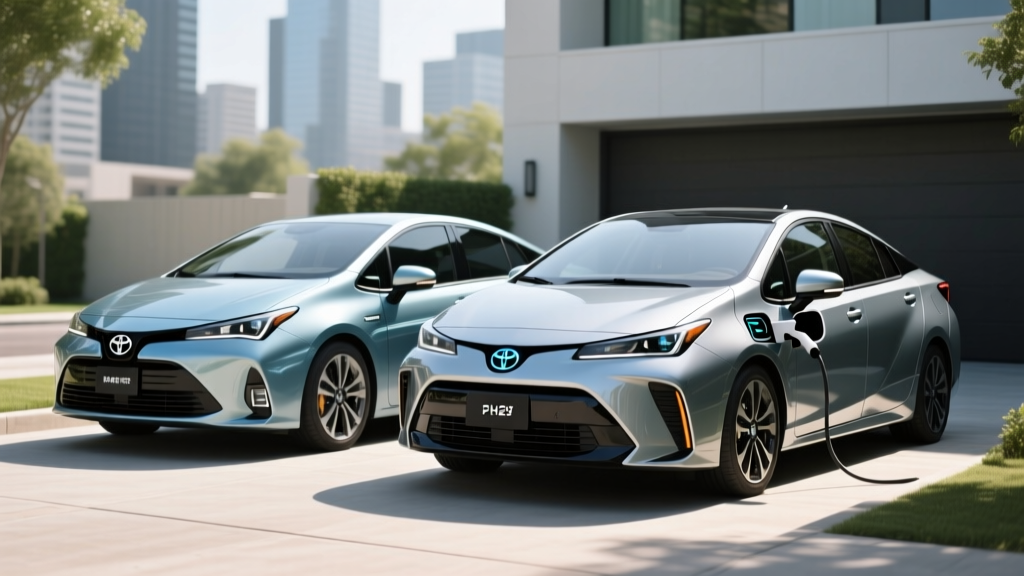
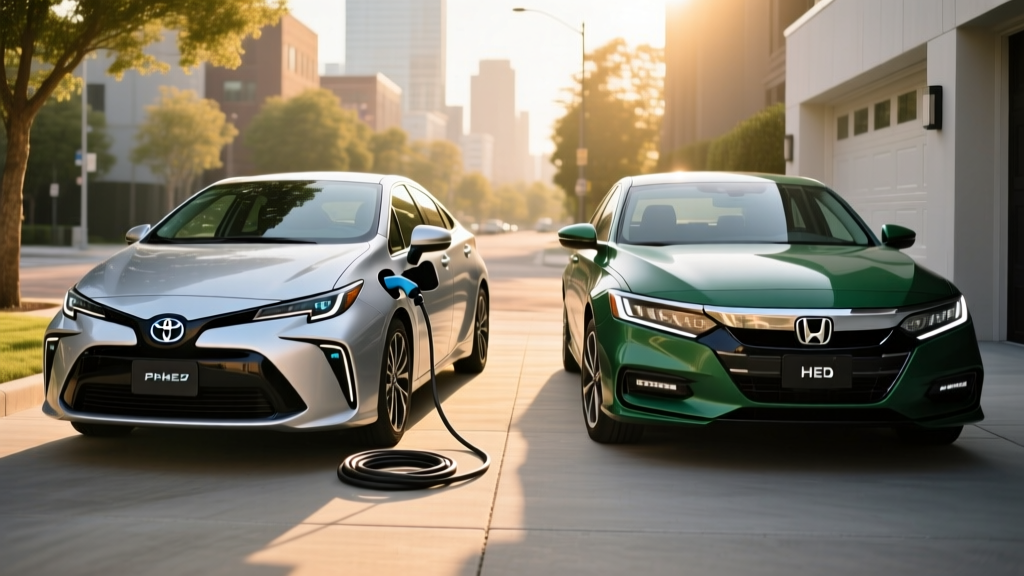
A conventional hybrid (HEV) like the Toyota Prius or Honda Accord Hybrid never plugs in. It generates all its electricity internally through regenerative braking and its gasoline engine. A plug-in hybrid (PHEV) like the Toyota RAV4 Prime or Jeep Wrangler 4xe has a larger battery and a charge port — you plug it in to unlock its electric-only driving range. If you don't plug in a PHEV, it still drives as a regular hybrid, but you're leaving its biggest advantage on the table.
HEV vs PHEV at a Glance
| Feature | Conventional Hybrid (HEV) | Plug-In Hybrid (PHEV) |
|---|---|---|
| Plugs in? | No | Yes (Level 1 or Level 2) |
| Battery size | 0.5–2.0 kWh | 10–25 kWh (usable) |
| Electric-only range | None (EV assist only) | 20–50 miles EPA |
| DC fast charging | N/A | Rare; most are Level 2 only |
| Federal tax credit (§30D) | No | Up to $7,500 (varies) |
| Best for | No home charging access | Home chargers, short commutes |
How Many MPG Does a Hybrid Get?
Hybrid fuel economy varies dramatically by vehicle class, but the efficiency gains over conventional gas cars are consistent. Here's a snapshot of top-selling 2026 hybrid models with EPA figures from fueleconomy.gov:
| Model (2026) | City MPG | Highway MPG | Combined MPG | Powertrain |
|---|---|---|---|---|
| Toyota Prius (HEV) | 57 | 56 | 57 | 2.0L I4 + 2 motors, 196 hp |
| Honda Accord Hybrid | 51 | 44 | 48 | 2.0L I4 + 2 motors, 204 hp |
| Toyota RAV4 Hybrid | 41 | 38 | 40 | 2.5L I4 + 3 motors, 219 hp |
| Hyundai Tucson Hybrid | 38 | 38 | 38 | 1.6L Turbo I4 + motor, 230 hp |
| Ford Maverick Hybrid | 42 | 33 | 37 | 2.5L I4 + motor, 191 hp |
Real-world MPG note: Hybrids frequently exceed their EPA city rating in stop-and-go traffic because regenerative braking recovers more energy at low speeds. On the highway, where regen opportunities are fewer and aerodynamic drag dominates, expect MPG to fall 3–8% below the EPA highway sticker. In cold weather (below 30°F), hybrid MPG drops 5–12% due to engine running longer for cabin heat and reduced battery efficiency.
PHEV Electric-Only Range and Total Range
If you're considering a plug-in hybrid, the electric-only range is the number that matters most for daily driving. Here's what current PHEVs deliver:
| Model (2026) | EV Range (EPA) | Battery (kWh usable) | Total Range | Combined HP | Charge Time (Level 2) | DC Fast Charge? |
|---|---|---|---|---|---|---|
| Toyota RAV4 Prime | 42 mi | 14.9 kWh | 600 mi | 302 hp | ~2.5 hrs (6.6 kW) | No |
| Jeep Wrangler 4xe | 22 mi | 15.0 kWh | 370 mi | 375 hp | ~3.5 hrs (6.6 kW) | No |
| Toyota Prius Prime | 44 mi | 13.6 kWh | 600+ mi | 220 hp | ~4.0 hrs (3.5 kW) | No |
| Hyundai Tucson PHEV | 33 mi | 13.8 kWh | 420 mi | 261 hp | ~2.0 hrs (7.2 kW) | No |
| Chrysler Pacifica PHEV | 32 mi | 16.0 kWh | 430 mi | 260 hp | ~2.0 hrs (7.2 kW) | No |
Charging a PHEV at home: Most PHEVs charge on a standard 120V outlet (Level 1) in 8–14 hours, which is sufficient for overnight top-ups given their small batteries. A 240V Level 2 home charger cuts that to 2–4 hours. Notably, almost no PHEVs support DC fast charging — the Mitsubishi Outlander PHEV is a rare exception with CHAdeMO capability. If you need road-trip fast charging, a PHEV's gasoline engine is its "fast charger."
Real-world EV range caveat: Expect PHEV electric range to drop 15–25% in winter or at sustained highway speeds above 70 mph. The RAV4 Prime's 42-mile EPA rating may deliver 32–35 miles in freezing temperatures with the heater running.
Hybrid vs PHEV vs EV: Which Fits Your Life?
Choose a Conventional Hybrid (HEV) If:
- You rent or live in an apartment with no charging access
- You want maximum MPG with zero behavior change
- You drive long highway routes where PHEV electric range adds little
- Your budget is under $35,000
Choose a Plug-In Hybrid (PHEV) If:
- You can install a Level 2 charger at home (or have a 120V garage outlet)
- Your daily commute is under 40 miles round-trip
- You want electric daily driving but gas flexibility for road trips
- You need an SUV or truck body style not yet available as a practical EV
Choose a Full EV (BEV) If:
- You have reliable home Level 2 charging
- Your typical trips fall within 250 miles, or you're willing to DC fast charge on road trips
- You want the lowest per-mile fuel cost and minimal maintenance
- You're targeting the full $7,500 federal tax credit
Hybrid Battery Reliability and Replacement Cost
Hybrid Battery Warranty: The Baseline
Federal law mandates that hybrid and PHEV battery packs carry a minimum warranty of 8 years / 100,000 miles. In California Air Resources Board (CARB) states, that extends to 10 years / 150,000 miles. Toyota, Honda, and Hyundai all meet or exceed these minimums on their 2026 models.
Longevity data: Toyota Prius hybrid batteries routinely surpass 200,000 miles with less than 15% capacity degradation, thanks to conservative state-of-charge management (the battery never fully charges or fully depletes). PHEV batteries face harder cycling but still show strong durability — Consumer Reports data indicates fewer than 5% of PHEVs require battery replacement before 150,000 miles.
Replacement cost if out of warranty:
- HEV battery (Prius, Accord Hybrid): $2,000–$4,000 including labor
- PHEV battery (RAV4 Prime, Wrangler 4xe): $6,000–$12,000 including labor
- Refurbished/remanufactured HEV batteries: $1,000–$2,000 (growing aftermarket)
The hybrid battery replacement fear is largely overstated for modern vehicles. Nickel-metal hydride (NiMH) packs in HEVs have 20+ years of proven longevity, and newer lithium-ion PHEV packs use thermal management systems that significantly reduce degradation compared to early-generation designs.
Tax Credits: Which Hybrids Qualify?
This is where the HEV vs PHEV distinction has real financial consequences. Under current IRS §30D rules:
- Conventional hybrids (HEVs): Do NOT qualify for any federal EV tax credit. No plug, no credit.
- Plug-in hybrids (PHEVs): May qualify for up to $7,500, but eligibility depends on:
- — Vehicle MSRP cap: $80,000 for SUVs/pickups/vans, $55,000 for sedans
- — Buyer income cap: $300,000 (joint), $225,000 (head of household), $150,000 (single)
- — Battery critical-mineral and component sourcing requirements (phased in annually through 2026)
- — Point-of-sale transfer is available — you can apply the credit as a dealer discount at purchase
As of 2026, qualifying PHEVs include the Toyota RAV4 Prime (partial credit depending on sourcing), Chrysler Pacifica PHEV, and select Jeep 4xe models. Always verify current eligibility at fueleconomy.gov before purchasing, as battery-sourcing compliance changes model by model and quarter by quarter. Consult a tax professional for your specific situation.
Charging a PHEV at Home: What You Actually Need
Because PHEV batteries are small (10–20 kWh), the charging infrastructure bar is much lower than a full EV:
| Charging Level | Power | Miles of EV Range Added/Hour | Full PHEV Charge Time |
|---|---|---|---|
| Level 1 (120V outlet) | ~1.4 kW | 3–5 mi/hr | 8–14 hours |
| Level 2 (240V, 16A) | ~3.8 kW | 10–15 mi/hr | 3–5 hours |
| Level 2 (240V, 32A) | ~7.2 kW | 20–25 mi/hr | 1.5–3 hours |
The practical insight: Most PHEV owners find that a standard 120V garage outlet is enough. Plug in when you get home, and 10 hours later the battery is full for your morning commute. A dedicated Level 2 charger ($300–$600 for equipment, $500–$1,500 for electrician installation) is a convenience upgrade, not a necessity. You do not need a 200-amp panel upgrade for a PHEV the way you might for a full EV charging at 48 amps.
Pros, Cons, and the Bottom Line
Conventional Hybrid (HEV) — Pros
- No charging infrastructure needed
- Proven 20+ year reliability track record
- 40–57 MPG combined with no behavior change
- Lower purchase price than PHEVs or EVs
- Minimal maintenance (no oil changes as frequent, regen saves brakes)
Conventional Hybrid (HEV) — Cons
- No electric-only driving
- No federal tax credit
- Still 100% gasoline-dependent
- Higher fuel cost per mile than PHEV on electric or full EV
Plug-In Hybrid (PHEV) — Pros
- 20–50 miles of daily electric driving
- Gas engine eliminates range anxiety on road trips
- May qualify for up to $7,500 federal credit
- Lower daily fuel cost if you charge at home
- Works as a regular hybrid even if you forget to plug in
Plug-In Hybrid (PHEV) — Cons
- $4,000–$8,000 price premium over HEV equivalent
- Heavier (bigger battery + engine = more weight)
- Requires charging access to justify the premium
- Most don't support DC fast charging
- More complex powertrain (two full systems to maintain long-term)
Frequently Asked Questions
Can I charge a regular hybrid like a Prius?
No. A conventional hybrid (HEV) has no charge port. Its small battery charges exclusively through regenerative braking and the gasoline engine. Only plug-in hybrids (PHEVs) and full electric vehicles (BEVs) have charge ports.
How far can a PHEV go on electric power alone?
Current 2026 PHEVs deliver 20–50 miles of EPA-rated electric-only range. The Toyota Prius Prime leads at 44 miles. Real-world range drops to 15–35 miles in cold weather or at highway speeds above 70 mph. Once the battery depletes, the vehicle seamlessly switches to hybrid mode.
Is a hybrid more reliable than a gas car?
Data from Consumer Reports and J.D. Power consistently ranks Toyota and Honda hybrids among the most reliable vehicles in their lineup. The hybrid system adds complexity, but the electric motor has far fewer moving parts than a transmission, and regenerative braking significantly extends brake pad life. Hybrid battery failure before 150,000 miles is statistically rare.
What does a hybrid battery replacement cost?
Out-of-warranty HEV battery replacement runs $2,000–$4,000. PHEV batteries cost $6,000–$12,000. However, federal warranty mandates cover hybrid batteries for at minimum 8 years/100,000 miles (10 years/150,000 in CARB states), and real-world data shows most hybrid batteries outlast these warranty periods by a wide margin.
Does a hybrid qualify for a tax credit?
Conventional hybrids (HEVs) do not qualify for any federal tax credit. Plug-in hybrids (PHEVs) may qualify for up to $7,500 under IRS §30D, subject to MSRP caps, buyer income limits, and battery-sourcing requirements. Check current eligibility at fueleconomy.gov and consult a tax professional before purchasing.
Should I get a hybrid, PHEV, or full EV?
If you can't charge at home, get an HEV. If you can charge at home and commute under 40 miles daily but take road trips, a PHEV is the pragmatic bridge. If you have home charging and want the lowest operating cost and no gasoline dependency, go full EV. The PHEV is the strongest "don't make me choose" option for households with one vehicle.