Quick Verdict: The Cayenne E-Hybrid at a Glance
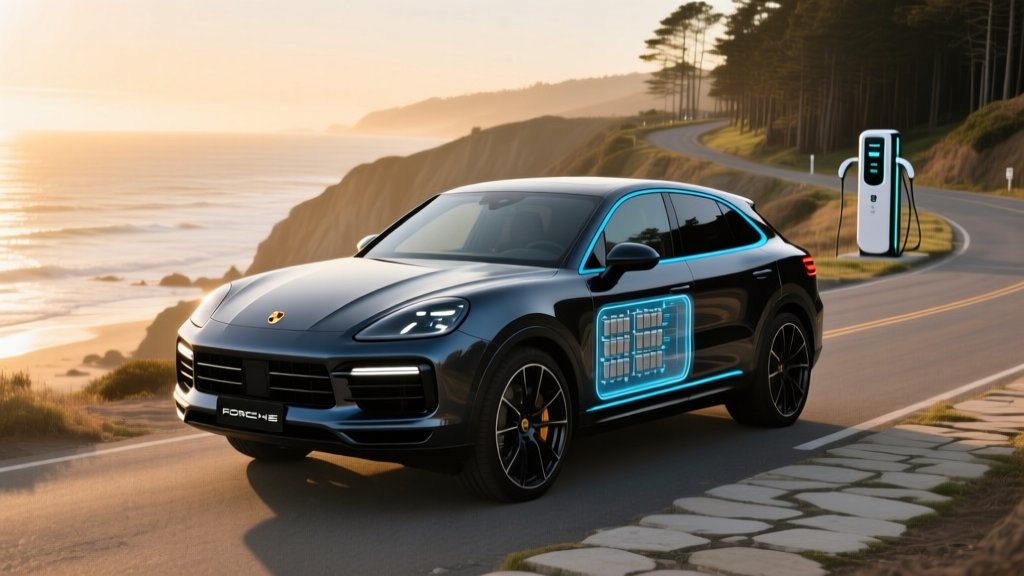
The 2026 Porsche Cayenne E-Hybrid threads a very specific needle: sports-luxury SUV performance with a plug-in hybrid powertrain that can handle most daily commutes on electricity alone. With a revised 25.7 kWh battery (up from 17.9 kWh in the previous generation), an EPA-estimated 35 miles of electric-only range, and a combined system output of 463 horsepower, it's positioned squarely at buyers who want Porsche dynamics without fully committing to a battery-electric vehicle.
But at a starting MSRP of $91,600, the Cayenne E-Hybrid isn't an efficiency bargain — it's a performance hybrid that happens to offer meaningful electric driving. Here's exactly what the numbers say, where the real-world experience diverges from the sticker, and whether the math works for your garage.
A conventional hybrid (HEV) like the Toyota RAV4 Hybrid uses a small battery recharged solely by the engine and regenerative braking — you never plug it in. A plug-in hybrid (PHEV) like the Cayenne E-Hybrid carries a much larger battery that you can charge from a wall outlet or public charger, enabling extended electric-only driving before the gas engine kicks in. The Cayenne E-Hybrid is exclusively a PHEV — there is no non-plug-in hybrid variant currently offered in the U.S. market.
Powertrain Specs: Engine, Motor, and Combined Output
The 2026 Cayenne E-Hybrid pairs a 3.0-liter turbocharged V6 with an electric motor integrated into the eight-speed Tiptronic S automatic transmission. Here's the full breakdown:
| Specification | Value |
|---|---|
| Gas Engine | 3.0L Turbocharged V6, 348 hp / 332 lb-ft |
| Electric Motor | 174 hp / 295 lb-ft (integrated in transmission) |
| Combined System Output | 463 hp / 479 lb-ft |
| Transmission | 8-speed Tiptronic S automatic, AWD |
| 0–60 mph | 4.6 seconds (with Sport Chrono) |
| Top Track Speed | 152 mph |
| Battery (Gross / Usable) | 25.7 kWh / ~21.8 kWh usable |
| Battery Chemistry | NMC (Nickel Manganese Cobalt) |
| Max Electric-Only Speed | 84 mph |
The electric motor alone is potent enough for highway merging and passing — 174 hp is more than many compact cars produce total. In E-Power mode, the Cayenne feels genuinely quick off the line, with instant torque that masks its 5,100-pound curb weight. When both power sources combine, the 4.6-second 0–60 time puts it in sports-sedan territory, not just SUV territory.
EPA MPG, MPGe, and Electric-Only Range
This is where PHEV math gets nuanced. The EPA rates plug-in hybrids in two ways: MPGe (miles-per-gallon-equivalent) when running primarily on electricity, and conventional MPG once the battery is depleted and the engine takes over.
| Metric | City | Highway | Combined |
|---|---|---|---|
| MPGe (charge-depleting, electric + gas) | 50 MPGe combined | ||
| MPG (charge-sustaining, gas only) | 19 MPG | 22 MPG | 20 MPG |
| Electric-Only Range | 35 miles (EPA est.) | ||
| Total Combined Range (EV + gas) | ~420 miles | ||
| Fuel Tank Capacity | 19.8 gallons | ||
Source: EPA Fuel Economy
The EPA's 35-mile electric range assumes moderate temperatures, flat terrain, and conservative driving. In real-world testing:
- Summer, city/suburban mix: Expect 30–34 miles electric — close to EPA.
- Highway at 75 mph: Electric range drops to roughly 22–26 miles due to aerodynamic drag and higher speeds.
- Cold weather (below 35°F): Expect 20–25 miles electric. The cabin heater draws significant power from the battery, and cold reduces lithium-ion discharge efficiency.
- Charge-sustaining MPG (battery depleted): Real-world highway driving yields 18–21 MPG combined, roughly matching the EPA's 20 MPG estimate. City driving with regen braking can nudge this to 21–23 MPG.
Charging: How Fast, What Connector, and DC Fast Charging
One of the most important questions for any PHEV buyer: how quickly can you recharge, and what infrastructure do you need?
| Charging Method | Power | Time (0–100%) | Notes |
|---|---|---|---|
| Level 1 (120V household outlet) | ~1.4 kW | ~16–18 hours | Emergency/trickle only |
| Level 2 (240V home/public) | 7.2 kW (onboard charger max) | ~3.5–4 hours | Recommended daily method |
| DC Fast Charging | Not supported | N/A | No CCS or NACS DC port |
The Cayenne E-Hybrid uses a J1772 connector for AC charging. It does not support DC fast charging — a limitation shared with most PHEVs, since the battery is too small to justify the added cost and weight of DC charging hardware. With a 7.2 kW onboard charger, a full replenishment from a Level 2 home charger takes about 3.5 hours, which is practical for overnight top-ups or mid-day charging at workplace stations.
Home charging setup cost: Expect $600–$1,200 for a quality Level 2 wallbox (ChargePoint Home Flex, Emporia Level 2, or Porsche's own Mobile Charger Connect) plus $500–$2,000 for electrician installation depending on panel proximity and whether a 240V/50A circuit already exists. Porsche recommends their Power Charger for integrated vehicle communication, but any J1772 Level 2 unit will work.
Pricing, Trims, and Tax Credit Eligibility
The 2026 Cayenne E-Hybrid is offered in multiple body styles and trim levels:
| Trim | Body Style | Base MSRP |
|---|---|---|
| Cayenne E-Hybrid | SUV | $91,600 |
| Cayenne E-Hybrid | Coupé | $96,300 |
| Cayenne S E-Hybrid | SUV | $101,400 |
| Cayenne S E-Hybrid | Coupé | $105,100 |
Prices exclude $1,650 destination charge. Options packages can add $15,000–$40,000+.
Does the Cayenne E-Hybrid Qualify for the Federal Tax Credit?
Under current IRS §30D rules, the Cayenne E-Hybrid faces significant hurdles for the $7,500 federal tax credit:
- MSRP cap: SUVs must be under $80,000. The Cayenne E-Hybrid starts at $91,600 — exceeds the cap.
- Battery capacity: Must be ≥7 kWh. The 25.7 kWh battery qualifies. ✓
- Buyer income cap: AGI ≤ $150K single / $300K joint. Varies by buyer.
- Critical minerals & battery sourcing: Must meet annual thresholds. Porsche's supply chain sourcing is complex — verify current-year compliance on IRS.gov's qualified vehicle list.
- Assembly: Must be assembled in North America. The Cayenne is assembled in Bratislava, Slovakia — does not qualify.
Bottom line: The Cayenne E-Hybrid does not qualify for the federal §30D tax credit due to both MSRP cap exceedance and non-North-American assembly. Some states offer separate PHEV rebates (California's CVRP, for instance, has income-dependent rebates), but buyers should not factor a federal credit into their purchase math.
Battery Warranty, Longevity, and Replacement Cost
- Hybrid battery warranty: 8 years / 100,000 miles (whichever comes first)
- Capacity retention threshold: Porsche warrants the high-voltage battery against dropping below 70% of original capacity during the warranty period
- Powertrain warranty: 4 years / 50,000 miles (standard Porsche limited warranty)
- Hybrid component warranty: 8 years / 100,000 miles for the electric motor, power electronics, and onboard charger
The 25.7 kWh NMC battery in the Cayenne E-Hybrid is liquid-cooled, which is critical for longevity — thermal management significantly slows degradation compared to passively cooled packs. Based on industry data from similar PHEV architectures (BMW X5 xDrive50e, Mercedes GLE 350de), expect 8–12% capacity loss over the first 8 years under normal use patterns.
Battery replacement cost: If the high-voltage battery requires replacement out of warranty, current estimates range from $12,000 to $18,000 for the battery pack itself, plus $2,000–$4,000 in labor and programming. This is a significant expense, though it's unlikely to be needed within the first decade given Porsche's thermal management engineering. Module-level repairs (replacing individual cell groups rather than the full pack) may reduce costs as the vehicle ages and the aftermarket develops expertise.
Who Should Choose the Cayenne E-Hybrid vs. a Full EV or Gas Cayenne?
✓ Choose the Cayenne E-Hybrid If
- You have home Level 2 charging and a commute under 30 miles round-trip
- You want Porsche performance (463 hp, 4.6s 0–60) with reduced fuel cost on daily drives
- You regularly take long road trips where EV charging infrastructure is sparse or slow
- You want to reduce tailpipe emissions without range anxiety
- You value the gas engine as a seamless backup for towing (7,700 lb capacity)
✗ Look at a Full EV or Gas Model If
- You can't charge at home — a PHEV without regular charging is just a heavy, less-efficient gas car
- Your daily commute exceeds 40+ miles — the electric range won't cover it, and you'll burn gas daily
- You prioritize lowest total cost of ownership — the Cayenne E-Hybrid's premium pricing and lack of federal tax credit hurt the math
- You want zero maintenance on the ICE side — PHEVs still require oil changes, spark plugs, and exhaust system maintenance
- Consider the gas Cayenne ($79,200) if you can't charge, or the Porsche Macan Electric if you want full EV with Porsche DNA
Real-World Ownership: What It Actually Costs to Drive
Let's model a realistic 12-month ownership scenario for a Cayenne E-Hybrid owner with home charging:
| Scenario | Miles on Electric | Miles on Gas | Annual Energy Cost |
|---|---|---|---|
| Charge daily, 25-mi commute | ~7,500 mi | ~4,500 mi | $1,350 (electricity) + $750 (gas) = ~$2,100 |
| Charge occasionally, 40-mi commute | ~3,000 mi | ~9,000 mi | $540 (electricity) + $1,500 (gas) = ~$2,040 |
| Never charge (PHEV as HEV) | 0 mi | 12,000 mi | ~$2,400 (gas at 20 MPG, $4.00/gal) |
For comparison, a gas-only Cayenne (19 MPG combined) would cost roughly $2,525/year in fuel at $4.00/gallon. The savings from the PHEV are meaningful but not transformative at this price point — you're saving $400–$900/year in energy, which will take decades to offset the E-Hybrid's price premium over the base gas Cayenne.
The real value proposition isn't fuel savings alone. It's the driving experience: silent electric departure, instant torque, reduced engine wear on short trips, and the ability to run emission-free in neighborhoods and garages — combined with the freedom to road-trip without planning charging stops.
Frequently Asked Questions
How many MPG does the Cayenne E-Hybrid get?
Once the battery is depleted, the EPA rates it at 19 city / 22 highway / 20 combined MPG. When factoring in electric driving, it achieves 50 MPGe combined. Real-world charge-sustaining MPG is typically 18–23 depending on driving style and conditions.
How far can the Cayenne E-Hybrid go on electric only?
The EPA estimates 35 miles of electric-only range. In real-world conditions, expect 22–34 miles depending on temperature, speed, and terrain. Highway driving at 75+ mph and cold weather significantly reduce this figure.
Can the Cayenne E-Hybrid use DC fast chargers?
No. The Cayenne E-Hybrid only supports AC charging via a J1772 connector, up to 7.2 kW on Level 2. It cannot use CCS, NACS, or CHAdeMO DC fast charging stations. A full charge from a Level 2 home charger takes approximately 3.5 hours.
Does the Cayenne E-Hybrid qualify for any tax credit?
It does not qualify for the federal §30D tax credit due to exceeding the $80,000 SUV MSRP cap and being assembled outside North America (Slovakia). Some state-level incentives may apply — check your state's energy office or IRS.gov for current eligibility lists.
Is the Cayenne E-Hybrid reliable, and what does battery replacement cost?
Porsche's hybrid systems have proven generally reliable, with the liquid-cooled battery managed conservatively to limit degradation. The high-voltage battery carries an 8-year/100,000-mile warranty with a 70% capacity retention guarantee. Out-of-warranty replacement is estimated at $14,000–$22,000 (parts and labor). The conventional powertrain components (V6, transmission) follow standard Porsche maintenance schedules.
How is the Cayenne E-Hybrid different from a regular hybrid?
A conventional hybrid (HEV) like the Toyota Highlander Hybrid has a small battery (1–2 kWh) charged only by the engine and regenerative braking — you never plug it in, and it can't drive on electricity alone for meaningful distances. The Cayenne E-Hybrid is a plug-in hybrid (PHEV) with a 25.7 kWh battery you charge from an outlet, enabling 35 miles of pure electric driving before the gas engine engages.
Should I buy the Cayenne E-Hybrid or the gas Cayenne?
If you have reliable home charging and a commute within the electric range, the E-Hybrid offers a superior daily driving experience with lower operating costs and more total power. If you lack charging access, regularly drive more than 40 miles one-way, or prioritize lowest purchase price, the gas Cayenne (starting at $79,200, 19 MPG combined) may be the more practical choice — or consider stepping to the fully electric Porsche Macan EV.