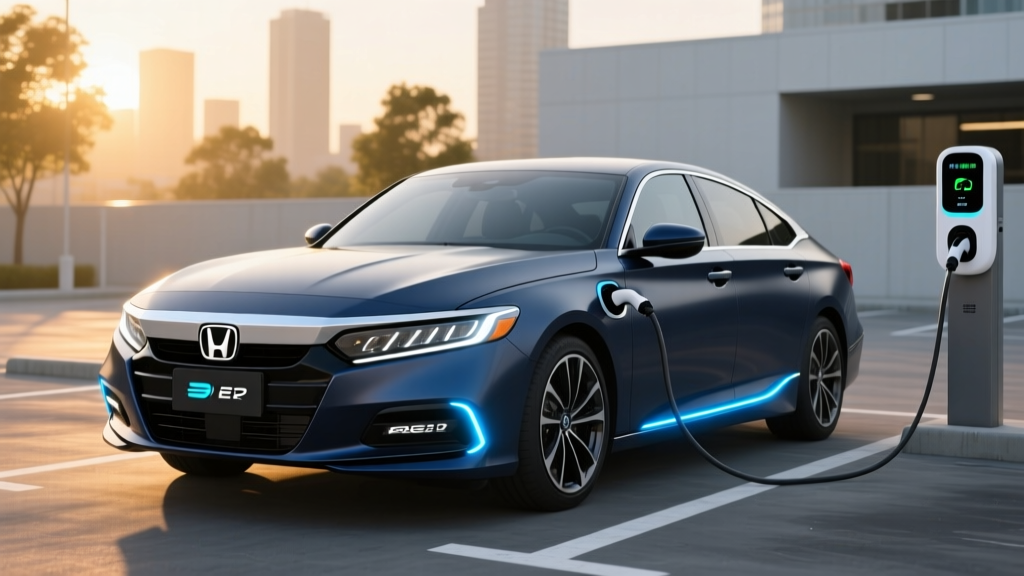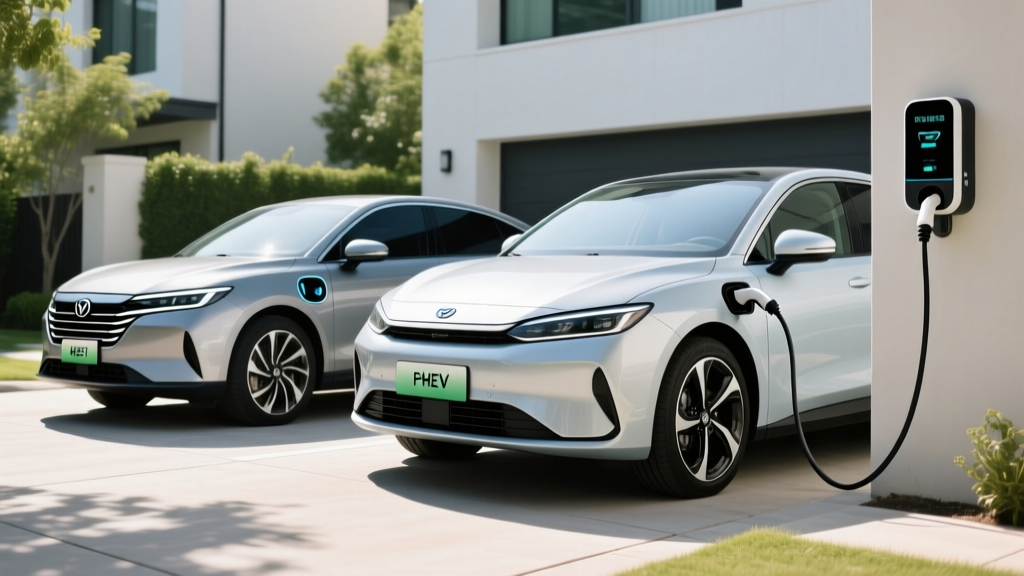
If you've asked yourself "can you plug in a hybrid car?" you're not alone — it's one of the most common questions from shoppers navigating the blur between gas-electric models. The honest answer: it depends entirely on which type of hybrid you're looking at. A conventional hybrid (HEV) like the Toyota Prius never plugs in. A plug-in hybrid (PHEV) like the Toyota RAV4 Prime absolutely does — and that plug is the whole point.
This guide cuts through the confusion with exact specs, real-world MPG data, charging times, battery warranties, and 2026 federal tax credit eligibility so you can match the right powertrain to your driving life.
The Short Answer: It Depends on the Hybrid Type
There are two fundamentally different vehicles hiding behind the word "hybrid." Understanding the difference determines whether you'll ever touch a charging cable.
| Feature | Conventional Hybrid (HEV) | Plug-In Hybrid (PHEV) |
|---|---|---|
| Plugs into a wall or charger? | No | Yes |
| How the battery charges | Regenerative braking + engine | Plug-in + regen + engine |
| Battery size | ~1.0–1.8 kWh | ~13–22 kWh usable |
| Electric-only driving | Very short bursts, low speed | 20–50+ miles at highway speed |
| Federal tax credit (§30D) | Not eligible | Up to $7,500 (rules apply) |
| Home charging hardware needed | None | 120V outlet minimum; 240V recommended |
A conventional hybrid generates all its electricity internally. You fuel it with gas and drive. A PHEV has a much larger battery and a charge port that accepts a J1772 connector (or NACS on newer models), letting you pre-load cheap, clean electricity before the gas engine ever starts.
How Hybrids Actually Charge: HEV vs PHEV Powertrains
In a conventional HEV, a small lithium-ion or nickel-metal-hydride battery (~1.0–1.8 kWh) is kept charged by two sources: the gasoline engine acting as a generator, and regenerative braking that captures kinetic energy during deceleration. There is no charge port, no cable, and no plug. You cannot plug in a Toyota Prius, Honda CR-V Hybrid, or Hyundai Tucson Hybrid — attempting to find a charge port on these will leave you walking around the car in circles.
A PHEV uses the same regenerative and engine-charging methods but adds a charge port and a battery 10 to 20 times larger. The 2026 Toyota RAV4 Prime, for example, carries an 18.1 kWh usable battery and a charge port on the driver-side rear quarter panel. Plug it into a standard 120V household outlet (Level 1) and it'll fully recharge in roughly 12 hours. Plug into a 240V Level 2 home charger at 6.6 kW and you're full in about 2.5 hours.
Fuel Economy: Real-World MPG and Electric Range
Fuel economy is where the HEV vs PHEV decision gets quantifiable. Below are EPA figures for popular 2026 models, paired with real-world notes from owner data and testing.
| Model | Type | EPA City | EPA Hwy | EPA Combined | EV-Only Range | Total Range |
|---|---|---|---|---|---|---|
| Toyota Prius LE | HEV | 57 mpg | 56 mpg | 57 mpg | N/A | ~620 mi |
| Honda CR-V Hybrid Sport | HEV | 43 mpg | 36 mpg | 40 mpg | N/A | ~450 mi |
| Toyota RAV4 Prime | PHEV | 94 MPGe | 84 MPGe | 94 MPGe (EV) / 38 mpg (gas) | 42 mi | ~600 mi |
| Hyundai Tucson PHEV | PHEV | 80 MPGe | 75 MPGe | 80 MPGe (EV) / 35 mpg (gas) | 33 mi | ~420 mi |
| Jeep Wrangler 4xe | PHEV | 49 MPGe | 45 MPGe | 49 MPGe (EV) / 20 mpg (gas) | 22 mi | ~370 mi |
| Chrysler Pacifica PHEV | PHEV | 82 MPGe | 76 MPGe | 82 MPGe (EV) / 30 mpg (gas) | 32 mi | ~460 mi |
Real-world MPG note: Conventional hybrids routinely beat their EPA city numbers in stop-and-go driving because regenerative braking is most effective at low speeds. Prius owners frequently report 60+ mpg in city commuting. Highway driving is the opposite — expect 5–10% below EPA at sustained 75+ mph. For PHEVs, the electric-only range assumes moderate temperatures and mixed driving; cold weather (below 32°F) can cut EV range by 20–30% due to battery chemistry and cabin heating loads.
PHEV Charging: Times, Levels, and Connector Reality
If you choose a PHEV, here's the charging picture. PHEVs have smaller batteries than full EVs, so they charge quickly — but most do not support DC fast charging.
| Level | Voltage / Power | Time (0–100%) | Where |
|---|---|---|---|
| Level 1 | 120V / ~1.4 kW | ~12–14 hours | Standard household outlet |
| Level 2 | 240V / 6.6 kW | ~2.5–3 hours | Home wallbox, workplace, public L2 |
| DC Fast Charge | 50+ kW | ~25–35 min (10–80%) | Rare on PHEVs; Mitsubishi Outlander PHEV is an exception |
Critical detail: Most PHEVs — including the RAV4 Prime, Tucson PHEV, and Pacifica PHEV — max out at Level 2 and have no DC fast-charge capability. The Mitsubishi Outlander PHEV is a notable exception, offering CHAdeMO DC fast charging on earlier models and CCS on newer ones. If your PHEV lacks DCFC, public fast-charging networks like Electrify America or Tesla Superchargers won't help you — plan around Level 2 destinations or home charging.
For daily use, Level 1 from a standard 120V outlet is often sufficient. If you drive 30 miles a day and your PHEV offers 35 miles of EV range, an overnight trickle charge from a garage outlet covers your commute. A dedicated 240V Level 2 charger ($400–$700 for the unit, plus $500–$1,500 for electrician installation) is a luxury for PHEVs, not a necessity — unlike full EVs where Level 2 is strongly recommended.
Powertrain Specs: What's Under the Hood
Hybrids pair a gasoline engine with one or more electric motors. The combined output often exceeds what the gas engine produces alone.
| Model | Engine | Combined HP | 0–60 mph | Drivetrain | Battery (usable kWh) |
|---|---|---|---|---|---|
| Toyota Prius LE | 2.0L I4 | 194 hp | 7.2 sec | FWD | ~1.3 kWh (HEV) |
| Honda CR-V Hybrid | 2.0L I4 | 204 hp | 7.6 sec | AWD | ~1.1 kWh (HEV) |
| Toyota RAV4 Prime | 2.5L I4 | 302 hp | 5.7 sec | AWD (e-AWD) | 18.1 kWh (PHEV) |
| Hyundai Tucson PHEV | 1.6L Turbo I4 | 261 hp | 7.1 sec | AWD | 13.8 kWh (PHEV) |
| Jeep Wrangler 4xe | 2.0L Turbo I4 | 375 hp | 6.0 sec | 4WD | 17.3 kWh (PHEV) |
The RAV4 Prime's 302 hp makes it one of the quickest vehicles in Toyota's lineup — a side benefit of PHEV architecture. The electric motor delivers instant torque while the gas engine fills in at higher speeds. This dual-power design means PHEVs often feel more responsive than their gas-only siblings, particularly in city acceleration from a stop.
Pricing, Tax Credits, and Total Cost
PHEVs carry a price premium over conventional hybrids due to the larger battery and charge hardware. Here's the 2026 landscape:
| Model | Base MSRP | §30D Federal Credit | Effective Price (after credit) |
|---|---|---|---|
| Toyota Prius LE (HEV) | $29,445 | $0 | $29,445 |
| Honda CR-V Hybrid Sport (HEV) | $36,775 | $0 | $36,775 |
| Toyota RAV4 Prime SE (PHEV) | $44,985 | Up to $7,500* | ~$37,485* |
| Hyundai Tucson PHEV SEL (PHEV) | $39,440 | Up to $7,500* | ~$31,940* |
| Jeep Wrangler 4xe Sport S (PHEV) | $51,790 | Up to $7,500* | ~$44,290* |
| Chrysler Pacifica PHEV (PHEV) | $51,490 | Up to $7,500* | ~$43,990* |
*§30D Tax Credit rules (2026): The federal plug-in vehicle credit under IRS §30D offers up to $7,500 for qualifying new PHEVs. Eligibility requires:
- MSRP cap: Vans, SUVs, and pickups ≤ $80,000; sedans ≤ $55,000
- Buyer income cap: AGI ≤ $150,000 (single), $225,000 (head of household), $300,000 (joint)
- Battery sourcing: Critical minerals and battery components must meet phased-in domestic/free-trade-area percentages that tighten annually
- Point-of-sale transfer: You can transfer the credit to the dealer at purchase, reducing your out-of-pocket cost immediately — even if you owe no federal tax
- Conventional HEVs are NOT eligible — only plug-in vehicles qualify
Battery sourcing requirements have disqualified several PHEVs in prior model years. Always verify current eligibility on fueleconomy.gov before purchasing, as the list updates frequently.
Reliability and Battery Warranty: What to Expect
Hybrid battery longevity is a top concern, and the data is reassuring. Modern lithium-ion hybrid batteries are engineered with conservative charge buffers — the car never uses 100% of the cells' capacity, which dramatically slows degradation.
- Toyota: 10 years / 150,000 miles (hybrid battery)
- Honda: 8 years / 100,000 miles (hybrid battery; 10/150k in CARB states)
- Hyundai/Kia: 10 years / 100,000 miles (hybrid/PHEV battery)
- Jeep/Chrysler (Stellantis): 8 years / 100,000 miles (PHEV battery)
Warranty covers capacity loss below ~60–70% of original, plus defects. Out-of-warranty replacement costs: $2,000–$4,000 for HEV batteries; $5,000–$9,000 for PHEV batteries (larger capacity).
Real-world longevity data from fleet and high-mileage owners shows most HEV batteries last 150,000–200,000+ miles with minimal degradation. The second-generation Prius (2004–2009) had some battery failures around 100,000 miles, but chemistry and thermal management have improved substantially since then. PHEV batteries, being larger and less stressed per cycle, show similarly strong durability. According to NHTSA complaint databases, hybrid battery failures on 2020+ models are statistically rare.
Who Should Choose an HEV, PHEV, or Full EV?
The right choice depends on your charging access, daily mileage, and budget tolerance.
Choose a conventional hybrid (HEV) if:
- You have no access to home or workplace charging
- You want maximum simplicity — no cables, no apps, no charging planning
- Your budget is tighter and you want 40–57 mpg without a price premium
- You frequently take long road trips and don't want to think about range
Choose a plug-in hybrid (PHEV) if:
- You can charge at home (even a 120V outlet works for most PHEVs overnight)
- Your daily commute is under 30–40 miles round-trip (you'll rarely burn gas)
- You want EV-like daily driving with gas-engine freedom for road trips
- You qualify for the §30D tax credit, narrowing the price gap with HEVs
Choose a full battery EV (BEV) if:
- You have reliable Level 2 home charging
- You want zero tailpipe emissions and minimal maintenance (no oil changes, no spark plugs)
- You drive under 250 miles daily and have access to DC fast charging for road trips
- You want the lowest per-mile fuel cost — electricity at $0.13/kWh costs roughly $0.04/mile vs. $0.12–$0.16/mile for gas
- ✅ No plug needed; works anywhere gas is sold
- ✅ 40–57 mpg real-world, especially in city driving
- ✅ Lower purchase price; no charging infrastructure cost
- ❌ No electric-only driving; always burning fuel
- ❌ No federal tax credit eligibility
- ❌ Still requires oil changes and engine maintenance
- ✅ 22–42 miles of zero-emission electric driving daily
- ✅ Gas engine eliminates range anxiety on long trips
- ✅ Eligible for up to $7,500 federal tax credit
- ✅ Level 1 outlet often sufficient for overnight charging
- ❌ Higher purchase price than HEV equivalents
- ❌ Most lack DC fast charging
- ❌ Two systems to maintain (engine + electric powertrain)
Frequently Asked Questions
Can you plug in a regular hybrid car like the Toyota Prius?
No. A conventional hybrid (HEV) has no charge port. Its small battery charges exclusively through regenerative braking and the gasoline engine. The only hybrid Prius that plugs in is the Prius Prime, which is a PHEV with a dedicated charge port and 44 miles of electric-only range.
How many MPG does a hybrid really get?
Real-world MPG for conventional hybrids typically matches or exceeds EPA city estimates in stop-and-go traffic (the Prius LE is EPA-rated at 57 mpg combined and owners commonly see 55–62 mpg in city driving). Highway driving at 75+ mph drops efficiency by 5–10% below EPA. PHEVs, when driven within their electric range, achieve 75–94 MPGe; once the battery depletes, they revert to 20–38 mpg on gas depending on the model.
How far can a PHEV go on electric only?
Current 2026 PHEVs offer 22–42 miles of EPA-rated electric-only range. The RAV4 Prime leads at 42 miles, the Tucson PHEV delivers 33 miles, and the Wrangler 4xe manages 22 miles. Real-world EV range drops 20–30% in cold weather due to battery resistance and cabin heating demands.
Do PHEVs charge while driving?
Yes. All PHEVs use regenerative braking and the gas engine to recharge the battery while driving. However, this is much slower and less efficient than plugging in. Relying solely on driving to charge a PHEV defeats the purpose — you'll burn more fuel generating electricity than you would by plugging into the grid.
Is a hybrid battery expensive to replace?
Out-of-warranty HEV battery replacement typically costs $2,000–$4,000. PHEV batteries, being larger, run $5,000–$9,000. However, most hybrid batteries last the life of the vehicle — 150,000–200,000+ miles is common. All 2026 hybrids carry at minimum an 8-year/100,000-mile battery warranty; Toyota and Hyundai extend that to 10 years.
Does a hybrid qualify for any tax credit?
Only plug-in hybrids (PHEVs) qualify for the federal §30D clean vehicle credit — up to $7,500, subject to MSRP caps, buyer income limits, and battery-sourcing requirements. Conventional hybrids (HEVs) do not qualify for any federal tax credit. Some states offer additional rebates for PHEVs; check your state energy office or IRS.gov for current details.
What happens if I never plug in my PHEV?
The car still works perfectly — it operates as a conventional hybrid once the battery depletes. But you'll get worse fuel economy than a purpose-built HEV because you're hauling extra battery weight without using it. A RAV4 Prime driven only on gas gets about 38 mpg combined; a standard RAV4 Hybrid gets 41 mpg. The PHEV only makes financial and environmental sense if you actually plug it in.