The Camry Hybrid Plug-In Question: What Toyota Actually Offers in 2026
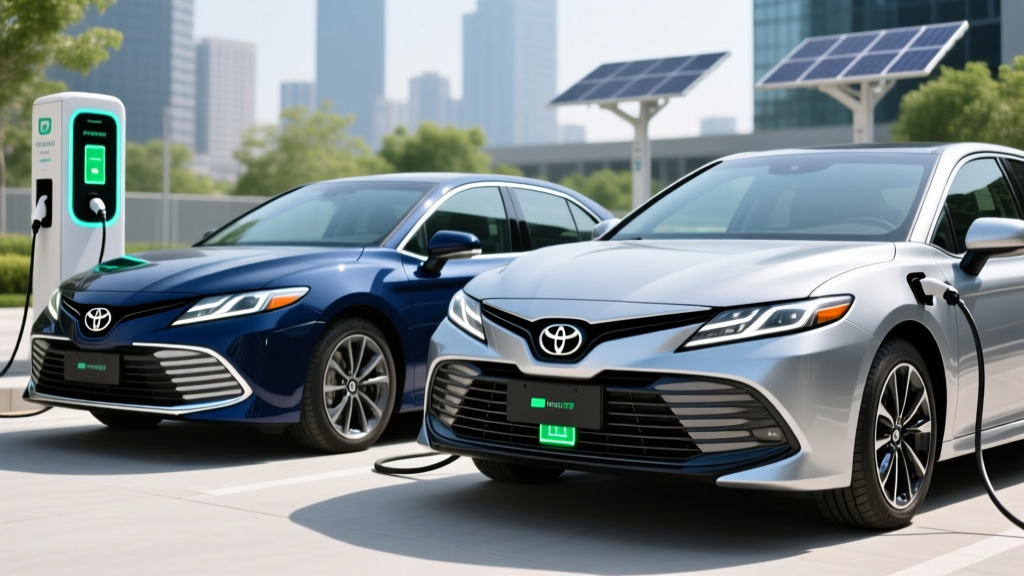
Every month, hundreds of shoppers search for a "Camry hybrid plug-in" — and land on a confusing reality. Toyota does not sell a plug-in hybrid (PHEV) version of the Camry in the United States for the 2026 model year. What Toyota does offer is the Camry Hybrid, a conventional self-charging hybrid electric vehicle (HEV) that requires no plug, no charging cable, and no change to your fueling routine. It's one of the most efficient midsize sedans on the market, but it is categorically not a plug-in.
If you're set on a Toyota plug-in hybrid with usable electric-only range, the RAV4 Prime (SUV) is currently Toyota's sole PHEV offering in the U.S. passenger-car lineup. But for sedan buyers prioritizing efficiency, low running costs, and proven reliability, the 2026 Camry Hybrid remains a benchmark. This guide dissects exactly what you get — and helps you decide whether the HEV Camry, a competing PHEV, or a full BEV is the right call.
HEV vs. PHEV: Why the Camry Is Hybrid-Only
Before diving into specs, it's worth clarifying the fundamental difference between the two hybrid architectures, since the confusion drives the "Camry hybrid plug-in" search volume:
| Feature | Conventional Hybrid (HEV) | Plug-In Hybrid (PHEV) |
|---|---|---|
| Needs to plug in? | No — self-charging via regenerative braking and engine | Yes — plug in to charge larger battery |
| Battery size | Small (~1.0–1.6 kWh usable) | Larger (~13–20+ kWh usable) |
| Electric-only range | Less than 1 mile at low speed | 25–45+ miles (EPA) |
| DC fast charging | N/A | Rarely — most PHEVs are Level 2 AC only |
| Federal tax credit (§30D) | Not eligible | Up to $7,500 if all sourcing/income/MSRP rules met |
| Example | 2026 Toyota Camry Hybrid | 2026 Toyota RAV4 Prime |
Toyota's decision to keep the Camry as an HEV is strategic: it holds the sedan's price down, eliminates charging dependency, and leverages a powertrain the company has refined since the 1997 Prius. For buyers without reliable home or workplace charging, an HEV is often the more pragmatic electrified choice.
2026 Camry Hybrid: Full Powertrain and Efficiency Specs
The 2026 Camry carries over the fifth-generation Toyota Hybrid System (THS) introduced with the current generation. Every trim uses the same 2.5-liter four-cylinder hybrid powertrain paired with a lithium-ion traction battery. Front-wheel drive is standard; electronic on-demand AWD is optional on most trims, adding a rear-axle motor.
| Spec | FWD | AWD |
|---|---|---|
| Combined horsepower | 225 hp | 232 hp |
| Engine | 2.5L inline-4 + two front motors (1 traction, 1 generator) | |
| AWD rear motor | — | 40 hp permanent-magnet |
| Traction battery | ~1.6 kWh lithium-ion (sealed, NiMH no longer used) | |
| EPA city MPG | 53 | 51 |
| EPA highway MPG | 50 | 49 |
| EPA combined MPG | 52 | 50 |
| Fuel tank | 13.2 gal | |
| Total range (EPA est.) | ~686 mi | ~660 mi |
| 0–60 mph (mfr. est.) | ~7.1 sec | ~6.9 sec |
| Plug-in charging | Not supported — no charge port | |
| DC fast charging | N/A | |
Source: fueleconomy.gov and Toyota USA specifications.
Real-World MPG: What Owners Actually Report
Toyota hybrids are one of the rare vehicle categories where real-world fuel economy often meets or exceeds the EPA sticker, especially in city driving. The EPA city cycle is weighted toward low-speed stop-and-go conditions where regenerative braking recovers energy and the engine shuts off frequently — exactly where the Camry Hybrid thrives.
- City / suburban: 50–56 MPG (many owners report beating the 53 city EPA figure in warm weather)
- Highway (70–80 mph, sustained): 44–48 MPG — hybrid advantage shrinks at high steady speeds
- Cold weather (below 35°F, short trips): 40–46 MPG — engine runs more often for cabin heat and battery warm-up
- Combined annual driving (EPA mix): Expect ~49–52 MPG for most owners
For comparison, the closest conventional-gas midsize sedan (2026 Honda Accord 1.5T) returns 29/37/32 MPG EPA. That's a ~62% improvement in combined fuel economy for the Camry Hybrid, translating to roughly $550–$750 per year in fuel savings at 15,000 miles and $3.40/gal regular unleaded, per fueleconomy.gov's annual fuel-cost calculator.
Pricing, Trims, and Tax-Credit Reality
The 2026 Camry is now hybrid-only across all trims — Toyota dropped the non-hybrid four-cylinder after the 2024 model year. This means every Camry you buy gets the 52 MPG combined powertrain, but it also means no trim qualifies for the federal §30D new clean-vehicle tax credit.
| Trim | FWD MSRP | AWD Add-On |
|---|---|---|
| LE | ~$29,990 | +$1,525 |
| SE | ~$31,490 | +$1,525 |
| XSE | ~$34,290 | +$1,525 |
| XLE | ~$35,190 | +$1,525 |
- ❌ Not eligible. The §30D credit applies only to plug-in electric vehicles (BEVs and PHEVs) with a minimum 7 kWh battery capacity. The Camry Hybrid's ~1.6 kWh pack and lack of a charge port disqualify it.
- ❌ The "clean vehicle" credit is not available for conventional HEVs, regardless of efficiency.
- ✅ Possible state incentives: A handful of states (e.g., Colorado, certain utility rebates) offer small rebates for efficient hybrids. Check your state's energy office and local utility — amounts vary widely.
- ✅ Used hybrid credit (§25E): If you later buy a qualifying used Camry Hybrid (model year ≥2 years old, under $25,000, income caps apply), you may qualify for up to $4,000 or 30% of sale price via the used clean-vehicle credit — though HEVs are generally excluded here too. Confirm with a tax professional and IRS §25E guidance.
Battery Warranty, Longevity, and Replacement Cost
Hybrid battery longevity is the number-one concern buyers raise — and it's where Toyota's track record is strongest. The company has shipped more than 25 million hybrid vehicles globally since 1997, and Camry/Prius taxi fleets have documented 200,000–300,000+ miles on original hybrid batteries.
- Hybrid battery warranty: 10 years / 150,000 miles (whichever comes first), transferrable to subsequent owners
- Hybrid system components (inverter, motors, control module): 8 years / 100,000 miles
- Powertrain warranty (engine, transaxle): 5 years / 60,000 miles
- Basic bumper-to-bumper: 3 years / 36,000 miles
Note: California-emissions states (CARB states) may carry extended hybrid-battery coverage — verify with your dealer.
If you do need an out-of-warranty replacement, a new OEM Camry Hybrid battery pack currently runs $2,500–$4,000 installed at a Toyota dealer. Independent hybrid specialists and refurbished packs can bring that down to $1,200–$2,200. For context, that's a fraction of a BEV pack replacement ($8,000–$20,000+), and most Camry Hybrids never need one within typical ownership.
Camry Hybrid vs. PHEV vs. Full EV: Which Fits You?
The "right" electrified vehicle depends less on ideology and more on your charging access, daily mileage, and budget. Use this framework:
- You lack reliable home Level 2 or workplace charging
- You want 650+ miles of total range with zero route planning
- Your budget is $30K–$38K and you want no tax-credit paperwork
- You drive a mix of city and highway with frequent long road trips
- Low-maintenance, proven-reliability ownership is the priority
- You can charge at home nightly and want 30–45 miles of daily electric-only commuting
- You still want gas-engine range for weekend road trips
- The specific model qualifies for the §30D credit (verify battery sourcing + MSRP + income caps on irs.gov)
- You're willing to pay a $5K–$12K premium over an HEV equivalent
- You have home Level 2 charging and your daily driving is under 250 miles
- You want to eliminate gasoline entirely and minimize per-mile fuel cost
- You can capture the full $7,500 §30D credit (point-of-sale transfer available)
- You're comfortable planning DC fast-charge stops on road trips
Pros and Cons of the 2026 Camry Hybrid
- Class-leading 52 MPG combined EPA; often beaten in real-world city driving
- No charging infrastructure required — just gas up and go
- 10-year / 150,000-mile hybrid battery warranty
- Strong resale value; Toyota reliability track record
- Standard Toyota Safety Sense 3.0 (AEB, lane-keep, adaptive cruise)
- ~686-mile total range — fewer fill-ups than any gas midsize sedan
- Not a plug-in — no electric-only driving, no §30D federal tax credit
- AWD fuel-economy penalty (~2 MPG combined)
- CVT-like powertrain drone under hard acceleration
- Highway MPG advantage over gas sedans is smaller than city advantage
- No DC fast charging or meaningful electric-only mode
Frequently Asked Questions
How many MPG does the 2026 Camry Hybrid get?
The FWD Camry Hybrid is EPA-rated at 53 city / 50 highway / 52 combined. AWD trims drop to 51/49/50. Real-world owners commonly see 50–56 MPG in city driving and 44–48 on the highway, with cold weather pulling combined numbers down to the mid-to-high 40s.
How far can the Camry Hybrid go on electric only?
Effectively less than one mile at very low speeds. The Camry Hybrid is not a plug-in — its small ~1.6 kWh battery is charged only by the engine and regenerative braking. If you want meaningful electric-only range (30+ miles) from a Toyota, the RAV4 Prime PHEV is currently the only U.S. option.
Hybrid vs. PHEV vs. EV — which is right for me?
HEVs like the Camry Hybrid win for drivers without home charging or who take frequent long road trips. PHEVs suit home-chargers who commute under 40 miles daily but want gas backup. Full BEVs minimize per-mile cost and maintenance if you can charge at home and rarely exceed 250 miles between stops. See the decision framework above for specifics.
Is the Camry Hybrid reliable, and what does a battery replacement cost?
Toyota's hybrid system is among the most proven in the industry, with a 10-year/150,000-mile battery warranty. Out-of-warranty replacement runs $2,500–$4,000 OEM or $1,200–$2,200 refurbished/independent. Most original packs last well past 150,000 miles; many Prius/Camry taxis have exceeded 250,000 on the original battery.
Does the 2026 Camry Hybrid qualify for any tax credit?
No. The federal §30D new clean-vehicle credit requires a plug-in vehicle with at least 7 kWh of battery capacity. The Camry Hybrid has neither a plug nor sufficient battery capacity. Some state or utility efficiency rebates may apply — check local programs. Always confirm eligibility with a tax professional and current IRS guidance.
Will Toyota ever release a Camry plug-in hybrid?
Toyota has not announced a Camry PHEV for the U.S. market as of 2026. The company has focused its PHEV strategy on the RAV4 Prime and (in some markets) the Prius Prime. Given the Camry's already-strong HEV efficiency and price positioning, a PHEV variant would likely push MSRP into RAV4 Prime territory without adding the cargo utility buyers want at that price point.
Specs and pricing reflect 2026 model-year information available at publication. Federal tax-credit rules under §30D and §25E are subject to change; always verify current requirements on irs.gov and consult a tax professional before making a purchase decision.