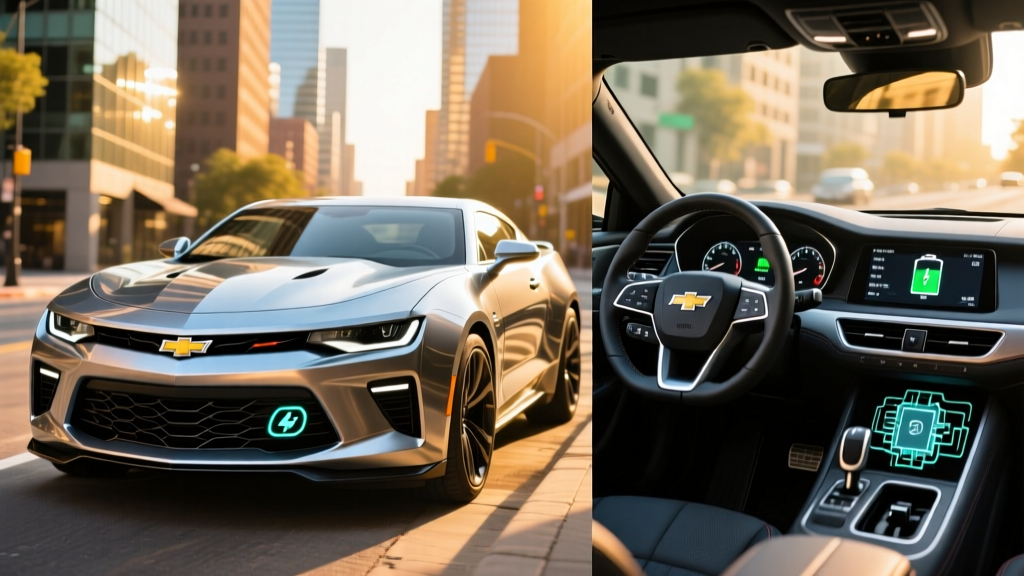
If you've been searching for a Camaro hybrid, you've likely hit a wall of forum speculation, concept-car rumors, and misleading clickbait. As of the 2026 model year, Chevrolet does not offer a hybrid or plug-in hybrid (PHEV) version of the Camaro — and the situation is more complicated than a simple "no." The sixth-generation Camaro ended production in January 2024, and while GM has signaled an electrified future for its performance lineup, no hybrid Camaro has been announced for sale.
This guide cuts through the noise. We'll explain exactly where the Camaro stands in GM's electrification strategy, break down the hybrid and PHEV muscle car alternatives that do exist today, and give you the data you need to decide whether to wait for a hybrid Camaro, pivot to an alternative, or go full EV.
Where the Camaro Stands in 2026: No Hybrid, No PHEV
Let's be direct: there is no Camaro hybrid on sale today. The Camaro nameplate went on hiatus after the 2024 model year, when Chevrolet ended production of the sixth-generation model at the Lansing Grand River plant. GM executives, including then-President Mark Reuss, confirmed that the Camaro would return — but strongly hinted it would do so on the Ultium (now called the BEV3/BrightDrop-derived) electric platform.
As of early 2026, Chevrolet has not officially revealed a next-generation Camaro in any form — gas, hybrid, PHEV, or electric. What we know from GM's public statements and supply-chain reporting:
- GM's performance division has been developing electric muscle car prototypes, likely under the Camaro or a successor nameplate.
- GM has invested heavily in PHEV technology for trucks (the Silverado PHEV launched for 2026) but has not confirmed PHEV for any coupe or sports car.
- The Corvette E-Ray, which pairs a 6.2L V8 with a front-axle electric motor, remains GM's only performance-car hybrid offering and serves as the closest analog to what a hybrid Camaro could be.
HEV vs PHEV vs EV: What Each Means for a Muscle Car
Before we discuss alternatives, it's essential to understand the three electrification paths and what each would mean for a performance coupe like the Camaro.
| Feature | HEV (Conventional Hybrid) | PHEV (Plug-In Hybrid) | BEV (Battery Electric) |
|---|---|---|---|
| Plug-in charging? | No — self-charging via regen and engine | Yes — plug in for electric-only range | Yes — 100% electric |
| Battery size | 1–2 kWh (small) | 15–25 kWh (medium) | 60–100+ kWh (large) |
| Electric-only range | None (motor assists only) | 20–50 miles typical | 230–400+ miles (EPA) |
| Fuel/energy source | Gasoline only | Gasoline + electricity | Electricity only |
| Performance benefit | Torque fill, marginal HP bump | Combined HP boost, electric launch | Instant torque, max acceleration |
| Tax credit eligibility | None | Up to $7,500 (§30D, if eligible) | Up to $7,500 (§30D, if eligible) |
| Weight penalty | ~150–250 lbs | ~400–700 lbs | ~800–1,500 lbs vs gas equivalent |
For a muscle car application, each approach has distinct trade-offs. A conventional hybrid (HEV) adds minimal weight and provides torque fill at low RPMs — ideal for a performance car that still needs to sound and feel like a V8. A PHEV offers more electric power and a usable electric-only commute range but adds significant weight that hurts handling. A full BEV delivers the most power and lowest running costs but fundamentally changes the character of the vehicle and adds the most mass.
Corvette E-Ray: The Closest Thing to a Hybrid Camaro Today
The 2026 Chevrolet Corvette E-Ray is the only hybrid performance car GM currently sells, and it offers the clearest preview of what hybridized Chevy muscle could deliver. Here are the exact numbers:
| Spec | Value |
|---|---|
| Powertrain | 6.2L LT2 V8 + front-axle electric motor (eAWD) |
| Combined output | 655 hp (495 hp gas + 160 hp electric) |
| Battery | 1.9 kWh lithium-ion (NMC), self-charging HEV |
| 0–60 mph | 2.5 seconds (AWD launch) |
| EPA MPG (combined) | 19 MPG combined (16 city / 24 highway) — fueleconomy.gov |
| Electric-only mode | Stealth Mode: ~3–4 miles at low speed (not EPA-rated) |
| Plug-in charging | No — charges via regen and engine only |
| MSRP | $106,595 (1LZ coupe) — $111,595 (1LZ convertible) |
| Battery warranty | 8 years / 100,000 miles (hybrid components) |
The E-Ray's hybrid system is a conventional HEV — it does not plug in. The 1.9 kWh battery is small by design, providing short bursts of electric torque for all-wheel-drive launches and low-speed electric crawling (Chevy calls it "Stealth Mode"). The fuel economy benefit is modest: 19 MPG combined is barely better than the standard Stingray's 19 MPG combined. The E-Ray's hybrid system exists primarily for performance, not efficiency.
Real-world note: Owners report that the E-Ray's hybrid system is most effective in stop-and-go traffic, where the electric motor handles low-speed movement and the V8 stays dormant. On highway cruises, it operates essentially as a conventional Stingray with added weight (~300 lbs from the hybrid system).
Hybrid Muscle Car Alternatives You Can Buy in 2026
If the Camaro hybrid doesn't exist and the E-Ray is out of budget, here's what the hybrid performance and sporty-car landscape looks like for buyers who want electrified efficiency without going full EV:
Ford Mustang (No Hybrid — But EcoBoost as Baseline)
Ford does not offer a hybrid Mustang for 2026. The seventh-generation Mustang (S650) is available with the 2.3L EcoBoost (315 hp, EPA 25 MPG combined) or the 5.0L Coyote V8 (480–500 hp, EPA 18–19 MPG combined). Ford has not announced hybrid or PHEV Mustang plans, though industry analysts expect a PHEV variant by 2028 given Ford's broader electrification strategy. The EcoBoost four-cylinder, while not hybrid, delivers the best fuel economy in the muscle car segment at 25 MPG combined — roughly what a conventional hybrid V6 Camaro would have achieved.
Toyota GR Supra (No Hybrid)
The BMW-sourced Toyota GR Supra remains gas-only for 2026 (255 hp 4-cyl, EPA 26 MPG combined; 382 hp 6-cyl, EPA 25 MPG combined). Toyota's hybrid expertise is extensive, but the Supra's BMW underpinnings make a Toyota hybrid integration unlikely in the current generation.
BMW M440i xDrive (Mild Hybrid)
While not a muscle car, the BMW 4 Series with the B58 inline-six features a 48-volt mild-hybrid system. It's not a full HEV or PHEV — the electric motor assists the starter and provides brief torque fill, but cannot propel the car independently. EPA: 28 MPG combined. MSRP from ~$60,000. It's the closest thing to a "hybrid sports coupe" in the luxury segment.
Decision Framework: What Should You Buy?
Choose the Corvette E-Ray if: You want GM's hybrid performance tech today, can budget $100K+, and value all-weather capability (eAWD) alongside V8 character.
Choose a Mustang EcoBoost if: You want a sporty coupe under $40K with the best available fuel economy (25 MPG) in the muscle segment, and you're willing to wait for a potential future hybrid.
Choose a full EV (Mustang Mach-E, Tesla Model 3 Performance, Hyundai Ioniq 5 N) if: You have home charging access, want instant torque and 250+ miles of range, and are ready to leave gas behind entirely.
Wait for a future hybrid/electric Camaro if: The Camaro nameplate is non-negotiable, you can delay your purchase 1–3 years, and you want GM to confirm the next generation's powertrain.
What a Hybrid Camaro Could Look Like (Speculative)
Based on GM's current hybrid architecture and the Corvette E-Ray precedent, here's an educated projection of what a hybrid Camaro might offer if GM green-lights one on the current Alpha platform or a future architecture:
| Scenario | HEV (E-Ray Style) | PHEV (Silverado PHEV Style) | Full BEV (Ultium) |
|---|---|---|---|
| Engine/Motor | 3.6L V6 + e-motor (eAWD) | 2.7L turbo 4-cyl + e-motor | Dual-motor AWD |
| Combined HP | ~400–450 hp | ~450–550 hp | ~500–700 hp |
| Battery | ~2 kWh NMC | ~18–22 kWh NMC | ~85–100 kWh NMC/NCA |
| Elec. range | ~3 mi (Stealth mode) | ~30–40 mi (EPA est.) | ~280–350 mi (EPA est.) |
| EPA MPG / MPGe | ~22–24 MPG combined | ~55–65 MPGe combined | ~100–110 MPGe |
| Plug-in? | No | Yes (Level 2, ~2.5 hrs) | Yes (DC fast charge capable) |
| Est. MSRP | $45,000–$55,000 | $50,000–$62,000 | $55,000–$75,000 |
| §30D Tax Credit | Not eligible | Potentially up to $7,500* | Potentially up to $7,500* |
*Tax credit eligibility depends on MSRP caps ($55,000 for cars), buyer income limits, and battery/critical-mineral sourcing rules under IRS §30D. Always verify current rules at irs.gov and consult a tax professional before purchasing.
The most likely scenario, based on GM's public strategy, is that the next Camaro skips hybrid entirely and launches as a full BEV on GM's Ultium-derived platform — similar to how the Dodge Charger Daytona has moved to electric. However, if emissions regulations or market demand push GM toward a bridge solution, a PHEV Camaro with ~35 miles of electric range is technically feasible using the hybrid architecture already developed for the 2026 Silverado PHEV.
Tax Credits, Warranties, and Ownership Costs for Hybrids
If a hybrid or PHEV Camaro does materialize, here's what buyers need to know about the financial and reliability picture:
Battery replacement cost: For a small HEV battery pack (~2 kWh, E-Ray style), out-of-warranty replacement typically runs $2,500–$4,500 including labor. For a larger PHEV pack (~20 kWh), expect $6,000–$10,000. These costs have been declining as hybrid battery production scales, but they remain a consideration for high-mileage used buyers.
Reliability outlook: GM's hybrid systems in the E-Ray and its truck lineup have shown strong early reliability. The eAWD system adds complexity (a front-axle motor, inverter, and additional cooling circuits), but the small battery pack in an HEV configuration is far less stressed than a full BEV pack. Toyota's decades of hybrid data suggest that HEV batteries routinely last 150,000–200,000 miles before significant degradation — well beyond the warranty period. For a low-volume performance car like the Camaro, most owners will never approach those mileages.
Hybrid vs PHEV vs EV: Which Powertrain Fits Your Driving?
Whether you're waiting for a hybrid Camaro or choosing an alternative today, the right powertrain depends on your specific driving patterns and charging access:
| Your Situation | Best Fit | Why |
|---|---|---|
| No home charging, apartment/condo living | HEV or gas | No plug-in needed; refuel at any gas station |
| Home Level 2 charger, commute under 35 mi | PHEV | Daily commute on electricity; gas for road trips |
| Home charging, commute under 250 mi/day | BEV | Lowest cost per mile, no gas, minimal maintenance |
| Track days, weekend canyon carving | Gas or HEV | Lightest weight, sustained high-load performance |
| Want V8 sound and character | Gas or HEV (E-Ray type) | PHEV/BEV replace engine noise with synthetic sound |
Frequently Asked Questions
Is there a Camaro hybrid for 2026?
No. The Chevrolet Camaro ended production after the 2024 model year. As of early 2026, GM has not announced a next-generation Camaro in any powertrain configuration. The closest hybrid performance car from Chevrolet is the 2026 Corvette E-Ray (655 hp hybrid, $106,595 MSRP).
Will Chevy make a hybrid or electric Camaro?
GM has confirmed the Camaro nameplate will return but has not specified the powertrain. Industry consensus, based on GM's Ultium platform investment and Dodge's electric Charger Daytona, points toward a battery-electric Camaro successor — likely for the 2027 or 2028 model year. A PHEV variant is possible but less likely given GM's strategic direction.
How many MPG would a hybrid Camaro get?
Based on the Corvette E-Ray's 19 MPG combined with a much larger V8 and heavier body, a hybrid V6 Camaro (if built) would likely achieve 22–26 MPG combined — comparable to the current Mustang EcoBoost's 25 MPG combined. A PHEV version could deliver 55+ MPGe when factoring in electric-only driving, with ~30–35 MPG once the battery is depleted.
Do conventional hybrids need to be plugged in?
No. A conventional hybrid (HEV) like the Corvette E-Ray charges its small battery entirely through regenerative braking and the gasoline engine. You never plug it in. Only plug-in hybrids (PHEVs) and full EVs require external charging.
Would a hybrid Camaro qualify for a tax credit?
A conventional hybrid (HEV) would not qualify for the federal §30D clean vehicle credit, which applies only to plug-in vehicles (PHEVs and BEVs). A PHEV Camaro could potentially qualify for up to $7,500, but only if it meets MSRP caps ($55,000 for sedans/coupes), buyer income limits ($150K single / $300K joint), and battery sourcing requirements. Always verify current eligibility at irs.gov.
What is the best hybrid sports car I can buy today?
The 2026 Corvette E-Ray is the top choice if budget allows ($106K+). Below that price, the BMW M440i (mild hybrid, ~$60K) and the Lexus LC 500h (full hybrid V6, ~$100K) offer hybrid efficiency in a sporty coupe. For a more accessible option, the Toyota Prius Prime PHEV delivers 44 miles of electric range and 52 MPG combined — not a sports car, but the efficiency benchmark for hybrid buyers.
How long do hybrid batteries last?
Modern hybrid battery packs (NMC chemistry) are designed for 150,000–200,000+ miles of service life. Federal law mandates a minimum 8-year / 100,000-mile hybrid battery warranty (10 years / 150,000 miles in CARB states). Toyota's Prius fleet has demonstrated that original hybrid batteries routinely exceed 200,000 miles. Out-of-warranty replacement for a small HEV pack costs $2,500–$4,500; a larger PHEV pack runs $6,000–$10,000.