The State of Cadillac's Electrified SUV Lineup in 2026
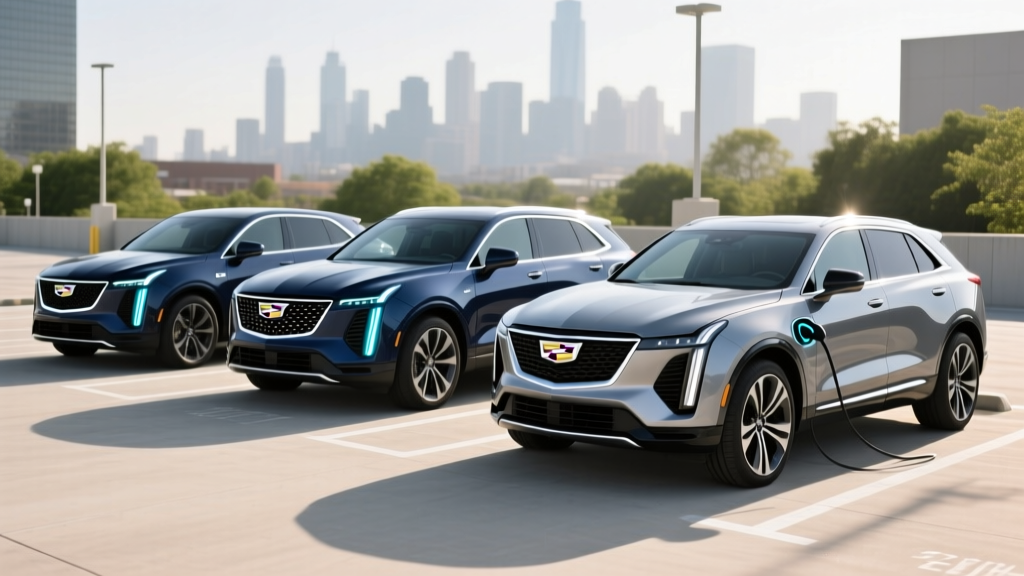
Cadillac's approach to electrification has been deliberate, and as of the 2026 model year, the brand offers a layered portfolio rather than a single all-in bet. If you're searching for a Cadillac hybrid SUV, you'll find three distinct flavors: the all-electric Lyriq (and its new performance Lyriq-V variant), the XT5 with its 48-volt mild-hybrid system, and the newly introduced Optiq compact SUV with a plug-in hybrid (PHEV) powertrain. Each serves a different buyer, and the differences in fuel economy, electric range, charging capability, and pricing are substantial.
This guide breaks down every electrified Cadillac SUV currently available, with exact EPA figures, real-world expectations, and the ownership math you need before signing a lease or purchase agreement.
HEV vs. PHEV vs. EV: Understanding Cadillac's Three Paths
Before diving into specs, it's critical to understand the distinction between these powertrain types — because Cadillac uses all three, and they behave very differently in daily driving.
| Powertrain Type | How It Works | Needs a Plug? | Cadillac Example |
|---|---|---|---|
| Mild Hybrid (MHEV) | 48V system assists gas engine; cannot drive on electric alone | No — gas only | XT5 (2026) |
| Plug-in Hybrid (PHEV) | Larger battery + electric motor for short EV trips; gas engine for longer drives | Yes — for EV range benefit | Optiq PHEV (2026) |
| Battery Electric (BEV) | No gas engine; 100% electric propulsion | Yes — always | Lyriq / Lyriq-V (2026) |
The XT5's mild-hybrid system does not provide any electric-only driving. It smooths stop-start events and recovers energy during braking, improving fuel economy by roughly 1-2 MPG over a non-hybrid equivalent. The Optiq PHEV, by contrast, offers genuine zero-emission commuting for short distances before the gasoline engine takes over. The Lyriq is fully electric — no gas tank at all.
2026 Cadillac Lyriq: The All-Electric Flagship SUV
The Lyriq remains Cadillac's volume electric vehicle and the cornerstone of its Ultium-platform strategy. For 2026, the lineup includes the standard Lyriq (rear-wheel and all-wheel drive) and the newly added Lyriq-V performance variant.
| Spec | Lyriq RWD (Luxury) | Lyriq AWD (Sport) | Lyriq-V |
|---|---|---|---|
| EPA Range | 314 miles | 307 miles | 283 miles (est.) |
| Battery (usable) | 102 kWh (NMC) | 102 kWh (NMC) | 102 kWh (NMC) |
| Horsepower | 340 hp | 500 hp | 615 hp (est.) |
| 0-60 mph | 6.0 sec | 4.6 sec | ~3.5 sec (est.) |
| DC Fast Charge (peak) | 190 kW | 190 kW | 190 kW |
| 10-80% DCFC Time | ~30 min | ~30 min | ~30 min |
| Level 2 Rate | 19.2 kW | 19.2 kW | 19.2 kW |
| MPGe (combined) | 89 MPGe | 87 MPGe | TBA |
| Starting MSRP | $58,590 | $62,090 | $72,000 (est.) |
| Battery/Powertrain Warranty | 8 yr / 100,000 mi | 8 yr / 100,000 mi | 8 yr / 100,000 mi |
Real-World Range Note: The EPA 314-mile figure for the Lyriq RWD is achievable in mixed city/suburban driving at moderate temperatures. On sustained highway trips at 75 mph, expect approximately 260-280 miles. In cold weather (below 30°F), range can drop 20-30%, yielding roughly 220-250 miles. The Lyriq's heat pump helps mitigate this loss compared to resistive heating systems, but physics still applies.
Charging the Lyriq: What to Expect
The Lyriq's 190 kW peak DC fast-charging rate is competitive but not class-leading. The charge curve holds near peak from roughly 10-40% State of Charge (SoC), then tapers progressively. A 10-80% session takes approximately 30 minutes at a 200+ kW station. At home, the 19.2 kW Level 2 onboard charger is among the fastest in its class, adding roughly 52 miles of range per hour of charging — a full overnight session from 20% to 100% takes about 8-9 hours.
The Lyriq uses the NACS (North American Charging Standard) connector natively, giving it seamless access to the Tesla Supercharger network — a significant infrastructure advantage over CCS-equipped competitors.
2026 Cadillac XT5: Mild-Hybrid Refinement, Not Electrification
The XT5 is Cadillac's best-selling SUV, and for 2026 it receives a 48-volt mild-hybrid system paired with the 2.0L turbocharged four-cylinder engine. This is a conventional hybrid in the loosest sense — it cannot propel the vehicle on electric power alone, and it does not plug in.
| Spec | XT5 FWD (2026) | XT5 AWD (2026) |
|---|---|---|
| Engine | 2.0L Turbo I4 + 48V MHEV | 2.0L Turbo I4 + 48V MHEV |
| Combined HP | 235 hp | 235 hp |
| EPA City | 24 MPG | 22 MPG |
| EPA Highway | 30 MPG | 28 MPG |
| EPA Combined | 26 MPG | 25 MPG |
| Starting MSRP | $46,295 | $48,295 |
| Battery Warranty | 6 yr / 70,000 mi | 6 yr / 70,000 mi |
Real-World MPG: What Owners Report
The mild-hybrid system's primary benefit is smoother stop-start behavior and marginal fuel savings in stop-and-go traffic. In real-world suburban commuting with frequent stops, some owners report achieving 27-28 MPG combined — slightly above the EPA estimate. On the highway, where the 48V system contributes little, expect the EPA-rated 28-30 MPG to be accurate. This is not a vehicle you buy for fuel-economy bragging rights; it's a luxury midsize SUV that happens to be slightly more efficient than its predecessor.
Battery Replacement Cost: The XT5's 48V lithium-ion battery is small (under 1 kWh) and relatively inexpensive to replace compared to full hybrid or EV batteries. Estimated replacement cost: $800-$1,500 out of warranty. Failure rates on 48V systems have been low across GM's portfolio. Source: NHTSA complaint data and GM service bulletins.
2026 Cadillac Optiq PHEV: The Plug-In Hybrid Compact SUV
The Optiq is Cadillac's newest entry — a compact luxury SUV positioned below the Lyriq in size and price. For 2026, it launches with a plug-in hybrid powertrain (a fully electric Optiq EV is expected for 2027). This is the model that most directly answers the "Cadillac hybrid SUV" search intent for buyers who want genuine electric commuting without range anxiety.
| Spec | Optiq PHEV FWD | Optiq PHEV AWD |
|---|---|---|
| Powertrain | 1.5L Turbo I4 + Electric Motor | 1.5L Turbo I4 + Dual Motors |
| Combined HP | 228 hp | 288 hp |
| Battery (usable) | 18.5 kWh (NMC) | 18.5 kWh (NMC) |
| EV-Only Range (EPA) | 38 miles | 35 miles |
| Total Range (EV + Gas) | ~420 miles | ~400 miles |
| MPGe (EV mode) | 88 MPGe | 84 MPGe |
| MPG (gas-only, combined) | 33 MPG | 31 MPG |
| Level 2 Charge Time (0-100%) | ~2.5 hours (7.2 kW) | ~2.5 hours (7.2 kW) |
| DC Fast Charging | Not available | Not available |
| 0-60 mph | 7.2 sec (est.) | 6.0 sec (est.) |
| Starting MSRP | $47,990 | $51,490 |
| Battery/Powertrain Warranty | 8 yr / 100,000 mi | 8 yr / 100,000 mi |
Electric-Only Range: Who Benefits Most
The Optiq PHEV's 38-mile EV-only range covers the average American's daily round-trip commute (approximately 32 miles, per FHWA data). If you can charge at home overnight — even on a standard 120V Level 1 outlet, which adds roughly 4-5 miles of EV range per hour — you may drive weeks without the gasoline engine engaging. Once the battery is depleted, the 1.5L turbo engine seamlessly takes over, delivering 33 MPG combined. No range anxiety, no charging-desert stress on road trips.
Charging Limitations
The Optiq PHEV does not support DC fast charging. Level 2 charging at 7.2 kW replenishes the 18.5 kWh battery in roughly 2.5 hours. This is typical for PHEVs — the smaller battery makes DC fast charging unnecessary for most use cases. A standard Level 1 (120V) outlet will fully charge the Optiq PHEV overnight in approximately 7-8 hours.
Pricing, Tax Credits, and Incentives
Federal tax credit eligibility for Cadillac's electrified SUVs depends on the specific powertrain and current IRS §30D rules.
- Lyriq (BEV): Eligible for up to $7,500 federal tax credit under §30D, subject to buyer income caps ($150K single / $300K joint), MSRP cap ($80,000 for SUVs), and battery critical-mineral/battery-component sourcing requirements. The Lyriq's US assembly (Spring Hill, TN) and Ultium battery sourcing have qualified most trims for the full credit as of early 2026. Point-of-sale transfer is available — the credit can be applied as a down-payment reduction at the dealer. Verify current eligibility on IRS.gov.
- Optiq PHEV: PHEVs with at least 7 kWh of battery capacity can qualify for a partial or full §30D credit. The Optiq's 18.5 kWh battery and US assembly position it favorably, but the $80,000 SUV MSRP cap and income limits still apply. Expected credit: $3,750-$7,500 depending on final battery-component sourcing certification. Check the DOE fueleconomy.gov tax credit tracker for real-time eligibility.
- XT5 (MHEV): Mild hybrids do not qualify for the §30D federal EV tax credit. The 48V system does not meet the minimum 7 kWh battery capacity requirement.
Hybrid vs. PHEV vs. EV: Which Cadillac SUV Fits Your Life?
Choose the XT5 (Mild Hybrid) If:
- You want a proven luxury SUV with no behavior change from your last gas car
- You cannot charge at home or work
- Your priority is purchase price — it's the most affordable option at ~$46K
- You drive primarily highway miles where mild-hybrid benefits are minimal anyway
Choose the Optiq PHEV If:
- Your daily commute is under 35 miles and you can charge at home (Level 1 or 2)
- You want electric commuting but take road trips where charging infrastructure is sparse
- You want a compact luxury SUV with lower running costs without full EV commitment
- You want partial federal tax credit eligibility
Choose the Lyriq (BEV) If:
- You have reliable home Level 2 charging (240V)
- Your daily driving is under 250 miles and you're comfortable planning road-trip charging stops
- You want the lowest per-mile fuel cost (~$0.04-$0.06/mile on home electricity vs. ~$0.14/mile for gas)
- You want the full $7,500 federal tax credit and maximum technology features
Reliability and Battery Longevity
GM's Ultium battery platform (used in the Lyriq) has demonstrated strong early durability data. The Cadillac battery warranty covers 8 years or 100,000 miles, whichever comes first, with a capacity-retention threshold of 70% — meaning if the battery degrades below 70% of original capacity within the warranty period, GM will repair or replace it.
Battery Replacement Cost (Out of Warranty):
- Lyriq (102 kWh Ultium pack): $12,000-$18,000 estimated — though module-level repair may reduce this significantly
- Optiq PHEV (18.5 kWh pack): $4,000-$7,000 estimated
- XT5 (48V battery): $800-$1,500 estimated
Historical data from GM's earlier Bolt EV platform suggests that NMC batteries with active liquid thermal management (which both the Lyriq and Optiq use) degrade approximately 10-15% over 100,000 miles — well within the warranty threshold. LFP chemistry, which degrades more slowly but has lower energy density, is not currently used in Cadillac's lineup.
Frequently Asked Questions
How many MPG does the Cadillac XT5 hybrid get?
The 2026 Cadillac XT5 with its 48V mild-hybrid system achieves 24 city / 30 highway / 26 combined MPG in front-wheel-drive form, and 22/28/25 MPG with all-wheel drive. These are EPA-estimated figures. In real-world suburban driving with frequent stops, some owners report 27-28 MPG combined.
How far can the Cadillac Optiq PHEV go on electric only?
The 2026 Optiq PHEV delivers 38 miles of EPA-estimated electric-only range in FWD form and 35 miles with AWD. Real-world EV range may vary: expect 32-36 miles in warm weather city driving and 25-30 miles in cold weather or at sustained highway speeds.
Does any Cadillac hybrid SUV qualify for a tax credit?
The Lyriq (all-electric) qualifies for up to $7,500 under IRS §30D, subject to income and MSRP caps. The Optiq PHEV is expected to qualify for $3,750-$7,500 depending on battery-sourcing certification. The XT5 mild hybrid does not qualify for any federal EV tax credit. Always verify current eligibility at IRS.gov before purchasing.
Is the Cadillac Lyriq battery reliable, and what does replacement cost?
The Lyriq's 102 kWh Ultium battery is covered by an 8-year/100,000-mile warranty with a 70% capacity-retention threshold. Based on GM's Bolt and earlier Ultium-platform data, expected degradation is 10-15% over 100,000 miles. Out-of-warranty replacement is estimated at $12,000-$18,000, though module-level repairs would cost significantly less.
Does the Cadillac Optiq PHEV support DC fast charging?
No. The Optiq PHEV charges only via Level 1 (120V) or Level 2 (240V) AC charging. The 18.5 kWh battery charges fully in about 2.5 hours on Level 2 or 7-8 hours on Level 1. This is standard for PHEVs — the battery is small enough that DC fast charging is unnecessary.
Hybrid vs. PHEV vs. EV — which Cadillac SUV should I choose?
If you cannot charge at home, choose the XT5 mild hybrid — it requires no plug. If you can charge at home and your commute is under 35 miles, the Optiq PHEV offers the best of both worlds: electric commuting with gas-engine backup. If you have home Level 2 charging and want the lowest operating costs and full tax credit, the Lyriq BEV is the strongest long-term value play.