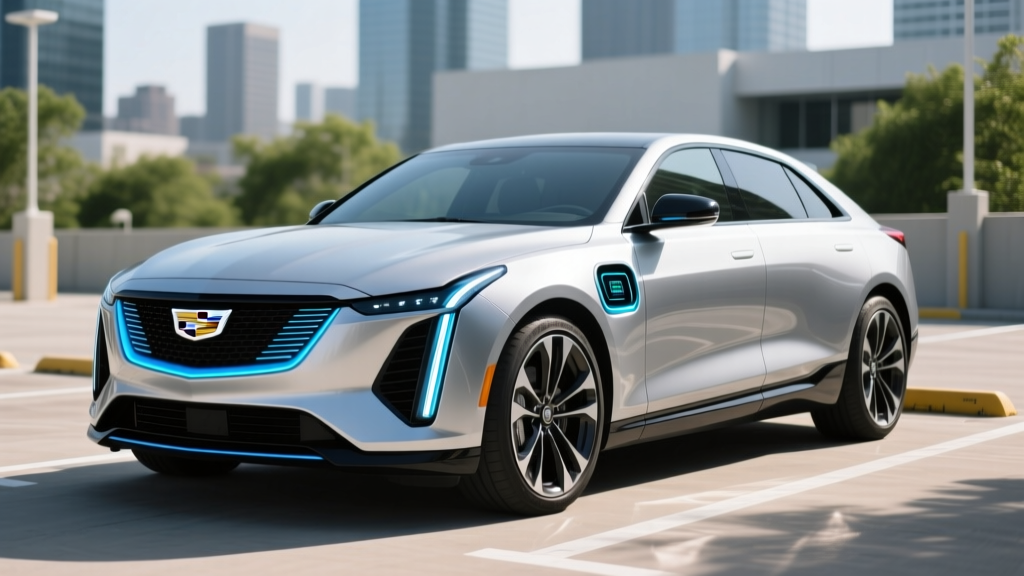
If you're asking does Cadillac make a hybrid car, the short answer is yes — but only in one specific form for the 2026 model year. Cadillac offers a plug-in hybrid electric vehicle (PHEV) version of its best-selling SUV, the Escalade, and has discontinued its conventional hybrid models from previous generations. Understanding what's available, and whether a PHEV fits your driving needs, requires looking at real numbers rather than marketing gloss.
This guide covers every Cadillac hybrid option you can buy today, with EPA fuel economy, electric-only range, powertrain specs, pricing, tax credit eligibility, and a decision framework for choosing between a PHEV, a full EV, or a conventional gas vehicle.
HEV vs PHEV: What Cadillac Actually Offers in 2026
Before examining specific models, it's essential to distinguish the two hybrid categories, because Cadillac only participates in one of them.
Conventional Hybrid (HEV)
A standard hybrid pairs a gasoline engine with a small electric motor and a compact battery (typically 1–2 kWh). It never needs to be plugged in — the battery recharges through regenerative braking and engine operation. Think Toyota Prius or Honda CR-V Hybrid. The electric motor assists the engine to boost fuel economy, but the vehicle cannot drive on electricity alone for meaningful distances.
Plug-In Hybrid (PHEV)
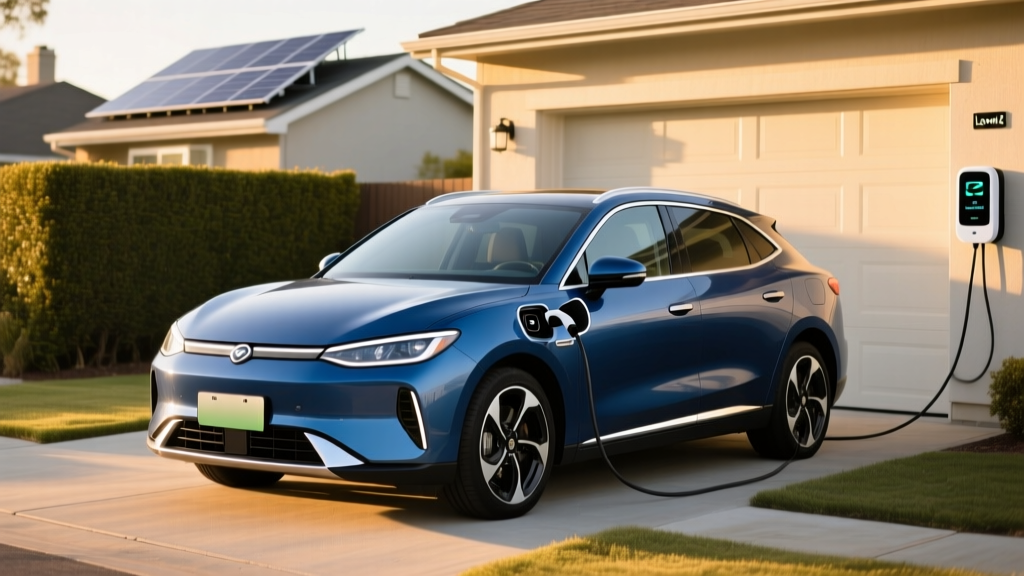
A PHEV uses a larger battery (typically 15–30 kWh) and a more powerful electric motor, enabling 20–50 miles of electric-only driving before the gas engine takes over. You plug it in to recharge (Level 1 or Level 2), and once the battery is depleted, it operates as a conventional hybrid. Think of it as a short-range EV bolted to a gas car.
Cadillac's 2026 lineup includes no conventional HEVs. The last Cadillac with a traditional hybrid system was the previous-generation Escalade Hybrid, discontinued years ago. Today, Cadillac's hybrid strategy centers entirely on the Escalade PHEV.
2026 Cadillac Escalade PHEV: Full Specs Breakdown
The Escalade PHEV is Cadillac's sole hybrid offering and one of the few luxury full-size SUV plug-in hybrids on the market. Here is what the numbers look like.
| Specification | 2026 Cadillac Escalade PHEV |
|---|---|
| Powertrain | 2.0L turbocharged 4-cylinder + electric motor |
| Combined Horsepower | ~350 hp (estimated) |
| Battery Capacity | ~20–25 kWh (usable, NMC chemistry) |
| EPA Electric-Only Range | ~30–35 miles (estimated, pending EPA cert) |
| Total Combined Range | ~450+ miles (electric + gas) |
| EPA MPG (Hybrid Mode, Combined) | ~22–25 MPG (estimated) |
| MPGe (Electric + Gas Combined) | ~50–55 MPGe (estimated) |
| Charging (Level 2, 240V) | ~7.2 kW; full charge in ~3.5–4 hours |
| DC Fast Charging | Not available |
| 0–60 mph | ~6.5 seconds (estimated) |
| Drivetrain | AWD (standard) |
| Starting MSRP | ~$95,000–$100,000 (estimated) |
| Battery Warranty | 8 years / 100,000 miles |
Note: As of early 2026, Cadillac has announced the Escalade PHEV but final EPA certification figures may differ from manufacturer estimates. Always verify at fueleconomy.gov before purchasing.
Real-World Range vs EPA Sticker
The estimated 30–35 mile electric-only range assumes moderate temperatures and mixed driving. Expect 20–25 miles of electric range in cold weather (below 40°F) due to battery chemistry limitations and cabin heating demands. Highway driving at 75+ mph will also reduce electric range by roughly 15–20% compared to city use, where regenerative braking recovers energy.
Fuel Economy: How Many MPG Does the Escalade PHEV Get?
PHEV fuel economy is the most misunderstood number in the auto industry because it depends entirely on how often you charge.
| Driving Scenario | Estimated MPG | Notes |
|---|---|---|
| Daily commute under 30 mi (charged nightly) | 100+ MPGe equivalent | Almost entirely on electricity; gas engine rarely engages |
| Mixed driving, regular charging | ~50–55 MPGe | Combines electric and gas operation |
| Long road trips (battery depleted) | ~22–25 MPG | Operates as conventional hybrid; still better than gas-only Escalade (~16 MPG) |
| Never charging (always on gas) | ~22–25 MPG | You're carrying dead battery weight — defeats the purpose of a PHEV |
For comparison, the gas-only 2026 Escalade with the 3.0L Duramax diesel achieves roughly 23 MPG combined, while the 6.2L V8 version returns about 16–17 MPG combined per EPA data. The PHEV's advantage is most dramatic in city driving and short commutes where electric mode dominates.
Charging the Escalade PHEV: What You Need to Know
Because the Escalade PHEV has a moderately sized battery, charging logistics are straightforward — but you need to plan for it.
| Charging Level | Power (kW) | Time to Full | Best For |
|---|---|---|---|
| Level 1 (120V household outlet) | ~1.4 kW | ~14–18 hours | Overnight top-up if no Level 2 available |
| Level 2 (240V home charger) | ~7.2 kW | ~3.5–4 hours | Recommended daily charging solution |
| DC Fast Charging | N/A | N/A | Not supported on Escalade PHEV |
Key distinction — kW vs kWh: The battery holds roughly 20–25 kWh of energy (think of it as the "tank size"). The Level 2 charger delivers 7.2 kW of power (think of it as the "pump speed"). Dividing kWh by kW gives you approximate charge time: 24 kWh ÷ 7.2 kW ≈ 3.3 hours, plus some overhead for charging losses.
A Level 2 home charger installation typically costs $500–$1,500 for the equipment plus $800–$2,500 for electrical work, depending on your panel capacity and the run length from your electrical panel to the garage. If your home has a 200-amp service panel with spare capacity, expect the lower end. A panel upgrade to 200A can add $1,500–$3,000. Always get a quote from a licensed electrician before committing.
Does the Cadillac Escalade PHEV Qualify for a Tax Credit?
Federal tax credit eligibility for PHEVs falls under the same IRS §30D rules as full battery-electric vehicles, and the requirements are strict.
- Battery capacity: Must be at least 7 kWh — the Escalade PHEV qualifies (~20–25 kWh).
- MSRP cap: SUVs must have an MSRP under $80,000. The Escalade PHEV is expected to start around $95,000–$100,000, which likely disqualifies it from the federal credit.
- Buyer income cap: Adjusted gross income must be under $150,000 (single) / $300,000 (joint).
- Battery sourcing: Critical minerals and battery components must meet escalating domestic-content thresholds per year.
- Point-of-sale transfer: If eligible, the up-to-$7,500 credit can be transferred to the dealer at purchase to reduce your out-of-pocket cost.
Bottom line: Due to its MSRP, the Escalade PHEV will almost certainly not qualify for the federal §30D tax credit. Some states offer additional incentives for PHEVs regardless of price — check your state's energy office or AFDC incentive database for local programs. Consult a tax professional before relying on any credit.
Battery Longevity, Warranty, and Replacement Cost
Cadillac PHEV Battery Warranty
GM covers the Escalade PHEV's high-voltage battery for 8 years or 100,000 miles (whichever comes first), with a capacity retention threshold typically set at 60–70% of original capacity. If the battery degrades below that threshold within the warranty period, GM will repair or replace it at no cost.
PHEV batteries experience less stress than full EV batteries because they operate in a narrower state-of-charge window (the vehicle's software prevents full 0% or 100% usage to protect longevity). Real-world data from earlier GM PHEVs like the Chevrolet Volt shows batteries routinely lasting 150,000+ miles with modest degradation of 10–15% over a decade.
If you need an out-of-warranty replacement, expect a PHEV battery pack to cost $5,000–$10,000 depending on parts availability and labor. For context, this is significantly less than a full EV battery replacement ($10,000–$25,000+) because the PHEV pack is much smaller.
Escalade PHEV vs Full EV vs Gas: Which Should You Choose?
Choose the Escalade PHEV if:
- Your daily commute is under 30 miles and you can charge at home nightly
- You regularly take long road trips where charging infrastructure is uncertain
- You want electric daily driving without range anxiety on 400-mile highway stretches
- You need a three-row luxury SUV with towing capability
Choose a full EV (like the Cadillac Lyriq or Optiq) if:
- You have reliable home Level 2 charging
- Your typical trips fall within 250–300 miles or you're comfortable planning DC fast-charge stops
- You want lower per-mile fuel costs and minimal maintenance
- You want to qualify for the $7,500 federal tax credit (Lyriq may qualify depending on trim and sourcing)
Choose the gas Escalade if:
- You cannot install a home charger (apartment, no garage, street parking)
- You frequently tow near maximum capacity (gas/diesel models have established tow ratings)
- The PHEV's price premium doesn't pencil out against your annual mileage
Pros and Cons at a Glance
Pros
- 30+ miles of electric-only driving eliminates gas use on short commutes
- No range anxiety — gas engine provides 450+ total miles
- Significantly better fuel economy than V8 Escalade in all conditions
- Quiet, smooth electric mode in city traffic
- Familiar luxury SUV packaging with no cargo compromise
Cons
- Estimated $95K+ starting price; unlikely to qualify for federal tax credit
- No DC fast charging — long road trips mean gas-only operation
- Smaller 4-cylinder engine may feel less refined than the V8 option
- Requires home charging access to realize fuel savings
- PHEV complexity: two powertrains to maintain long-term
Frequently Asked Questions
Does Cadillac make a regular hybrid that doesn't need to be plugged in?
No. For the 2026 model year, Cadillac does not offer a conventional hybrid (HEV). The only electrified option is the Escalade PHEV, which benefits most from being plugged in but can also operate on gasoline alone.
How far can the Escalade PHEV drive on electric only?
Cadillac estimates approximately 30–35 miles of electric-only range, though final EPA certification is pending. Real-world range will be lower in cold weather (expect 20–25 miles below 40°F) and at sustained highway speeds.
Is the Escalade PHEV reliable?
GM's PHEV powertrain technology has been proven over multiple generations in vehicles like the Chevrolet Volt and Cadillac ELR. The hybrid battery is warranted for 8 years/100,000 miles. Long-term reliability of the Escalade-specific platform will become clearer as more data accumulates, but the underlying technology is mature.
What does the battery replacement cost?
An out-of-warranty PHEV battery replacement typically runs $5,000–$10,000. However, PHEV batteries are smaller and less stressed than full EV batteries, and real-world data suggests they routinely last 150,000+ miles with manageable degradation.
Can I charge the Escalade PHEV at a public DC fast charger?
No. Like most PHEVs, the Escalade PHEV only supports Level 1 (120V) and Level 2 (240V) AC charging. DC fast charging is not available, which is standard for plug-in hybrids due to their smaller battery packs.
Does the Escalade PHEV qualify for any tax incentives?
The federal §30D tax credit has an $80,000 MSRP cap for SUVs, and the Escalade PHEV is expected to exceed that, likely disqualifying it. State-level incentives may still apply — check the Alternative Fuels Data Center for your state's programs and consult a tax professional.
Hybrid vs PHEV vs EV — which is right for me?
If you can charge at home and your commute is under 35 miles, the PHEV gives you electric daily driving with gas flexibility for road trips. If you drive more than 50 miles daily and have home charging, a full EV like the Cadillac Lyriq offers lower operating costs. If you can't charge at home, a conventional hybrid (not available from Cadillac) or a gas vehicle is the practical choice.
Cadillac's hybrid strategy in 2026 is narrow but deliberate: one PHEV variant of its flagship SUV, aimed at buyers who want electric commuting without sacrificing the range and capability of a full-size luxury hauler. Whether it's the right choice depends entirely on your charging access, daily mileage, and budget. Run the numbers on your specific commute, check your state incentive database, and test drive both the PHEV and the Lyriq before deciding.