The Escalade Goes Electrified: What Buyers Need to Know
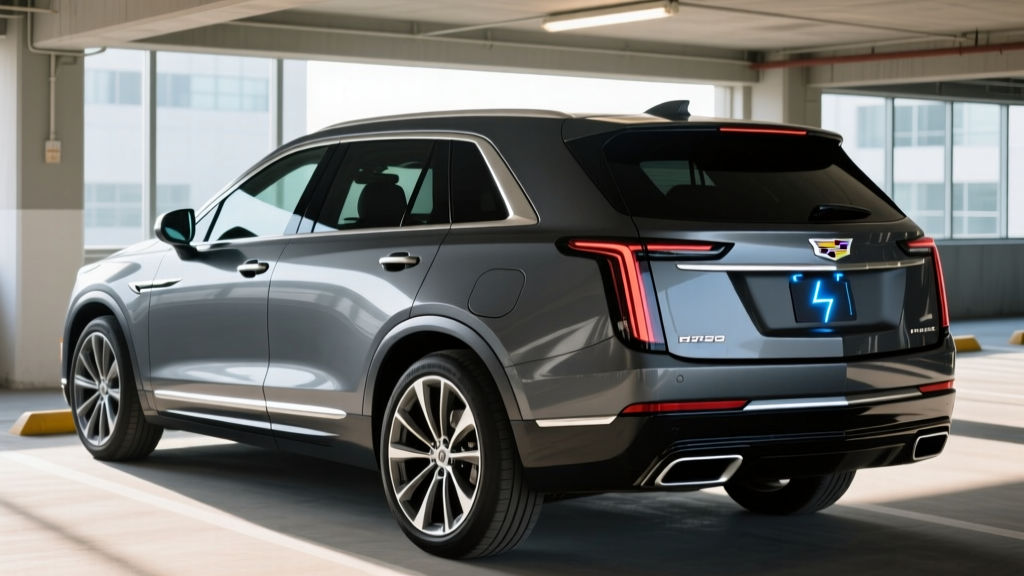
For 2025, Cadillac introduced the Escalade IQ — a fully electric luxury SUV built on GM's Ultium platform. But for buyers who aren't ready to commit to a full battery-electric vehicle, the search for an Escalade hybrid leads to a more nuanced answer. As of the 2026 model year, Cadillac does not offer a conventional hybrid (HEV) or plug-in hybrid (PHEV) variant of the standard Escalade. The Escalade IQ fills the electrified role, while the gasoline Escalade (with its 6.2L V8 or 3.0L Duramax diesel) continues without a hybrid powertrain option.
This guide breaks down exactly what's available, what the Escalade IQ offers as a full EV, and how it compares to the hybrid luxury SUVs that compete in this segment — so you can make an informed decision about electrified three-row luxury.
HEV vs PHEV vs EV: Understanding the Escalade's Electrified Options
Conventional Hybrid (HEV): Uses a small battery and electric motor to assist a gasoline engine. No plug-in charging needed. Regenerative braking and the engine recharge the battery. Typical fuel economy improvement: 20–40% over gas-only. Not available on the Escalade.
Plug-in Hybrid (PHEV): Larger battery (typically 15–30 kWh) that can be charged from an outlet. Offers 20–50 miles of electric-only driving before the gas engine engages. Requires regular plug-in charging to maximize benefit. Not available on the Escalade.
Battery Electric (BEV) — Escalade IQ: No gasoline engine. Runs entirely on a large battery pack (~200 kWh usable). EPA-estimated range of approximately 450+ miles. Requires home or public charging infrastructure.
If you specifically need a hybrid Cadillac SUV, the closest current option is the Escalade IQ (full EV). For a true PHEV in this luxury three-row class, competitors like the BMW X7 xDrive50e (if available in the US market) or the Volvo XC90 Recharge T8 PHEV remain the benchmarks.
Escalade IQ: The Electrified Escalade's Specs and Efficiency
| Specification | 2026 Escalade IQ |
|---|---|
| Powertrain Type | Battery Electric (BEV), dual-motor AWD |
| Combined Horsepower | ~680 hp (estimated, AWD) |
| Battery Capacity | ~200 kWh usable (Ultium, NMC chemistry) |
| EPA Range (est.) | ~450 miles |
| MPGe (est. combined) | ~85 MPGe |
| DC Fast Charging (peak) | ~200 kW (800V architecture) |
| 10–80% DC Charge Time | ~35–45 minutes (est.) |
| Level 2 Charging (kW) | ~19.2 kW (AC) |
| 0–60 mph | ~4.5 seconds (est.) |
| Starting MSRP | ~$130,000 (est.) |
| Federal Tax Credit (§30D) | Up to $7,500 (eligibility varies) |
| Battery Warranty | 8 years / 100,000 miles |
Note: Some Escalade IQ specifications are based on GM's published Ultium platform data and pre-production estimates. Final EPA-certified figures may vary. Always confirm with fueleconomy.gov before purchasing.
Range, Efficiency, and Real-World Expectations
EPA-Estimated Range: ~450 miles
Real-World Highway Expectation: ~360–400 miles at 70–75 mph
Cold-Weather Expectation (20°F): ~310–360 miles (15–30% reduction typical for large-battery EVs)
The Escalade IQ's massive ~200 kWh Ultium battery pack provides range that eclipses virtually every EV on the market. However, physics governs all EVs equally: highway speeds above 70 mph, cold temperatures, and heavy cargo loads will reduce range. The 800V architecture enables faster DC charging than older 400V systems, but the enormous battery means even at 200 kW peak, a 10–80% session takes longer than smaller EVs. Expect the charge curve to taper significantly above 80% SoC — plan to charge to 80% on road trips and move on rather than waiting for a full fill.
For efficiency context, the EPA rates large electric SUVs in MPGe (miles per gallon equivalent). An estimated ~85 MPGe combined means the Escalade IQ uses roughly 40 kWh per 100 miles — high in absolute terms, but expected for a 7,000+ lb luxury SUV.
Charging the Escalade IQ: Home and Public Infrastructure
| Charging Level | Power (kW) | Miles Added Per Hour | Typical Use Case |
|---|---|---|---|
| Level 1 (120V outlet) | ~1.4 kW | ~3–4 miles/hr | Emergency/trickle only |
| Level 2 (240V, 48A) | ~11.5 kW | ~28–32 miles/hr | Daily home charging |
| Level 2 (240V, 80A) | ~19.2 kW | ~48–52 miles/hr | Optimal home charging |
| DC Fast Charge | ~200 kW peak | ~500+ miles/hr (peak) | Road trips |
Given the Escalade IQ's ~200 kWh battery, a standard Level 2 home charger at 11.5 kW will take approximately 17–18 hours for a full 0–100% charge. At 19.2 kW (requiring a 100-amp circuit), that drops to roughly 10–11 hours — feasible for overnight charging. Most owners will plug in nightly and rarely deplete the full battery, making daily charging manageable.
For home installation, budget $1,500–$3,500 for a hardwired Level 2 charger including equipment, electrician labor, and permits. A 200-amp electrical panel upgrade may be necessary for the 80A circuit, adding $2,000–$4,000. Always consult a licensed electrician for final specifications.
Pricing, Trims, and Federal Tax Credit Eligibility
The 2026 Cadillac Escalade IQ is expected to start around $130,000 for the Luxury trim, with Sport and Premium Luxury trims climbing toward $150,000+. This positions it well above the gasoline Escalade (starting ~$83,000) and directly competes with the Tesla Model X, Rivian R1S, and Mercedes EQS SUV.
Federal §30D Tax Credit Requirements (2026):
- Vehicle MSRP cap: SUVs/vans/pickups must be ≤ $80,000 — the Escalade IQ exceeds this cap and does NOT qualify for the new-vehicle §30D credit
- Buyer income cap: MAGI ≤ $300,000 (joint) / $225,000 (head of household) / $150,000 (single)
- Battery sourcing: Critical minerals and battery components must meet phased-in domestic content thresholds
- Point-of-sale transfer: Eligible credits can be transferred to the dealer at purchase
Source: IRS §30D Clean Vehicle Credit. Consult a tax professional for personal eligibility.
Key takeaway: Because the Escalade IQ's MSRP exceeds the $80,000 SUV cap, it does not qualify for the federal $7,500 new-vehicle tax credit. Some states may offer additional rebates or incentives — check your state's energy or environmental agency for current programs.
Escalade IQ vs Hybrid Luxury SUVs: Which Fits Your Needs?
Choose the Escalade IQ (full EV) if:
- You have reliable home Level 2 charging
- Your daily driving is under 200 miles and you take occasional road trips
- You want zero tailpipe emissions and minimal maintenance (no oil changes, fewer moving parts)
- You prioritize cutting-edge EV tech, instant torque, and a quiet cabin
- You're comfortable with the $130K+ price point without a federal tax credit
Choose a competitor PHEV (e.g., Volvo XC90 Recharge) if:
- You lack consistent home charging access
- You want 30–35 miles of electric-only commuting with gas-engine backup for long trips
- You prefer a lower purchase price ($60K–$75K range)
- You want a proven hybrid system with established reliability data
Choose the gasoline Escalade if:
- You regularly tow heavy loads (the gas V8 offers proven towing capacity)
- You drive in extreme cold or remote areas with limited charging infrastructure
- Upfront cost is a primary concern
Battery Warranty, Reliability, and Long-Term Ownership
Escalade IQ Battery Warranty: 8 years / 100,000 miles (minimum capacity retention threshold typically 60–70% of original, per GM's Ultium warranty terms)
Estimated Battery Replacement Cost: $25,000–$40,000+ out of warranty (based on Ultium pack size and current replacement pricing for large EV batteries)
GM's Ultium battery platform uses NMC (nickel manganese cobalt) chemistry, which offers high energy density suitable for the Escalade IQ's 450-mile range target. NMC batteries typically experience 10–15% degradation over 150,000–200,000 miles based on industry data — meaning the pack should retain 85–90% of its original capacity through the warranty period under normal use.
For reliability context, the Escalade IQ is a new nameplate with limited long-term data. The gasoline Escalade has historically scored average to below-average in predicted reliability per consumer surveys. GM's Ultium platform is newer still, though it underpins several production vehicles (GMC Hummer EV, Chevrolet Silverado EV, Cadillac Lyriq). Early Lyriq ownership data suggests acceptable powertrain reliability, but the Escalade IQ's larger battery and higher output warrant monitoring.
For hybrid buyers specifically concerned about battery longevity: modern EV and hybrid battery packs are engineered to outlast 200,000+ miles with gradual capacity loss rather than sudden failure. The 8-year/100,000-mile warranty provides a substantial safety net, and out-of-pocket replacement — while expensive — is rarely needed within a typical ownership cycle.
Pros and Cons: The Electrified Escalade
Pros
- ~450-mile range eliminates most range anxiety
- ~680 hp delivers effortless acceleration for a 7,000+ lb SUV
- 800V architecture enables faster DC charging than legacy EVs
- Ultra-quiet cabin with no engine noise
- Minimal scheduled maintenance vs gas Escalade
- Available Super Cruise (Level 2 driver assistance) for highway driving
Cons
- No hybrid (HEV/PHEV) option — it's full EV or full gas
- $130K+ starting price with no federal tax credit (MSRP cap exceeded)
- Home charging requires significant electrical infrastructure (potential panel upgrade)
- ~200 kWh battery means long Level 2 charge times (10–18 hours full charge)
- Limited long-term reliability data for the IQ nameplate
- Heavy weight impacts tire wear and cold-weather range
Frequently Asked Questions
Is there a hybrid Cadillac Escalade?
As of the 2026 model year, Cadillac does not offer a conventional hybrid (HEV) or plug-in hybrid (PHEV) Escalade. The electrified option is the Escalade IQ, which is a fully battery-electric vehicle (BEV). The standard Escalade continues with gasoline V8 and diesel inline-six powertrains.
How many MPG does the Escalade IQ get?
The Escalade IQ, being a full EV, is rated in MPGe (miles per gallon equivalent). Estimated combined MPGe is approximately 85, which translates to roughly 40 kWh per 100 miles. The gasoline Escalade with the 6.2L V8 achieves an EPA-estimated 14 city / 18 highway / 16 combined MPG per fueleconomy.gov.
How far can the Escalade IQ go on a full charge?
The Escalade IQ targets approximately 450 miles of EPA-estimated range. Real-world highway driving at 70–75 mph will likely yield 360–400 miles, and cold-weather conditions (below 30°F) may reduce range by 15–30%, bringing it to approximately 310–360 miles.
Does the Escalade IQ qualify for the federal EV tax credit?
No. Under current IRS §30D rules, the Escalade IQ's MSRP exceeds the $80,000 cap for SUVs, making it ineligible for the $7,500 federal clean vehicle credit. State incentives may still apply — check your local programs.
Is the Escalade IQ reliable?
Long-term reliability data for the Escalade IQ is not yet available as a new nameplate. The Ultium platform powering it has been in production since 2022 (GMC Hummer EV, Cadillac Lyriq). GM provides an 8-year/100,000-mile battery warranty. The gasoline Escalade has historically scored average in predicted reliability.
What does it cost to charge the Escalade IQ at home?
At the US average residential electricity rate of ~$0.16/kWh, fully charging the ~200 kWh battery costs approximately $32. For 10,000 miles of annual driving (at ~40 kWh/100mi), expect roughly $640/year in home electricity costs — significantly less than the gasoline Escalade's estimated $3,000+ annual fuel cost at $3.50/gallon and 16 MPG combined.
Hybrid vs PHEV vs EV — which luxury SUV is right for me?
If you have home charging and drive under 300 miles daily, a full EV like the Escalade IQ offers the lowest operating costs and smoothest driving experience. If you lack home charging or frequently drive 400+ miles in a day, a PHEV competitor (like the Volvo XC90 Recharge with ~35 miles electric range) provides electric commuting with gas-engine flexibility. A conventional HEV is best for buyers who want improved fuel economy without any plug-in behavior — but no HEV exists in this luxury three-row segment at Cadillac.