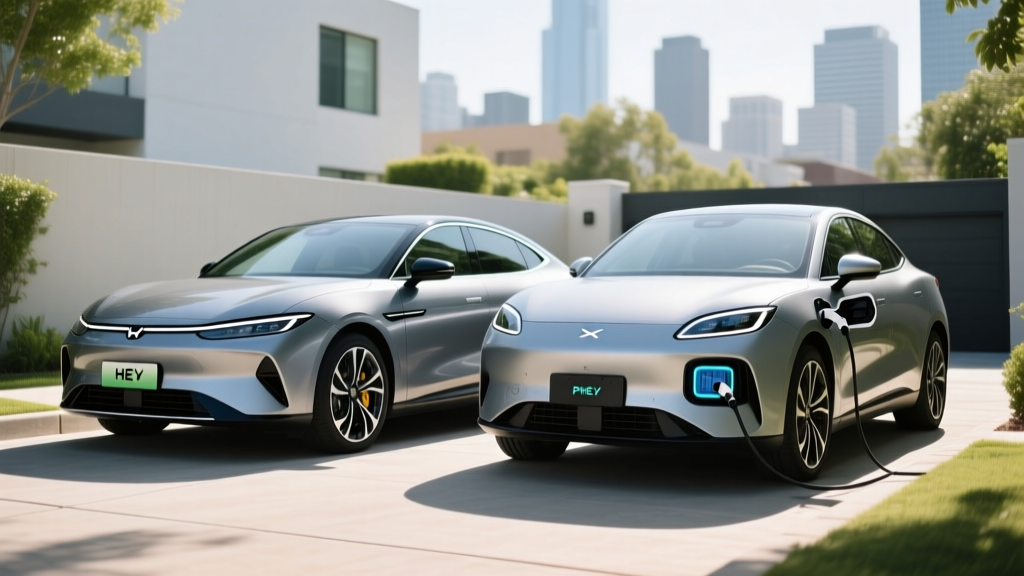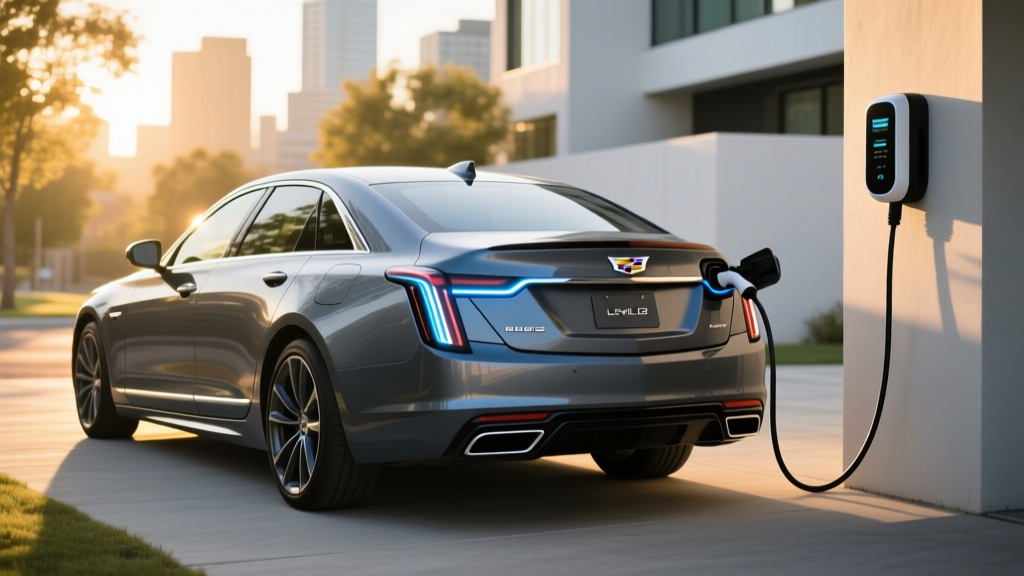
The Cadillac CT6 Hybrid occupies a niche that few luxury sedans attempt: a plug-in hybrid (PHEV) flagship that pairs a turbocharged engine with meaningful electric-only range. For buyers who want Cadillac's premium ride quality and technology without committing fully to a battery-electric vehicle, the CT6 Hybrid presents a compelling middle ground. But how does it actually perform in daily driving, and does the math work out versus a full EV or a conventional hybrid?
This guide covers every number that matters — EPA fuel economy, real-world MPG, electric-only range, battery specs, charging times, powertrain output, pricing, and tax credit eligibility — so you can make a data-driven decision.
HEV vs PHEV: Where the CT6 Hybrid Fits
Before examining specs, it is essential to understand what type of hybrid the CT6 is. The CT6 Hybrid is a plug-in hybrid electric vehicle (PHEV), not a conventional hybrid (HEV) like a Toyota Prius.
| Feature | Conventional Hybrid (HEV) | Plug-In Hybrid (PHEV) — CT6 Hybrid |
|---|---|---|
| Plug in to charge? | No — charges via regenerative braking and engine | Yes — plug in to maximize electric-only driving |
| Electric-only range | 0–2 miles at low speed | 30–40+ miles (EPA est.) |
| Battery size | 1–2 kWh | 18–20 kWh (usable) |
| Federal tax credit | Not eligible | Up to $7,500 (subject to §30D rules) |
| Gas engine | Always available | Always available after battery depletes |
The practical difference: if you can charge at home or work, a PHEV like the CT6 Hybrid lets you complete most daily commutes on electricity alone, then switch to hybrid mode for longer trips. A conventional hybrid never offers meaningful electric-only range but requires zero behavior change.
CT6 Hybrid Powertrain: Engine, Motors, and Combined Output
The Cadillac CT6 Hybrid pairs a turbocharged 2.0-liter four-cylinder engine with two electric motors integrated into a specialized transmission. Here are the core powertrain figures:
| Specification | Value |
|---|---|
| Engine | 2.0L turbocharged I4 |
| Electric motors | 2 integrated motor-generators |
| Combined system horsepower | 335 hp |
| Combined system torque | 432 lb-ft |
| Transmission | Electrically variable transmission (EVT) |
| Drivetrain | Rear-wheel drive |
| 0–60 mph | ~5.6 seconds |
The dual-motor setup allows the CT6 Hybrid to operate in pure electric mode at highway speeds, not just around town. The combined 335 hp gives it passing power appropriate for a luxury sedan of its size, though it is not a performance-oriented machine — Cadillac reserves that role for the CT6 V-Series (now discontinued).
Fuel Economy: EPA MPG and Real-World Expectations
Fuel economy in a PHEV has two components: electric-mode efficiency (measured in MPGe) and hybrid-mode MPG once the battery is depleted.
| Mode | City | Highway | Combined |
|---|---|---|---|
| Charge-depleting (electric + engine assist) | — | — | ~62 MPGe |
| Charge-sustaining (hybrid mode, battery depleted) | ~26 MPG | ~28 MPG | ~27 MPG |
Real-world MPG note: PHEVs are highly sensitive to charging habits. If you charge nightly and commute 25 miles round-trip, you may burn almost no gasoline for months. If you never plug in, the CT6 Hybrid operates as a heavy conventional hybrid and will return roughly 24–27 MPG combined — respectable for a 4,000+ lb luxury sedan but not class-leading. According to fueleconomy.gov, real-world PHEV drivers who charge regularly report 50–70% lower fuel consumption than EPA charge-sustaining figures suggest.
Highway-heavy driving reduces electric-mode efficiency because the battery depletes faster at sustained speeds. In cold weather (below 32°F), expect electric-only range to drop 20–30%, which shifts more driving to the gasoline engine.
Electric-Only Range, Battery, and Charging Specs
The CT6 Hybrid's high-voltage battery is the key to its PHEV capability. Here are the critical energy storage and charging numbers:
| Specification | Value |
|---|---|
| Battery chemistry | Lithium-ion (NMC) |
| Total battery capacity | ~18.4 kWh |
| Usable capacity | ~14.5 kWh (buffer protects longevity) |
| EPA electric-only range | ~31 miles |
| Real-world electric range (70°F, mixed driving) | ~25–30 miles |
| Real-world electric range (cold, 20°F) | ~18–22 miles |
| Total combined range (electric + gas) | ~440 miles |
| Level 1 charging (120V, 1.4 kW) | ~12 hours (0–100%) |
| Level 2 charging (240V, 3.6 kW) | ~4.5 hours (0–100%) |
| DC fast charging | Not supported |
Charging reality: The CT6 Hybrid does not support DC fast charging. This is typical for PHEVs — the battery is small enough that Level 2 charging overnight is sufficient. At 3.6 kW on a 240V Level 2 circuit, a full charge takes roughly 4.5 hours. On a standard 120V household outlet (Level 1), plan for an overnight charge of 12+ hours. If you plug in every evening at home, you will start each morning with a full battery.
Range reality check: The EPA rates the CT6 Hybrid at approximately 31 miles electric-only. In temperate conditions with moderate acceleration, expect 25–30 miles. In winter or at sustained highway speeds above 70 mph, plan for 18–22 miles before the gasoline engine engages.
Pricing, Trims, and Federal Tax Credit Eligibility
The Cadillac CT6 Hybrid was positioned at the top of the CT6 lineup. Current market pricing for the most recent model year reflects its premium placement:
| Trim | MSRP (approx.) |
|---|---|
| CT6 Plug-In Hybrid | $76,090 |
Federal tax credit (§30D): Under current IRS rules, PHEVs may qualify for up to $7,500 in federal tax credits. However, eligibility depends on several factors that change annually:
- MSRP cap: Sedans must have an MSRP at or below $55,000. The CT6 Hybrid at ~$76,000 exceeds this cap and is not eligible for the §30D new-vehicle credit.
- Buyer income limits: AGI must not exceed $150,000 (single) or $300,000 (joint).
- Battery sourcing: Critical minerals and battery components must meet phased domestic-content thresholds.
- Point-of-sale transfer: Eligible credits can be transferred to the dealer for an upfront price reduction.
Because the CT6 Hybrid's MSRP exceeds the $55,000 sedan cap, it does not qualify for the federal §30D new-vehicle tax credit. Buyers should consult a tax professional and check the latest rules at IRS.gov, as legislation can shift eligibility.
Used CT6 Hybrid: The §25E used clean vehicle credit offers up to $4,000 (30% of sale price, capped) for qualifying used PHEVs/EVs priced at $25,000 or less. Given the CT6 Hybrid's residual values, finding one at this price point may be possible for higher-mileage examples — check current listings and IRS eligibility requirements.
Battery Warranty, Reliability, and Replacement Cost
Battery longevity is the top concern for hybrid and PHEV buyers. Cadillac's warranty coverage for the CT6 Hybrid's high-voltage battery is competitive:
High-voltage battery warranty: 8 years / 100,000 miles (whichever comes first), covering defects and capacity loss below a specified threshold (typically 60–70% of original capacity). In CARB states (California and states adopting California emissions standards), the warranty extends to 10 years / 150,000 miles.
Hybrid battery degradation: PHEV batteries experience gradual capacity loss, but the CT6 Hybrid's buffer system (reserving ~4 kWh of the 18.4 kWh total) protects against deep discharge cycles that accelerate degradation. Most GM PHEV batteries retain 85–90% of usable capacity at 100,000 miles based on fleet data from the Volt and Bolt platforms.
Replacement cost: If the battery fails outside warranty, a replacement high-voltage battery pack for the CT6 Hybrid is estimated at $4,000–$6,500 including parts and labor. This is lower than full-EV battery replacements because the pack is smaller. Third-party refurbishment shops increasingly offer repaired packs for $2,500–$4,000.
General reliability: The CT6's 2.0T engine is well-proven across the GM lineup. The EVT transmission has fewer wear components than a conventional automatic. Common non-powertrain issues reported by owners relate to infotainment software and minor interior trim — typical for luxury sedans of this era. The hybrid system itself has proven robust, consistent with GM's extensive PHEV experience from the Chevrolet Volt program.
CT6 Hybrid vs Full EV vs Conventional Hybrid: Which Fits You?
The CT6 Hybrid makes sense for a specific buyer profile. Here is a decision framework:
Choose the CT6 Hybrid (PHEV) if:
- You can charge at home (Level 2 preferred) and your daily commute is under 30 miles round-trip.
- You want a luxury sedan with electric daily driving but need 400+ mile total range for road trips.
- You are not ready to rely on public charging infrastructure for long-distance travel.
- You want Cadillac's ride quality, cabin materials, and technology without the range commitment of a full EV.
Choose a full EV (like the Cadillac Lyriq or Tesla Model S) if:
- You have reliable home charging and your longest regular trip is under 250 miles, or you are comfortable with DC fast charging stops.
- You want the lowest per-mile fuel cost and minimal maintenance (no oil changes, no engine).
- You want to qualify for the full $7,500 federal tax credit (many EVs under the MSRP cap qualify).
Choose a conventional hybrid (HEV) if:
- You cannot charge at home or at work.
- You want improved fuel economy with zero behavior change — just drive and refuel normally.
- You prioritize lower purchase price over electric-only driving.
Pros and Cons of the Cadillac CT6 Hybrid
Pros
- ~31 miles EPA electric-only range covers most commutes
- 335 combined hp delivers confident acceleration
- 440+ mile total range eliminates range anxiety
- Cadillac luxury: premium cabin, quiet ride, advanced tech
- Proven GM PHEV powertrain architecture
- 8–10 year battery warranty
Cons
- MSRP exceeds $55,000 sedan cap — no federal §30D tax credit
- No DC fast charging capability
- Heavy vehicle — hybrid-mode MPG trails lighter competitors
- Limited model availability (discontinued in some markets)
- Charge-sustaining MPG (~27 combined) unremarkable for the price
Frequently Asked Questions
How many MPG does the Cadillac CT6 Hybrid get?
In charge-sustaining (hybrid) mode after the battery is depleted, the CT6 Hybrid achieves approximately 26 city / 28 highway / 27 combined MPG. When operating with a charged battery, the combined rating is approximately 62 MPGe. Real-world MPG depends heavily on how often you charge — daily charging can reduce gasoline consumption by 50–80% for short-commute drivers.
How far can the CT6 Hybrid go on electric only?
The EPA rates the CT6 Hybrid at approximately 31 miles of electric-only range. In real-world conditions at moderate temperatures, expect 25–30 miles. In cold weather or at sustained highway speeds, plan for 18–22 miles before the gasoline engine activates.
Does the CT6 Hybrid qualify for a federal tax credit?
Under current IRS §30D rules, the CT6 Hybrid does not qualify for the new-vehicle federal tax credit because its MSRP (~$76,000) exceeds the $55,000 cap for sedans. A used CT6 Hybrid may qualify for the §25E used-vehicle credit (up to $4,000) if the sale price is $25,000 or less and other eligibility criteria are met. Always verify current rules at IRS.gov.
Is the CT6 Hybrid reliable, and what does battery replacement cost?
The CT6 Hybrid's powertrain is based on GM's proven PHEV architecture (shared lineage with the Chevrolet Volt). The high-voltage battery is warrantied for 8 years/100,000 miles (10 years/150,000 miles in CARB states). Out-of-warranty battery replacement is estimated at $4,000–$6,500. General reliability is consistent with other GM luxury vehicles of this generation.
Do I need to plug in the CT6 Hybrid?
You do not need to plug it in — the gasoline engine will operate the car indefinitely as a conventional hybrid. However, you will forfeit the 31 miles of electric-only range and the associated fuel savings. To get the value from a PHEV, plan to plug in at home nightly using a standard 120V outlet or a 240V Level 2 charger.
Can the CT6 Hybrid DC fast charge?
No. The CT6 Hybrid supports Level 1 (120V) and Level 2 (240V) AC charging only. At 3.6 kW on Level 2, a full charge takes approximately 4.5 hours. DC fast charging is not available — this is standard for nearly all PHEVs, as the battery is small enough that overnight AC charging is sufficient.