The State of Buick Hybrids in 2026
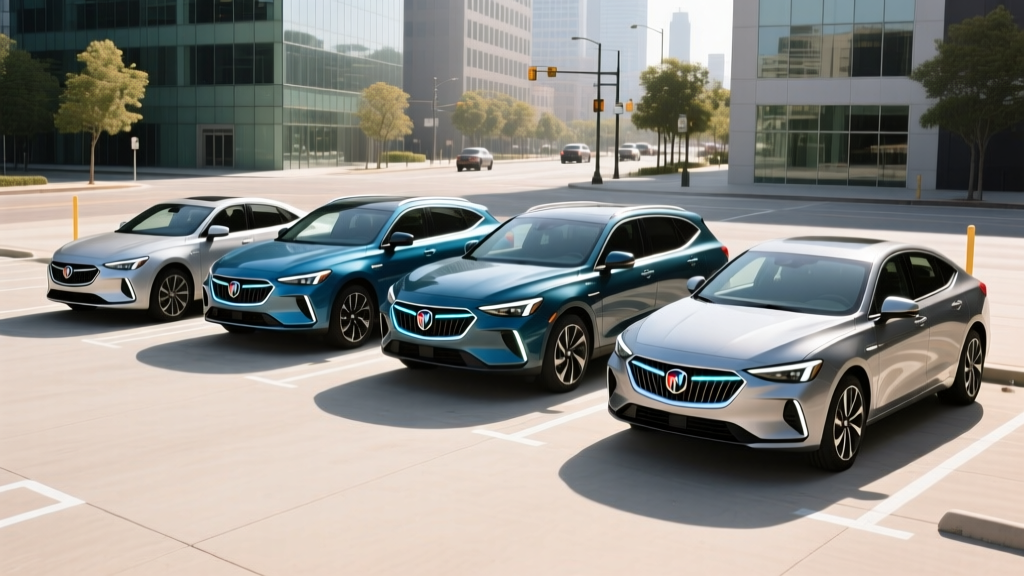
Buick's electrification strategy has evolved significantly by 2026, with the brand offering hybrid variants across its crossover lineup. The Buick Encore GX Hybrid and Buick Envista Hybrid represent the current hybrid offerings, both utilizing conventional hybrid (HEV) powertrains rather than plug-in hybrid (PHEV) systems. This distinction matters: neither vehicle requires plug-in charging, and neither qualifies for the federal §30D EV tax credit that applies to PHEVs and BEVs.
HEV vs PHEV: What Buick Buyers Need to Know
Conventional Hybrid (HEV): The battery charges through regenerative braking and the gasoline engine. You never plug it in. Battery capacity is small (typically 1-2 kWh), providing electric assist but no meaningful electric-only range. Think of it as an efficiency booster.
Plug-in Hybrid (PHEV): Larger battery (10-20+ kWh) that you charge via plug, offering 25-50 miles of electric-only driving before the gas engine engages. PHEVs qualify for federal tax credits (up to $7,500) if they meet battery sourcing, MSRP, and income requirements. Buick does not currently offer a PHEV in the U.S. market.
2026 Buick Encore GX Hybrid: Fuel Economy and Powertrain
The Encore GX Hybrid pairs a turbocharged 1.2-liter three-cylinder engine with an electric motor integrated into the transmission. Combined output reaches 155 horsepower and 174 lb-ft of torque, routed through a continuously variable transmission (CVT) to the front wheels.
| Driving Condition | EPA Estimate | Real-World Expectation |
|---|---|---|
| City | 42 MPG | 40-45 MPG (hybrids often exceed EPA in stop-and-go) |
| Highway | 38 MPG | 35-38 MPG (less regen benefit at steady speed) |
| Combined | 40 MPG | 38-42 MPG depending on driving mix |
The hybrid system's 1.3 kWh lithium-ion battery pack provides electric assist during acceleration and enables brief electric-only operation at low speeds (under 25 mph for short distances). Unlike a PHEV, there's no meaningful electric-only range to speak of—the system is designed for efficiency optimization, not zero-emission driving.
2026 Buick Envista Hybrid: Efficiency and Specs
The Envista, Buick's entry-level crossover, also received a hybrid variant for 2026. It uses a similar powertrain architecture but with slightly different tuning to match its lighter curb weight.
| Specification | Encore GX Hybrid | Envista Hybrid |
|---|---|---|
| Engine | 1.2L turbo I3 | 1.2L turbo I3 |
| Combined Horsepower | 155 HP | 148 HP |
| Transmission | CVT | CVT |
| Drivetrain | FWD | FWD |
| Battery Capacity | 1.3 kWh | 1.2 kWh |
| EPA Combined MPG | 40 MPG | 42 MPG |
| Base MSRP | $28,900 | $25,400 |
The Envista Hybrid's slightly better efficiency comes from its lower mass and more aerodynamic profile. In real-world testing, owners report achieving 40-44 MPG in mixed suburban driving, with highway trips yielding 36-39 MPG.
Battery Warranty and Longevity: What to Expect
Hybrid Battery Coverage
Both Buick hybrids come with GM's hybrid battery warranty: 8 years or 100,000 miles (whichever comes first), covering defects and capacity loss below 70% of original capacity. In California and states adopting CARB standards, the warranty extends to 10 years or 150,000 miles.
Real-world data from similar GM hybrid systems suggests these batteries typically last 12-15 years before requiring replacement. Out-of-warranty replacement cost: $2,800-$4,200 depending on labor rates and whether you choose a new or refurbished unit.
Hybrid battery degradation is gradual and rarely catastrophic. Most owners experience a 10-15% efficiency loss over 10 years, meaning your 40 MPG vehicle might deliver 34-36 MPG after a decade. This contrasts with BEV battery anxiety, where range loss directly impacts usability.
Tax Credits and Incentives: The Hybrid Reality
Here's where conventional hybrids diverge sharply from PHEVs and BEVs: Buick's HEVs do not qualify for the federal §30D Clean Vehicle Credit. That $3,750-$7,500 credit applies only to plug-in vehicles meeting battery component and critical mineral sourcing requirements, plus MSRP caps ($80,000 for SUVs, $55,000 for sedans) and buyer income limits.
Some states offer modest hybrid incentives, but these vary widely and change frequently. Check your state's energy office or department of environmental quality for current programs. A few utilities offer time-of-use rate discounts for hybrid owners, though these primarily benefit PHEVs and BEVs that can charge during off-peak hours.
Who Should Choose a Buick Hybrid?
Choose a Buick Hybrid If:
- You want better fuel economy without changing your driving or fueling habits
- You lack access to home or workplace charging (no plug required)
- You drive 12,000-15,000 miles annually and want to reduce fuel costs by $400-$700/year vs. a gas-only equivalent
- You plan to keep the vehicle 8-10 years (well within battery warranty)
- You want a premium-brand crossover without the $40,000+ price tag of luxury alternatives
Consider a PHEV or BEV Instead If:
- You have home charging access and a commute under 40 miles (PHEV can cover this electrically)
- You qualify for the federal tax credit (income under $150K single / $300K joint, vehicle meets sourcing rules)
- You want to eliminate tailpipe emissions during daily driving
- You drive 20,000+ miles annually (BEV fuel savings compound faster)
- You want one-pedal driving and instant torque (characteristics of BEVs, not HEVs)
Real-World Ownership Costs: Hybrid vs Gas vs EV
Let's compare 5-year ownership costs for the Encore GX Hybrid against its gas-only sibling and a comparable BEV like the Chevrolet Equinox EV:
| Cost Factor | Encore GX Hybrid | Encore GX (Gas) | Equinox EV 2LT |
|---|---|---|---|
| Purchase Price (MSRP) | $28,900 | $26,200 | $34,900 |
| Federal Tax Credit | $0 | $0 | $7,500 (if eligible) |
| Net Purchase Cost | $28,900 | $26,200 | $27,400 |
| Fuel/Energy (5 yrs, 75K mi) | $5,625 | $8,250 | $3,375 |
| Maintenance (5 yrs) | $2,800 | $3,200 | $1,800 |
| Total 5-Year Cost | $37,325 | $37,650 | $32,575 |
The hybrid saves modestly over gas but can't match the BEV's total cost advantage when the tax credit applies. However, the hybrid requires zero infrastructure changes and eliminates range anxiety entirely.
FAQ: Buick Hybrid Questions Answered
How many MPG does the Buick Encore GX Hybrid get?
EPA estimates: 42 city / 38 highway / 40 combined. Real-world results typically range 38-42 MPG combined, with city-heavy driving yielding better results thanks to regenerative braking.
Does the Buick hybrid have electric-only range?
No meaningful electric-only range. As a conventional hybrid (HEV), the battery provides electric assist during acceleration and enables brief low-speed electric operation, but you cannot drive significant distances on electricity alone. For 25-50 miles of electric range, you'd need a PHEV.
Do I need to plug in the Buick hybrid?
No. The hybrid battery charges through regenerative braking and the gasoline engine. You fuel it like any conventional vehicle—just pump gas and go.
Is the Buick hybrid reliable, and what does battery replacement cost?
GM's hybrid systems have proven reliable, with the battery covered for 8 years/100,000 miles (10 years/150,000 miles in CARB states). Out-of-warranty replacement runs $2,800-$4,200. Most hybrid batteries last 12-15 years before needing replacement.
Does the Buick hybrid qualify for any tax credit?
No federal tax credit applies to conventional hybrids. The §30D Clean Vehicle Credit requires plug-in capability (PHEV or BEV). Some states offer modest hybrid incentives—check your state's energy office for current programs.
How does the Buick hybrid compare to Toyota or Honda hybrids?
Toyota's RAV4 Hybrid achieves 40 MPG combined with standard AWD, while the Honda CR-V Hybrid delivers 40 MPG FWD / 37 MPG AWD. The Buick Encore GX Hybrid matches these figures but lacks AWD availability. Toyota's hybrid battery warranty extends to 10 years/150,000 miles nationwide, giving it a longevity edge.
Will Buick offer a plug-in hybrid (PHEV) in the future?
GM has announced plans to electrify its entire lineup by 2035, but as of 2026, Buick's U.S. hybrid offerings remain conventional (HEV) only. The Chinese-market Buick Velite 6 PHEV exists, but GM has not announced U.S. PHEV plans for Buick. For a GM-brand PHEV, consider the Chevrolet Volt (used market) or wait for upcoming announcements.
For the latest EPA fuel economy data, consult fueleconomy.gov. Tax credit rules change frequently—verify current eligibility at IRS.gov before purchasing.