The Bugatti Hybrid Era: Tourbillon's V16 Plug-In Powertrain
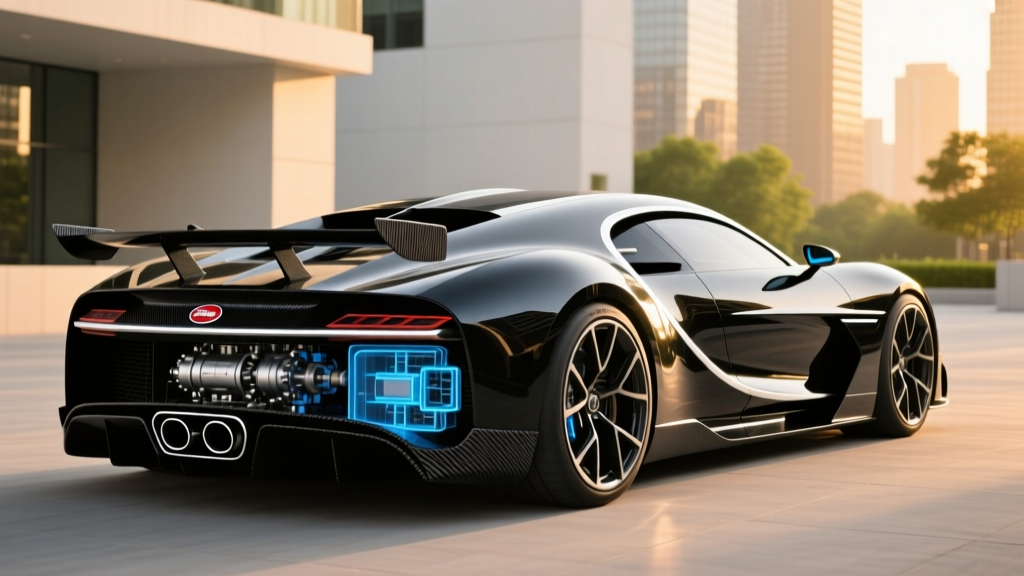
When Bugatti retired the Chiron and its legendary W16 engine, enthusiasts wondered what could possibly replace a quad-turbocharged 8.0-liter monster. The answer arrived with the Bugatti Tourbillon, a hypercar that pairs a naturally aspirated 8.3-liter V16 with three electric motors in a plug-in hybrid (PHEV) configuration. This isn't a mild-hybrid efficiency play — it's a 1,800-horsepower statement that uses electrification to fill torque gaps and enable short-distance electric-only driving.
As a PHEV, the Tourbillon sits in a category almost no other hypercar occupies. It can plug in, charge its battery, and drive on electricity alone for a limited distance before the V16 awakens. Below, we break down every spec that matters: powertrain output, battery capacity, electric-only range, fuel economy, pricing, and whether any tax incentives apply to a $4.6 million hypercar.
HEV vs. PHEV — Where Does the Tourbillon Fit?
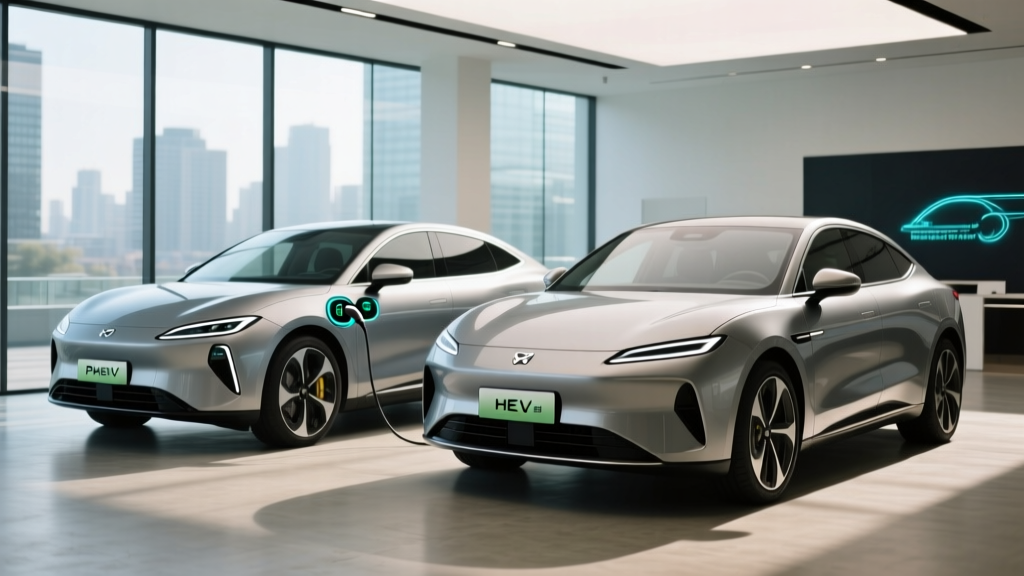
A conventional hybrid (HEV), like a Toyota Prius, uses a small battery recharged solely by regenerative braking and the engine. You never plug it in. A plug-in hybrid (PHEV), like the Tourbillon, carries a larger battery that can be recharged from a wall outlet or charging station, enabling electric-only driving before the gas engine kicks in. The Tourbillon is definitively a PHEV — it has a charge port and a usable electric-only mode.
Powertrain: V16 Meets Three Electric Motors
The Tourbillon's hybrid system is engineered by Bugatti in collaboration with Rimac, leveraging the Croatian company's deep electric-powertrain expertise. Here's the full breakdown:
| Component | Specification |
|---|---|
| Internal Combustion Engine | 8.3L naturally aspirated V16 (Cosworth-built) |
| Engine Output | ~1,000 HP @ 9,000 RPM |
| Electric Motors | 3 (two front axle, one rear axle) |
| Electric Motor Output | ~800 HP combined |
| Total System Output | 1,800 HP |
| Transmission | 8-speed dual-clutch automatic |
| Drivetrain | All-wheel drive (electric front axle, engine-driven rear) |
| 0–60 mph | ~2.0 seconds (estimated) |
| Top Speed | 277 mph (electronically limited) |
| Battery Chemistry | Not publicly disclosed (high-performance pouch cells) |
| Battery Capacity (usable) | ~25 kWh (estimated) |
The front axle is entirely electric — two motors provide torque vectoring across the front wheels, while the V16 and rear electric motor drive the rear axle through the DCT. This architecture gives the Tourbillon an effectively variable torque split and enables the electric-only mode to operate using the front motors alone.
Electric-Only Range and Charging
Bugatti has stated the Tourbillon can travel approximately 37 miles (60 km) on electric power alone under the WLTP testing cycle. In real-world driving — particularly at highway speeds or in cold weather — expect that figure to drop to roughly 25–30 miles. This is typical of performance-oriented PHEVs, where the battery prioritizes power delivery over energy density.
Charging: Level 2 Only, No DC Fast Charge
The Tourbillon supports AC Level 2 charging (estimated 7.4 kW onboard charger), which should replenish the ~25 kWh battery in approximately 3–4 hours. Like most performance PHEVs, it does not support DC fast charging — the battery is optimized for high C-rate discharge (launch power), not rapid bulk charging. For a hypercar that will spend most of its life in a climate-controlled garage, overnight Level 2 charging is perfectly adequate.
It's important to distinguish kW (kilowatts — the rate of power flow, like water pressure from a hose) from kWh (kilowatt-hours — the total energy stored, like the size of a tank). The Tourbillon's ~25 kWh battery holds 25 kilowatt-hours of energy; a 7.4 kW charger delivers 7.4 kilowatts of power to refill it.
Fuel Economy: What MPG Does the Bugatti Hybrid Get?
The Tourbillon is a low-volume hypercar (250 units planned), and as such, it does not appear on the EPA's fueleconomy.gov database the way mass-market vehicles do. Bugatti has not published official EPA MPG figures, and given the car's performance envelope, traditional fuel-economy metrics are somewhat beside the point. However, we can estimate based on comparable high-performance PHEVs:
| Metric | Estimated Figure |
|---|---|
| Combined MPG (gas only, battery depleted) | ~12–14 MPG |
| City MPG (gas only) | ~10–12 MPG |
| Highway MPG (gas only) | ~15–17 MPG |
| MPGe (electric + gas combined, first 37 mi) | ~35–45 MPGe |
| Electric-only efficiency | ~2.0–2.5 kWh/mile |
For context, the outgoing Chiron returned roughly 9 MPG combined under EPA testing. The Tourbillon's hybrid system, electric-only capability, and more efficient V16 (no turbos, higher thermal efficiency) should deliver a modest improvement — but this is a 1,800-HP hypercar, not a commuter. Real-world fuel economy will depend heavily on how owners drive: short trips in electric mode will yield dramatically better "MPG" than track sessions.
Pricing, Availability, and Tax Credit Eligibility
The Bugatti Tourbillon carries a base price of approximately €3.8 million (~$4.6 million USD), with deliveries expected to begin in 2026. All 250 production slots were sold out within weeks of the car's June 2024 reveal.
Tax Credit Eligibility
Under the IRS §30D Clean Vehicle Credit, a PHEV must meet several criteria to qualify for up to $7,500:
- MSRP must not exceed $55,000 for sedans or $80,000 for SUVs/pickups/vans
- Buyer AGI must not exceed $150K (single) / $300K (joint)
- Battery components and critical minerals must meet domestic-sourcing thresholds
At ~$4.6 million, the Tourbillon does not qualify for the federal EV/PHEV tax credit. The MSRP cap alone disqualifies it by a factor of roughly 57×. No state incentives meaningfully apply either.
Battery Longevity, Warranty, and Replacement Cost
Hybrid and PHEV battery longevity is a top concern for any electrified-vehicle buyer. For mainstream PHEVs, federal law mandates that the high-voltage battery carry a warranty of at least 8 years / 100,000 miles (10 years / 150,000 miles in CARB states like California). Battery replacement costs for mainstream PHEVs typically range from $4,000 to $12,000 depending on capacity and chemistry.
The Tourbillon operates in a different universe. Bugatti has not published specific battery warranty terms, but given the brand's ownership by Bugatti-Rimac (a joint venture with Porsche/Rimac) and the hypercar's engineering standards, buyers can expect comprehensive coverage for the duration of any reasonable ownership period. Battery replacement cost, should it ever be needed out of warranty, would likely exceed $50,000–$80,000 given the bespoke high-discharge cells and integrated thermal management system.
In practice, hypercar owners rarely accumulate enough mileage to stress battery longevity. The Tourbillon's battery will likely outlast the ownership cycle of virtually every original purchaser. Rimac's experience with the Nevera's battery system — which has proven robust across hundreds of units — provides a strong reliability pedigree.
Who Should Buy the Bugatti Hybrid vs. a Full EV or Gas Hypercar?
The Tourbillon's PHEV architecture serves a specific purpose: it preserves the emotional, acoustic drama of a naturally aspirated V16 while using electric motors to deliver instantaneous torque that no internal combustion engine can match on its own. The electric-only mode is a bonus for low-speed maneuvering in garages, residential areas, or concours events — not a daily commuting solution.
Compared to a fully electric hypercar like the Rimac Nevera (1,914 HP, zero electric-only compromises, but no engine sound), the Tourbillon trades some efficiency and packaging simplicity for sensory engagement. Compared to the outgoing gas-only Chiron, it gains front-axle torque vectoring, improved low-speed drivability, and marginally better fuel economy.
Choose the Tourbillon If
- You want the last great naturally aspirated hypercar engine with electric augmentation
- Engine sound and mechanical drama are non-negotiable
- You value exclusivity (250 units worldwide)
- You have garage Level 2 charging available
Consider a Full EV If
- You want maximum efficiency and lowest running costs
- You prefer zero maintenance on an internal combustion engine
- You want instant, uncomplicated torque without engine spool-up
- Your daily driving is under 300 miles with home charging
Frequently Asked Questions
How many MPG does the Bugatti hybrid get?
The Tourbillon does not have published EPA figures. Estimated gas-only MPG (battery depleted) is approximately 12–14 combined. When driving within the ~37-mile electric range, fuel consumption drops to zero. MPGe is estimated at 35–45 for mixed electric/gas driving.
How far can the Bugatti Tourbillon go on electric only?
Bugatti claims approximately 37 miles (WLTP) on electric power alone. Real-world expectations are closer to 25–30 miles, particularly at highway speeds or in cold weather. The electric-only mode uses the two front-axle motors.
Is the Bugatti Tourbillon a hybrid or a plug-in hybrid?
It is a plug-in hybrid (PHEV). It has a charge port, a ~25 kWh battery, and can be driven on electricity alone. A conventional hybrid (HEV) cannot be plugged in and has no meaningful electric-only range.
Is the Tourbillon's hybrid system reliable?
The powertrain is co-developed with Rimac, which has proven its electric-drive technology in the Nevera. As a low-volume hypercar with minimal mileage accumulation, long-term battery degradation is unlikely to be a practical concern for owners.
Does the Bugatti hybrid qualify for any tax credit?
No. The federal §30D tax credit has an MSRP cap of $80,000 (SUVs/trucks) or $55,000 (sedans). At ~$4.6 million, the Tourbillon exceeds these caps by orders of magnitude and does not qualify for any federal or meaningful state PHEV incentive.
Can the Tourbillon DC fast charge?
No. It supports AC Level 2 charging only (estimated 7.4 kW), sufficient for overnight replenishment. This is standard for performance PHEVs where the battery is optimized for high power output rather than rapid charging.