Yes, BMW Makes Hybrid SUVs — Here Are Your 2026 Options
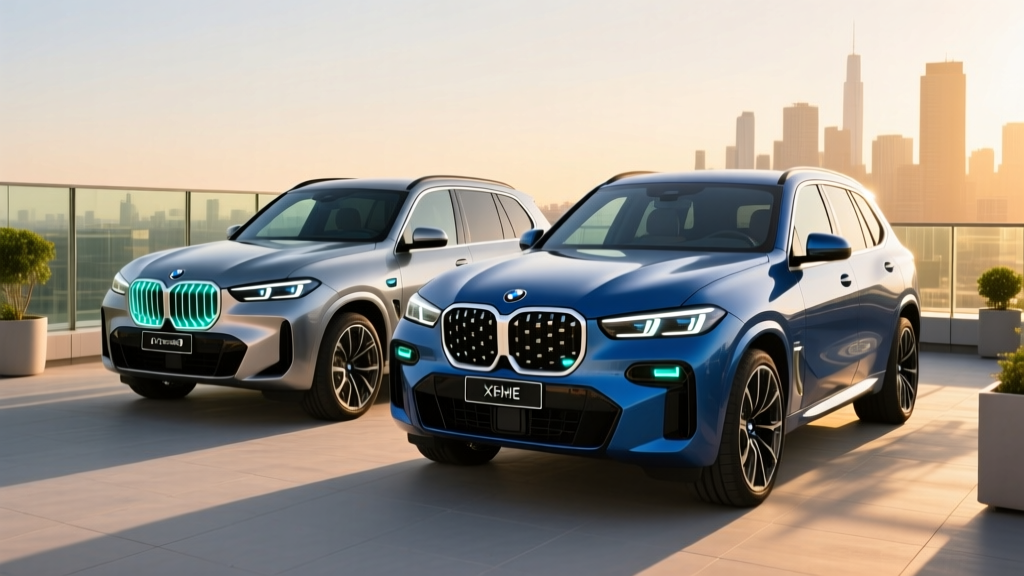
BMW currently offers two plug-in hybrid (PHEV) SUVs in the U.S. market: the BMW X5 xDrive50e and the high-performance BMW XM. Both pair a turbocharged gasoline engine with an electric motor and a battery large enough to handle daily commuting on electricity alone. BMW does not currently sell a conventional (non-plug-in) hybrid SUV in the United States — every electrified BMW SUV stateside is a PHEV that you plug in to unlock its full efficiency potential.
If you've been searching "does BMW make a hybrid SUV" and landing on outdated forums referencing the older X5 xDrive45e, that model was replaced by the xDrive50e for the 2024 model year with a larger battery and more power. The current-generation X5 xDrive50e is the mainstream choice; the XM is BMW's M-division flagship that happens to be a PHEV.
Quick Refresher: HEV vs. PHEV
Conventional Hybrid (HEV): A small battery recharged by regenerative braking and the engine. No plug. Typical electric-only range: 0–1 mile. Examples: Toyota RAV4 Hybrid, Honda CR-V Hybrid.
Plug-in Hybrid (PHEV): A larger battery you charge via a plug (Level 1 or Level 2). Delivers meaningful electric-only range (20–50+ miles) before the gas engine kicks in. Examples: BMW X5 xDrive50e, Toyota RAV4 Prime.
Both BMW hybrid SUVs are PHEVs. You do not have to plug them in — they'll operate as conventional hybrids if you never charge — but you'll miss the electric-only commuting benefit and much of the fuel savings.
BMW X5 xDrive50e: The Practical PHEV SUV
The X5 xDrive50e is where most buyers should focus. It slots into BMW's mid-size luxury SUV lineup alongside the gas-only X5 models and offers a genuine all-electric commute paired with road-trip flexibility from its inline-six gasoline engine.
| Spec | Value |
|---|---|
| Powertrain | 3.0L turbocharged inline-6 + electric motor (integrated in transmission) |
| Combined Horsepower | 483 hp |
| Combined Torque | 516 lb-ft |
| 0–60 mph | 4.6 seconds |
| Battery (gross / usable) | 29.5 kWh / ~25.7 kWh usable |
| EPA Electric-Only Range | 38 miles |
| EPA MPGe (combined) | 50 MPGe |
| EPA MPG (gas-only, combined) | 22 MPG combined (21 city / 24 highway) |
| Total Combined Range | ~440 miles |
| Max AC Charging (Level 2) | 7.4 kW (0–100% in ~4.25 hours) |
| DC Fast Charging | Not available |
| Drivetrain | xDrive AWD |
| Cargo Volume (behind 2nd row) | 33.9 cu ft |
| Towing Capacity | 5,000 lbs (with factory hitch) |
| Base MSRP | $67,275 (before destination) |
Real-World MPG vs. EPA Estimates
The EPA's 50 MPGe figure blends electric and gasoline driving. Your actual fuel economy depends entirely on how often you charge:
- Daily commuter who charges nightly: If your round-trip commute is under 38 miles, you'll burn almost zero gasoline on weekdays. Weekend road trips use gas normally. Annual fuel consumption can drop 60–80% versus the gas-only X5 xDrive40i.
- Never-charge driver: Operated purely as a hybrid (battery at minimum state of charge), expect roughly 22 MPG combined — on par with the gas X5's 24 MPG combined but carrying ~400 lbs of extra battery weight.
- Cold-weather reality: Electric-only range drops 20–30% in freezing temperatures. That 38-mile EPA range contracts to roughly 27–30 miles at 20°F, consistent with all PHEVs due to cabin heating demands and battery chemistry limitations.
BMW XM: The Performance PHEV
The BMW XM is BMW M's first standalone model since the M1, and it uses the same PHEV architecture tuned for maximum output. It is significantly more expensive and less practical than the X5, but it answers the question of whether a 738-hp hybrid SUV exists.
| Spec | XM | XM Label (Red) |
|---|---|---|
| Powertrain | 4.4L twin-turbo V8 + electric motor | |
| Combined Horsepower | 644 hp | 738 hp |
| Combined Torque | 590 lb-ft | 738 lb-ft |
| 0–60 mph | 4.1 sec | 3.7 sec |
| Battery (gross / usable) | 29.5 kWh / ~25.7 kWh usable | |
| EPA Electric-Only Range | 31 miles | 30 miles |
| EPA MPGe (combined) | 46 MPGe | 43 MPGe |
| EPA MPG (gas-only) | 14 combined | 13 combined |
| Max AC Charging | 7.4 kW | |
| DC Fast Charging | Not available | |
| Base MSRP | $159,995 | $185,995 |
The XM exists for enthusiasts who want PHEV tax-credit potential and electric city driving in a supercar-rivaling package. For everyone else, the X5 xDrive50e delivers the PHEV benefits at a fraction of the cost.
Charging: What You Need to Know
Neither the X5 xDrive50e nor the XM supports DC fast charging. This is typical for PHEVs — their smaller batteries don't justify the cost and weight of DC hardware, and most charging happens at home overnight.
| Level | Power | Time (0–100%) | Where |
|---|---|---|---|
| Level 1 (120V household) | ~1.4 kW | ~18–19 hours | Standard outlet |
| Level 2 (240V, 32A) | 7.4 kW | ~4.25 hours | Home wallbox, public Level 2 |
Practical takeaway: A Level 2 home charger is essentially mandatory for daily PHEV use. At 7.4 kW, you'll fully recharge overnight and wake up to a full 38 miles of electric range. Level 1 charging is too slow for daily replenishment unless your commute is under 15 miles and you can top up over 12+ hours.
BMW recommends and sells its own Wallbox (approximately $600 for the unit), but any J1772-compatible Level 2 charger rated at 32A or higher will work. A licensed electrician will typically charge $500–$1,500 for a 240V circuit installation, depending on panel proximity and local permit requirements.
Pricing, Tax Credits, and Incentives
The 2026 BMW X5 xDrive50e starts at $67,275 (plus $995 destination). Well-equipped examples with the Premium Package, Driving Assistance Professional, and upgraded wheels land in the $74,000–$78,000 range.
The BMW XM starts at $159,995, with the XM Label at $185,995.
Federal §30D Tax Credit Eligibility
Under current IRS rules for the §30D Clean Vehicle Credit, PHEVs can qualify for up to $7,500 — but eligibility depends on several criteria:
- MSRP cap: SUVs must have an MSRP at or below $80,000. The X5 xDrive50e base qualifies; heavily optioned examples and all XM trims exceed the cap.
- Battery sourcing: The battery must meet critical-mineral and battery-component requirements that tighten each year. BMW's battery supply chain for U.S.-built X5 models (Spartanburg, SC) has been progressively restructured, but you must verify current-year compliance at fueleconomy.gov before purchasing.
- Buyer income limits: AGI must not exceed $300,000 (married filing jointly), $225,000 (head of household), or $150,000 (single).
- Point-of-sale transfer: You can transfer the credit to the dealer at purchase for an immediate price reduction, rather than waiting to claim it on your tax return.
Important: Tax credit eligibility changes frequently due to sourcing-rule updates. Consult a tax professional and verify the specific VIN's eligibility on the IRS portal before finalizing your purchase.
Battery Warranty, Reliability, and Replacement Cost
BMW PHEV Battery Warranty
BMW covers the high-voltage battery in both the X5 xDrive50e and XM for 8 years or 80,000 miles (whichever comes first), with a capacity-retention threshold of 70%. If the battery degrades below 70% of its original capacity within the warranty period, BMW will repair or replace it at no cost.
This warranty is federally mandated minimum compliance — many BMW dealers report that PHEV battery degradation in the current-generation 29.5 kWh pack has been minimal in early field data, with most owners retaining 95%+ capacity after 30,000 miles.
Reliability Outlook
BMW's PHEV powertrain — the inline-six plus electric motor integrated into the ZF 8-speed transmission — is now in its second generation (the first being the xDrive45e). The mechanical components are well-proven: the B58 inline-six is widely regarded as one of the most reliable modern BMW engines, and the electric motor adds minimal complexity since it replaces the traditional torque converter.
According to IIHS and owner-survey data, the primary reliability concerns with the X5 PHEV relate to software integration (charging scheduling, preconditioning logic) rather than mechanical failures. BMW has issued several OTA updates addressing these.
Battery Replacement Cost
Out-of-warranty high-voltage battery replacement for the X5 xDrive50e is estimated at $12,000–$16,000 (parts and labor). However, PHEV batteries rarely require full replacement — individual module swaps are possible and cost significantly less. Given the 8-year/80,000-mile warranty and real-world degradation data suggesting 90%+ retention at 100,000 miles, most owners will never face this expense.
Hybrid vs. PHEV vs. Full EV — Which BMW Fits You?
BMW offers all three powertrain types in the X5 lineup. Here's how to decide:
Choose the X5 xDrive50e (PHEV) if:
- You can charge at home (garage or driveway with 240V access)
- Your daily commute is under 35–38 miles round-trip
- You take road trips longer than 300 miles regularly and want zero range anxiety
- You want lower fuel costs without committing to full electric
- You live in an area with limited DC fast-charging infrastructure
Choose the BMW iX (Full EV) if:
- You have reliable home charging and your daily driving is under 300 miles
- You want the lowest possible operating cost (electricity vs. gasoline)
- You want zero tailpipe emissions and minimal maintenance (no oil changes, no spark plugs)
- The iX's EPA range of 300–324 miles covers your typical week with margin
Choose the gas X5 xDrive40i if:
- You cannot charge at home (apartment, street parking)
- Your daily driving far exceeds 38 miles and you won't charge between trips
- You want the lowest purchase price (xDrive40i starts ~$7,500 less than the xDrive50e)
X5 xDrive50e — Pros
- 38 miles electric covers most daily commutes gas-free
- 483 hp with seamless electric torque fill — genuinely quick
- No range anxiety on road trips (gas engine takes over)
- Qualifies for up to $7,500 federal credit (verify VIN eligibility)
- Strong resale value; X5 is BMW's U.S. best-seller
- Smooth, quiet electric mode in city driving
X5 xDrive50e — Cons
- No DC fast charging — impractical for mid-trip electric top-ups
- Gas-only MPG (22 combined) is worse than dedicated hybrid SUVs (RAV4 Hybrid: 39 MPG)
- Premium fuel required (91+ octane)
- $67K+ starting price is steep vs. mainstream PHEVs
- Electric range drops to ~27–30 miles in freezing weather
- Heavy: ~5,500 lbs curb weight affects tire wear and braking
Frequently Asked Questions
How many MPG does the BMW X5 hybrid get?
The 2026 BMW X5 xDrive50e is rated at 50 MPGe combined when blending electric and gasoline driving. When the battery is depleted and it operates as a conventional hybrid, it returns 22 MPG combined (21 city / 24 highway). For comparison, the gas-only X5 xDrive40i achieves 24 MPG combined. Your real-world fuel economy depends entirely on how frequently you charge — nightly chargers on short commutes may use gasoline only a few times per month.
How far can the BMW X5 PHEV go on electric only?
The EPA rates the X5 xDrive50e at 38 miles of electric-only range. In real-world conditions: expect 35–38 miles in mild weather at city speeds, 30–33 miles on the highway (higher speeds drain the battery faster), and 27–30 miles in freezing temperatures when the heat pump and battery heating draw additional energy.
Does the BMW X5 hybrid qualify for a tax credit?
The X5 xDrive50e can qualify for up to $7,500 under the federal §30D Clean Vehicle Credit, provided: the MSRP stays at or below $80,000 (base model qualifies; heavily optioned examples may not), your AGI is within IRS limits, and the battery meets current-year critical-mineral and component sourcing requirements. Verify eligibility at the IRS energy credits portal before purchasing. The BMW XM does not qualify due to its MSRP exceeding the $80,000 SUV cap.
Is the BMW X5 PHEV reliable?
The current-generation X5 xDrive50e uses BMW's second-generation PHEV system with the well-proven B58 inline-six engine and a ZF 8-speed transmission with an integrated electric motor. Early reliability data is positive, with most reported issues being software-related (charging timers, preconditioning) rather than mechanical. The high-voltage battery is warrantied for 8 years/80,000 miles with a 70% capacity-retention threshold.
What is the battery replacement cost for a BMW X5 PHEV?
An out-of-warranty full battery replacement is estimated at $12,000–$16,000. However, BMW can replace individual battery modules at lower cost, and real-world data suggests the 29.5 kWh pack retains 90%+ capacity at 100,000 miles. Most owners will sell or trade the vehicle before facing any battery expense.
Does BMW make a conventional (non-plug-in) hybrid SUV?
Not in the U.S. market. BMW's mild-hybrid (48V) technology is used in gas models like the X5 xDrive40i to smooth stop-start operation and provide minor efficiency gains, but this is not a true hybrid system — it cannot drive on electric power alone. If you want meaningful electric-only driving from a BMW SUV, the PHEV models (X5 xDrive50e, XM) are the options. For a full electric BMW SUV, look at the iX.
Can I charge the BMW X5 PHEV at a Tesla Supercharger?
Not directly. The X5 xDrive50e uses a J1772 connector for AC Level 2 charging and does not support DC fast charging at all. Tesla Superchargers are DC-only (NACS connector), so there's no adapter solution. You'll use public Level 2 chargers from networks like ChargePoint, EVgo (Level 2 stations), or Electrify America's AC destinations.