BMW's Electrified Strategy: Where Hybrids Fit in 2026
If you're researching a BMW hybrid, you're likely weighing the brand's plug-in hybrid (PHEV) models against its fully electric iX and i4 offerings — or against conventional gas-powered BMWs. BMW's approach in 2026 centers heavily on PHEVs rather than conventional hybrids (HEVs). Unlike Toyota or Honda, BMW does not currently sell a self-charging, non-plug-in hybrid in the U.S. market. Every electrified BMW you can buy today is either a plug-in hybrid or a battery-electric vehicle (BEV).
This guide breaks down the current BMW hybrid lineup — specifically the PHEV models available — with exact EPA figures, battery specs, charging data, pricing, and tax credit eligibility so you can make a spec-driven decision.
HEV vs PHEV: Understanding What BMW Actually Sells
Conventional Hybrid (HEV)
A conventional hybrid uses a small battery (typically 1–2 kWh) charged entirely by regenerative braking and the engine. You never plug it in. Examples: Toyota Prius, Honda Accord Hybrid. BMW does not currently offer an HEV in the U.S.
Plug-in Hybrid (PHEV)
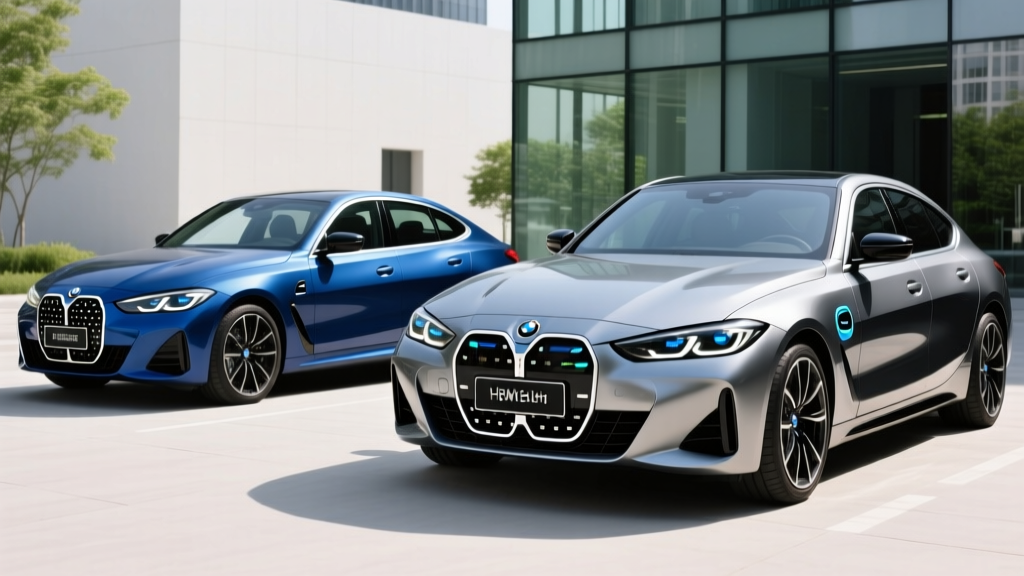
A PHEV carries a larger battery (15–30+ kWh) that you charge via a plug, giving 20–40+ miles of electric-only driving before the gas engine engages. This is BMW's hybrid strategy. Current U.S. PHEV models include the 330e, X3 xDrive30e, X5 xDrive50e, and 750e xDrive.
The distinction matters practically: if you cannot charge at home or at work, a PHEV still functions as a conventional hybrid once the battery depletes — but you lose the efficiency and cost advantage that makes the premium worthwhile.
The 2026 BMW PHEV Lineup: Specs at a Glance
| Model | Powertrain | Combined HP | Battery (kWh) | EV Range (mi) | 0-60 mph | Base MSRP |
|---|---|---|---|---|---|---|
| 330e Sedan | 2.0L turbo I4 + e-motor | 288 hp | ~19.5 kWh (usable) | ~22 mi (EPA est.) | 5.6 sec | ~$47,000 |
| X3 xDrive30e | 2.0L turbo I4 + e-motor | 288 hp | ~19.5 kWh (usable) | ~26 mi (EPA est.) | 6.0 sec | ~$53,000 |
| X5 xDrive50e | 3.0L turbo I6 + e-motor | 483 hp | ~25.7 kWh (usable) | ~38 mi (EPA est.) | 4.6 sec | ~$74,000 |
| 750e xDrive | 3.0L turbo I6 + e-motor | 483 hp | ~25.7 kWh (usable) | ~34 mi (EPA est.) | 4.1 sec | ~$108,000 |
Source: BMW USA official specifications and fueleconomy.gov. Figures are EPA estimates; real-world results vary with driving style, temperature, and terrain.
Fuel Economy: EPA MPG and Real-World Expectations
| Model | MPGe (combined) | Gas-only MPG (combined) | City MPG | Highway MPG |
|---|---|---|---|---|
| 330e Sedan | ~60 MPGe | ~28 MPG | ~25 | ~33 |
| X3 xDrive30e | ~55 MPGe | ~26 MPG | ~23 | ~29 |
| X5 xDrive50e | ~56 MPGe | ~22 MPG | ~20 | ~25 |
| 750e xDrive | ~52 MPGe | ~22 MPG | ~20 | ~26 |
Real-world note: PHEVs reward short, chargeable commutes. If your daily round trip is under the EV range (say, 20 miles in the 330e) and you charge nightly, you may use almost no gasoline for weeks. On a long highway road trip after the battery depletes, expect gas-only MPG figures at or slightly below the combined column above — BMW's inline-six PHEVs (X5, 7 Series) are heavy vehicles, and highway-only driving at 75+ mph pushes consumption higher than the EPA combined figure suggests.
For context, a comparable gas-only BMW X5 xDrive40i returns about 24 MPG combined. The X5 xDrive50e in gas-only mode isn't dramatically more efficient — the savings come from electric-only commuting.
Electric-Only Range and Charging Details
The X5 xDrive50e leads the lineup with approximately 38 miles of EPA-rated electric range — enough for most suburban commutes without touching gasoline. The 330e sedan, despite a smaller vehicle footprint, delivers around 22 miles due to its slightly smaller usable battery and different powertrain tuning.
Charging Speed & Battery Specs
- Level 1 (120V household): ~1.4 kW — full charge in 12–18 hours depending on model
- Level 2 (240V home charger): ~7.4 kW max onboard charger — full charge in approximately 3–4 hours
- DC Fast Charging: Not available on current BMW PHEVs. These vehicles use AC charging only (J1772/NACS adapter). Do not expect 10–80% DC fast-charge capability.
- Battery chemistry: Lithium-ion (NMC-type cells, prismatic format)
The 7.4 kW onboard charger is competitive with rivals like the Volvo XC60 Recharge (~7.4 kW) but slower than the Toyota RAV4 Prime's 6.6 kW — in practice, overnight Level 2 charging fully replenishes any BMW PHEV battery well before morning.
Tax Credits and Incentives: What You Can Actually Claim
Federal tax credit eligibility for BMW PHEVs is constrained by the Inflation Reduction Act's §30D rules. As of 2026, the requirements include:
- MSRP cap: SUVs/vans/pickups ≤ $80,000; sedans ≤ $55,000 (per IRS.gov §30D guidelines)
- Battery sourcing: Critical minerals and battery components must meet escalating domestic-content thresholds
- Buyer income cap: AGI ≤ $150,000 (single), $225,000 (head of household), $300,000 (joint)
- Point-of-sale transfer: Eligible buyers can apply the credit as a down-payment reduction at the dealer
What qualifies: The BMW 330e sedan (base ~$47,000) may qualify for partial or full credit depending on battery-sourcing compliance, which BMW has been working to improve. The X5 xDrive50e at ~$74,000 falls under the $80,000 SUV cap and may qualify. The 750e xDrive at ~$108,000 exceeds all MSRP caps and does not qualify for the federal credit.
Always verify current eligibility on fueleconomy.gov before purchasing — sourcing rules tighten annually and model eligibility can change mid-year. Consult a tax professional for your specific situation.
Reliability, Battery Warranty, and Long-Term Costs
BMW PHEV reliability has been broadly acceptable in recent model years, though the brand doesn't match Toyota or Lexus in long-term dependability surveys. The additional complexity of a PHEV — two power sources, an onboard charger, high-voltage cabling — introduces more potential failure points than a conventional hybrid or gas car.
Battery & Powertrain Warranty
- High-voltage battery: 8 years / 80,000 miles (federal mandate for emissions-related components)
- Capacity retention threshold: BMW typically warrants against degradation below ~70% of original capacity
- Powertrain warranty: 4 years / 50,000 miles (engine, transmission, e-motor)
- Out-of-warranty battery replacement cost: Estimated $8,000–$14,000 depending on model (parts + labor), though full replacements are rare within the first decade
Real-world PHEV battery degradation data from owner communities suggests BMW's Gen5 e-drive batteries lose roughly 5–10% capacity over the first 5 years of normal use — consistent with industry norms for NMC chemistry with active thermal management. BMW's battery management system includes a buffer (the gross kWh is higher than the usable figure in the spec table above) to slow visible degradation.
Who Should Choose a BMW Hybrid — and Who Shouldn't
Choose a BMW PHEV If:
- Your daily commute is under 30 miles round-trip and you can charge at home
- You want BMW driving dynamics and interior quality without committing to full electric
- You take frequent road trips where charging infrastructure is uncertain
- You want reduced fuel costs for commuting without range anxiety on long drives
- You value the instant torque of the electric motor in city driving
Skip the BMW PHEV If:
- You cannot charge at home or work (you'll operate mostly in gas mode, negating the PHEV premium)
- You want maximum electric range — consider a BMW i4 (up to ~307 mi EPA) or iX instead
- You prioritize lowest total cost of ownership — a Toyota RAV4 Prime or Prius Prime delivers better efficiency per dollar
- You need DC fast charging for road-trip electric driving (PHEVs don't offer it)
- You want a conventional, no-plug hybrid — BMW doesn't sell one; look at Lexus or Toyota
BMW Hybrid vs Full EV vs Gas: A Decision Framework
The right powertrain depends on your charging access, driving patterns, and budget:
- BMW PHEV (330e, X5 50e): Best for home-chargers with a sub-35-mile commute who also drive long distances monthly. You get electric commuting and gas flexibility. Total fuel cost depends on your electricity rate — at $0.14/kWh, a full 25 kWh charge costs about $3.50 for ~30 miles, versus ~$4.50 in gasoline for the same distance in a gas X5.
- BMW BEV (i4, iX, i7): Best for home-chargers who want zero tailpipe emissions, lower maintenance (no oil changes, fewer moving parts), and can plan road trips around DC fast-charging. The i4 eDrive40 starts around $55,000 with up to 307 miles of EPA range.
- Gas-only BMW (330i, X5 40i): Best if you lack home charging, drive long distances frequently, and don't want the PHEV price premium. You'll pay more in fuel but avoid the complexity and weight of a battery system.
Frequently Asked Questions
Does BMW make a conventional hybrid that doesn't need plugging in?
No. As of 2026, BMW does not sell a conventional (non-plug-in) hybrid in the United States. All electrified BMWs are either plug-in hybrids (PHEVs) or battery-electric vehicles (BEVs). If you want a luxury-brand conventional hybrid, Lexus (RX 500h, TX 500h) and Mercedes-Benz (mild-hybrid models with 48V systems) offer alternatives, though these are mild hybrids rather than full HEVs in the Prius sense.
How far can a BMW PHEV drive on electric power alone?
It depends on the model. The X5 xDrive50e offers the most electric range at approximately 38 EPA-rated miles. The 330e sedan provides about 22 miles, the X3 xDrive30e roughly 26 miles, and the 750e xDrive around 34 miles. Real-world range may be 10–20% lower in cold weather (below 40°F) or at sustained highway speeds above 70 mph, as battery efficiency drops and climate control draws additional power.
Can BMW PHEVs use DC fast chargers?
No. Current BMW PHEV models support only AC charging — Level 1 (120V) and Level 2 (240V). They use a J1772 connector (or NACS with adapter in newer models). You cannot plug a BMW PHEV into a DC fast charger at an Electrify America or Tesla Supercharger station. The onboard charger maxes out at approximately 7.4 kW, meaning a full Level 2 charge takes about 3–4 hours.
Is a BMW PHEV reliable, and what does battery replacement cost?
BMW PHEV reliability is generally acceptable, though not class-leading. J.D. Power and Consumer Reports rate BMW mid-pack among luxury brands. The high-voltage battery is warranted for 8 years/80,000 miles against capacity loss below ~70%. Out-of-warranty replacement is estimated at $8,000–$14,000, but most PHEV batteries last well beyond the warranty period with proper care — avoid routinely charging to 100% and leaving the car at full charge in extreme heat.
Does any BMW PHEV qualify for the federal tax credit?
Possibly, depending on the model and current IRS sourcing rules. The 330e sedan (base ~$47,000) falls under the $55,000 sedan MSRP cap. The X5 xDrive50e (~$74,000) falls under the $80,000 SUV cap. However, eligibility also depends on battery component and critical-mineral sourcing requirements, which change annually. The 750e xDrive exceeds all MSRP caps and does not qualify. Always check fueleconomy.gov for the latest eligibility list before purchasing, and verify your income falls within §30D limits.
How does BMW's PHEV system manage battery and engine power?
BMW's Gen5 eDrive system uses three driving modes: Electric (motor only, up to ~84 mph), Hybrid (system optimizes between engine and motor), and Sport (both power sources deliver maximum output). The system also includes a Battery Control mode that lets you set a target state of charge — useful for saving battery for a zero-emission zone or city portion of your trip. Regenerative braking recovers energy during deceleration, and the navigation system can pre-condition the battery and optimize energy use based on your route profile.