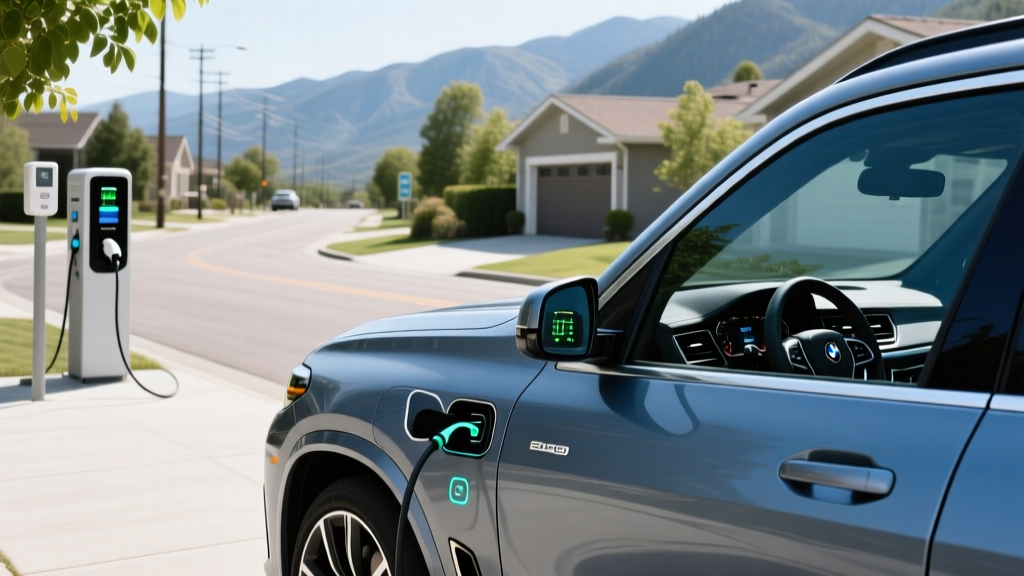
If you've been searching for a BMW hybrid lease in 2026, you've probably noticed the Bavarian brand has fully committed to plug-in hybrid (PHEV) powertrains for its SUV lineup. Gone are the days of mild-hybrid-only options: today's BMW PHEVs pair turbocharged inline-six or V8 engines with substantial battery packs and electric motors capable of real, usable electric-only driving. But before you sign a 36-month lease agreement, you need to know exactly what you're getting — real-world range, charging logistics, tax-credit eligibility, and whether a PHEV lease actually makes financial sense versus a full EV or conventional hybrid.
This guide covers BMW's current U.S. PHEV lineup — the 2026 BMW X5 xDrive50e and the 2026 BMW XM — with exact specs, lease economics, and a decision framework to help you choose.
BMW's 2026 Plug-In Hybrid Lineup: HEV vs PHEV Clarified
First, a critical distinction that trips up many shoppers. BMW does not currently sell a conventional hybrid (HEV) in the U.S. market — the kind that recharges its small battery solely through regenerative braking and never plugs in (like a Toyota Prius). Every electrified BMW SUV available stateside is a plug-in hybrid (PHEV), meaning it has a larger battery you charge via a wall outlet or charging station, and it can drive on electric power alone for a meaningful distance before the gasoline engine kicks in.
HEV vs PHEV: What's the Difference?
| Feature | Conventional Hybrid (HEV) | Plug-In Hybrid (PHEV) |
|---|---|---|
| Plugs in? | No | Yes |
| Battery size | 1–2 kWh | 15–30 kWh |
| Electric-only range | 0–1 mile at low speed | 30–40+ miles |
| Federal tax credit | No | Up to $7,500 (if eligible) |
| Example | Toyota RAV4 Hybrid | BMW X5 xDrive50e |
If you want a BMW that can handle your daily commute on electricity alone and then switch to gasoline for road trips, the PHEV models below are your options.
2026 BMW X5 xDrive50e: The Lease-Ready PHEV
The X5 xDrive50e is BMW's volume PHEV and the model most shoppers are considering when they search for a BMW hybrid lease. It replaced the older xDrive45e for the 2024 model year with a significantly larger battery and more electric power, and the 2026 version carries over those improvements with minor trim updates.
| Specification | Value |
|---|---|
| Powertrain | 3.0L turbo I6 + electric motor (8-speed auto, AWD) |
| Combined horsepower | 483 hp / 516 lb-ft torque |
| Battery (usable) | 25.7 kWh (Lithium-ion NMC) |
| EPA electric-only range | 38 miles |
| EPA combined range (gas + electric) | ~440 miles |
| EPA MPGe (electric + gas) | 56 MPGe |
| EPA MPG (gas only, after battery depleted) | 24 city / 27 highway / 25 combined |
| Level 2 charging (7.7 kW onboard) | ~3.5 hours (0–100%) |
| DC fast charging | Not available |
| 0–60 mph | 4.6 seconds |
| Starting MSRP | $74,400 (before destination) |
| Battery warranty | 8 years / 80,000 miles |
Real-World Range and MPG
EPA electric range: 38 miles
Real-world expectation: Expect 30–35 miles in mixed driving, dropping to 25–28 miles in cold weather (below 40°F) or sustained highway speeds above 70 mph. Electric-only range is highly sensitive to temperature and driving style.
When the battery depletes, the X5 xDrive50e operates as a conventional hybrid. The EPA rates it at 25 MPG combined, but in real-world city driving, PHEVs often exceed their EPA estimates because regenerative braking recaptures energy in stop-and-go traffic. On a purely highway road trip at 75 mph, expect closer to 23–24 MPG. These numbers are respectable for a 5,500-pound luxury SUV but not exceptional — the electric range is where the efficiency gains happen.
Charging the X5 xDrive50e
The X5 xDrive50e charges exclusively via its J1772/CCS AC port at up to 7.7 kW on a Level 2 home charger. That means a full charge takes roughly 3.5 hours — easy to replenish overnight. There is no DC fast charging capability, which is standard for most PHEVs in this class (the battery is small enough that Level 2 is adequate for overnight or workplace charging).
If you're leasing, you'll want a Level 2 home charger installed. Budget $500–$1,200 for a quality 48-amp unit (like a ChargePoint Home Flex or Emporia V2) plus $500–$2,000 for electrician installation, depending on your panel capacity and run length. A standard 120V outlet (Level 1) will replenish roughly 4–5 miles of range per hour — sufficient only if your daily electric driving is under 15 miles.
2026 BMW XM: The Performance PHEV
The BMW XM is the brand's halo performance SUV — a M Division-exclusive PHEV that prioritizes power over efficiency. It's a far more expensive lease proposition, but worth understanding if you're cross-shopping.
| Specification | XM (Base) | XM Label (Red) |
|---|---|---|
| Powertrain | 4.4L twin-turbo V8 + electric motor | 4.4L twin-turbo V8 + electric motor (tuned) |
| Combined horsepower | 644 hp / 590 lb-ft | 738 hp / 738 lb-ft |
| Battery (usable) | 25.7 kWh (NMC) | 25.7 kWh (NMC) |
| EPA electric-only range | 31 miles | 30 miles |
| EPA MPG (gas only) | 14 city / 19 hwy / 16 combined | 12 city / 17 hwy / 14 combined |
| 0–60 mph | 4.1 seconds | 3.7 seconds |
| Starting MSRP | $159,995 | $185,995 |
| DC fast charging | No | No |
The XM is a niche vehicle. Its electric-only range is shorter, its fuel economy once the battery depletes is poor, and its lease payments will reflect its six-figure MSRP. Most BMW hybrid lease shoppers will find the X5 xDrive50e to be the practical choice.
BMW Hybrid Lease Economics: What to Expect in 2026
Leasing a PHEV has distinct financial dynamics compared to buying or leasing a full EV. Here's what shapes your monthly payment:
The Federal Tax Credit Advantage in Leases
This is where leasing a BMW PHEV gets interesting. Under current IRS §30D rules, the $7,500 federal EV tax credit is subject to strict requirements for buyers: MSRP caps ($80,000 for SUVs), household income limits ($300,000 joint / $150,000 single), and critical-mineral/battery-sourcing thresholds that many BMWs struggle to meet due to supply-chain origins.
However, when you lease a vehicle, the tax credit technically goes to the leasing company (the legal owner). Many manufacturers, including BMW Financial Services, have historically passed some or all of this savings through as a "lease cash" incentive that reduces your capitalized cost. This means you may benefit from the credit even if you wouldn't qualify buying outright — and even if the vehicle doesn't meet all §30D sourcing requirements for a direct purchase credit.
§30D Credit Eligibility Checklist (Purchase, Not Lease)
- MSRP cap: SUVs must be under $80,000 (X5 xDrive50e qualifies; XM does not)
- Income cap: AGI under $300K (joint) or $150K (single)
- Battery sourcing: Critical minerals and battery components must meet escalating annual thresholds from qualified trade partners
- Point-of-sale transfer: Eligible buyers can apply the credit as a down-payment reduction at the dealer
- Lease loophole: Commercial credit (§45W) may apply to the leasing entity — savings passed as lease cash, no buyer income/sourcing restrictions
Always confirm current BMW lease incentives with your dealer and consult a tax professional for your specific situation. Rules and manufacturer pass-through policies change frequently.
Typical BMW X5 xDrive50e Lease Payment (2026 Estimates)
Based on typical BMW Financial Services terms in early 2026:
- 36-month lease, 10,000 miles/year
- Capitalized cost: ~$74,400 (MSRP, before incentives)
- Residual value: ~55–58%
- Money factor: ~0.0023–0.0028 (equivalent to 5.5–6.7% APR)
- Estimated monthly payment: $1,050–$1,350/month (before any lease cash or down payment)
If BMW passes through $7,500 in lease cash, that reduces your cap cost and can shave $200–$225/month off the payment. Putting money down further reduces the monthly figure but increases your risk if the car is totaled early in the lease.
Reliability, Battery Warranty, and Long-Term Costs
BMW PHEV Battery Warranty
Coverage: 8 years or 80,000 miles (whichever comes first)
Capacity threshold: BMW warrants the high-voltage battery against defects and excessive capacity loss (typically below 70% of original capacity during the warranty period).
Out-of-warranty replacement cost: Estimated $12,000–$18,000 for the high-voltage battery pack, plus labor, based on current BMW parts pricing.
For a 36-month lease, battery degradation is essentially a non-issue. You'll return the vehicle well within the warranty period, and any battery-related problems are BMW's responsibility. This is one of the strongest arguments for leasing a PHEV: you sidestep the long-term battery replacement cost concern entirely.
BMW's PHEV powertrains have proven reasonably reliable in owner surveys. The inline-six in the X5 is a well-established engine family, and the electric motor is a simpler, lower-stress component than a traditional transmission. NHTSA and IIHS safety data should be checked closer to your purchase date for the latest ratings.
Maintenance Costs During a Lease
BMW includes complimentary scheduled maintenance for the first 3 years or 36,000 miles on new vehicles — which typically covers your entire lease term. PHEV maintenance is lighter than a gas car (less brake wear due to regen, no transmission fluid changes), but you still have engine oil changes, cabin air filters, and brake fluid service. Factor in tires, which wear faster on heavy PHEVs.
Hybrid vs PHEV vs EV: Which Fits Your Driving Life?
Not everyone searching for a BMW hybrid lease actually needs a PHEV. Here's a practical framework:
Choose the BMW X5 xDrive50e PHEV If:
- Your daily round-trip commute is under 35 miles (you'll drive almost entirely on electricity)
- You have access to Level 2 charging at home or work
- You take regular road trips of 300+ miles and don't want to plan around charging stops
- You want the tax-credit lease advantage without committing to full EV infrastructure
Choose a Full EV (like the BMW iX) If:
- You have reliable home Level 2 charging
- Your longest regular trip is under 250 miles, or you're willing to DC fast-charge on road trips
- You want to eliminate gasoline entirely and minimize maintenance
- You're eligible for the full $7,500 tax credit on purchase (or benefit from lease incentives)
Choose a Conventional Hybrid (non-BMW, e.g., Toyota, Lexus) If:
- You cannot install a home charger (apartment, street parking)
- You want lower upfront cost and no plug-in logistics
- Your priority is maximum MPG without behavioral changes
Pros and Cons: BMW PHEV Lease at a Glance
Pros
- 38 miles of electric-only range covers most daily commutes (X5)
- No range anxiety — gas engine provides 440+ total miles
- 483 hp with smooth inline-six refinement
- Lease may unlock tax-credit savings unavailable to buyers
- BMW complimentary maintenance covers most of a 36-month lease
- Luxury interior, strong tech (iDrive 8.5), excellent ride quality
Cons
- No DC fast charging — Level 2 only
- Lease payments are high ($1,100+/month typical)
- Gas-only MPG is mediocre for the class (25 combined)
- $7,500 credit not guaranteed — depends on lease cash pass-through
- Cargo space slightly reduced vs gas X5 due to battery placement
- Lease mileage penalties if you exceed your annual allotment
Frequently Asked Questions
How many MPG does the BMW X5 xDrive50e get?
The EPA rates the 2026 X5 xDrive50e at 24 city / 27 highway / 25 combined MPG when running on gasoline after the battery is depleted. When factoring in electric-only driving, the combined rating is 56 MPGe. In real-world city driving with regular charging, many owners report using very little gasoline at all during the work week.
How far can the BMW X5 PHEV go on electric only?
The EPA rates the X5 xDrive50e at 38 miles of electric-only range. In real-world conditions, expect 30–35 miles in mild weather and mixed driving, dropping to 25–28 miles in cold weather or at sustained highway speeds. The BMW XM offers slightly less at 30–31 miles EPA.
Does a BMW PHEV qualify for a tax credit?
For outright purchase, the X5 xDrive50e may qualify for a partial or full $7,500 federal tax credit under IRS §30D, depending on battery-sourcing compliance, your income, and the vehicle's MSRP (the XM exceeds the $80,000 SUV cap and does not qualify). For leases, the commercial clean vehicle credit (§45W) may apply to the leasing company, and BMW Financial Services has historically passed some savings through as lease cash. Confirm current incentives with your dealer.
Is the BMW PHEV battery reliable and what does replacement cost?
BMW's high-voltage batteries are covered by an 8-year/80,000-mile warranty against defects and excessive degradation. During a typical 36-month lease, you will not approach battery end-of-life. Out-of-warranty replacement is estimated at $12,000–$18,000, which is a key reason many buyers prefer leasing or plan to sell before the warranty expires.
Can I charge a BMW PHEV at a DC fast charger?
No. The BMW X5 xDrive50e and XM do not support DC fast charging. They charge via AC Level 2 at up to 7.7 kW, taking approximately 3.5 hours for a full charge. This is standard for PHEVs — the battery is small enough that overnight Level 2 charging is sufficient.
Should I lease or buy a BMW PHEV?
Leasing makes sense if you want to avoid long-term battery risk, benefit from potential lease-cash incentives tied to the tax credit, and prefer swapping into a new vehicle every 3 years. Buying makes sense if you drive fewer than 10,000 miles per year (lease penalties add up), plan to keep the vehicle 6+ years, or can take advantage of the purchase tax credit directly. Run the numbers with your dealer's finance desk for your specific situation.
Sources: EPA Fuel Economy, IRS Clean Vehicle Credits, BMW USA official specifications.