Quick Verdict: The Black RAV4 Hybrid at a Glance
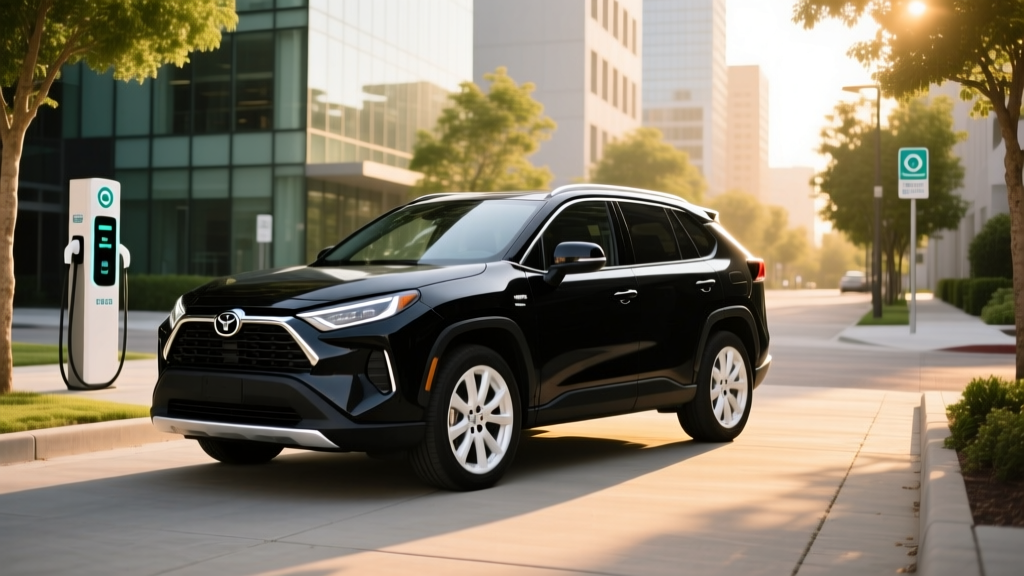
The Toyota RAV4 Hybrid in black (officially the "Midnight Black Metallic" paint option across most trims) remains one of the most practical hybrid SUVs on the market. For 2026, it delivers an EPA-estimated 41 MPG city / 38 MPG highway / 40 MPG combined in standard HEV form, with a combined 219 horsepower from its 2.5-liter four-cylinder engine and dual electric motors. Starting around $33,000 before destination, it undercuts most rival hybrid SUVs on price while offering standard all-wheel drive across all trims.
For buyers who can charge at home, the RAV4 Prime plug-in hybrid variant pushes the equation further: 42 miles of electric-only range, 94 MPGe combined, and 302 horsepower — but at a significant price premium starting near $45,000. This guide breaks down both powertrains, real-world efficiency, battery longevity, and whether the black RAV4 Hybrid earns its spot in your driveway.
HEV vs PHEV: Which RAV4 Hybrid Is Which?
Toyota sells two electrified RAV4 variants, and the distinction matters for your wallet and daily routine.
| Attribute | RAV4 Hybrid (HEV) | RAV4 Prime (PHEV) |
|---|---|---|
| Powertrain Type | Conventional hybrid — no plug | Plug-in hybrid — charges via outlet or station |
| Electric-Only Range | None (EV assist only at low speeds) | 42 miles (EPA est.) |
| Battery Size | ~1.6 kWh (NiMH) | 18.1 kWh (lithium-ion) |
| Combined Horsepower | 219 hp | 302 hp |
| EPA MPG (Combined) | 40 MPG | 38 MPG (gas) / 94 MPGe (gas + electric) |
| Plug-In Charging | No — regenerative braking only | Yes — Level 1 (120V) or Level 2 (240V) |
| DC Fast Charging | N/A | No DC fast charge capability |
| Starting MSRP (2026) | ~$33,000 | ~$45,000 |
| Federal Tax Credit (§30D) | Not eligible | Up to $7,500 (subject to eligibility rules) |
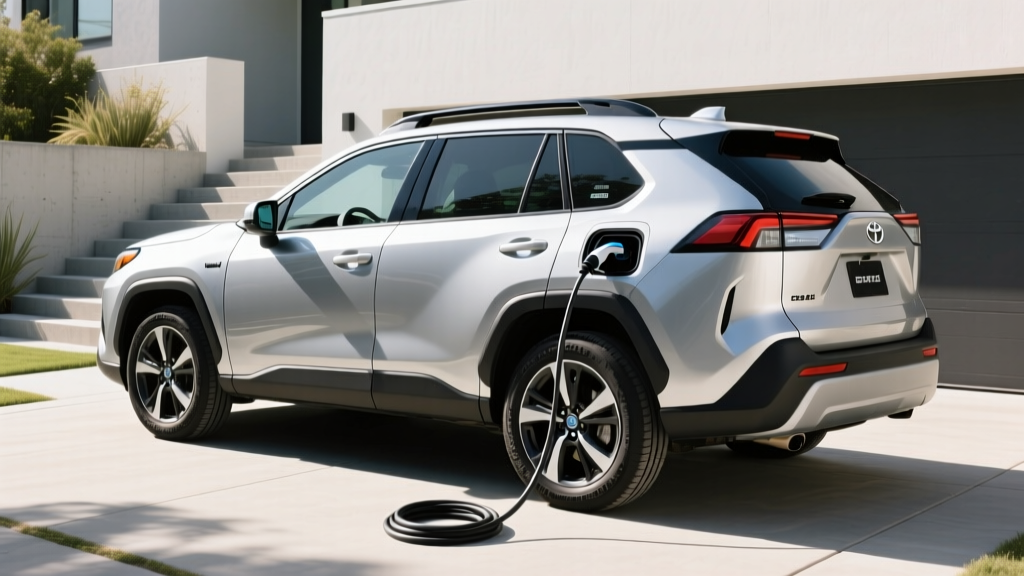
The conventional RAV4 Hybrid generates all its electricity internally through regenerative braking and engine-driven generation. You never plug it in — just fuel it like a gas car and it handles the rest. The RAV4 Prime has a much larger battery that you can charge externally, enabling genuine electric-only commuting before the gas engine engages.
Fuel Economy: EPA Numbers and Real-World MPG
According to fueleconomy.gov, the 2026 RAV4 Hybrid achieves:
| Driving Condition | EPA Estimate | Real-World Expectation |
|---|---|---|
| City | 41 MPG | 42–46 MPG (hybrids excel in stop-and-go) |
| Highway | 38 MPG | 34–37 MPG (aerodynamic drag at 70+ mph) |
| Combined | 40 MPG | 37–42 MPG depending on driving mix |
Hybrids like the RAV4 consistently beat their EPA city estimates in real-world driving because regenerative braking recaptures energy during frequent stops. Highway driving is where the advantage narrows — at sustained 75–80 mph speeds, the gasoline engine does most of the work, and aerodynamic drag reduces efficiency.
In cold weather (below 35°F), expect a 5–10% drop in fuel economy as the engine runs more frequently to provide cabin heat and maintain battery temperature. This is normal hybrid behavior, not a defect.
For the RAV4 Prime in hybrid mode (after the battery is depleted), EPA estimates drop to 38 MPG combined — still excellent, but slightly lower than the standard HEV due to the Prime's added battery weight (~350 lbs more).
Powertrain and Performance Specs
| Specification | RAV4 Hybrid (HEV) | RAV4 Prime (PHEV) |
|---|---|---|
| Engine | 2.5L 4-cyl Atkinson cycle | 2.5L 4-cyl Atkinson cycle |
| Engine Output | 176 hp / 163 lb-ft | 177 hp / 165 lb-ft |
| Front Electric Motor | 118 hp / 149 lb-ft | 174 hp / 199 lb-ft |
| Rear Electric Motor (AWD-i/eAWD) | 54 hp / 89 lb-ft | 40 hp / 89 lb-ft |
| Net Combined System HP | 219 hp | 302 hp |
| 0–60 mph | 7.4 seconds | 5.7 seconds |
| Drivetrain | Electronic AWD (AWD-i) | Electronic AWD (eAWD) |
| Transmission | eCVT | eCVT |
| Towing Capacity | 1,750 lbs | 2,500 lbs |
The RAV4 Prime's 302 combined horsepower makes it the quickest RAV4 Toyota sells — faster than the gas-only four-cylinder and competitive with V6 crossovers. The standard HEV's 219 hp provides adequate acceleration for merging and passing, with the electric motors delivering instant torque from a stop that makes it feel punchier than the horsepower number suggests.
RAV4 Prime: Electric-Only Range and Charging Details
The RAV4 Prime's 18.1 kWh lithium-ion battery pack delivers an EPA-estimated 42 miles of electric-only range — enough for most commutes without burning a drop of gasoline. Total combined range (electric + full gas tank) exceeds 600 miles.
Charging options are straightforward:
- Level 1 (120V household outlet): ~5.5 hours from empty to full using the included charging cord. Practical for overnight charging if your commute is under 40 miles.
- Level 2 (240V home charger): ~2.5 hours using a 32-amp Level 2 station. Ideal for topping up mid-day or for households with two EVs sharing a charger.
- DC Fast Charging: Not available. The RAV4 Prime uses a J1772 connector for AC charging only and does not support CCS or CHAdeMO DC fast charging.
The lack of DC fast charging is a deliberate engineering trade-off. Toyota sized the battery for daily commuting, not road-trip fast-charging. On longer trips, the Prime operates as a conventional hybrid after the battery depletes — and at 38 MPG, that's still highly efficient.
Pricing, Trims, and Tax Credit Eligibility
Midnight Black Metallic is available across the RAV4 Hybrid lineup at no additional charge on most trims. Here's the approximate 2026 MSRP breakdown:
| Trim (RAV4 Hybrid HEV) | Approximate MSRP |
|---|---|
| LE | $33,000 |
| XLE | $35,500 |
| XLE Premium | $37,800 |
| SE | $38,200 |
| Woodland Edition | $37,500 |
| Limited | $41,000 |
| Trim (RAV4 Prime PHEV) | Approximate MSRP |
|---|---|
| SE | $45,000 |
| XSE | $48,500 |
Federal Tax Credit: HEV vs PHEV
The conventional RAV4 Hybrid (HEV) does not qualify for the federal §30D clean vehicle tax credit — that credit applies only to plug-in vehicles with sufficient battery capacity. If you're buying the standard HEV, your purchase price is your purchase price (though some states offer hybrid rebates — check your local energy agency).
The RAV4 Prime (PHEV) may qualify for up to $7,500 under IRS §30D rules, but eligibility depends on several factors that change regularly:
- MSRP cap: SUVs must be under $80,000 — the Prime qualifies.
- Buyer income cap: Modified AGI must not exceed $150,000 (single) / $300,000 (joint).
- Battery sourcing: Critical minerals and battery components must meet phased-in domestic-content requirements. Verify current-year compliance on the IRS eligible vehicle list.
- Point-of-sale transfer: As of 2024, eligible buyers can transfer the credit to the dealer for an immediate price reduction at purchase.
Always confirm current eligibility with your tax professional and the IRS clean vehicle credit page before purchasing — sourcing rules tighten annually.
Battery Warranty, Reliability, and Replacement Cost
Hybrid Battery Warranty:
- RAV4 Hybrid (HEV): 10 years / 150,000 miles (whichever comes first) on the hybrid battery and all hybrid system components.
- RAV4 Prime (PHEV): 10 years / 150,000 miles on the traction battery and plug-in hybrid components.
Toyota's hybrid warranty is among the best in the industry, and the company has been building hybrid powertrains since the 1997 Prius. Real-world data from fleet operators and long-term owners shows Toyota hybrid batteries routinely lasting 150,000–200,000+ miles before significant capacity loss.
Battery Replacement Cost
If the hybrid battery does fail outside warranty:
- RAV4 Hybrid (HEV) NiMH battery: $2,500–$4,000 for a new OEM replacement, including labor. Refurbished units run $1,500–$2,500.
- RAV4 Prime (PHEV) lithium-ion battery: $6,000–$9,000 for a new OEM pack, reflecting the larger capacity and more complex chemistry.
For context, the HEV's smaller NiMH battery is one of the least expensive hybrid batteries to replace in the industry. The Prime's larger lithium-ion pack costs more but is protected by the same 10-year/150,000-mile warranty.
Overall Reliability
Toyota consistently ranks at or near the top in long-term reliability surveys from J.D. Power and Consumer Reports. The RAV4 Hybrid's powertrain is mechanically simpler than a conventional gas car's — the eCVT has no traditional gears or clutch packs to wear, and regenerative braking extends the life of friction brake pads (many owners report 80,000+ miles on original brake pads).
Who Should Choose the Black RAV4 Hybrid?
Reasons to Choose the RAV4 Hybrid (HEV)
- You want excellent fuel economy without changing any habits — no plugs, no apps, no charging planning
- Your budget is under $40,000 and you need AWD standard
- You drive a mix of city and highway with no predictable charging access
- You want Toyota's proven hybrid reliability track record
- You value strong resale value (RAV4 Hybrids hold value exceptionally well)
Reasons to Consider the RAV4 Prime (PHEV) Instead
- You have home charging and a commute under 42 miles — you may rarely use gasoline
- You want the quickest RAV4 (5.7-second 0–60) and 2,500-lb towing
- You qualify for the $7,500 federal tax credit, bringing effective price closer to the HEV Limited
- You want to drive electric daily but need gas flexibility for road trips
Choose the RAV4 Hybrid HEV if: You want a no-compromise, no-plug hybrid SUV under $40K with standard AWD and minimal ownership complexity. It's the right call for apartment dwellers, street parkers, and anyone without reliable home charging.
Choose the RAV4 Prime PHEV if: You can charge at home, your daily driving is under 40 miles, and you want electric commuting with a gas safety net. The tax credit can make the math work — but only if you qualify and the vehicle meets current sourcing requirements.
Choose a full EV (like the bZ4X or IONIQ 5) if: You have reliable home charging, your daily needs are under 250 miles, and you want zero tailpipe emissions with minimal maintenance. Full EVs eliminate oil changes, spark plugs, and transmission fluid entirely — but require charging infrastructure commitment.
Frequently Asked Questions
How many MPG does the black RAV4 Hybrid get?
The 2026 RAV4 Hybrid achieves an EPA-estimated 41 MPG city, 38 MPG highway, and 40 MPG combined. In real-world city driving, many owners report 42–46 MPG thanks to frequent regenerative braking. Highway-only driving at 75+ mph typically yields 34–37 MPG.
How far can the RAV4 Prime go on electric only?
The RAV4 Prime delivers an EPA-estimated 42 miles of electric-only range on a full charge. This covers most daily commutes without engaging the gasoline engine. After the battery depletes, it operates as a conventional hybrid at 38 MPG combined.
Does the RAV4 Hybrid need to be plugged in?
No. The standard RAV4 Hybrid (HEV) charges its battery entirely through regenerative braking and the gasoline engine. You never plug it in. Only the RAV4 Prime (PHEV) requires plugging in to access its electric-only range — if you don't plug in the Prime, it still works as a regular hybrid.
Is the RAV4 Hybrid battery reliable and what does replacement cost?
Toyota hybrid batteries are among the most reliable in the industry, routinely lasting 150,000–200,000+ miles. The battery is covered by a 10-year/150,000-mile warranty. Out-of-pocket replacement for the HEV's NiMH battery runs $2,500–$4,000; the Prime's lithium-ion pack costs $6,000–$9,000.
Does the RAV4 Hybrid qualify for a federal tax credit?
The standard RAV4 Hybrid (HEV) does not qualify for the §30D federal tax credit — it's a non-plug-in hybrid. The RAV4 Prime (PHEV) may qualify for up to $7,500, subject to buyer income limits, MSRP caps, and battery-sourcing requirements. Check the IRS clean vehicle credit page for current eligibility.
Is Midnight Black Metallic an extra-cost color?
On most 2026 RAV4 Hybrid trims, Midnight Black Metallic is included at no additional charge. Some two-tone roof combinations (e.g., black body with a contrasting roof) may carry a small premium of $200–$400. Verify with your dealer for specific trim availability.
Hybrid vs PHEV vs EV — which fits me?
Choose the HEV if you want fuel savings with zero lifestyle change. Choose the PHEV if you have home charging and a short commute but need gas flexibility for trips. Choose a full EV if you have reliable charging and want the lowest operating cost with zero tailpipe emissions — but accept that road trips require DC fast-charging planning.