The 2026 Lexus Hybrid Lineup at a Glance
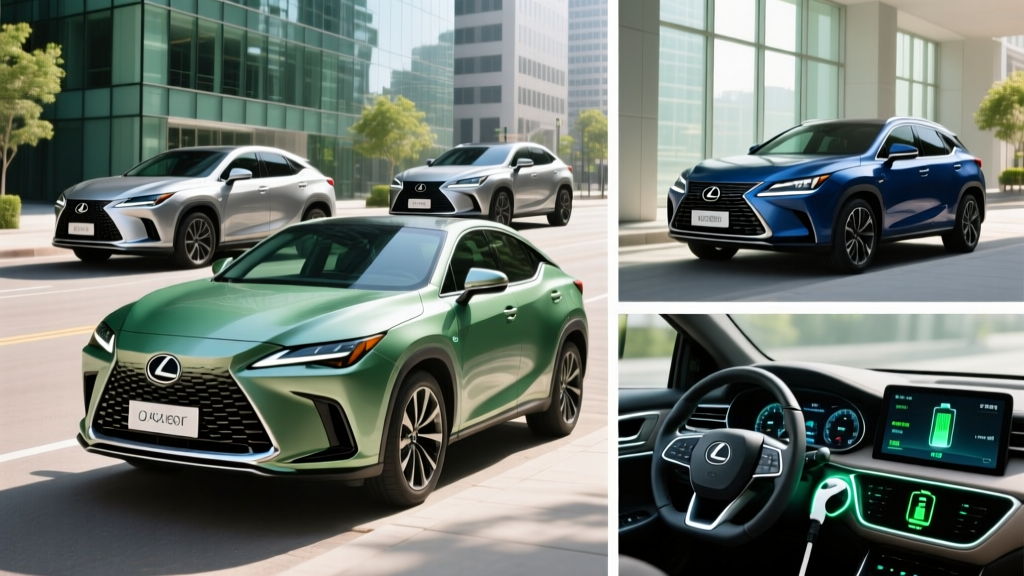
Lexus has gone all-in on hybridization. For the 2026 model year, every nameplate in the Lexus showroom offers at least one hybrid variant, and several models — like the RX and NX — are available as both a conventional hybrid (HEV) and a plug-in hybrid (PHEV). That breadth is both a strength and a source of confusion for buyers. This guide breaks down every current Lexus hybrid with exact EPA fuel economy, powertrain specs, battery warranty details, real-world ownership economics, and federal tax credit eligibility so you can pick the right one.
HEV vs PHEV — What's the Difference?
Conventional Hybrid (HEV): Uses a small battery (typically 1–2 kWh) charged by the gas engine and regenerative braking. You never plug it in. The electric motor assists the engine and enables brief electric-only driving at low speeds. Think of it as a gas car that sips fuel.
Plug-In Hybrid (PHEV): Carries a much larger battery (18–20+ kWh usable) that you charge from a wall outlet or public charger. It delivers 20–40 miles of true electric-only driving before the gas engine kicks in. After the battery depletes, it operates like a regular hybrid. Think of it as a short-range EV with a gas backup.
2026 Lexus Hybrid & PHEV Fuel Economy and Specs
The table below covers every 2026 Lexus hybrid model currently on sale, with EPA-rated fuel economy, powertrain output, battery capacity, and starting MSRP. All figures reflect the latest fueleconomy.gov data and Lexus specifications.
| Model | Type | EPA MPG (City/Hwy/Comb) | EV Range (mi) | Battery (kWh) | HP | Base MSRP |
|---|---|---|---|---|---|---|
| UX 300h | HEV | 43 / 41 / 42 | — | ~1.4 | 196 | $38,390 |
| NX 350h | HEV | 41 / 37 / 39 | — | ~1.6 | 244 | $44,515 |
| NX 450h+ | PHEV | 84 MPGe comb. | 37 | 18.1 usable | 304 | $57,315 |
| RX 350h | HEV | 37 / 34 / 36 | — | ~1.6 | 250 | $53,400 |
| RX 450h+ | PHEV | 83 MPGe comb. | 37 | 18.1 usable | 304 | $64,850 |
| TX 500h | HEV | 27 / 28 / 27 | — | ~1.6 | 371 | $65,800 |
| ES 300h | HEV | 43 / 44 / 44 | — | ~1.6 | 215 | $45,590 |
| LC 500h | HEV | 26 / 33 / 29 | — | ~1.1 | 354 | $102,150 |
| LS 500h | HEV | 22 / 29 / 25 | — | ~1.1 | 354 | $84,650 |
Sources: EPA fueleconomy.gov, Lexus USA specifications. MSRP excludes destination charges. PHEV MPGe measured with a full battery; once depleted, expect ~33–36 MPG combined on gas alone.
Real-World MPG: What Owners Actually See
EPA estimates are a useful baseline, but Lexus hybrids — like most Toyota/Lexus hybrid systems — tend to exceed their EPA city ratings in real-world stop-and-go driving. The hybrid system recovers braking energy aggressively, and the engine shuts off frequently at low speeds.
Here's what to expect based on owner-reported data and third-party testing:
- UX 300h (42 EPA combined): Owners regularly report 44–47 MPG in city-heavy commutes. Highway-only driving at 75+ mph drops to roughly 37–39 MPG.
- ES 300h (44 EPA combined): Real-world city driving often yields 46–49 MPG. This sedan is one of the most efficient vehicles in its class, period.
- NX 350h (39 EPA combined): Expect 40–43 MPG in mixed suburban driving; highway cruising at 70 mph nets around 35–37 MPG.
- RX 350h (36 EPA combined): The larger crossover sees 37–39 MPG in city driving but drops to 31–33 MPG on sustained highway trips, especially when loaded with passengers and cargo.
- NX 450h+ / RX 450h+ (PHEV, 37 mi EV range): The 37-mile EV range holds well in moderate temperatures (60–80°F). In cold weather (below 30°F), expect the electric-only range to drop to roughly 28–32 miles due to cabin heating demands and reduced battery efficiency. Once the battery is depleted, both PHEVs operate as conventional hybrids at approximately 33–36 MPG combined.
Lexus PHEV Charging: Speed, Connectors, and Home Setup
Only two Lexus models are plug-in hybrids for 2026: the NX 450h+ and the RX 450h+. Both share the same 18.1 kWh usable battery pack and charging hardware.
| Charging Level | Power | Time (0–100%) | Connector |
|---|---|---|---|
| Level 1 (120V household) | ~1.4 kW | ~14 hours | J1772 |
| Level 2 (240V home/public) | 3.3 kW (onboard max) | ~5.5 hours | J1772 |
| DC Fast Charging | Not supported | — | — |
Key takeaway: Neither Lexus PHEV supports DC fast charging. The onboard charger is limited to 3.3 kW, meaning a full charge on a 240V Level 2 home charger takes about 5.5 hours. If you plug in every night, that's fine — you'll wake up with a full 37 miles of EV range. But on a road trip, you cannot quickly top up the battery at a public DC fast charger. This is a deliberate design choice by Lexus/Toyota prioritizing cost and packaging over rapid-charge capability.
For home charging, a standard 240V/16A Level 2 wallbox (such as a ChargePoint Home Flex or Emporia Vue) costing $500–$700 for the unit plus $400–$1,200 for electrician installation is sufficient. No panel upgrade is typically needed since the 3.3 kW draw is modest — roughly equivalent to running a clothes dryer.
Powertrain Deep Dive: How Lexus Hybrids Work
Lexus uses Toyota's Hybrid System architecture across its lineup, with variations in engine displacement and motor count depending on the model.
HEV Models (UX 300h, NX 350h, RX 350h, ES 300h)
These pair a 2.5-liter inline-4 Atkinson-cycle engine with one or two electric motor-generators routed through an electronically controlled CVT (eCVT). The system seamlessly blends gas and electric power. The rear axle on AWD models (UX, NX, RX) gets its own independent electric motor — there's no mechanical driveshaft, which saves weight and improves packaging. Total system output ranges from 196 hp (UX 300h) to 250 hp (RX 350h).
PHEV Models (NX 450h+, RX 450h+)
These use the same 2.5L hybrid architecture but with a substantially larger 18.1 kWh (usable) lithium-ion battery mounted under the floor. The larger battery enables the 37-mile EV-only range and provides 304 total system horsepower — making the PHEVs the most powerful non-performance variants in their respective lineups. The eCVT manages four driving modes: EV-only, hybrid, auto (system decides), and a charge mode that uses the engine to replenish the battery.
Performance Hybrids (TX 500h, LC 500h, LS 500h)
The TX 500h uses a 2.4-liter turbocharged hybrid system producing 371 hp, paired with a traditional 6-speed automatic rather than an eCVT for more direct power delivery. The LC 500h and LS 500h use a 3.5-liter V6 with a Multi Stage Hybrid System that adds a 4-speed automatic gearbox behind the eCVT, simulating up to 10 "gears" for a more engaging driving feel at 354 total system horsepower.
Battery Warranty, Reliability, and Replacement Costs
Lexus Hybrid Battery Warranty
Coverage: 10 years / 150,000 miles (whichever comes first) on the hybrid battery and all hybrid system components, including the inverter, motor-generators, and eCVT.
Capacity threshold: Lexus warrants the battery against defects and abnormal capacity loss. There is no published minimum capacity retention percentage (unlike some EV warranties that guarantee 70% SoH). Warranty claims are evaluated case-by-case by Lexus dealers.
Transferability: The hybrid battery warranty transfers to subsequent owners, which supports resale value.
Toyota/Lexus hybrid batteries have an outstanding reliability track record. Data from long-term fleet studies and owner surveys show that the vast majority of Lexus hybrid batteries last well beyond the warranty period — commonly reaching 180,000–250,000 miles before any significant capacity loss. The HEV batteries are small (1–2 kWh) and operate in a shallow charge/discharge window (typically 40–80% state of charge), which dramatically reduces stress on the cells.
Battery replacement costs if out of warranty:
- HEV models (UX, NX 350h, RX 350h, ES 300h): $2,000–$4,000 for a new OEM battery pack. Refurbished/remanufactured units are available for $1,000–$2,000.
- PHEV models (NX 450h+, RX 450h+): $6,000–$9,000 for the larger 18.1 kWh pack. These are more expensive because they contain substantially more cells and energy capacity.
For context, the hybrid system's eCVT is far simpler and more durable than a conventional automatic transmission — there are no friction clutches, bands, or torque converters to wear out. This is a significant long-term ownership advantage that offsets the eventual battery replacement concern.
Federal Tax Credits: Do Lexus Hybrids Qualify?
This is where many buyers get confused, so let's be precise about the IRS §30D Clean Vehicle Credit rules as they apply to the 2026 model year:
- Conventional HEVs (UX 300h, NX 350h, RX 350h, ES 300h, TX 500h, LC 500h, LS 500h): Do NOT qualify for any federal tax credit. The §30D credit requires a minimum 7 kWh battery capacity and plug-in charging capability. Standard hybrids meet neither requirement.
- PHEV models (NX 450h+, RX 450h+): These have 18.1 kWh batteries and are technically eligible to be evaluated for the credit. However, as of 2026, the credit amount depends on critical mineral sourcing and battery component manufacturing requirements under the Inflation Reduction Act. Each PHEV can earn up to $3,750 for meeting critical-mineral thresholds and up to $3,750 for battery-component sourcing, for a maximum of $7,500. The actual credit amount varies by model year and supply-chain compliance — check the fueleconomy.gov tax credit lookup for the specific 2026 determination.
- Income caps: Modified adjusted gross income must not exceed $150,000 (single), $225,000 (head of household), or $300,000 (joint filing).
- MSRP caps: The NX 450h+ and RX 450h+ are classified as SUVs, so the MSRP cap is $80,000. Both base trims fall under this limit, but fully optioned RX 450h+ builds may approach or exceed it.
- Point-of-sale transfer: Eligible buyers can transfer the credit to the dealer at purchase, reducing the out-of-pocket price immediately rather than waiting for a tax refund.
State incentives: Several states offer additional rebates for PHEVs (typically $1,000–$2,500). Check your state's energy office or DMV for current programs. Conventional HEVs rarely qualify for state incentives.
Hybrid vs PHEV vs Full EV — Which Lexus Fits You?
Decision Framework
Choose a Lexus HEV (UX 300h, NX 350h, RX 350h, ES 300h) if:
- You cannot charge at home (apartment, street parking, no garage)
- You want maximum simplicity — no plugs, no charging apps, no behavior change
- Your annual mileage is moderate (8,000–15,000 miles) and fuel savings alone justify the hybrid premium
- You want proven, 20-year-old Toyota hybrid reliability with minimal maintenance
Choose a Lexus PHEV (NX 450h+, RX 450h+) if:
- You can install a Level 2 home charger and your daily commute is under 37 miles round-trip
- You want EV-like daily driving with the freedom to road-trip without charging stops
- You may qualify for the federal tax credit, narrowing the price gap with the HEV variant
- You want the most powerful version of the NX or RX without stepping up to a performance trim
Choose a full EV (like the Lexus RZ 450e) if:
- You have reliable home charging and your daily driving is under 200 miles
- You want zero tailpipe emissions, minimal maintenance, and the lowest cost-per-mile
- You're ready to plan around DC fast charging for longer road trips
- You want the full $7,500 federal tax credit (subject to eligibility)
2026 Lexus Hybrid Ownership Costs: 5-Year Estimate
To put real numbers behind the purchase decision, here's a simplified 5-year / 75,000-mile total cost of ownership comparison between the most popular Lexus hybrid models and their gas-only equivalents. Assumes $3.50/gallon regular fuel and $0.14/kWh electricity.
| Cost Factor | NX 350h (HEV) | NX 450h+ (PHEV) | NX 250 (Gas) |
|---|---|---|---|
| Purchase Price (base MSRP) | $44,515 | $57,315 | $40,515 |
| Est. Tax Credit | $0 | Up to $7,500 | $0 |
| Fuel Cost (5 yr / 75k mi) | ~$6,730 | ~$4,200 (gas + elec) | $10,500 |
| Maintenance (5 yr est.) | ~$2,800 | ~$2,600 | ~$3,500 |
| 5-Year Total (approx.) | $54,045 | $56,615 | $54,515 |
The NX 350h HEV nearly matches the gas NX 250 on 5-year cost while delivering dramatically better fuel economy. The NX 450h+ PHEV narrows its price premium significantly when the full tax credit applies — and offers the bonus of silent, electric daily commuting.
Pros and Cons of the 2026 Lexus Hybrid Lineup
✓ Pros
- Best-in-class fuel economy across nearly every segment (UX, ES, NX)
- 10-year / 150,000-mile hybrid battery warranty — among the longest in the industry
- Proven Toyota hybrid reliability with 20+ years of real-world data
- PHEV models offer genuine 37-mile EV range for daily commuting
- No range anxiety — HEVs need no behavior change whatsoever
- Strong resale value; Lexus hybrids hold premium over gas versions on the used market
- Quiet, refined driving experience with seamless gas-electric transitions
✗ Cons
- HEV models receive zero federal tax credit — the price premium is out-of-pocket
- PHEV models limited to 3.3 kW AC charging — no DC fast charging support
- PHEV price premium is steep: ~$12,800 more than the HEV NX 350h
- Real-world highway MPG drops noticeably for larger models (RX, TX)
- Performance hybrids (TX 500h, LS 500h) achieve modest fuel economy gains over gas versions
- eCVT can produce a "rubber-band" feel under hard acceleration — not sporty
- PHEV cargo space slightly reduced due to larger battery pack placement
Frequently Asked Questions
How many MPG does the most efficient Lexus hybrid get?
The 2026 Lexus ES 300h leads the lineup at an EPA-rated 44 MPG combined (43 city / 44 highway). The UX 300h follows closely at 42 MPG combined. In real-world city driving, both models routinely exceed their EPA ratings, with owners reporting 45–49 MPG in stop-and-go traffic.
How far can a Lexus PHEV go on electric power alone?
Both the NX 450h+ and RX 450h+ deliver an EPA-rated 37 miles of electric-only range on a full charge. In moderate temperatures with conservative driving, some owners report 38–40 miles. In cold weather (below 30°F), expect 28–32 miles. Once the battery is depleted, the vehicle continues as a conventional hybrid at approximately 33–36 MPG.
Does any Lexus hybrid qualify for a federal tax credit?
Only the PHEV models — the NX 450h+ and RX 450h+ — are potentially eligible for the IRS §30D Clean Vehicle Credit, which can be worth up to $7,500 depending on battery sourcing compliance, buyer income limits, and MSRP caps. Conventional HEVs (UX 300h, NX 350h, RX 350h, ES 300h, etc.) do not qualify because they lack plug-in capability and sufficient battery capacity. Always verify current eligibility on fueleconomy.gov and consult a tax professional.
Is a Lexus hybrid reliable, and what does battery replacement cost?
Lexus hybrids are among the most reliable vehicles on the road. The hybrid battery is warranted for 10 years / 150,000 miles, and real-world data shows most batteries last 180,000–250,000 miles. If replacement is needed out of warranty, expect $2,000–$4,000 for an HEV battery and $6,000–$9,000 for a PHEV battery. The eCVT transmission is simpler and more durable than a conventional automatic.
Do I need to plug in a Lexus hybrid?
No — unless you choose a PHEV. Conventional Lexus hybrids (any model ending in "h" but not "h+") charge their small battery through regenerative braking and the gas engine. You simply fill up with gas and drive. The PHEV models (NX 450h+ and RX 450h+) benefit greatly from nightly plug-in charging to maximize electric driving, but they still operate as regular hybrids if you forget to plug in.
Should I buy a Lexus hybrid or a full EV?
Choose a Lexus HEV if you lack home charging access or want zero lifestyle change. Choose a Lexus PHEV if you can charge at home, commute under 37 miles daily, but still want gas-engine freedom for road trips. Choose a full EV (like the Lexus RZ 450e) if you have home charging, want the lowest operating cost, and are comfortable planning DC fast-charge stops on long trips. The PHEV is the best "bridge" option for buyers not yet ready to commit to a full EV.