Quick Verdict: The Audi Q5 e-Hybrid SUV in 2026
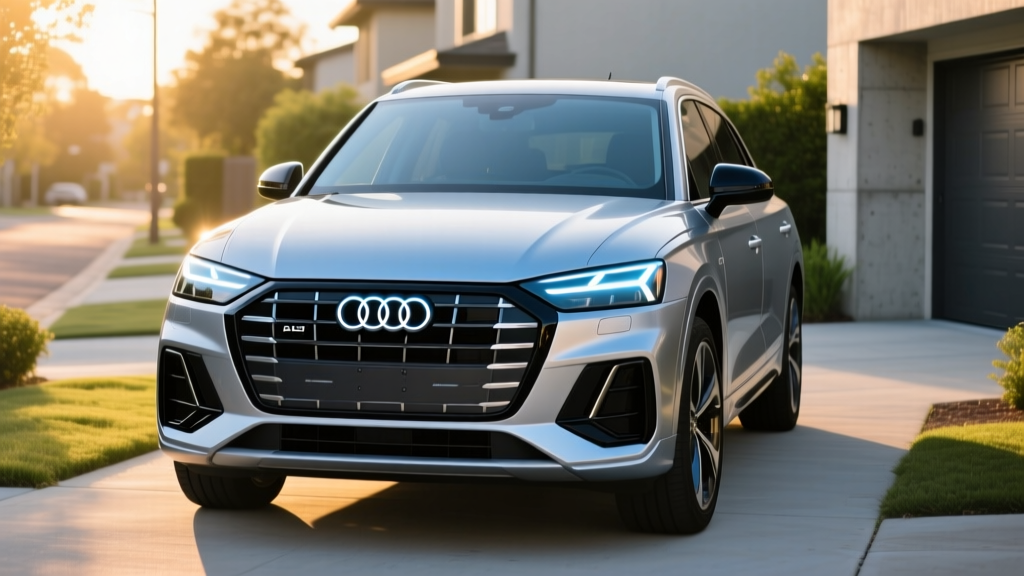
The 2026 Audi Q5 e-Hybrid SUV occupies a specific niche: luxury compact crossover buyers who want some electric-only driving for short commutes but aren't ready to commit to a full battery-electric vehicle. With a redesigned third-generation platform, a 25.9 kWh battery pack (17.9 kWh usable), and a combined 362 horsepower from its turbocharged 2.0-liter engine and electric motor, the Q5 e-Hybrid delivers genuine PHEV utility without sacrificing the premium cabin Audi is known for.
But at a starting MSRP of $58,995, the math only works if you can charge at home and keep most daily driving under 23 miles. This guide breaks down every number that matters — EPA range, real-world MPG, charging times, tax credit eligibility, and long-term battery costs — so you can decide whether the Q5 e-Hybrid fits your routine or whether a conventional hybrid or full EV makes more financial sense.
HEV vs PHEV: What the Audi Q5 e-Hybrid Actually Is
Before examining specs, it's worth clarifying the terminology, because the Q5 lineup now spans both hybrid types:
Conventional Hybrid (HEV)
The standard Audi Q5 Hybrid uses a small battery (typically under 2 kWh) and a mild-hybrid or full-hybrid system that recovers energy during braking. It never plugs in. The electric motor assists the gas engine but cannot propel the car on electricity alone for meaningful distances. Think of it as a more efficient gas car — no charging infrastructure needed, no electric-only range to manage.
Plug-In Hybrid (PHEV) — The Q5 e-Hybrid
The Audi Q5 e-Hybrid SUV carries a much larger battery (25.9 kWh total / 17.9 kWh usable) and a more powerful electric motor. It plugs into a wall outlet or Level 2 charger and can drive up to 23 miles on electricity alone before the gas engine engages. Once the battery depletes, it operates as a conventional hybrid. This is the model covered in this guide.
The distinction matters for ownership costs: a PHEV rewards you with near-zero fuel consumption on short commutes (if you charge regularly) but adds complexity, weight, and a higher purchase price compared to an HEV.
Powertrain, Horsepower, and Performance Specs
The 2026 Q5 e-Hybrid pairs a turbocharged 2.0-liter inline-four gasoline engine with an electric motor integrated into the seven-speed S tronic dual-clutch transmission. Here's the complete spec breakdown:
| Specification | 2026 Audi Q5 e-Hybrid |
|---|---|
| Gas Engine | 2.0L Turbocharged I4, 261 HP / 295 lb-ft |
| Electric Motor | 141 HP / 258 lb-ft |
| Combined System Output | 362 HP / 369 lb-ft |
| Transmission | 7-speed S tronic dual-clutch automatic |
| Drivetrain | quattro all-wheel drive |
| 0–60 mph | 5.0 seconds |
| Battery (Total / Usable) | 25.9 kWh / 17.9 kWh (NMC chemistry) |
| EPA Electric-Only Range | 23 miles |
| Total Combined Range | ~440 miles (electric + gas) |
| Cargo Volume (rear seats up) | 23.8 cu ft |
| Cargo Volume (rear seats folded) | 47.6 cu ft |
The 362 combined horsepower makes the Q5 e-Hybrid the quickest variant in the Q5 lineup, outpacing the mild-hybrid Q5 45 TFSI (261 HP) and the Q5 Hybrid (295 HP combined). The instant torque from the electric motor is especially noticeable in city acceleration and highway merging.
Fuel Economy: EPA MPG and MPGe Breakdown
The EPA rates the 2026 Audi Q5 e-Hybrid SUV in two ways: MPGe (miles-per-gallon-equivalent) when operating on a blend of electricity and gasoline, and conventional MPG when the battery is depleted and the car runs as a hybrid.
| Mode | City | Highway | Combined |
|---|---|---|---|
| Charge-Sustaining (Hybrid Mode) | 25 MPG | 27 MPG | 26 MPG |
| Charge-Depleting (Electric + Gas) | 61 MPGe combined | ||
MPGe explained: MPGe converts electricity consumption into a gasoline-equivalent figure so you can compare PHEVs and EVs to gas cars. The 61 MPGe figure applies when you start with a full charge and drive within the electric range. Once the battery depletes, the car reverts to 26 MPG combined.
Real-World MPG vs. EPA Estimates
PHEV real-world economy varies dramatically based on charging habits. If you plug in nightly and commute 15–20 miles round-trip, you may burn almost no gasoline for weeks. Owners who never charge and drive long highway routes will see closer to 24–26 MPG — the car is carrying 400+ pounds of battery and motor hardware that a conventional Q5 does not.
In cold weather (below 30°F), expect the electric-only range to drop by 15–25%, reducing it to roughly 17–19 miles. The cabin heater and battery thermal management draw from the pack. Highway driving at 70+ mph also shortens electric range to about 18–20 miles due to increased aerodynamic drag.
Source: EPA Fuel Economy — Audi Q5 e-Hybrid
Charging: How Long, What Connector, and Can It DC Fast Charge?
The 2026 Q5 e-Hybrid supports AC charging only — there is no DC fast charging capability. This is typical for luxury PHEVs in this class (the BMW X5 xDrive50e and Mercedes GLE 350e also lack DC fast charging).
| Charging Method | Power | Time (0–100%) | Connector |
|---|---|---|---|
| Level 1 (120V household outlet) | 1.4 kW | ~12.5 hours | |
| Level 2 (240V home/work charger) | 7.2 kW | ~2.5 hours | |
| DC Fast Charge | Not supported | ||
With a 7.2 kW onboard charger, a Level 2 home station refills the 17.9 kWh usable battery in about 2.5 hours. This is practical for overnight charging or topping up during the workday. A standard 120V outlet will fully recharge overnight if you arrive home with a partially depleted battery, but a dedicated Level 2 station (such as a ChargePoint Home Flex or Emporia Vue) is strongly recommended for daily PHEV use.
The Q5 e-Hybrid uses a J1772 connector for AC charging (the North American standard for non-Tesla plug-in vehicles). No NACS or CCS adapter is needed, as those standards primarily apply to DC fast charging.
Pricing, Trims, and Federal Tax Credit Eligibility
The 2026 Audi Q5 e-Hybrid is offered in three trims. Pricing includes the mandatory $1,195 destination charge:
| Trim | MSRP (incl. destination) |
|---|---|
| Premium | $58,995 |
| Premium Plus | $63,495 |
| Prestige | $68,295 |
Does the Q5 e-Hybrid Qualify for the Federal Tax Credit?
Under IRS §30D rules current for the 2026 tax year, the Audi Q5 e-Hybrid may qualify for up to $3,750 in federal tax credits, depending on battery component and critical mineral sourcing requirements. The full $7,500 credit requires meeting both the critical minerals threshold ($3,750) and the battery components threshold ($3,750). PHEVs must also meet the same minimum battery capacity requirement (at least 7 kWh — the Q5's 25.9 kWh pack clears this easily).
§30D eligibility checklist for the Q5 e-Hybrid:
- Vehicle MSRP must not exceed $80,000 for SUVs — all trims qualify
- Buyer modified AGI must not exceed $150,000 (single) / $300,000 (married filing jointly)
- Battery critical minerals and components must meet phased-in sourcing thresholds
- Credit may be transferred to the dealer as a point-of-sale discount
Critical mineral sourcing rules tighten annually. Audi's PHEV battery supply chain has historically met the critical minerals requirement but not always the battery components requirement, which is why the credit may be limited to $3,750 rather than $7,500. Always verify current eligibility on the IRS qualified vehicles list before purchasing, and consult a tax professional for your specific situation.
Additionally, many states offer separate PHEV incentives. California's CVRP program, Colorado's state credit, and various utility rebates may apply. Check your state energy office for current programs.
Battery Warranty, Reliability, and Replacement Costs
Audi Q5 e-Hybrid Battery Warranty
High-voltage battery: 8 years / 100,000 miles (whichever comes first), covering defects and capacity loss below 70% of original capacity.
Powertrain warranty: 4 years / 50,000 miles.
Limited vehicle warranty: 4 years / 50,000 miles.
Is the Q5 e-Hybrid Reliable?
Audi's PHEV powertrain is now in its second generation, and the 2.0L TFSI engine has a long production history. The primary reliability concerns for PHEV owners center on the added complexity: two power sources, an onboard charger, a high-voltage cooling system, and power electronics that a conventional Q5 does not have.
Historical data from the previous-generation Q5 55 TFSI e (2020–2024) showed average reliability ratings from owner surveys. The most common reported issues involved software glitches in the hybrid energy management system and occasional 12V auxiliary battery drain — not the high-voltage traction battery itself. NMC (nickel manganese cobalt) battery chemistry in Audi PHEVs has shown degradation rates of approximately 8–12% over the first 5 years / 60,000 miles based on fleet data, which is within the warranty threshold.
Battery Replacement Cost
If the high-voltage battery requires replacement outside of warranty, expect a cost between $12,000 and $16,000 including parts and labor at an Audi dealership. This figure has decreased from earlier estimates as NMC cell pricing has declined. However, complete battery failure before 100,000 miles is rare — most degradation is gradual capacity loss, not catastrophic failure.
Source: Audi USA — 2026 Q5 e-Hybrid Specifications
Q5 e-Hybrid vs. Full EV vs. Gas Q5: Which Should You Choose?
Choose the Q5 e-Hybrid (PHEV) If:
- Your daily round-trip commute is under 25 miles and you can charge at home nightly
- You take regular road trips and don't want to plan around charging stations
- You want 362 HP of performance without a six-figure price tag
- You live in an area with limited DC fast-charging infrastructure
- You want to reduce fuel consumption without full EV commitment
Choose a Full EV (Audi Q8 e-tron) If:
- You have reliable home Level 2 charging and drive under 250 miles daily
- You want to eliminate gasoline entirely and minimize maintenance
- You qualify for the full $7,500 federal tax credit on eligible EVs
- You prioritize lower per-mile energy costs (electricity at ~$0.13/kWh vs. gas at $3.50/gal)
Choose the Gas Q5 45 TFSI If:
- You cannot charge at home (apartment, street parking, no garage outlet)
- Your budget is closer to $45,000–$50,000
- You primarily drive long highway routes where PHEV electric range is irrelevant
- You want simpler long-term maintenance without high-voltage system concerns
5-Year Total Cost of Ownership Comparison
Assuming 15,000 miles/year, $3.50/gallon gas, $0.13/kWh electricity, and the PHEV owner charging 80% of days:
| Cost Category | Q5 45 TFSI (Gas) | Q5 e-Hybrid (PHEV) | Q8 e-tron (EV) |
|---|---|---|---|
| Purchase Price (base) | $46,695 | $58,995 | $74,400 |
| Federal Tax Credit | $0 | Up to $3,750 | Up to $7,500 |
| Fuel/Energy (5 yr) | $10,500 | $5,200 | $3,900 |
| Maintenance (5 yr) | $3,800 | $3,400 | $2,100 |
| Estimated 5-Yr Depreciation | $21,000 | $28,000 | $32,000 |
| Approx. 5-Yr Total | $82,000 | $93,300 | $109,900 |
The PHEV saves roughly $5,300 in fuel over 5 years compared to the gas Q5, but the $12,300 higher purchase price (net of credit) means the gas model still wins on pure economics unless you value the electric driving experience, performance boost, and environmental benefit.
Frequently Asked Questions
How many MPG does the Audi Q5 e-Hybrid get?
The EPA rates the 2026 Q5 e-Hybrid at 25 city / 27 highway / 26 combined MPG when operating in charge-sustaining (hybrid) mode. When starting with a full battery and driving within the electric range, the combined rating is 61 MPGe. Real-world results depend heavily on how often you charge — diligent plug-in users may average well over 50 MPGe on short commutes, while those who never charge will see 24–26 MPG.
How far can the Q5 e-Hybrid go on electric only?
The EPA-estimated electric-only range is 23 miles. In real-world conditions, expect 18–20 miles at highway speeds or in cold weather (below 30°F), and up to 23–25 miles in mild weather at city speeds with light acceleration. The 17.9 kWh usable battery capacity and the vehicle's ~4,800-lb curb weight limit how far the electric motor can carry it alone.
Does the Audi Q5 e-Hybrid qualify for a tax credit?
Under current 2026 IRS §30D rules, the Q5 e-Hybrid may qualify for up to $3,750 in federal tax credits (meeting the critical minerals requirement but potentially not the battery components requirement). Eligibility depends on your income (under $300,000 MFJ / $150,000 single), the vehicle's MSRP (under $80,000 — all trims qualify), and current battery sourcing certifications. The credit can be transferred to the dealer at point of sale as a purchase discount. Always verify on the IRS qualified vehicles list before buying.
Is the Q5 e-Hybrid reliable, and what does a battery replacement cost?
The high-voltage battery is warrantied for 8 years / 100,000 miles against defects and capacity loss below 70%. NMC chemistry in Audi PHEVs has shown 8–12% degradation over 5 years, which is normal and within warranty thresholds. A full battery replacement outside of warranty costs approximately $12,000–$16,000. The overall powertrain adds complexity compared to a gas-only Q5, but catastrophic failures before 100,000 miles are uncommon.
Can I charge the Q5 e-Hybrid at a DC fast charger?
No. The 2026 Audi Q5 e-Hybrid only supports AC charging (Level 1 at 1.4 kW and Level 2 at 7.2 kW) via a J1772 connector. DC fast charging (CCS or NACS) is not available. A full charge on a Level 2 home station takes approximately 2.5 hours.
Should I buy the Q5 e-Hybrid or wait for a full electric Audi SUV?
If you have home charging, drive under 250 miles daily, and want to eliminate gasoline, Audi's Q8 e-tron (EPA range up to 285 miles) or the upcoming Q6 e-tron are stronger long-term EV plays. The Q5 e-Hybrid makes the most sense for buyers who regularly exceed 200+ miles in a day, frequently road-trip to areas with sparse charging, or want to dip into electrified driving without full commitment. It's a bridge vehicle — excellent at what it does, but a compromise by design.