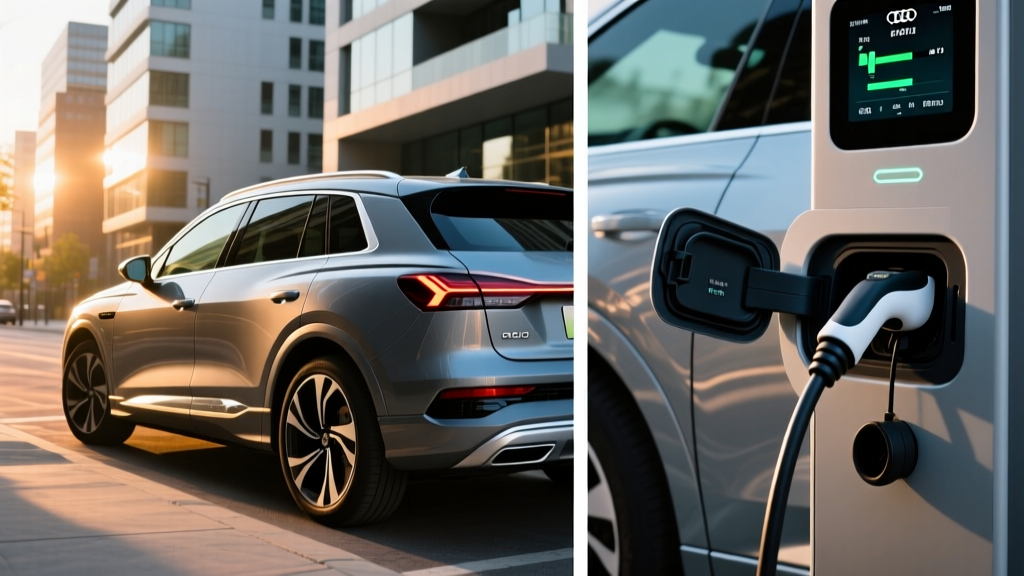
The Audi Q5 has long been a benchmark compact luxury SUV, but the Audi Q5 e hybrid — officially the Q5 TFSI e — adds a plug-in powertrain that lets owners commute on electricity while retaining gas-engine flexibility for road trips. For 2026, Audi continues to refine this PHEV formula with updated infotainment and a slightly larger battery pack. This guide breaks down the real numbers: EPA efficiency, electric-only range, charging logistics, federal tax credit eligibility under current IRS §30D rules, and whether the Q5 PHEV actually saves you money versus a pure EV or a conventional hybrid.
HEV vs PHEV: What the Q5 e Hybrid Actually Is
Before diving into specs, it's worth clarifying terminology because confusion here costs buyers money. The Audi Q5 e is a plug-in hybrid electric vehicle (PHEV), not a conventional hybrid (HEV) like a Toyota RAV4 Hybrid.
| Feature | Conventional Hybrid (HEV) | Plug-in Hybrid (PHEV) — Q5 e | Battery Electric (BEV) |
|---|---|---|---|
| Plugs in to charge? | No — self-charging via regen | Yes — Level 1/Level 2 | Yes — Level 1/2/DC fast |
| Electric-only range | 0–2 miles at low speed | ~25 miles (EPA est.) | 200–400+ miles |
| Battery size | 1–2 kWh | 17.9 kWh (usable) | 60–100+ kWh |
| Gas engine? | Yes (primary) | Yes (backup + combined) | No |
| Federal tax credit | None (typically) | Up to $3,750 (§30D) | Up to $7,500 (§30D) |
The Q5 e's 17.9 kWh usable battery (from a ~19.3 kWh gross pack) enables roughly 25 miles of zero-emission driving — enough for most daily commutes. When the battery depletes, the 2.0-liter turbocharged four-cylinder engine seamlessly takes over, and the SUV operates as a conventional hybrid. You never need to plug it in to drive, but you lose the efficiency and cost benefits if you don't.
Powertrain and Performance Specs
The 2026 Q5 TFSI e pairs a 261-hp 2.0L turbocharged inline-four with a 141-hp electric motor integrated into the seven-speed S tronic dual-clutch transmission. Combined system output reaches 362 horsepower and 369 lb-ft of torque, with Audi's quattro all-wheel drive standard.
| Specification | 2026 Audi Q5 TFSI e (PHEV) |
|---|---|
| Engine | 2.0L turbo I4 (261 hp / 273 lb-ft) |
| Electric Motor | 141 hp / 258 lb-ft (integrated) |
| Combined Output | 362 hp / 369 lb-ft |
| Transmission | 7-speed S tronic dual-clutch |
| Drivetrain | quattro AWD |
| Battery (gross / usable) | 19.3 kWh / 17.9 kWh (NMC) |
| EPA Electric Range | ~25 miles |
| Total Combined Range | ~410 miles (gas + electric) |
| 0–60 mph | 5.0 seconds |
| Towing Capacity | 4,400 lbs (braked) |
That 0–60 time puts the Q5 e ahead of most four-cylinder luxury competitors and gives it genuine passing punch on the highway. The electric motor's instant torque fills in the low-end lag typical of turbocharged engines, making around-town acceleration feel effortless.
Fuel Economy: EPA Ratings vs Real-World MPG
PHEV fuel economy is expressed two ways: MPGe when operating on electricity, and conventional MPG when the battery is depleted and the gas engine takes over.
| Metric | City | Highway | Combined |
|---|---|---|---|
| MPGe (charge-sustaining + electric) | — | — | 64 MPGe (EPA est.) |
| MPG (battery depleted, gas only) | 27 | 31 | 28 MPG (EPA est.) |
The EPA's fueleconomy.gov listing confirms the combined 64 MPGe figure, but that number assumes you start each trip with a full battery and drive within the electric range. In practice:
- Commuters who charge daily and stay under 25 miles: You may use almost no gasoline for weeks. Real-world MPGe can exceed 80+ in mild weather.
- Road trips (battery depleted after 25 mi): Expect 26–28 MPG combined at highway speeds. This is respectable for a 4,700-lb luxury AWD SUV but not class-leading — a conventional Q5 45 TFSI returns about 25 MPG combined.
- Cold weather impact: Battery capacity drops roughly 15–25% in sub-freezing temperatures, reducing electric range to 18–21 miles. The engine also runs more frequently to provide cabin heat unless you precondition while plugged in.
Charging: What It Takes to Keep the Battery Full
The Q5 e uses a J1772 connector for AC charging (Level 1 and Level 2). It does not support DC fast charging — a common limitation among PHEVs with smaller batteries.
| Charging Level | Power (kW) | Time to Full (0–100%) | Miles of Range per Hour |
|---|---|---|---|
| Level 1 (120V household outlet) | ~1.4 kW | ~13 hours | ~3 miles/hr |
| Level 2 (240V, 40A circuit) | ~7.7 kW (vehicle limited) | ~2.5 hours | ~14 miles/hr |
| DC Fast Charge | Not supported | ||
With a Level 2 home charger — which most PHEV buyers should install — a full charge takes about 2.5 hours. This means you can easily top off during the workday if you have access to a workplace charger, or fully recharge overnight on a standard 240V circuit.
Level 2 installation costs typically range from $500 to $2,000 depending on your electrical panel's capacity and the distance from the panel to your parking spot. A dedicated 40-amp circuit with a NEMA 14-50 outlet is the most cost-effective approach; hardwired wall connectors add $100–$200 in equipment cost. Always consult a licensed electrician for your specific setup.
Pricing, Trims, and Federal Tax Credit Eligibility
The 2026 Audi Q5 TFSI e starts at approximately $58,995 MSRP (Premium trim, including destination). Higher trims include:
- Premium Plus: ~$63,500
- Prestige: ~$68,200
These prices place the Q5 e roughly $6,000–$8,000 above the equivalent conventional Q5 45 TFSI, a premium you'll need to recoup through fuel savings and incentives.
- Maximum credit: Up to $3,750 (not the full $7,500 — PHEVs with smaller batteries receive a reduced credit based on battery capacity)
- Battery sourcing requirement: Must meet critical-mineral and battery-component thresholds per current IRS §30D rules — check the IRS eligible-vehicle list at time of purchase
- Buyer income caps: AGI ≤ $150,000 (single) / $300,000 (joint filing)
- MSRP cap: SUVs capped at $80,000 — all Q5 e trims qualify
- Point-of-sale transfer: Eligible buyers can transfer the credit to the dealer at purchase for an immediate price reduction
Rules are subject to change. Consult a tax professional and verify current eligibility on IRS.gov before purchasing.
After a potential $3,750 federal credit, the effective starting price drops to roughly $55,245. Some states offer additional PHEV rebates (California's CVRP, for example, has historically offered up to $1,500 for PHEVs, though funding varies). Check your state energy office for current programs.
Battery Warranty, Reliability, and Replacement Cost
Audi covers the Q5 e's high-voltage battery with an 8-year / 100,000-mile warranty (whichever comes first), guaranteeing the battery will retain at least 70% of its original capacity. This is standard across the luxury PHEV segment and aligns with the federal mandate for hybrid battery coverage.
On reliability, the Q5 platform has a solid track record, and the PHEV powertrain has been in production since 2020 with iterative improvements. Common owner-reported issues are minor — mostly related to infotainment software glitches rather than powertrain failures. The electric motor itself has far fewer moving parts than the engine and is generally maintenance-free.
The conventional hybrid components (engine, transmission, standard 12V battery) follow Audi's standard 4-year/50,000-mile new-vehicle warranty. Scheduled maintenance is required at 10,000-mile intervals and is comparable to the gas-only Q5.
Q5 PHEV vs Full EV vs Conventional Hybrid: Which Fits You?
- Your daily commute is under 30 miles round-trip and you can charge at home
- You take road trips of 200+ miles several times per year and don't want to plan around charging stops
- You want electric commuting without fully committing to a BEV
- You live in an area with sparse DC fast-charging infrastructure
- You have reliable home Level 2 charging and your daily driving is under 250 miles
- You want zero tailpipe emissions and minimal maintenance (no oil changes, no gas engine)
- You qualify for the full $7,500 federal tax credit
- You want the lowest per-mile "fuel" cost (electricity is typically $0.04–$0.06/mile vs. $0.12–$0.18/mile for gas)
- You cannot charge at home (apartment, street parking, no garage)
- You want better fuel economy without any behavioral change
- You want a lower purchase price and don't need electric-only driving
Pros and Cons at a Glance
- 25 miles of electric range covers most daily commutes
- 362 hp provides strong acceleration (5.0 sec 0–60)
- quattro AWD standard — confident in snow and rain
- No range anxiety on road trips — gas backup always available
- Premium interior quality and quiet cabin
- Eligible for partial §30D federal tax credit
- No DC fast charging — limits public charging utility
- 28 MPG gas-only is only marginally better than the conventional Q5
- $6,000–$8,000 premium over the gas Q5 requires years to recoup
- Cargo space reduced by ~3 cu ft due to battery placement
- Electric range drops significantly in cold weather
- Smaller tax credit than a full BEV ($3,750 vs. $7,500)
Frequently Asked Questions
How many MPG does the Audi Q5 e hybrid get?
The EPA rates the 2026 Q5 TFSI e at 64 MPGe combined when using both electric and gas power. Once the battery is depleted, it achieves 28 MPG combined (27 city / 31 highway) on gasoline alone. Real-world results vary significantly based on how often you charge and your driving mix.
How far can the Audi Q5 e go on electric only?
The EPA estimates approximately 25 miles of electric-only range. In real-world conditions — especially highway driving at 70+ mph or in cold weather — expect 18–22 miles. Around town in mild weather with moderate speeds, you may achieve the full 25 miles or slightly more.
Does the Audi Q5 e hybrid qualify for a tax credit?
Yes, potentially. Under current IRS §30D rules, the Q5 TFSI e may qualify for up to $3,750 in federal tax credit, subject to battery sourcing requirements, buyer income caps ($150K single / $300K joint), and the $80,000 SUV MSRP cap. The credit can be transferred to the dealer at point of sale. Always verify eligibility on IRS.gov before purchasing.
Is the Audi Q5 hybrid reliable, and what does battery replacement cost?
The Q5 PHEV powertrain has been in production since 2020 with generally positive reliability feedback. Audi covers the high-voltage battery for 8 years / 100,000 miles at 70% capacity retention. Out-of-warranty replacement costs approximately $8,000–$12,000. Most PHEV batteries outlast 150,000 miles before meaningful degradation.
Can I charge the Q5 e at a public DC fast charger?
No. The Q5 TFSI e only supports AC charging (Level 1 at 120V and Level 2 at 240V via J1772). It does not have a DC fast-charge port. This is standard for most PHEVs — the smaller battery doesn't justify the cost and weight of DC fast-charge hardware. Plan to charge primarily at home or at Level 2 workplace chargers.
How does the Q5 e compare to the Audi Q8 e-tron (full EV)?
The Q8 e-tron offers 285+ miles of EPA range, DC fast charging up to 170 kW, and qualifies for the full $7,500 federal credit — but starts around $75,000 and requires commitment to electric-only driving. The Q5 e is the pragmatic middle ground: lower price, gas-engine flexibility, but shorter electric range and no DC fast charging.
Sources: EPA fueleconomy.gov, IRS §30D Clean Vehicle Credits, Audi USA official specifications.