Short Answer: Yes, Every Toyota Prius Is a Hybrid
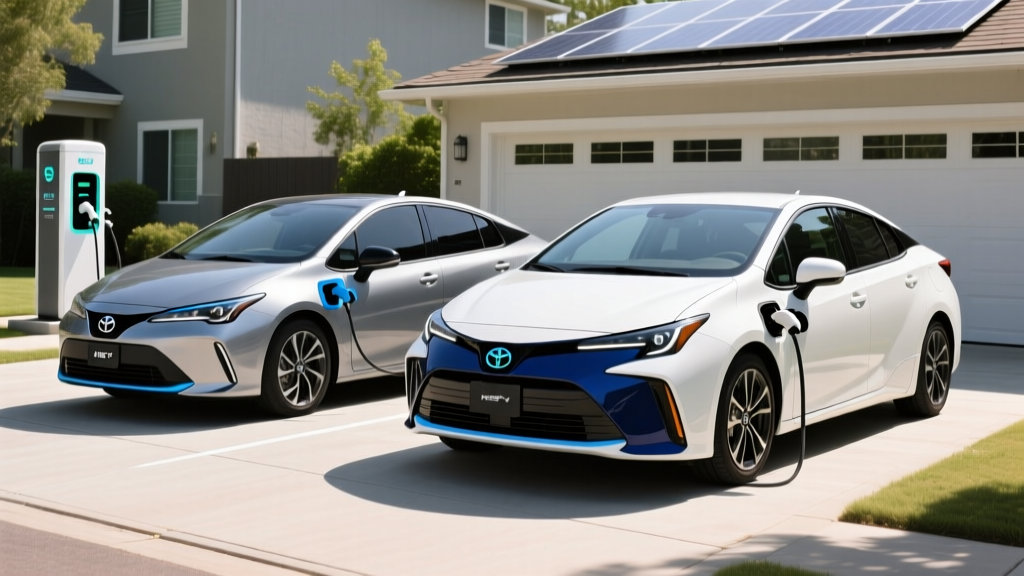
If you're asking "are all Priuses hybrids," the answer is an unambiguous yes. Since its debut as the world's first mass-produced hybrid in 1997, every single Toyota Prius has shipped with a hybrid powertrain. There has never been a gas-only Prius. However, the 2026 Toyota Prius lineup now splits into two very different hybrid flavors: the conventional Toyota Prius Hybrid (HEV) and the Toyota Prius Prime (PHEV), a plug-in hybrid you can charge from a wall outlet. Understanding the difference between these two is the single most important thing to get right before you buy, because the ownership experience, fuel cost, and tax-credit eligibility diverge sharply.
HEV vs PHEV: What's Actually Different?
Conventional Hybrid (HEV) — Toyota Prius: A small battery (1.36 kWh lithium-ion) is recharged entirely by the gas engine and regenerative braking. You never plug it in. It operates like a normal gas car that happens to be extraordinarily efficient, especially in stop-and-go city driving.
Plug-in Hybrid (PHEV) — Toyota Prius Prime: A much larger battery (13.6 kWh lithium-ion) can be charged from a wall outlet or public charger, giving you roughly 44 miles of pure electric driving before the gas engine kicks in. Once that electric range is used, it operates exactly like a conventional hybrid.
2026 Toyota Prius (HEV): Fuel Economy and Powertrain Specs
The standard 2026 Prius carries over the fifth-generation platform introduced in 2023 with a striking redesign that finally killed the "slow, boring appliance" reputation. Here's what the EPA says about fuel economy:
| Trim / Drivetrain | City MPG | Highway MPG | Combined MPG |
|---|---|---|---|
| LE (FWD) | 57 | 56 | 57 |
| XLE / Limited (FWD) | 52 | 52 | 52 |
| LE / XLE (AWD-e) | 53 | 54 | 54 |
Source: fueleconomy.gov
Real-world MPG vs EPA: Toyota hybrids consistently meet or exceed their EPA ratings in real-world city driving because regenerative braking recovers energy that gas-only cars waste as heat. On a mixed suburban commute, owners regularly report 55-62 MPG in the LE trim. Highway-only driving at 75+ mph, however, tends to drop below the EPA sticker — expect 48-52 MPG on long road trips. Cold weather (below 30°F) will knock 3-5 MPG off for the first 10-15 minutes of each trip as the engine runs to warm the cabin and catalytic converter.
Powertrain Details
The fifth-gen Prius pairs a 2.0-liter four-cylinder Dynamic Force engine with one or two electric motors (FWD gets a front motor; AWD-e adds a rear motor). Combined system output is 196 horsepower on FWD models and 199 hp on AWD-e. That's enough for a 0-60 mph time of about 7.0 seconds — roughly 3 seconds quicker than the outgoing generation and genuinely quick for a 57-MPG car. The AWD-e system uses an independent rear motor for traction in rain and snow, not a mechanical driveshaft.
2026 Toyota Prius Prime (PHEV): Electric Range, MPGe, and Charging
The Prius Prime is where things get interesting for EV-curious buyers who aren't ready to commit to a full battery-electric vehicle. Here's the full spec breakdown:
| Battery capacity (usable) | 13.6 kWh lithium-ion |
| EPA electric-only range | 44 miles (SE trim), 40 miles (XSE / XSE Premium) |
| EPA MPGe (electric + gas) | 127 MPGe (SE), 114 MPGe (XSE) |
| MPG after battery depleted | 52 city / 50 highway / 51 combined (SE) |
| Total combined range | ~510 miles (electric + 10.6-gal tank) |
| Combined system horsepower | 220 hp |
| 0-60 mph | 6.6 seconds |
| Level 1 charging (120V) | ~11 hours to full |
| Level 2 charging (240V, 3.5 kW) | ~4 hours to full |
| DC fast charging | Not supported |
Source: fueleconomy.gov, Toyota Motor Corporation
Electric range reality check: The EPA's 44-mile figure assumes moderate temperatures and mixed driving. In summer with A/C, expect 38-42 miles. In freezing weather with cabin heat, that can drop to 30-35 miles because the Prime uses a resistive PTC heater that pulls heavily from the traction battery. Highway driving at 70+ mph also cuts electric range by 15-20% compared to city use. If your round-trip commute is under 35 miles and you have Level 2 charging at home, you may go weeks without buying gas.
Charging note: The Prius Prime does not support DC fast charging. Its onboard charger tops out at 3.5 kW on Level 2. This is fine for overnight home charging (4 hours is plenty) but means public charging stops aren't practical — you're better off just driving on gas. This is a deliberate tradeoff: Toyota kept the charge port simple and the vehicle cost down.
HEV vs PHEV vs Full EV: Which Prius Fits Your Life?
Choosing between the standard Prius, the Prius Prime, and a full battery-electric vehicle (BEV) like a Tesla Model 3 or Hyundai Ioniq 6 comes down to three questions: Can you charge at home? How far is your commute? And how often do you road-trip?
Choose the Prius HEV if:
- You cannot install a home charger (apartment, street parking, no garage)
- Your daily driving exceeds 80 miles and you don't want to think about plugging in
- You want the lowest purchase price ($28,350 base) and simplest ownership
- You drive a lot of highway miles where the HEV's 57 MPG still shines
Choose the Prius Prime (PHEV) if:
- You have access to Level 2 charging at home or work
- Your daily round-trip commute is under 40 miles (you'll rarely use gas)
- You want EV-like daily driving with zero range anxiety on road trips
- You qualify for the federal §30D tax credit (see below — up to $3,750)
Choose a full EV (BEV) if:
- You can charge at home and your typical trip is under 250 miles
- You want zero tailpipe emissions and the lowest per-mile fuel cost
- You want to qualify for the full $7,500 federal tax credit on eligible models
- You don't mind planning longer road trips around DC fast-charging stops
Pricing, Trims, and Federal Tax Credit Eligibility
| Model / Trim | MSRP (incl. destination) |
|---|---|
| Prius LE (FWD) | $28,350 |
| Prius XLE (FWD) | $31,695 |
| Prius Limited (FWD) | $35,565 |
| Prius Prime SE | $33,445 |
| Prius Prime XSE | $36,695 |
| Prius Prime XSE Premium | $40,165 |
Does the Prius Qualify for a Federal Tax Credit?
Here's where the HEV/PHEV distinction matters enormously for your wallet:
- Prius HEV (conventional hybrid): Does NOT qualify for the federal §30D clean vehicle credit. That credit is reserved for plug-in vehicles (PHEVs and BEVs) with batteries of at least 7 kWh. The Prius HEV's 1.36 kWh pack is far too small.
- Prius Prime (PHEV): Qualifies for up to $3,750 under current IRS §30D rules. The Prime's 13.6 kWh battery meets the capacity threshold, and the vehicle is assembled in Japan, which satisfies the final-assembly requirement. However, the full $7,500 credit requires meeting both critical-mineral and battery-component sourcing thresholds that the Prime currently only partially satisfies, hence the $3,750 figure. Income caps apply ($150,000 single / $300,000 joint modified AGI), and the buyer's MSRP cap for sedans is $55,000 — all Prime trims clear that. The credit can now be transferred to the dealer at point of sale as an instant discount. Verify current rules at IRS.gov before purchasing, as sourcing requirements tighten annually.
§30D Credit Checklist — Prius Prime
- ✓ Battery capacity ≥ 7 kWh (Prime has 13.6 kWh)
- ✓ Final assembly in a qualifying location (Japan)
- ✓ MSRP under $55,000 sedan cap (all trims qualify)
- ⚠ Critical minerals sourcing — partial ($3,750, not full $7,500)
- ⚠ Buyer income limits: $150K single / $300K joint MAGI
- ✓ Point-of-sale transfer available at participating dealers
Battery Reliability, Warranty, and Replacement Cost
Hybrid battery longevity is the number-one concern we hear from prospective Prius buyers, and it's where Toyota's track record is genuinely exceptional.
Toyota Hybrid Battery Warranty (2026 Models)
- Coverage: 10 years / 150,000 miles (whichever comes first)
- Applies to: Both Prius HEV and Prius Prime traction batteries
- What's covered: Battery failure or capacity loss below a defined threshold
- Transferable: Yes, to subsequent owners
Real-world longevity: Toyota's hybrid battery packs are among the most durable in the industry. The current-generation lithium-ion packs are designed for a 15-20 year service life under normal use. Data from fleet operators and high-mileage owners shows that fifth-generation Prius batteries are holding up extremely well, with most retaining 90%+ capacity after 100,000 miles. Toyota uses a relatively conservative state-of-charge window (never fully charging or fully depleting the pack), which dramatically extends cycle life.
Replacement cost if out of warranty: A new OEM hybrid battery for the Prius HEV runs approximately $2,500-$3,500 including labor at a Toyota dealer. The Prius Prime's larger pack is more expensive — roughly $4,500-$6,500 installed. Independent hybrid shops and refurbished packs can cut these figures by 30-40%. For context, a single battery replacement over 200,000 miles of ownership still costs far less than the cumulative fuel savings the hybrid system provides over a comparable gas-only car.
Pros, Cons, and the Verdict
Toyota Prius HEV — Pros
- 57 MPG combined — among the highest of any non-plug-in vehicle
- No charging infrastructure required
- Low starting price ($28,350)
- Proven, low-maintenance powertrain
- Quick for its class (7.0 sec 0-60)
- 10-yr/150K-mile hybrid battery warranty
Toyota Prius HEV — Cons
- No federal tax credit eligibility
- No electric-only driving mode
- Rear-seat headroom tight for tall passengers
- Cargo space limited by battery placement (23.8 cu ft)
- No DC fast charging (not applicable for HEV)
Toyota Prius Prime (PHEV) — Pros
- 44 miles electric-only covers most commutes gas-free
- Up to $3,750 federal tax credit
- 220 hp — the quickest Prius ever (6.6 sec 0-60)
- 510+ mile total range eliminates road-trip anxiety
- Still gets 51 MPG combined after battery depletes
Toyota Prius Prime (PHEV) — Cons
- Requires home/work charging to realize EV benefits
- No DC fast charging — 4 hours on Level 2
- Higher base price ($33,445 before credit)
- Reduced cargo space vs HEV (due to larger battery)
- Electric range drops 20-30% in freezing weather
Frequently Asked Questions
How many MPG does the 2026 Toyota Prius get?
The base Prius LE (FWD) is EPA-rated at 57 city / 56 highway / 57 combined MPG. AWD-e models drop to 54 combined, and higher trims with larger wheels sit at 52 combined. Real-world city driving often exceeds the EPA number; highway driving at 75+ mph typically falls 3-5 MPG below.
How far can the Prius Prime go on electric only?
The 2026 Prius Prime SE is EPA-rated for 44 miles of electric-only range; the heavier XSE trims get 40 miles. In freezing weather or sustained highway driving, expect 30-38 miles. Once the battery is depleted, the Prime operates as a conventional hybrid rated at 51 MPG combined.
Do I need to plug in the regular Toyota Prius?
No. The standard Prius (HEV) never needs to be plugged in. Its small battery charges via the gas engine and regenerative braking. Only the Prius Prime (PHEV) has a charge port and benefits from plugging in. If you never plug in a Prime, it will still function as a regular hybrid — you just won't get the electric-range benefit.
Is the Toyota Prius hybrid battery reliable, and what does replacement cost?
Toyota's hybrid batteries are among the most reliable in the industry, typically lasting 15-20 years or 200,000+ miles. They're covered by a 10-year/150,000-mile warranty. Out-of-warranty replacement runs $2,500-$3,500 for the HEV and $4,500-$6,500 for the Prime's larger pack.
Does the Toyota Prius qualify for any tax credit?
The standard Prius HEV does not qualify for any federal tax credit. The Prius Prime PHEV qualifies for up to $3,750 under IRS §30D rules, subject to buyer income limits and point-of-sale transfer at participating dealers. Some states offer additional rebates for PHEVs — check your state's energy office for current programs.
Are all Priuses hybrids, or was there ever a gas-only version?
Every Toyota Prius ever produced since 1997 has been a hybrid. There has never been a conventional gas-only Prius. The lineup currently includes the standard Prius Hybrid (HEV) and the Prius Prime plug-in hybrid (PHEV). Both use Toyota's Hybrid Synergy Drive system; they differ in battery size, plug-in capability, and electric-only range.