Yes, Every Prius Is a Hybrid — But There Are Two Very Different Kinds
If you're asking "are all Prius hybrids?" the short answer is yes: every Toyota Prius ever sold uses a gasoline engine paired with an electric motor and a battery pack. You cannot buy a gas-only Prius, and you cannot buy a fully electric Prius (that would be the bZ4X). But the real question buyers should be asking in 2026 is which kind of hybrid Prius fits their life — because the current lineup splits into two distinct powertrains with very different capabilities, costs, and use cases.
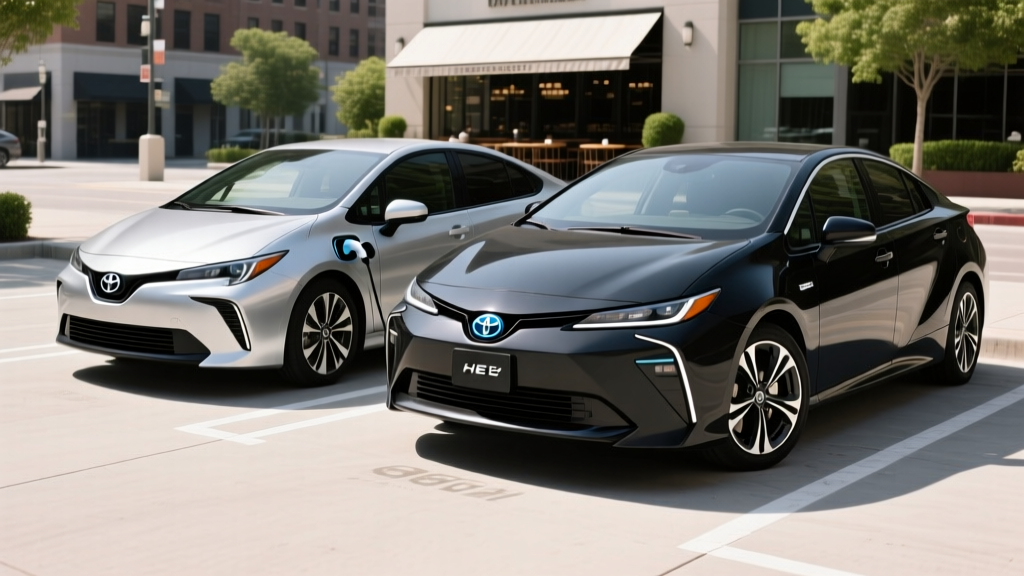
The 2026 Toyota Prius (conventional hybrid, or HEV) generates all its electricity from the gas engine and regenerative braking. You never plug it in. The 2026 Toyota Prius Prime (plug-in hybrid, or PHEV) carries a larger battery you can charge from a wall outlet, giving it a meaningful electric-only driving range before the gas engine ever starts. Both are hybrids. Neither is a battery-electric vehicle. Let's break down exactly what that means for your wallet and your daily commute.
HEV vs PHEV: What the Prius Lineup Actually Offers
| Attribute | 2026 Prius (HEV) | 2026 Prius Prime (PHEV) |
|---|---|---|
| Powertrain Type | Conventional Hybrid | Plug-in Hybrid |
| Plugs In? | No | Yes (Level 1 & Level 2) |
| Battery Capacity | ~1.0 kWh (NiMH/Li-ion, small buffer) | 13.6 kWh (lithium-ion) |
| EPA Electric-Only Range | N/A | 44 miles |
| EPA Combined MPG (gas) | 57 MPG | 52 MPG (after battery depleted) |
| EPA MPGe (electric + gas) | N/A | 127 MPGe |
| Combined Horsepower | 194 hp (FWD) / 196 hp (AWD) | 220 hp |
| 0–60 mph | ~7.2 sec (FWD) | ~6.6 sec |
| DC Fast Charging? | No | No (AC only) |
| Starting MSRP | ~$29,445 | ~$34,045 |
The conventional Prius HEV is a self-charging system. Its small battery captures energy from braking and the engine, then deploys it for low-speed electric assist, engine stop-start, and efficiency optimization. You drive it exactly like a gas car — fill up at the pump, never think about a plug.
The Prius Prime's 13.6 kWh battery is roughly 13 times larger. That capacity translates to 44 miles of pure electric driving at speeds up to 84 mph, per the EPA on fueleconomy.gov. Once that battery is depleted, the Prime operates as a conventional hybrid, returning 52 MPG combined. Total driving range exceeds 400 miles when you combine electric and gas.
Real-World MPG: What You'll Actually See on the Road
Hybrids have a well-documented trait that surprises first-time owners: they frequently beat their EPA city estimates. This is because stop-and-go traffic maximizes regenerative braking, which recaptures kinetic energy and feeds it back to the battery. Highway driving, where the engine runs more continuously, tends to return slightly lower numbers than the EPA highway sticker.
| Metric | Prius HEV (EPA) | Prius HEV (Real-World Typical) | Prius Prime (EPA, Gas Only) | Prius Prime (Real-World Typical) |
|---|---|---|---|---|
| City | 57 MPG | 55–62 MPG | 50 MPG | 48–55 MPG |
| Highway | 56 MPG | 49–54 MPG | 47 MPG | 43–48 MPG |
| Combined | 57 MPG | 52–58 MPG | 52 MPG | 47–52 MPG |
For the Prius Prime, the real efficiency story depends on how often you charge. If your commute is under 44 miles round-trip and you plug in nightly, you might go months without buying gas. Toyota owners on fueleconomy.gov's MyMPG tracker report combined gas-plus-electric efficiency well above the 127 MPGe sticker when they charge diligently. If you never plug in the Prime, you're carrying 300+ lbs of battery you're not using — and getting 52 MPG instead of the 57 MPG the lighter HEV delivers.
Powertrain Deep Dive: Engine, Motors, and Performance
Both 2026 Prius models use Toyota's fifth-generation hybrid system built around a 2.0-liter four-cylinder engine. But the tuning and motor output differ significantly.
Prius HEV: The 2.0L Dynamic Force engine produces 150 hp on its own, paired with a front electric motor for a combined system output of 194 hp (FWD) or 196 hp (AWD-e, which adds a rear motor for all-wheel drive). Torque delivery is immediate from the electric motor, making the HEV feel responsive around town despite modest peak numbers. The AWD-e variant uses an independent rear motor that engages only when traction is needed, minimizing efficiency loss.
Prius Prime: The same 2.0L engine is tuned for 150 hp, but the front electric motor is more powerful, pushing combined output to 220 hp. This makes the Prime genuinely quick — 0–60 mph in approximately 6.6 seconds, a dramatic improvement over the previous-generation Prime's leisurely 10-second runs. The extra power comes from the larger battery's ability to discharge at higher rates, feeding the motor more current during hard acceleration.
Neither Prius offers DC fast charging. The Prime charges via AC only: approximately 11 hours on a standard 120V household outlet (Level 1) or about 4 hours on a 240V Level 2 charger. For most Prime owners, overnight Level 1 charging is sufficient to refill the 13.6 kWh battery, since daily driving rarely depletes it fully.
Pricing, Trims, and Tax Credit Eligibility
| Trim | 2026 Prius HEV MSRP | 2026 Prius Prime MSRP |
|---|---|---|
| LE (base) | ~$29,445 | ~$34,045 (SE) |
| XLE | ~$32,245 | ~$37,245 (XSE) |
| Limited | ~$35,845 | ~$40,645 (XSE Premium) |
The federal tax credit picture for the Prius lineup requires careful attention. Under current IRS §30D rules, the Prius Prime qualifies for up to $3,750 in federal tax credit, provided the buyer meets income caps ($150,000 single / $300,000 joint modified AGI) and the vehicle's MSRP stays under the $55,000 sedan cap. The credit amount depends on critical-mineral and battery-component sourcing requirements that the IRS updates periodically — always verify current eligibility on irs.gov before purchasing.
Importantly, this credit can now be transferred to the dealer at point of sale, reducing your purchase price directly rather than waiting for a tax refund. The conventional Prius HEV does not qualify for the federal §30D credit because it is not a plug-in vehicle. Some states offer additional incentives for PHEVs — check your state energy office or the AFDC incentive database for local programs.
Battery Longevity, Warranty, and Replacement Costs
Toyota Hybrid Battery Warranty (2026 Models)
- Coverage: 10 years / 150,000 miles (whichever comes first)
- Applies to: Both Prius HEV and Prius Prime hybrid battery packs
- What's covered: Battery capacity below a defined threshold, defects, premature failure
- Transferable: Yes, to subsequent owners
Toyota's hybrid battery track record is among the best in the industry. The original Prius, introduced in the US for the 2001 model year, established a reputation for battery packs lasting 150,000–200,000+ miles with gradual capacity loss rather than sudden failure. The fifth-generation system in the 2026 Prius uses improved cell chemistry and thermal management that should extend lifespan further.
If a battery does need replacement out of warranty, expect to pay approximately $2,500–$4,000 for a Prius HEV pack and $5,000–$8,000 for the Prime's larger 13.6 kWh pack (parts and labor, dealer pricing). Refurbished and aftermarket options exist at lower cost. However, given the 10-year/150,000-mile warranty and Toyota's reliability data, most owners will never face an out-of-pocket battery replacement. The 12V auxiliary battery (a separate, conventional battery) may need replacement every 4–6 years at typical cost of $200–$400.
Prius HEV vs Prius Prime vs Full EV: Which Fits Your Life?
Choose the Prius HEV If:
- You have no access to home or workplace charging (apartment, street parking)
- You want the lowest purchase price and simplest ownership experience
- Your driving is a mix of city and highway with no predictable short commute
- You want maximum MPG without ever thinking about plugging in
- You plan to keep the car 10+ years and value Toyota's long-term reliability record
Choose the Prius Prime If:
- You can charge at home (even a standard 120V outlet works overnight)
- Your daily round-trip commute is under ~40 miles
- You want electric driving for daily errands but gas flexibility for road trips
- You want the $3,750 federal tax credit (if eligible) to narrow the price gap
- You want 220 hp and the quickest acceleration in the Prius lineup
Choose a Full EV (e.g., Tesla Model 3, Hyundai Ioniq 6) Instead If:
- You have reliable Level 2 home charging AND your typical trips stay under 250 miles
- You want zero tailpipe emissions and minimal drivetrain maintenance (no oil, no engine)
- You qualify for the full $7,500 federal EV credit, making a BEV comparably priced
- You rarely take road trips over 300 miles, or you're comfortable planning DC fast-charge stops
The Prius HEV is the pragmatic default: cheap to buy, cheap to fuel, zero lifestyle changes required. The Prime is the optimization play — it rewards owners who can charge regularly with near-EV daily driving costs while eliminating range anxiety entirely. A full BEV makes sense only when charging access is solved and your driving patterns align with current battery range.
Frequently Asked Questions
How many MPG does the 2026 Prius get?
The conventional Prius HEV is EPA-rated at 57 MPG combined (57 city / 56 highway) for the LE FWD trim. AWD-e trims drop slightly to approximately 53 MPG combined. The Prius Prime returns 52 MPG combined once its battery is depleted, plus 127 MPGe when operating on its electric charge. In real-world city driving, many Prius HEV owners report 55–62 MPG thanks to regenerative braking.
How far can the Prius Prime go on electric only?
The 2026 Prius Prime is EPA-rated for 44 miles of electric-only range on a full charge of its 13.6 kWh battery. Real-world results vary: expect 38–44 miles in mild weather at moderate speeds, and potentially 30–35 miles in cold weather or at sustained highway speeds above 70 mph. The gasoline engine provides an additional ~380+ miles of range after the battery is depleted.
Is the Prius reliable, and what does a battery replacement cost?
Toyota's Prius has one of the strongest long-term reliability records of any vehicle, hybrid or otherwise. The hybrid battery is warranted for 10 years / 150,000 miles. Out-of-warranty replacement costs range from roughly $2,500–$4,000 for the HEV and $5,000–$8,000 for the Prime. Many Prius batteries last 200,000+ miles before significant degradation. Routine maintenance (oil changes, brake pads) is often cheaper than a conventional car because regenerative braking reduces brake wear.
Does the Prius qualify for a federal tax credit?
The conventional Prius HEV does not qualify for the federal §30D clean vehicle credit because it is not a plug-in vehicle. The Prius Prime qualifies for up to $3,750, subject to IRS battery-sourcing and critical-mineral requirements, buyer income limits ($150,000 single / $300,000 joint), and the $55,000 MSRP cap for sedans. Always verify current eligibility on irs.gov before purchasing, as sourcing rules are updated periodically.
Do I need to plug in the regular Prius?
No. The conventional Prius HEV charges its small battery entirely through the gasoline engine and regenerative braking. There is no plug, no charging cable, and no need for any electrical infrastructure. You fuel it like any other gas car. Only the Prius Prime requires (and benefits from) plugging in.
Are all Prius models hybrids?
Yes. Every Toyota Prius ever produced is a hybrid — combining a gasoline engine with at least one electric motor and a battery pack. There is no gas-only Prius and no fully electric Prius. The lineup currently includes the conventional hybrid (HEV, no plug) and the Prius Prime plug-in hybrid (PHEV, plugs in for electric-only range). Toyota's all-electric offerings are the bZ4X and upcoming bZ models, which are separate nameplates entirely.