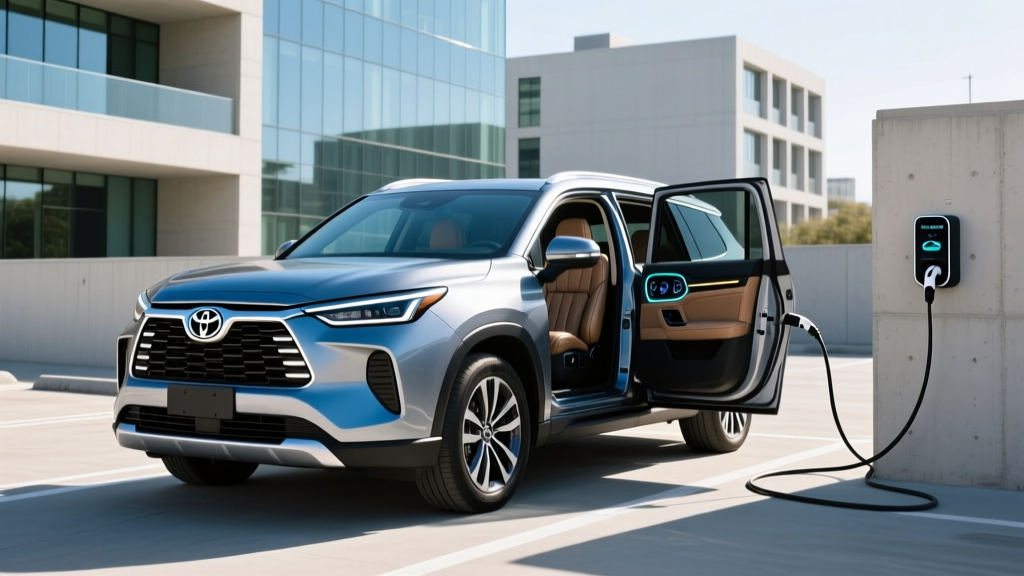
If you've ever asked yourself are all Prius cars hybrids, the short answer is yes. Since its debut, every Toyota Prius has been a hybrid electric vehicle. Toyota has never sold a conventional gas-only Prius. However, the current lineup splits into two very different flavors of hybrid: the standard Prius (a conventional hybrid, or HEV) and the Prius Prime (a plug-in hybrid, or PHEV). Understanding that distinction is the key to picking the right one.
Below, we break down the 2026 Prius family — powertrain specs, real-world MPG, electric-only range, battery warranties, pricing, and tax credit eligibility — so you can decide whether a Prius HEV, a Prius Prime PHEV, or a full battery-electric vehicle (BEV) is the right fit for your driving life.
HEV vs PHEV: What's the Actual Difference?
Before we get into Prius-specific numbers, let's clear up the terminology that trips up a lot of shoppers.
Conventional Hybrid (HEV) — 2026 Prius
- Plugs in? No. The battery charges via regenerative braking and the gas engine.
- Battery size: ~1.0 kWh lithium-ion — small, lightweight, never depleted fully.
- Electric-only driving: Very short bursts at low speed (under 1 mile, typically in parking lots or stop-and-go traffic).
- How it saves fuel: The electric motor assists the gas engine, recovers braking energy, and lets the engine shut off at stops.
Plug-in Hybrid (PHEV) — 2026 Prius Prime
- Plugs in? Yes — via a standard J1772 connector on Level 1 (120V) or Level 2 (240V). No DC fast charging.
- Battery size: 13.6 kWh usable lithium-ion.
- Electric-only driving: EPA-rated 44 miles on electricity alone before the gas engine engages.
- How it saves fuel: Operates as a pure EV for daily commutes, then seamlessly transitions to hybrid mode for longer trips.
The critical point: a conventional Prius HEV never needs to be plugged in. You fuel it like any other car and the hybrid system handles the rest. The Prius Prime requires plugging in to unlock its electric-only range — if you never plug it in, you're just carrying extra battery weight and getting slightly worse fuel economy than the standard Prius.
2026 Prius Powertrain Specs: HEV and Prime Side by Side
| Specification | 2026 Prius (HEV) | 2026 Prius Prime (PHEV) |
|---|---|---|
| Powertrain | 2.0L 4-cyl + 2 electric motors | 2.0L 4-cyl + 2 electric motors |
| Combined Horsepower | 196 hp (FWD) / 196 hp (AWD) | 220 hp |
| 0–60 mph | ~7.0 sec (FWD) | ~6.6 sec |
| Battery Capacity | ~1.0 kWh lithium-ion | 13.6 kWh usable lithium-ion |
| Drivetrain Options | FWD or Electronic AWD | FWD only |
| Transmission | eCVT | eCVT |
| DC Fast Charging | N/A | Not available |
| Level 2 Charge Time (0–100%) | N/A | ~4 hours at 3.3 kW (240V) |
| Cargo Volume | 23.8 cu ft (rear seats up) | 20.3 cu ft (rear seats up) |
Toyota's fifth-generation hybrid system pairs a 2.0-liter Dynamic Force four-cylinder engine with front and rear electric motors. The Prime gets a higher-output motor and a larger inverter, yielding 220 combined horsepower — enough to make it genuinely quick. The standard HEV tops out at 196 hp, which is still a significant leap from the sluggish pre-2023 Prius reputation.
Fuel Economy: EPA MPG and Real-World Expectations
Here's where the Prius earns its reputation. According to fueleconomy.gov, the 2026 Prius lineup posts these numbers:
| Model | City MPG | Highway MPG | Combined MPG | MPGe (Prime EV mode) |
|---|---|---|---|---|
| Prius LE (FWD) | 57 | 56 | 57 | — |
| Prius XLE/Limited (FWD) | 52 | 52 | 52 | — |
| Prius AWD (all trims) | 49 | 50 | 49 | — |
| Prius Prime SE | 53 (hybrid mode) | 51 (hybrid mode) | 52 (hybrid mode) | 127 MPGe |
| Prius Prime XSE/XSE Premium | 50 (hybrid mode) | 47 (hybrid mode) | 48 (hybrid mode) | 114 MPGe |
Real-World MPG: What Owners Actually See
Hybrids, especially Toyota's series-parallel system, tend to exceed EPA city estimates in real-world driving because stop-and-go traffic maximizes regenerative braking and electric motor assist. Many Prius owners report 58–62 MPG in city driving on the LE trim. Highway driving is where hybrids lose some advantage — sustained high speeds rely more on the gas engine, so expect 50–54 MPG highway on the LE in temperate conditions.
In cold weather (below 30°F), expect a 5–10% fuel economy drop on the HEV. The engine runs more often to generate cabin heat, and the battery is less efficient at low temperatures. The Prius Prime sees a larger cold-weather hit to its electric-only range — roughly 30–35 miles instead of the EPA-rated 44 when temperatures drop below freezing.
Prius Prime: Electric-Only Range and Total Range
The 2026 Prius Prime SE delivers an EPA-rated 44 miles of electric-only range. The heavier XSE trims drop to 40 miles. Once the battery depletes, the Prime operates as a conventional hybrid, giving you an additional ~380 miles of gas-powered range on its 11.4-gallon tank. Total combined range exceeds 420 miles — eliminating any range anxiety on road trips.
For context, the average American commute is roughly 16 miles each way (Bureau of Transportation Statistics). That means most Prime owners can complete their daily driving entirely on electricity, only burning gas on weekends or longer trips.
Charging the Prius Prime: What You Need to Know
The Prius Prime uses a standard J1772 connector for AC charging. Here's the reality of charging times:
| Charging Level | Power | 0–100% Time | Where You'll Find It |
|---|---|---|---|
| Level 1 (120V household outlet) | ~1.4 kW | ~10.5 hours | Any standard outlet |
| Level 2 (240V home/public) | 3.3 kW (vehicle-limited) | ~4 hours | Home wallbox, public Level 2 stations |
| DC Fast Charge | N/A | N/A | The Prius Prime does not support DC fast charging |
A key limitation: the Prius Prime's onboard charger is capped at 3.3 kW. Even if you plug into a 7.2 kW or 11.5 kW Level 2 station, the car will only draw 3.3 kW. This means a full charge takes about 4 hours regardless of the station's capacity. For overnight charging, this is perfectly adequate — plug in when you get home and wake up to a full battery. But you can't top up quickly on a lunch break.
The standard Prius HEV requires no charging infrastructure whatsoever. Its small battery is maintained entirely by the hybrid system.
Pricing, Tax Credits, and Total Cost of Ownership
2026 Prius MSRP by Trim
Based on Toyota's current pricing:
- Prius LE (FWD): ~$29,445
- Prius XLE (FWD): ~$32,695
- Prius Limited (FWD): ~$35,895
- Prius AWD (LE/XLE): add ~$1,400
- Prius Prime SE: ~$34,115
- Prius Prime XSE: ~$37,365
- Prius Prime XSE Premium: ~$40,415
Federal Tax Credit Eligibility
Here's where HEV and PHEV diverge significantly. Under the IRS §30D Clean Vehicle Credit rules:
- Prius HEV (conventional hybrid): Does NOT qualify for any federal tax credit. The §30D credit applies only to plug-in vehicles with a battery capacity of at least 7 kWh.
- Prius Prime (PHEV): May qualify for up to $3,750 in federal tax credits, contingent on meeting critical-mineral and battery-component sourcing requirements. The full $7,500 requires both thresholds to be met; as of 2026, the Prime typically qualifies for the $3,750 critical-minerals portion.
- Income caps apply: Modified AGI ≤ $150,000 (single), ≤ $300,000 (joint).
- MSRP cap: The Prius Prime is well under the $55,000 sedan cap.
- Point-of-sale transfer: Eligible buyers can apply the credit as a down-payment reduction at the dealer.
Always verify current-year eligibility on irs.gov before purchasing, as battery sourcing requirements tighten annually and manufacturer eligibility can shift.
5-Year Cost of Ownership Snapshot
At 15,000 miles/year and $3.20/gallon gas, a Prius LE uses roughly 263 gallons annually (~$842/year in fuel). A comparable gas-only sedan averaging 30 MPG would burn 500 gallons (~$1,600/year). That's roughly $3,790 in fuel savings over five years with the HEV.
The Prius Prime, charged mostly on electricity at a national average of $0.17/kWh, costs about $2.30 to "fill" its 13.6 kWh battery. For 40 miles of daily electric driving, annual electricity cost is roughly $350, with occasional gas use on longer trips bringing the total to approximately $500–700/year — saving an additional $1,500+ over five years compared to the HEV.
Battery Warranty, Reliability, and Replacement Cost
Toyota Hybrid Battery Warranty
Coverage: 10 years / 150,000 miles (whichever comes first) on the hybrid battery for all 2026 Prius models.
What's covered: Defects and capacity loss below a defined threshold (typically ~60% of original capacity).
Transferability: Fully transferable to subsequent owners.
Toyota's hybrid battery track record is among the best in the industry. Real-world data shows Prius hybrid batteries regularly lasting 200,000–300,000 miles before significant degradation. The HEV's small ~1.0 kWh battery experiences shallow charge cycles (it never fully charges or fully depletes), which dramatically extends its lifespan. Many first-generation Prius vehicles are still running on their original batteries past 250,000 miles.
The Prius Prime's larger 13.6 kWh battery undergoes deeper cycles but benefits from Toyota's conservative battery management system, which maintains a buffer at the top and bottom of the state-of-charge window to reduce stress.
Battery Replacement Cost
If your hybrid battery does fail outside of warranty:
- Prius HEV battery replacement: $2,000–$3,500 (new OEM), $1,000–$2,000 (refurbished)
- Prius Prime battery replacement: $4,500–$7,000 (new OEM)
These costs have been trending downward as more refurbished units enter the market and third-party repair shops gain expertise. The Prius is one of the most widely serviced hybrids in the world — independent hybrid specialists are available in most metro areas.
For broader reliability, the Prius consistently earns high marks from Consumer Reports and was an IIHS Top Safety Pick in recent model years, with standard Toyota Safety Sense 3.0 including pre-collision braking, lane departure alert, adaptive cruise control, and road sign assist.
Who Should Buy Which Prius — and Who Should Look at a Full EV?
Choose the Prius HEV if:
- You don't have access to home or workplace charging (apartment, street parking).
- You want maximum MPG with zero behavior change — just drive and fuel up.
- Your budget is under $36,000 and you want the lowest upfront cost.
- You frequently take long road trips and don't want to plan around charging.
Choose the Prius Prime (PHEV) if:
- You have reliable home or workplace Level 1 or Level 2 charging.
- Your daily commute is under 40 miles round-trip — you'll rarely burn gas on weekdays.
- You want to drive electric most days but need gas flexibility for weekend trips.
- You want to reduce your carbon footprint now without committing to full EV infrastructure.
Choose a Full BEV (like the Tesla Model 3, Hyundai Ioniq 6, or Chevy Equinox EV) if:
- You have home Level 2 charging and your daily driving is under 250 miles.
- You want to eliminate gas entirely and minimize maintenance (no oil changes, no engine).
- You qualify for the full $7,500 federal tax credit on an eligible BEV.
- You're ready to plan road trips around DC fast charging networks.
Prius Family Pros
- Class-leading fuel economy (57 MPG combined on LE)
- Proven hybrid reliability with 10yr/150k-mile battery warranty
- No range anxiety — total range exceeds 550 miles (HEV)
- Quick and engaging (196–220 hp, ~7 sec 0–60)
- Low starting price for the segment
- Standard Toyota Safety Sense 3.0 ADAS suite
Prius Family Cons
- No DC fast charging on the Prime
- Prime's 3.3 kW onboard charger limits Level 2 speed
- AWD unavailable on the Prime
- HEV does not qualify for any federal tax credit
- Rear cargo space is modest (20–24 cu ft)
- Rear-seat headroom is tight for taller passengers
Frequently Asked Questions
Are all Prius cars hybrids?
Yes. Every Toyota Prius ever sold has been a hybrid. Toyota does not make a gas-only Prius. The current lineup includes the standard Prius (conventional HEV) and the Prius Prime (plug-in hybrid PHEV), but both use a gasoline engine paired with electric motors.
How many MPG does the 2026 Prius get?
The 2026 Prius LE achieves an EPA-rated 57 city / 56 highway / 57 combined MPG. The XLE and Limited trims are rated at 52 combined. AWD models are rated at 49 combined. Real-world city driving often exceeds EPA estimates by 2–5 MPG thanks to regenerative braking.
How far can the Prius Prime go on electric only?
The 2026 Prius Prime SE delivers 44 miles of EPA-rated electric-only range. The XSE and XSE Premium trims are rated at 40 miles. In cold weather (below freezing), expect 30–35 miles of electric range due to battery efficiency loss and cabin heating demands.
Does the Prius qualify for a federal tax credit?
The standard Prius HEV does not qualify for any federal tax credit. The Prius Prime PHEV may qualify for up to $3,750 under the IRS §30D Clean Vehicle Credit, depending on current battery-sourcing requirements and your income level. Verify eligibility on irs.gov before purchasing.
Is the Prius hybrid battery reliable and what does replacement cost?
Toyota's hybrid batteries are among the most reliable in the industry, regularly lasting 200,000+ miles. They're covered by a 10-year/150,000-mile warranty. If replacement is needed out of warranty, a Prius HEV battery costs $2,000–$3,500 new or $1,000–$2,000 refurbished. Prime batteries run $4,500–$7,000 new.
Does the Prius Prime need to be plugged in?
To get the most from it, yes. The Prius Prime must be plugged in to charge its 13.6 kWh battery for electric-only driving. If you never plug it in, it still operates as a conventional hybrid (getting ~48–52 MPG), but you're carrying dead battery weight and losing the cost-per-mile advantage of electric driving.
Can the Prius Prime DC fast charge?
No. The 2026 Prius Prime only supports AC charging via a J1772 connector at up to 3.3 kW. A full charge takes about 4 hours on Level 2 or about 10.5 hours on a standard 120V household outlet. DC fast charging is not available on any Prius model.