The Short Answer: Yes, Every New Camry Is a Hybrid
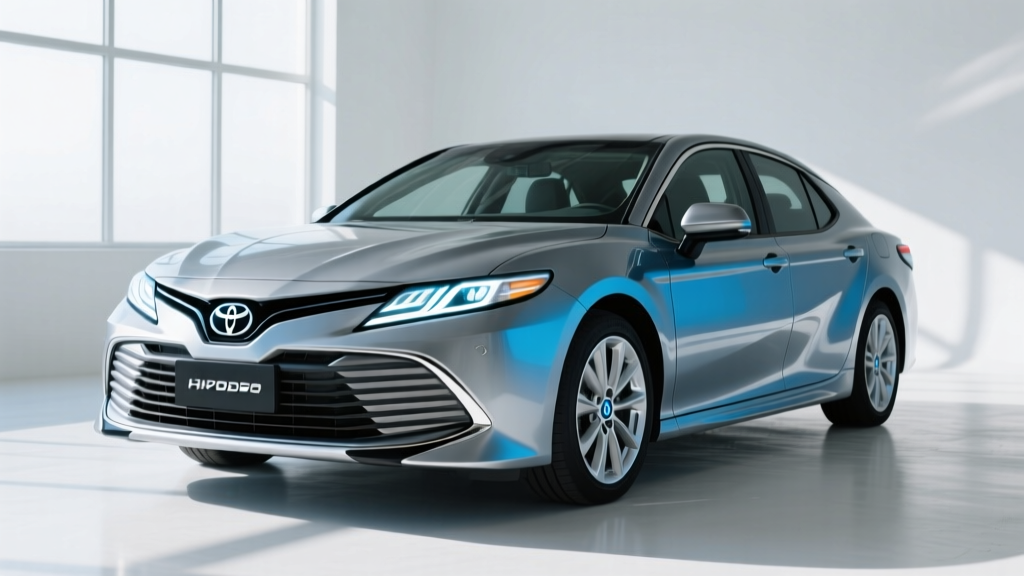
Starting with the ninth-generation Camry (introduced for the 2025 model year and continuing into 2026), Toyota eliminated the traditional four-cylinder gas-only option entirely. Every 2026 Toyota Camry rolls off the line as a hybrid electric vehicle (HEV) powered by Toyota's fifth-generation hybrid system. There is no conventional gas-only Camry in the current lineup, and no plug-in hybrid (PHEV) variant is offered in the United States.
This was a bold move for America's best-selling sedan, but the data supports it: the previous-generation Camry Hybrid already accounted for a growing share of sales, and the fuel-economy gap between the hybrid and the old 2.5L gas model had become impossible to justify. For 2026, Toyota streamlined the lineup around a single, efficient powertrain.
HEV vs PHEV: What Kind of Hybrid Is the Camry?
The 2026 Camry is a conventional hybrid (HEV), not a plug-in hybrid (PHEV). Understanding this distinction is critical before you shop:
- HEV (Conventional Hybrid): The Camry's small battery recharges through regenerative braking and the gasoline engine. You never plug it in. You simply fuel up at a gas station like any other car.
- PHEV (Plug-In Hybrid): Vehicles like the Toyota Prius Prime or RAV4 Prime have larger batteries that can be plugged in for a meaningful electric-only range (25–44 miles typically). The Camry does not offer this.
- BEV (Battery Electric Vehicle): Pure electric cars like the Tesla Model 3 or Hyundai Ioniq 6 have no gasoline engine at all.
If you were hoping for a Camry you could plug in and drive 30 miles on electricity alone, that option doesn't exist in this generation. Toyota reserves its PHEV technology for the Prius Prime and RAV4 Prime. The Camry is strictly a self-charging hybrid.
2026 Camry Hybrid Powertrain Specs
The 2026 Camry uses Toyota's fifth-generation hybrid powertrain, pairing a 2.5-liter four-cylinder engine with electric motors. Front-wheel-drive (FWD) models use two electric motors, while all-wheel-drive (AWD) trims add a third motor on the rear axle.
| Specification | FWD Models | AWD Models |
|---|---|---|
| Engine | 2.5L 4-cylinder + 2 electric motors | 2.5L 4-cylinder + 3 electric motors |
| Combined Horsepower | 225 hp | 232 hp |
| Drivetrain | Front-wheel drive | Electronic AWD (rear motor) |
| Transmission | eCVT | eCVT |
| Battery Type | Lithium-ion | Lithium-ion |
| 0–60 mph (est.) | ~7.2 sec | ~6.9 sec |
The AWD system isn't a traditional mechanical setup — it's an independent rear electric motor that engages when the car detects slip or under hard acceleration, providing extra traction without a meaningful fuel-economy penalty.
Fuel Economy: EPA MPG and Real-World Numbers
The headline reason the Camry went all-hybrid is efficiency. Here's how the EPA rates the 2026 Camry across its configurations, based on fueleconomy.gov data:
| Configuration | City MPG | Highway MPG | Combined MPG |
|---|---|---|---|
| FWD (LE, SE) | 51 | 44 | 48 |
| AWD (SE, XLE, XSE) | 48 | 41 | 45 |
Real-world MPG vs. EPA: Toyota's hybrid system excels in stop-and-go city driving, where regenerative braking and electric-motor assist do the most work. Many owners report exceeding the EPA city estimate — 52–55 MPG is common in moderate-temperature urban commuting. Highway driving is the opposite story: at sustained 70–80 mph speeds, the gasoline engine does most of the work, and real-world highway MPG tends to land 2–4 MPG below the sticker, especially in cold weather or with headwinds.
For context, the previous gas-only Camry with the 2.5L engine returned 28 city / 39 highway / 32 combined. The 2026 hybrid essentially doubles city fuel economy while matching or beating the old gas car on the highway.
Pricing and Tax Credit Eligibility
The 2026 Toyota Camry starts at approximately $29,490 (including destination) for the LE FWD trim and tops out near $36,000 for the XSE AWD. Key trims include:
- LE (FWD): ~$29,490 — 48 MPG combined
- SE (FWD/AWD): ~$31,090–$32,590 — sport-tuned suspension, darker styling
- XLE (FWD/AWD): ~$33,590–$35,090 — premium interior, heated seats
- XSE (AWD): ~$35,990 — sport-luxury flagship
Does the Camry Hybrid qualify for a federal tax credit? No. Under current IRS §30D rules, the federal Clean Vehicle Credit of up to $7,500 applies only to plug-in electric vehicles (BEVs and PHEVs) that meet battery sourcing, critical minerals, MSRP cap, and buyer income requirements. Conventional hybrids like the Camry HEV do not qualify for the federal credit. Some states offer modest hybrid rebates or HOV-lane access — check your state's energy office or AFDC state incentive database for specifics, as these vary widely by jurisdiction.
Battery Warranty, Reliability, and Replacement Cost
Toyota Hybrid Battery Warranty: Toyota covers the Camry's hybrid battery for 10 years or 150,000 miles (whichever comes first) across all 50 states. This is one of the strongest hybrid battery warranties in the industry.
The broader hybrid system (inverter, motor, control module) is covered for 8 years / 100,000 miles.
Is the Camry Hybrid reliable? Toyota's hybrid powertrain has a two-decade track record dating back to the original Prius. The Camry Hybrid consistently earns top reliability marks from Consumer Reports and has been an IIHS Top Safety Pick+ recipient. The fifth-generation system is simpler and more refined than earlier iterations, with fewer failure points.
Battery replacement cost: If the hybrid battery fails outside warranty, replacement typically runs $2,000–$4,000 depending on the source (dealer OEM vs. refurbished). However, real-world data shows Toyota hybrid batteries lasting well beyond 200,000 miles with minimal degradation. Unlike full EV batteries, the Camry's hybrid battery is small (approximately 1.6 kWh usable) and never deeply cycled — the car's software keeps it in a narrow state-of-charge window to maximize longevity.
Who Should Choose the Camry Hybrid — and Who Shouldn't?
Choose the Camry Hybrid if:
- You want 45–51 MPG without changing your fueling habits (no plugs, no chargers)
- You drive mostly in the city or mixed commuting where hybrid efficiency shines
- You need a spacious, comfortable sedan with proven reliability
- You live in a region with extreme cold where EV range loss is a concern
- You want available AWD without the fuel-economy penalty of a traditional AWD system
- You plan to keep the car 8–10+ years (warranty coverage is excellent)
Look elsewhere if:
- You want electric-only driving for short commutes (consider a PHEV like the Prius Prime)
- You want to eliminate gasoline entirely (look at BEVs like the Tesla Model 3 or Hyundai Ioniq 6)
- You want to qualify for the $7,500 federal EV tax credit (HEVs don't qualify)
- You prioritize sporty driving dynamics over efficiency (the eCVT and 225–232 hp prioritize smoothness over excitement)
- You need a crossover or SUV for cargo/passenger flexibility
Camry Hybrid vs. Full EV: If you have home charging and a daily commute under 40 miles, a BEV like the Tesla Model 3 or Chevy Equinox EV will cost far less per mile to "fuel" and requires almost zero powertrain maintenance. But if you lack reliable charging access, take frequent long road trips, or live in an apartment without charging options, the Camry Hybrid gives you outstanding efficiency with zero infrastructure requirements.
Camry Hybrid vs. PHEV: The Prius Prime offers about 44 miles of electric-only range and qualifies for a partial federal tax credit (up to $3,750 depending on sourcing). If you can charge at home and most of your driving is under 40 miles, the Prius Prime can function as an EV on weekdays and a hybrid on road trips — a compelling middle ground the Camry doesn't offer.
Frequently Asked Questions
Are all 2026 Camrys hybrids?
Yes. Toyota discontinued the gas-only Camry after the 2024 model year. Every 2026 Camry uses the fifth-generation Toyota hybrid system with a 2.5-liter four-cylinder engine and electric motors. There is no non-hybrid option.
Do I need to plug in the Camry Hybrid?
No. The Camry is a conventional hybrid (HEV), not a plug-in. The battery charges automatically through regenerative braking and the gasoline engine. You fuel it at a gas station like any other car.
How many MPG does the 2026 Camry Hybrid get?
FWD models are EPA-rated at 51 city / 44 highway / 48 combined. AWD models are rated at 48 city / 41 highway / 45 combined. Real-world city driving often exceeds the EPA estimate; highway driving tends to fall slightly below.
Does the Camry Hybrid qualify for a tax credit?
Not the federal §30D credit, which is limited to plug-in vehicles (BEVs and PHEVs). Some states offer small hybrid incentives or HOV-lane stickers — check your state's programs for details.
How long will the Camry Hybrid battery last?
Toyota covers the hybrid battery for 10 years / 150,000 miles. Real-world data from Toyota's hybrid lineup shows batteries routinely lasting 200,000+ miles. Replacement cost, if needed out of warranty, is typically $2,000–$4,000 — far less than a full EV battery replacement.
Is the Camry Hybrid available with AWD?
Yes. SE, XLE, and XSE trims offer electronic AWD via a dedicated rear electric motor. AWD models produce 232 combined horsepower (7 hp more than FWD) and sacrifice only 3 MPG combined versus FWD.
How does the Camry Hybrid compare to the Prius?
The Prius is slightly more efficient (up to 57 MPG combined for FWD) and is available as a PHEV (Prius Prime), but it's smaller inside. The Camry offers more rear legroom, a larger trunk, and a more premium ride. Both use the same fifth-generation hybrid system.