Quick Verdict: The Efficiency Benchmark
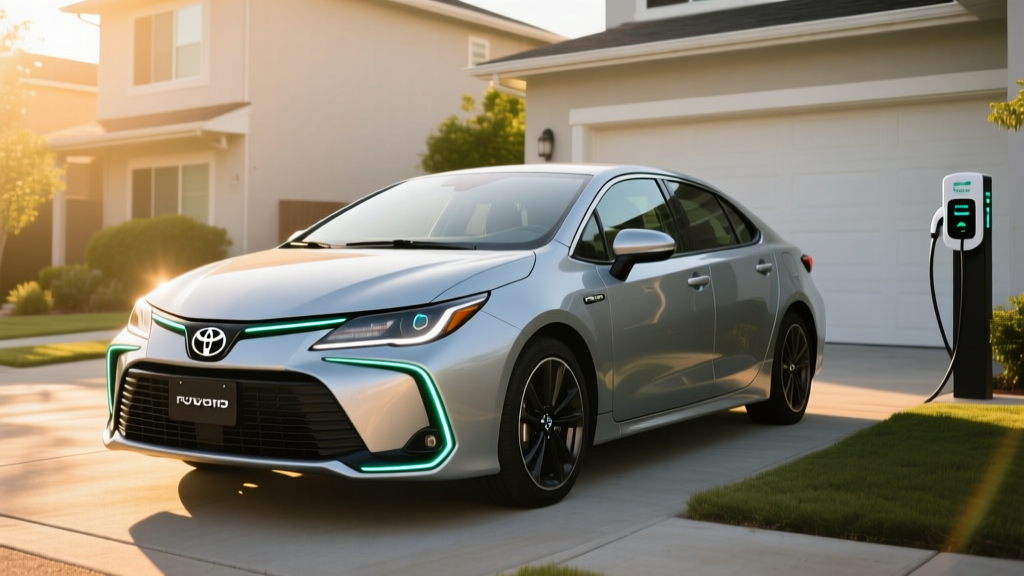
The Toyota Corolla Hybrid has quietly become one of the most fuel-efficient non-plug-in vehicles sold in the United States. For the 2024 model year, Toyota carries forward the fifth-generation hybrid system with an EPA-estimated 50 MPG combined — a figure that routinely improves in real-world city driving thanks to aggressive regenerative braking and engine-off coasting. At a starting MSRP around $23,500, it undercuts most competitors while delivering efficiency that rivals vehicles costing thousands more.
This guide breaks down the 2024 Corolla Hybrid's MPG in detail, its powertrain, battery longevity, ownership economics, and where it fits for buyers weighing a conventional hybrid (HEV) against a plug-in hybrid (PHEV) or battery-electric vehicle (BEV).
2024 Corolla Hybrid MPG: EPA Ratings and Real-World Results
The headline number is what draws most buyers, but the city/highway split tells the more useful story for daily commuting.
| Metric | EPA Estimate | Real-World Expectation |
|---|---|---|
| City MPG | 53 | 52–58 (hybrids often exceed EPA in stop-and-go) |
| Highway MPG | 46 | 42–48 (sustained 75+ mph cruising reduces advantage) |
| Combined MPG | 50 | 48–54 depending on driving mix |
According to fueleconomy.gov, the 2024 Corolla Hybrid LE with all-wheel drive achieves 53 city / 46 highway / 50 combined. The FWD-only configuration is no longer offered for 2024 — Toyota standardized electronic on-demand AWD across the Corolla Hybrid lineup starting with the 2023 refresh.
Why Real-World City MPG Often Beats the Sticker
Conventional hybrids like the Corolla Hybrid thrive in urban environments. The electric motor handles low-speed acceleration where internal combustion engines are least efficient, while regenerative braking recovers energy at every stoplight. Owners who drive predominantly in city or suburban traffic commonly report 52–58 MPG on community forums and fueleconomy.gov user submissions.
Highway driving narrows the advantage. At sustained speeds above 70 mph, the 1.8L Atkinson-cycle engine does most of the work, and the electric motor contributes less. Expect 42–48 MPG on long interstate trips, particularly with headwinds, elevation changes, or cold temperatures that increase engine warm-up time.
HEV vs PHEV vs EV: Which Powertrain Fits You?
The Corolla Hybrid is a conventional hybrid (HEV) — it has no plug, no electric-only range, and requires no change to your fueling routine. That simplicity is a feature, not a limitation, for many buyers. Here's how the three electrified powertrains compare:
| Factor | HEV (Corolla Hybrid) | PHEV (e.g., Prius Prime) | BEV (e.g., Model 3) |
|---|---|---|---|
| Plug-in Required? | No — gas only | Yes — for electric-only miles | Yes — sole energy source |
| Electric-Only Range | 0 miles (motor assists only) | 30–44 miles typical | 250–360 miles typical |
| Fuel Cost per Mile | ~$0.08 (at $3.50/gal, 50 MPG) | ~$0.04 electric / ~$0.08 gas | ~$0.04–$0.06 (varies by electricity rate) |
| Home Charging Needed? | No | Recommended (Level 2 ideal) | Essential (Level 2 strongly recommended) |
| Federal Tax Credit (§30D) | Not eligible | Up to $7,500 (if sourcing rules met) | Up to $7,500 (if sourcing rules met) |
| Upfront Price Premium | Low (~$1,500 over gas model) | Moderate ($4,000–$8,000 over HEV) | Higher ($8,000–$15,000 over HEV) |
| Best For | No home charging access, long highway commutes, budget buyers | Short commutes + occasional road trips, home charging available | Home charging available, daily driving under 300 mi, lowest running cost |
Choose a PHEV (Prius Prime) if: You can charge at home, your daily commute is under 40 miles round-trip (covering most driving on electricity), but you still want gas-engine flexibility for road trips without charging-planning.
Choose a BEV if: You have Level 2 home charging, want the lowest per-mile operating cost, qualify for the full federal tax credit, and your longest regular trip falls within fast-charger range.
Powertrain and Performance Specs
The 2024 Corolla Hybrid pairs Toyota's fifth-generation hybrid system with a 1.8-liter four-cylinder Atkinson-cycle engine and two motor-generators routed through a planetary gearset (eCVT). An additional rear-mounted electric motor provides electronic on-demand all-wheel drive.
| Specification | Value |
|---|---|
| Engine | 1.8L 4-cyl Atkinson-cycle DOHC |
| Engine Power | 96 hp @ 5,200 rpm |
| Front Motor Power | 94 hp (MG2 drive motor) |
| Rear Motor Power | 40 hp (AWD assist) |
| Net Combined System Power | 138 hp |
| Transmission | eCVT (planetary gearset) |
| Drivetrain | Electronic on-demand AWD |
| Hybrid Battery | ~1.3 kWh lithium-ion (sealed NiMH on base LE in prior years; Li-ion for 2024) |
| 0–60 mph | ~9.0 seconds (estimated) |
| Curb Weight | ~3,130 lbs |
At 138 net horsepower, the Corolla Hybrid is adequate for commuting and merging but not quick by modern standards. The eCVT delivers seamless, shift-free acceleration, and the transition between electric and gasoline power is nearly imperceptible. The AWD system engages the rear motor automatically during acceleration from stops and on low-traction surfaces — it's a traction aid, not a performance feature.
The Hybrid Battery: Small by Design
The Corolla Hybrid's traction battery stores roughly 1.3 kWh — far smaller than a PHEV (typically 10–18 kWh) or a BEV (60–100 kWh). This is intentional. The battery's job is to buffer energy recovered from braking and engine excess, then deploy it for low-speed electric assist and engine-off coasting. It never fully charges or fully depletes; the hybrid system maintains a narrow state-of-charge window (roughly 40–80%) to maximize cycle life.
Pricing, Trims, and Tax Credit Eligibility
For 2024, Toyota offers the Corolla Hybrid in a single LE trim with AWD standard. Pricing is straightforward:
| Trim | MSRP (incl. destination) | Federal Tax Credit |
|---|---|---|
| LE AWD | $23,500 | $0 — not eligible (§30D applies to PHEVs/BEVs only) |
The IRS §30D New Clean Vehicle Credit applies exclusively to plug-in electric vehicles — battery-electric and plug-in hybrid models that meet battery-sourcing, critical-mineral, MSRP cap, and buyer-income requirements. Conventional hybrids like the Corolla Hybrid do not qualify for any federal purchase incentive.
Some states offer rebates or reduced registration fees for hybrids, but these vary widely by jurisdiction. Check your state energy office or department of revenue for current programs.
Total Fuel Cost Savings vs. Gas-Only Corolla
The gas-only 2024 Corolla LE (2.0L, CVT) rates at 35 MPG combined per the EPA. At $3.50/gallon and 15,000 miles/year:
- Gas Corolla LE: ~$1,500/year in fuel
- Corolla Hybrid LE: ~$1,050/year in fuel
- Annual savings: ~$450
- 5-year savings: ~$2,250
The hybrid carries roughly a $1,500 price premium over the gas model. At typical driving, the fuel savings pay back that premium in approximately 3.3 years — faster if gas prices rise or your driving skews toward city conditions where the hybrid's advantage widens.
Battery Warranty, Reliability, and Replacement Cost
Hybrid battery longevity remains the single most common concern among first-time hybrid buyers. Toyota's track record here is among the best in the industry, with millions of hybrid vehicles on the road — many with original batteries past 200,000 miles.
- Hybrid Battery: 10 years / 150,000 miles (whichever comes first)
- Hybrid System Components: 8 years / 100,000 miles (inverters, converters, control modules)
- Powertrain: 5 years / 60,000 miles
- Basic Bumper-to-Bumper: 3 years / 36,000 miles
Real-World Battery Degradation
Because the Corolla Hybrid's system keeps the battery in a narrow state-of-charge window and the pack is relatively small, thermal stress is minimal. Data from long-term fleet vehicles and owner reports indicate typical capacity loss of 10–15% over 150,000 miles — which translates to a minor MPG reduction (1–3 MPG) rather than a functional failure.
Battery Replacement Cost
If the hybrid battery does require replacement outside of warranty:
- New OEM battery pack: $2,000–$3,500 (parts + labor at a Toyota dealer)
- Refurbished/reconditioned pack: $1,000–$2,000 (independent hybrid specialists)
- Individual module replacement: $300–$800 (only failed modules replaced — available through some independent shops)
For context, most Corolla Hybrid batteries last well beyond the warranty period. The 10-year/150,000-mile coverage means the vast majority of original owners will never face a battery replacement cost.
Reliability and Safety Ratings
Toyota's hybrid powertrain is one of the most proven in the automotive industry. The Corolla nameplate benefits from decades of iterative refinement, and the hybrid variant shares its core architecture with the Prius — a vehicle with over 25 years of real-world durability data.
The IIHS has historically rated the Corolla sedan highly, with the Toyota Safety Sense 3.0 suite standard on all trims. This includes:
- Pre-Collision System with Pedestrian Detection
- Lane Departure Alert with Steering Assist
- Full-Speed Range Dynamic Radar Cruise Control
- Lane Tracing Assist
- Automatic High Beams
- Road Sign Assist
Note: Toyota Safety Sense 3.0 is a Level 2 driver-assistance system per SAE classification. It provides steering and speed support but requires the driver to remain fully engaged and hands-on at all times. It is not autonomous or "self-driving."
Who Should Buy the 2024 Corolla Hybrid?
Pros
- 50 MPG combined EPA — routinely exceeded in city driving
- No plug-in required — zero lifestyle change from a gas car
- Lowest MSRP in its efficiency class (~$23,500)
- AWD standard — uncommon for sub-$25K hybrids
- 10-year/150,000-mile hybrid battery warranty
- Toyota Safety Sense 3.0 standard
- Strong resale value and proven reliability record
Cons
- Only available in LE trim — no premium options
- 138 hp is adequate but not quick (0-60 ~9.0 sec)
- No federal tax credit eligibility
- Small trunk vs. some competitors (~13.1 cu ft)
- Infotainment is functional but dated vs. rivals
- No electric-only driving mode
Frequently Asked Questions
How many MPG does the 2024 Corolla Hybrid get?
The EPA rates the 2024 Corolla Hybrid at 53 city / 46 highway / 50 combined MPG. Real-world results frequently exceed the city estimate — many owners report 52–58 MPG in urban driving. Highway MPG typically falls to 42–48 during sustained high-speed cruising.
Does the Corolla Hybrid need to be plugged in?
No. The Corolla Hybrid is a conventional hybrid (HEV). It generates all its electricity internally through regenerative braking and the gasoline engine. You fuel it exclusively at gas stations, exactly like a conventional car.
How far can the Corolla Hybrid drive on electric power alone?
The Corolla Hybrid has no meaningful electric-only range. Its ~1.3 kWh battery provides brief low-speed electric assist (typically under 1 mile at very low speeds) but cannot propel the car independently for any practical distance. If electric-only commuting is a priority, a PHEV like the Prius Prime (44 miles EV range) is the appropriate choice.
Is the Corolla Hybrid reliable?
Toyota's hybrid system has an extensive reliability record spanning over 25 years and millions of vehicles. The Corolla Hybrid's powertrain is a proven design shared across Toyota's hybrid lineup. The hybrid battery carries a 10-year/150,000-mile warranty, and real-world data shows most batteries last well beyond that coverage period.
How much does a Corolla Hybrid battery replacement cost?
A new OEM hybrid battery replacement runs $2,000–$3,500 at a Toyota dealer. Refurbished packs are available for $1,000–$2,000 from independent specialists. However, battery failure before 200,000 miles is uncommon, and the 10-year/150,000-mile warranty covers most original owners.
Does the 2024 Corolla Hybrid qualify for a tax credit?
No. The federal §30D New Clean Vehicle Tax Credit applies only to plug-in electric vehicles (PHEVs and BEVs) that meet battery-sourcing and critical-mineral requirements. Conventional hybrids are not eligible. Some states may offer separate incentives for hybrids — check your state's energy or revenue department.
Corolla Hybrid vs. Prius: which is more efficient?
The 2024 Toyota Prius (redesigned for 2023) rates at 57 MPG combined in LE FWD trim — 7 MPG higher than the Corolla Hybrid's 50 combined. The Prius also offers a more powerful powertrain (194 hp FWD) and a PHEV variant (Prius Prime). However, the Prius starts approximately $4,000–$5,000 higher. If maximum efficiency is the priority and budget allows, the Prius wins. If value and a lower entry price matter more, the Corolla Hybrid delivers 88% of the Prius's efficiency at a significantly lower cost.
Does the Corolla Hybrid have all-wheel drive?
Yes. All 2024 Corolla Hybrid models come with electronic on-demand AWD standard. A rear-mounted electric motor provides additional traction during acceleration and on slippery surfaces. This is a fuel-efficient AWD system — it engages only when needed and adds minimal weight.