If you've shopped for a hybrid recently, you may have noticed something missing from the spec sheet: any mention of a manual transmission. That's not an oversight. The short answer to are all hybrid cars automatic is: effectively yes. Every mainstream hybrid and plug-in hybrid sold in the U.S. for the 2026 model year uses an automatic or continuously variable transmission (CVT). But the engineering reasons behind this — and what it means for your driving experience — are worth understanding before you buy.
This guide covers the transmission architecture of modern hybrids, the real-world efficiency you can expect, and how to choose between a conventional hybrid (HEV), a plug-in hybrid (PHEV), or a full battery-electric vehicle (BEV).
Why Hybrids Don't Offer Manual Transmissions
A conventional manual transmission relies on a mechanical clutch linking the engine directly to the drivetrain. Hybrids fundamentally change that layout by inserting one or more electric motor-generators between the engine and the wheels. This architecture requires precise computer control to blend torque from the gasoline engine and the electric motor(s) seamlessly — something a human-operated clutch simply cannot coordinate in real time.
Most hybrids use one of three automatic transmission types:
- eCVT (electronic continuously variable transmission): Used by Toyota, Ford, and others in their hybrid systems. Despite the "CVT" name, this isn't a belt-and-pulley design like a conventional CVT. It's a planetary gearset that splits power between the engine, motor, and wheels with no fixed gear ratios — resulting in exceptionally smooth acceleration and high efficiency.
- Dedicated hybrid transmission (DHT): Hyundai, Kia, and Honda use multi-speed automatic or dual-clutch transmissions modified for hybrid duty, often with a built-in electric motor. These can feel more like traditional automatics with perceptible gear shifts.
- Series-hybrid / range-extender drivetrain: In vehicles like certain EREVs, the gasoline engine never drives the wheels directly — it only generates electricity. There is no traditional transmission at all; the electric motor handles all propulsion.
The result is that every hybrid on the U.S. market in 2026 shifts automatically. No clutch pedal, no stick shift. For most buyers, this is a non-issue — automatics account for over 98% of new car sales — but it's a definitive constraint if you specifically want a manual.
HEV vs PHEV: What's the Difference?
| Feature | Conventional Hybrid (HEV) | Plug-in Hybrid (PHEV) |
|---|---|---|
| Needs to plug in? | No — charges via regenerative braking & engine | Yes — plug in for electric-only driving |
| Battery size | 1.0–2.0 kWh (small) | 11–25 kWh (much larger) |
| Electric-only range | 0 miles (electric assist only) | 25–48 miles EPA typical |
| Fuel economy | 40–57 MPG combined | 30–50 MPG combined (gas mode) + MPGe |
| Federal tax credit (§30D) | Not eligible | Up to $7,500 if eligible |
| Best for | No home charging, high-mileage commuters | Home charging access, shorter daily commutes |
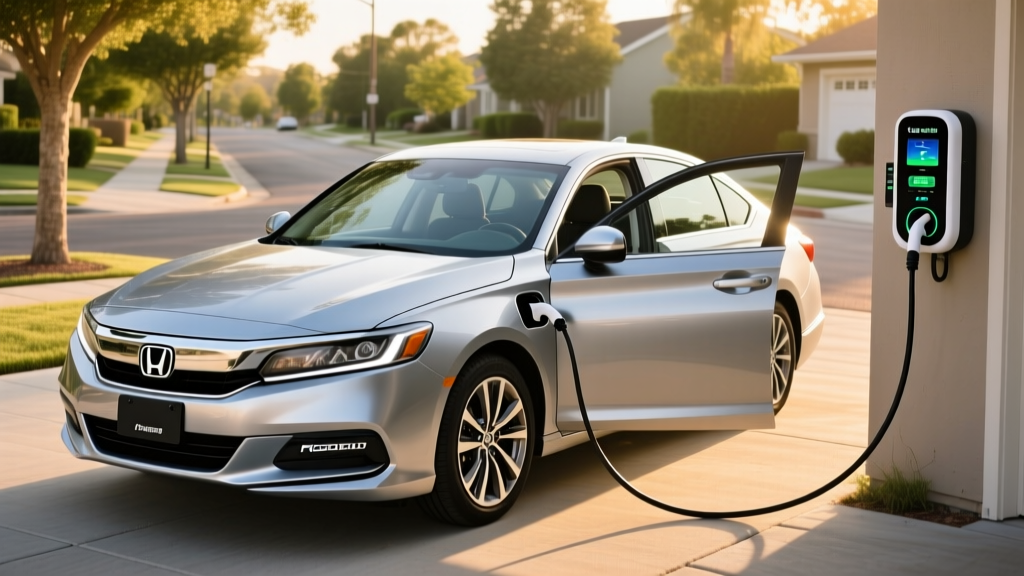
The distinction matters because it affects everything from your fuel bill to your tax situation. An HEV is a drop-in replacement for a gas car — you never change your fueling habits. A PHEV rewards you for plugging in at home but works perfectly fine as a hybrid when the battery is depleted.
Fuel Economy: What EPA Numbers Actually Mean for Hybrids
Hybrid fuel economy varies significantly by model, weight, and drivetrain. Here's a snapshot of current popular models as rated by the EPA:
| Model (2026 MY) | Type | City MPG | Highway MPG | Combined MPG | PHEV Elec. Range |
|---|---|---|---|---|---|
| Toyota Prius LE | HEV | 57 | 56 | 57 | — |
| Toyota Prius Prime SE | PHEV | 52 (gas) | 48 (gas) | 50 (gas) | 44 mi |
| Honda Accord Hybrid | HEV | 51 | 44 | 48 | — |
| Hyundai Tucson PHEV | PHEV | 38 (gas) | 35 (gas) | 37 (gas) | 33 mi |
| Toyota RAV4 Hybrid | HEV | 41 | 38 | 40 | — |
| Ford Escape PHEV | PHEV | 42 (gas) | 38 (gas) | 40 (gas) | 37 mi |
| Chrysler Pacifica PHEV | PHEV | 30 (gas) | 31 (gas) | 30 (gas) | 32 mi |
Real-world MPG note: Hybrids consistently exceed their EPA city ratings in stop-and-go traffic because regenerative braking recovers more energy at low speeds. On the highway, where regen opportunities are limited and aerodynamic drag dominates, real-world MPG often falls 3–5 MPG below the EPA highway sticker. If your commute is mostly city driving, expect to beat the combined number. If it's 70+ MPH highway, expect to fall short.
Powertrain Specs: How Hybrid Drivetrains Deliver Power
Hybrid powertrains combine a gasoline engine with one or more electric motors. Combined output varies widely:
| Model | Engine | Electric Motor | Combined HP | 0-60 mph | Transmission Type |
|---|---|---|---|---|---|
| Toyota Prius | 2.0L I4 | 2x motor-generators | 196 hp (AWD) | 6.7 sec | eCVT |
| Honda Accord Hybrid | 2.0L I4 | 2x motors | 204 hp | 7.0 sec | eCVT (direct-drive) |
| Hyundai Tucson PHEV | 1.6L turbo I4 | Single motor | 261 hp | 6.8 sec | 6-speed auto |
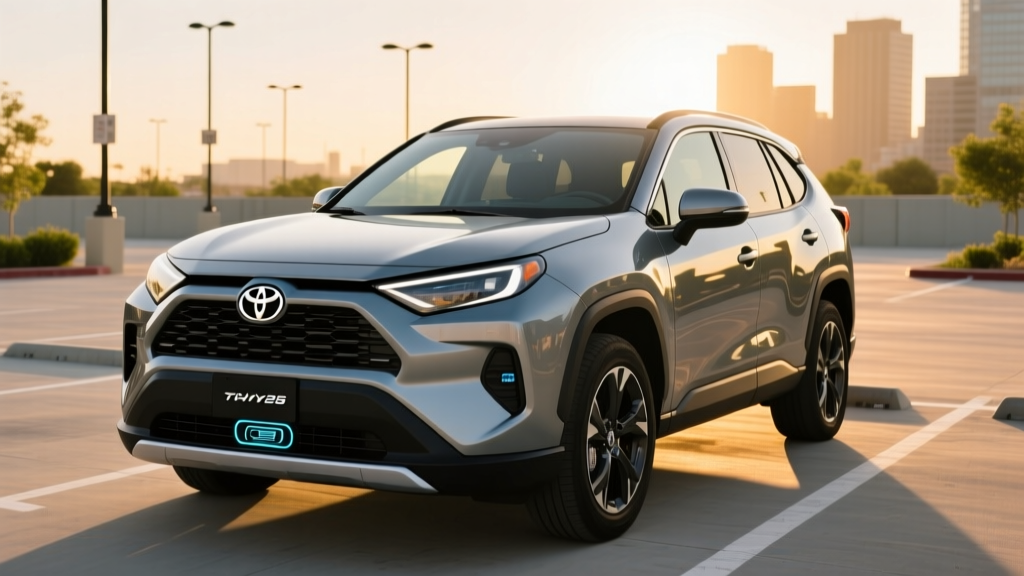
| Toyota RAV4 Prime (PHEV) | 2.5L I4 | 2x motors | 302 hp | 5.7 sec | eCVT |
| Ford Escape PHEV | 2.5L I4 | Single motor | 210 hp | 7.5 sec | eCVT |
The current-generation Toyota Prius is a strong example of how far hybrid performance has come. The previous generation's reputation for sluggishness is gone — the 2026 Prius AWD hits 60 mph in 6.7 seconds with 196 horsepower, all while returning 57 MPG combined. The RAV4 Prime PHEV, at 302 hp, outruns many sport compacts while offering 42 miles of electric-only range.
PHEV Battery, Charging, and Electric-Only Range
If you're considering a PHEV, battery capacity and charging logistics determine how much of your daily driving happens on electricity (and how much on gasoline).
| Model | Battery (kWh usable) | Elec. Range (EPA) | Level 2 Charge Time | DC Fast Charge? | Total Range (elec + gas) |
|---|---|---|---|---|---|
| Toyota Prius Prime SE | 10.9 kWh | 44 mi | ~4 hours (240V) | No | ~480 mi |
| Toyota RAV4 Prime | 14.9 kWh | 42 mi | ~2.5 hours (240V) | No | ~600 mi |
| Hyundai Tucson PHEV | 13.8 kWh | 33 mi | ~2 hours (240V) | No | ~430 mi |
| Ford Escape PHEV | 14.4 kWh | 37 mi | ~3.5 hours (240V) | No | ~520 mi |
| Chrysler Pacifica PHEV | 16.0 kWh | 32 mi | ~2 hours (240V) | No | ~460 mi |
Key observation: Most PHEVs do not support DC fast charging. You'll charge on a standard 120V outlet (Level 1, adding ~4–5 miles of range per hour) or a 240V Level 2 home charger. For a PHEV with a 14 kWh battery, overnight Level 2 charging is more than sufficient to fully replenish the battery before your morning commute.
A standard 120V household outlet will fully charge most PHEVs in 8–14 hours — fine for overnight top-ups. If you want faster replenishment, a Level 2 home charger (240V, 16–32 amps) costs roughly $500–$1,200 for the equipment plus $400–$1,500 for electrician installation, depending on your panel capacity and wiring run.
Tax Credits and Pricing: What You'll Actually Pay
Conventional hybrids (HEVs) do not qualify for the federal §30D tax credit — that incentive applies only to plug-in vehicles. However, qualifying PHEVs can receive up to $7,500 under current IRS rules, subject to several requirements:
- MSRP cap: Vans, SUVs, and pickups must be under $80,000; sedans and other vehicles under $55,000.
- Buyer income cap: Modified AGI must not exceed $150,000 (single), $225,000 (head of household), or $300,000 (joint).
- Battery sourcing: Critical minerals and battery components must meet phased-in domestic-sourcing thresholds that tighten each year through 2029.
- Point-of-sale transfer: As of 2024, you can transfer the credit to the dealer at purchase, reducing your out-of-pocket cost immediately rather than waiting until tax filing.
Base MSRP examples for 2026 models (before any credits or incentives):
- Toyota Prius LE (HEV): $29,445
- Toyota Prius Prime SE (PHEV): $34,595
- Toyota RAV4 Hybrid XLE (HEV): $34,025
- Hyundai Tucson PHEV SEL (PHEV): $39,440
- Ford Escape PHEV (PHEV): $40,500
Always verify current credit eligibility for your specific model and tax situation — battery sourcing rules change annually, and a model that qualifies in January may not qualify later in the year. Consult a tax professional or the IRS clean vehicle credit page for the latest details.
Reliability and Battery Longevity
Hybrid battery warranty (industry standard): 8 years / 100,000 miles minimum (10 years / 150,000 miles in California and CARB-adopting states). The warranty typically guarantees the battery will retain at least 60–70% of its original capacity.
Hybrid battery reliability is one of the most well-documented stories in modern automotive ownership. Toyota's hybrid system, now in its fifth generation, has accumulated billions of real-world miles. Failures before 150,000 miles are uncommon, and many Prius taxis have surpassed 300,000 miles on the original battery pack.
Battery replacement cost: If your hybrid battery does eventually need replacement outside of warranty, expect to pay $2,000–$4,000 for an HEV battery (smaller capacity) or $4,000–$8,000 for a PHEV battery (larger capacity). Refurbished and aftermarket options can reduce this to $1,500–$3,000 for common models like the Prius.
Hybrids actually experience less wear on certain components than conventional gas cars: the engine shuts off frequently (reducing operating hours), regenerative braking extends brake pad life dramatically (many owners report 80,000+ miles on original pads), and there's no traditional starter motor to fail.
For a deeper look at hybrid battery chemistry and degradation patterns, the NHTSA maintains safety and recall data, and organizations like Consumer Reports and J.D. Power publish annual reliability rankings where hybrids consistently rank near the top.
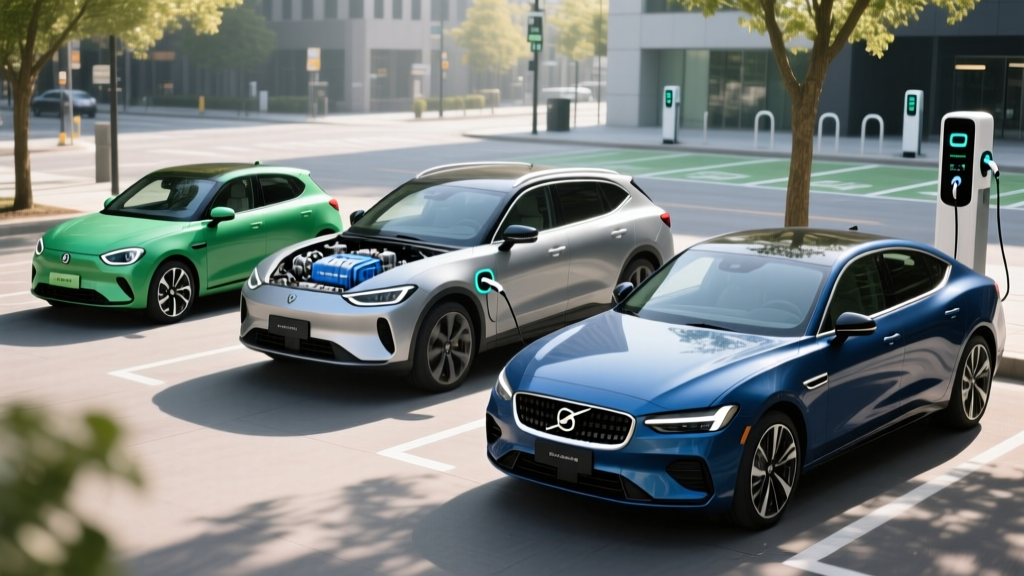
Hybrid vs PHEV vs EV: Which One Fits Your Life?
Choose a conventional hybrid (HEV) if:
- You can't charge at home (apartment, street parking, no garage)
- You drive 30,000+ miles per year and want maximum fuel savings without behavior change
- You want the lowest upfront cost in an electrified vehicle
- You frequently take long road trips through areas with sparse charging infrastructure
Choose a plug-in hybrid (PHEV) if:
- You have home or workplace charging and a daily commute under 40 miles
- You want electric driving for daily errands but gas flexibility for weekend road trips
- You qualify for the federal §30D credit, narrowing the price gap with HEVs
- You're not ready to commit to a full EV but want to reduce gasoline use
Choose a full battery-electric vehicle (BEV) if:
- You have reliable home Level 2 charging
- Your daily driving is under 250 miles and you can plan road-trip charging stops
- You want the lowest per-mile fuel cost and zero tailpipe emissions
- You want maximum performance and the lowest maintenance costs (no oil changes, no engine)
Hybrid (HEV) Pros
- No plug-in required — zero behavior change
- Excellent city MPG (often beats EPA sticker)
- Lower upfront cost than PHEV or EV
- Proven long-term reliability
Hybrid (HEV) Cons
- No electric-only driving
- No federal tax credit
- Still pays for gasoline 100% of the time
- Higher emissions than PHEV or EV
Frequently Asked Questions
Are all hybrid cars automatic transmission?
Yes. Every hybrid and plug-in hybrid sold in the U.S. for the 2026 model year uses an automatic transmission — either an eCVT, a dedicated hybrid automatic, or a multi-speed automatic with integrated electric motor. The hybrid architecture requires computer-controlled blending of engine and motor torque that a manual clutch cannot accommodate.
Can I get a hybrid with a manual transmission?
No mainstream manufacturer offers a hybrid with a manual transmission. The last notable attempt was the first-generation Honda Insight (2000–2006), which had a 5-speed manual but was a mild hybrid by today's standards. If a manual is a dealbreaker, you'll need to choose a conventional gasoline vehicle.
Do conventional hybrids need to be plugged in?
No. A standard hybrid (HEV) charges its small battery entirely through regenerative braking and the gasoline engine. You fuel it exactly like a regular gas car. Only plug-in hybrids (PHEVs) benefit from being plugged into an external power source.
How much does it cost to replace a hybrid battery?
For a conventional hybrid (HEV), replacement typically costs $2,000–$4,000. For a PHEV with a larger battery, expect $4,000–$8,000. Most hybrid batteries are warranted for 8–10 years / 100,000–150,000 miles, and real-world data shows many last well beyond 200,000 miles before needing service.
Do hybrids get better MPG in the city or on the highway?
Hybrids get significantly better fuel economy in city driving. Stop-and-go traffic maximizes regenerative braking and allows the engine to shut off frequently. On the highway, the engine runs continuously and aerodynamic drag reduces efficiency. The Toyota Prius, for example, is rated at 57 city / 56 highway — nearly flat — but many hybrids show a 5–10 MPG gap favoring city driving.
Are hybrids more reliable than gas-only cars?
Historical data from Consumer Reports and J.D. Power consistently ranks hybrids among the most reliable vehicle categories. Toyota and Lexus hybrids in particular have decades of proven durability. The electric motor-generators have no brushes or wear items, the eCVT has no belts or friction clutches to fail, and the engine experiences less cumulative wear due to frequent shut-off.
Whether you choose a 57-MPG Prius that never needs a plug or a RAV4 Prime that covers 42 miles on electricity before seamlessly switching to hybrid mode, you're getting an automatic transmission that's engineered to extract maximum efficiency from every drop of fuel and every kilowatt-hour. The manual transmission era in hybrids ended before it really began — and given the performance and efficiency gains, few owners miss it.