Short Answer: Yes, Every 2026 Toyota Camry Is a Hybrid
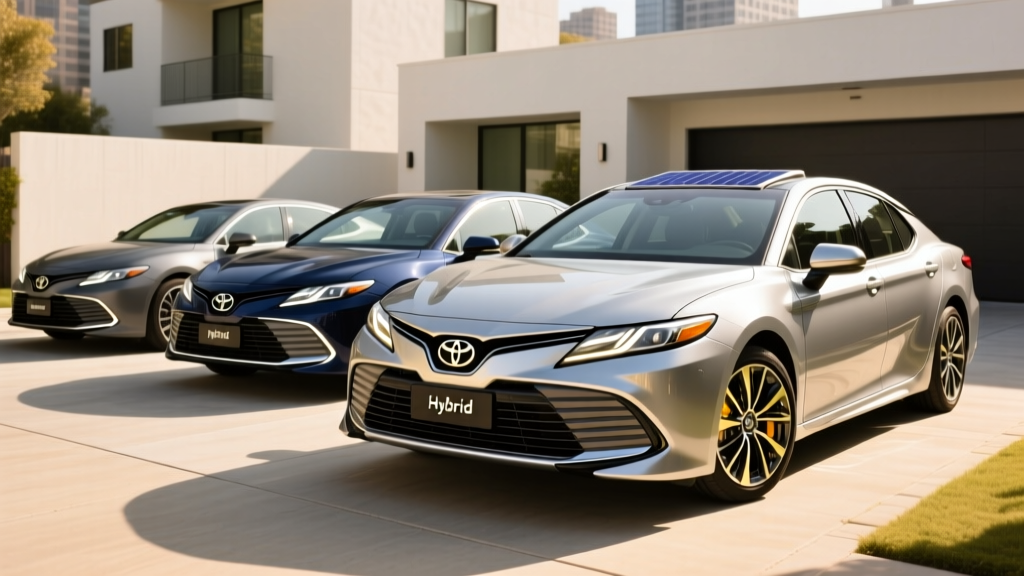
Starting with the 2025 model year, Toyota eliminated the purely gasoline four-cylinder Camry from its lineup. For 2026, every Toyota Camry sold in the United States is a hybrid. There is no conventional internal-combustion-only variant available. The entire lineup — LE, SE, XLE, and XSE trims — is built around Toyota's fifth-generation hybrid system, pairing a 2.5-liter four-cylinder engine with one or two electric motors depending on drivetrain configuration.
This is a significant shift. The Camry was America's best-selling midsize sedan for decades, and Toyota's decision to go all-hybrid signals confidence that buyers are ready for electrification — just not necessarily a full battery-electric vehicle (BEV). If you've been searching "are all Camrys hybrid," the answer is definitive: for the current generation, yes.
But "hybrid" can mean different things. Let's clarify exactly what you're getting, what it costs, and whether it's the right choice versus a plug-in hybrid or full EV.
HEV vs. PHEV: The Camry Is a Conventional Hybrid
The 2026 Camry is a conventional hybrid electric vehicle (HEV), not a plug-in hybrid (PHEV). This distinction matters for how you use the car, what you pay, and what incentives are available.
| Feature | HEV (2026 Camry) | PHEV (e.g., Toyota RAV4 Prime) | BEV (e.g., Tesla Model 3) |
|---|---|---|---|
| Plug-in charging required? | No | Yes (Level 1/2) | Yes (Level 1/2/DC) |
| Electric-only range | ~1 mile at low speed | 25–42 miles typical | 250–400+ miles |
| Battery size | ~1.0 kWh (buffer) | 13–20 kWh usable | 50–100+ kWh |
| Fueling | Gas station only | Gas station + plug | Plug only |
| Federal tax credit (§30D) | Not eligible | Up to $7,500 if eligible | Up to $7,500 if eligible |
| Regenerative braking | Yes (self-charges) | Yes (self-charges + plug) | Yes |
The Camry's hybrid system captures energy during braking and deceleration to recharge its small battery pack. You never plug it in. You simply fill up at a gas station, and the hybrid system handles the rest — seamlessly switching between electric motor assist, engine power, and combined operation. For drivers without access to home or workplace charging, this is the lowest-friction path to better fuel economy.
EPA MPG: How Many Miles Per Gallon Does the 2026 Camry Hybrid Get?
The 2026 Camry hybrid's EPA ratings vary by trim and whether you choose front-wheel drive (FWD) or available electronic all-wheel drive (AWD). Here is the breakdown per fueleconomy.gov:
| Trim / Drivetrain | City MPG | Highway MPG | Combined MPG |
|---|---|---|---|
| LE FWD | 53 | 50 | 52 |
| LE AWD | 51 | 49 | 50 |
| SE FWD | 48 | 47 | 47 |
| SE AWD | 46 | 46 | 46 |
| XLE FWD | 48 | 47 | 47 |
| XSE AWD | 44 | 43 | 44 |
The LE FWD's 52 MPG combined is exceptional for a midsize sedan — roughly 70% better than the last gas-only Camry four-cylinder, which returned around 32 MPG combined. The drop in higher trims (SE, XLE, XSE) reflects larger wheels, heavier curb weight, sport-tuned suspensions, and additional equipment.
Real-World MPG vs. EPA Sticker
Toyota hybrids have a well-documented real-world behavior: they often exceed their EPA city rating in stop-and-go driving. Regenerative braking recaptures more energy in heavy traffic, and the engine shuts off more frequently at low speeds. Owners routinely report 55–58 MPG in urban conditions with the LE trim.
Highway driving is the opposite story. At sustained 70–80 MPH speeds, the gasoline engine carries most of the load, and aerodynamic drag dominates. Expect 44–48 MPG highway in real-world conditions with the LE, slightly below the EPA's 50 MPG highway estimate. In cold weather (below 30°F), expect a 5–10% fuel economy reduction as the engine runs longer to provide cabin heat and maintain operating temperature.
Powertrain Specs: What's Under the Hood?
| Specification | 2026 Camry Hybrid |
|---|---|
| Engine | 2.5L inline-4 (A25A-FXS) Atkinson cycle |
| Engine output | 184 hp / 163 lb-ft torque |
| Front electric motor | 134 hp / 155 lb-ft |
| Rear motor (AWD only) | 40 hp |
| Combined net horsepower | 225 hp (FWD) / 232 hp (AWD) |
| Transmission | eCVT (planetary gearset, not a belt CVT) |
| 0–60 mph | ~7.0 sec (FWD) / ~6.7 sec (AWD) |
| Battery | ~1.0 kWh lithium-ion (sealed NiMH on base) |
| Drivetrain | FWD standard; electronic AWD available |
The 225–232 combined horsepower is a meaningful upgrade over the previous gas-only Camry's 203 hp. The electric motor delivers instant torque from a stop, giving the Camry hybrid noticeably stronger off-the-line acceleration than its predecessor. The eCVT is Toyota's proven planetary gearset design — it has no belt, no fixed gear ratios, and none of the "rubber band" feel associated with traditional continuously variable transmissions.
The AWD system is worth understanding: it uses a separate rear-mounted electric motor rather than a mechanical driveshaft. There's no physical connection between the front and rear axles. The rear motor engages automatically during acceleration, slippery conditions, or when the system detects front-wheel slip, then disengages at steady cruising speeds to preserve fuel economy.
Pricing, Trims, and Tax Credit Eligibility
The 2026 Camry hybrid lineup starts at approximately $29,990 MSRP for the LE FWD (including destination charge) and climbs to roughly $37,000 for a fully equipped XSE AWD. Here's the approximate trim pricing:
- LE FWD: ~$29,990
- LE AWD: ~$31,390
- SE FWD: ~$31,490
- SE AWD: ~$32,890
- XLE FWD: ~$34,490
- XLE AWD: ~$35,890
- XSE AWD: ~$36,990
Does the Camry Hybrid Qualify for a Federal Tax Credit?
No. The 2026 Camry is a conventional hybrid (HEV), and the IRS §30D Clean Vehicle Credit applies only to plug-in electric vehicles — battery-electric vehicles (BEVs) and plug-in hybrids (PHEVs) with a minimum battery capacity of 7 kWh. The Camry's ~1.0 kWh pack does not qualify.
Some states offer their own hybrid incentives — for example, certain utility companies provide rebates for purchasing any hybrid vehicle. Check your state energy office or local utility for specific programs. But at the federal level, there is no tax credit for a conventional hybrid.
Battery Warranty, Reliability, and Replacement Cost
Hybrid battery longevity is consistently one of the top concerns for first-time hybrid buyers. Toyota addresses this with one of the strongest warranties in the industry.
2026 Camry Hybrid Battery Warranty
- Hybrid battery: 10 years / 150,000 miles (whichever comes first)
- Hybrid system components (inverter, motor, control module): 8 years / 100,000 miles
- Standard powertrain: 5 years / 60,000 miles
- Capacity retention threshold: Toyota warrants the battery against failure; there is no published minimum capacity percentage (as there is for BEVs), because the small pack is managed conservatively with a large buffer
Real-World Reliability
Toyota's hybrid system is among the most proven in automotive history. The Prius, which uses fundamentally similar technology, has demonstrated hybrid battery packs lasting 200,000–300,000+ miles with minimal degradation. The Camry hybrid uses a smaller, less-stressed battery than a PHEV or BEV — it never deep-cycles, never charges to true 100% or discharges to true 0%, and the thermal management keeps it in an optimal temperature window.
Independent reliability data from Consumer Reports and J.D. Power consistently ranks Toyota hybrids among the most dependable vehicles in their segments. The hybrid system actually reduces wear on several conventional components: regenerative braking extends brake pad life significantly (many owners report 80,000+ miles on original pads), and the engine's start-stop operation is managed smoothly by the electric motor, reducing starter wear.
Battery Replacement Cost
If the hybrid battery does fail outside of warranty — which is uncommon before 200,000 miles — replacement costs have decreased substantially. A new OEM hybrid battery pack for the Camry runs approximately $2,000–$3,500 including labor at a Toyota dealer. Independent hybrid specialists often offer refurbished packs for $1,200–$2,000. This is a fraction of the $8,000–$20,000+ cost of replacing a large BEV traction battery.
Who Should Buy the Camry Hybrid — And Who Shouldn't?
Pros
- 52 MPG combined (LE) — among the most efficient midsize sedans
- No plug-in charging required; zero lifestyle change from a gas car
- 225–232 hp is genuinely quick for the segment
- 10-year/150,000-mile hybrid battery warranty
- Strong resale value and proven reliability track record
- AWD available across the lineup
- Lower starting price than comparable PHEVs or BEVs
Cons
- No federal tax credit (HEV, not PHEV/BEV)
- No electric-only driving range beyond parking-lot speeds
- Cannot drive on electricity alone during a gas shortage
- Highway MPG drops below EPA estimate at sustained 75+ MPH
- Still burns gasoline — not a path to zero tailpipe emissions
- Rear-seat and trunk space slightly reduced vs. prior gas model due to battery placement
Decision Framework: Camry HEV vs. PHEV vs. Full EV
Choose the Camry Hybrid (HEV) if: You don't have reliable access to home or workplace charging, you drive a mix of city and highway miles, you want maximum fuel economy with zero behavior change, and your budget is under $35,000.
Choose a PHEV (like the Toyota Prius Prime or Hyundai Tucson PHEV) if: You can charge at home (even a standard 120V outlet works), your daily commute is under 30 miles, you want electric-only driving for errands but gas flexibility for road trips, and you can utilize the $7,500 federal tax credit.
Choose a full BEV (like the Tesla Model 3 or Hyundai Ioniq 6) if: You have Level 2 home charging, you want zero tailpipe emissions and minimal maintenance, your daily driving is under 250 miles, and you want to eliminate gasoline costs entirely.
Camry Hybrid vs. Competing Hybrid Sedans
The Camry isn't the only hybrid sedan in the midsize segment. Here's how it stacks up against key rivals:
| Vehicle | Combined MPG | Combined HP | Starting MSRP | Tax Credit |
|---|---|---|---|---|
| 2026 Toyota Camry Hybrid LE | 52 | 225 | ~$29,990 | None |
| 2026 Honda Accord Hybrid | 48 | 204 | ~$32,500 | None |
| 2026 Hyundai Sonata Hybrid | 47 | 192 | ~$31,250 | None |
| 2026 Toyota Prius (compact) | 57 | 196 | ~$28,550 | None |
| 2026 Toyota Prius Prime (PHEV) | 52 / 44 mi EV | 220 | ~$33,445 | Up to $7,500 |
The Camry hybrid's 52 MPG combined leads the midsize sedan class. The Honda Accord Hybrid and Hyundai Sonata Hybrid are strong alternatives, but both trail by 4–5 MPG. If you're willing to step down to the compact Prius, you gain 5 more MPG and a lower price — but you sacrifice rear-seat room, trunk space, and the Camry's more refined ride quality. The Prius Prime is the compelling wildcard: if you qualify for the full $7,500 federal tax credit, a Prius Prime can effectively cost less than a Camry LE while offering 44 miles of electric-only range.
Frequently Asked Questions
Are all Camrys hybrid for 2026?
Yes. Beginning with the 2025 model year, Toyota discontinued the gasoline-only Camry. Every 2026 Camry — LE, SE, XLE, and XSE — uses the fifth-generation Toyota hybrid system. There is no non-hybrid option.
Do I need to plug in the Camry hybrid?
No. The Camry is a conventional hybrid (HEV), not a plug-in hybrid. Its small battery recharges through regenerative braking and the gasoline engine. You fuel it exclusively at gas stations, exactly like a traditional car.
How many MPG does the 2026 Camry hybrid get in real-world driving?
The EPA rates the LE FWD at 53 city / 50 highway / 52 combined. In real-world use, city drivers often see 55–58 MPG thanks to aggressive regenerative braking in stop-and-go traffic. Highway drivers should expect 44–48 MPG at sustained speeds above 70 MPH. Cold weather reduces fuel economy by roughly 5–10%.
Is the Camry hybrid battery expensive to replace?
Hybrid battery replacement typically costs $2,000–$3,500 at a dealer or $1,200–$2,000 from an independent hybrid specialist. However, Toyota's hybrid batteries routinely last 200,000+ miles, and the battery is covered by a 10-year/150,000-mile warranty. Most owners will never need a replacement.
Does the 2026 Camry hybrid qualify for any tax credit?
The Camry hybrid does not qualify for the federal §30D Clean Vehicle Credit because it is a conventional hybrid (HEV), not a plug-in vehicle. The credit requires a minimum 7 kWh battery and plug-in capability. Check with your state energy office or local utility for possible state-level hybrid rebates, which vary by jurisdiction.
How does the Camry hybrid compare to a full EV like the Tesla Model 3?
The Camry hybrid still uses gasoline and costs roughly $1,000–$1,400 per year in fuel (at 12,000 miles and $3.20/gallon). A Tesla Model 3 Long Range eliminates gasoline entirely, costs roughly $500–$700 per year in electricity, qualifies for up to $7,500 in federal tax credits (subject to IRS §30D eligibility), and offers 300+ miles of range. However, the Model 3 requires home charging infrastructure, has a higher starting MSRP, and demands more planning on road trips. The Camry hybrid is the pragmatic choice for buyers who want better fuel economy without changing their refueling habits.
Is the Camry hybrid AWD system good in snow?
The electronic AWD system provides meaningful traction improvement in snow and rain by engaging the 40-hp rear motor when slip is detected. It's not a substitute for dedicated winter tires, but it's significantly more capable than FWD alone. The system adds only ~1 MPG penalty versus FWD, which is a negligible tradeoff for all-weather confidence.