If you've asked yourself what is the advantage of a hybrid car over a conventional gas vehicle—or whether you should skip straight to a full battery-electric vehicle (BEV)—you're not alone. In 2026, hybrids occupy a pragmatic middle ground: they deliver 40–55+ MPG without requiring a home charger, a lifestyle change, or a $50,000+ starting price. But the answer depends heavily on whether you're looking at a conventional hybrid (HEV) or a plug-in hybrid (PHEV), and how you actually drive.
This guide cuts through the marketing with exact EPA figures, real-world efficiency data, battery warranty realities, and a concrete decision framework so you can choose the right electrified powertrain for your situation.
HEV vs PHEV: The Two Types of Hybrid, Explained
The single biggest source of buyer confusion is lumping all hybrids together. They split into two fundamentally different categories:
Conventional Hybrid (HEV)
- No plug required. A small battery (typically 1–2 kWh) is recharged by regenerative braking and the gasoline engine.
- Always uses gas. The electric motor assists the engine and enables brief electric-only creeping, but you never plug in.
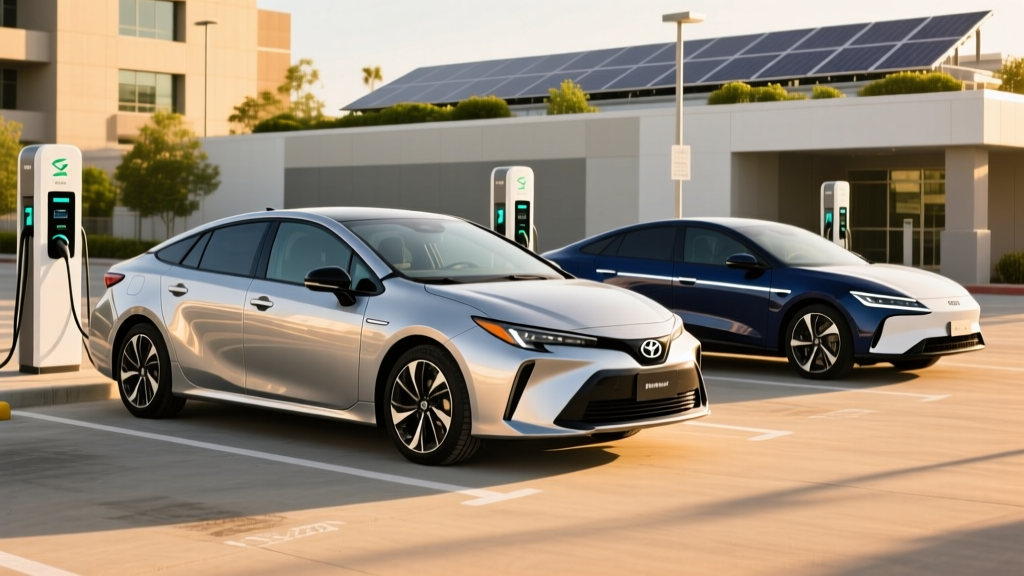
- Examples: Toyota Prius, Honda Accord Hybrid, Toyota RAV4 Hybrid, Hyundai Tucson Hybrid.
Plug-In Hybrid (PHEV)
- Plugs in like an EV. A larger battery (13–25+ kWh usable) provides 25–50+ miles of pure electric driving before the gas engine kicks in.
- Best of both worlds—if you charge. Daily commutes run on electricity; road trips use the gas engine with no range anxiety.
- Examples: Toyota RAV4 Prime, Jeep Wrangler 4xe, Chrysler Pacifica Hybrid, Hyundai Tucson PHEV.
The critical caveat: A PHEV that is never plugged in is just a heavier, less efficient HEV. If you can't charge at home or work, a conventional hybrid is almost always the smarter buy.
Real-World MPG: What Hybrids Actually Deliver
Hybrid efficiency is measured in miles per gallon (MPG), and the EPA provides city, highway, and combined estimates via fueleconomy.gov. But real-world results often diverge—especially in city driving, where hybrids shine.
| Model | Type | City MPG | Highway MPG | Combined MPG | Real-World City (Typical) |
|---|---|---|---|---|---|
| Toyota Prius (FWD) | HEV | 57 | 54 | 57 | 55–62 |
| Toyota Prius (AWD-e) | HEV | 53 | 50 | 54 | 50–56 |
| Honda Accord Hybrid | HEV | 51 | 44 | 48 | 48–54 |
| Toyota RAV4 Hybrid | HEV | 41 | 38 | 40 | 38–44 |
| Hyundai Tucson Hybrid | HEV | 38 | 38 | 38 | 35–40 |
| Toyota RAV4 Prime (PHEV) | PHEV | 94 MPGe (EV mode) / 38 MPG (gas-only) | 36–41 (gas) | ||
| Jeep Wrangler 4xe (PHEV) | PHEV | 49 MPGe (EV mode) / 20 MPG (gas-only) | 18–22 (gas) | ||
| Chrysler Pacifica Hybrid (PHEV) | PHEV | 82 MPGe (EV mode) / 30 MPG (gas-only) | 28–33 (gas) | ||
Why hybrids often beat EPA in the city: Conventional gas cars waste enormous energy idling and braking. Hybrids recapture braking energy via regeneration and shut off the engine at stops. The stop-and-go traffic that tanks a gas car's MPG is exactly where a hybrid's electric motor does the most work. On the highway, the advantage narrows because the gas engine runs continuously at steady speed—there's less braking energy to recapture.
PHEV Electric-Only Range and Total Range
For plug-in hybrids, the electric-only range is the headline spec. This is how far you can drive on battery power alone before the gasoline engine starts. According to EPA data, here's what popular 2026 PHEVs deliver:
| Model | EV-Only Range | Total Range (EV + Gas) | Battery (Usable kWh) | Level 2 Charge Time (0–100%) | DC Fast Charge? |
|---|---|---|---|---|---|
| Toyota RAV4 Prime | 42 mi | ~600 mi | 14.9 kWh | ~2.5 hr (6.6 kW) | No |
| Jeep Wrangler 4xe | 21 mi | ~370 mi | 15.0 kWh | ~3 hr (6.6 kW) | No |
| Chrysler Pacifica Hybrid | 32 mi | ~520 mi | 16.0 kWh | ~2 hr (7.2 kW) | No |
| Hyundai Tucson PHEV | 33 mi | ~440 mi | 13.8 kWh | ~2 hr (7.2 kW) | No |
| Ford Escape PHEV | 37 mi | ~520 mi | 14.4 kWh | ~3.5 hr (3.3 kW) | No |
Key takeaway on PHEV charging: Most PHEVs charge exclusively on Level 2 (240V) and do not support DC fast charging. This is intentional—their batteries are small enough that a full Level 2 charge takes 2–3.5 hours, which covers overnight home charging or a workplace top-up. If you need rapid road-trip charging, that's a BEV advantage.
Real-world EV range caveat: Expect 10–20% less electric-only range in cold weather (below 40°F) and at sustained highway speeds above 70 mph. A RAV4 Prime rated at 42 miles may deliver 34–36 miles in January in Chicago.
Powertrain and Performance: More Than Just Efficiency
One advantage of hybrid cars that surprises first-time buyers is performance. Electric motors provide instant torque at zero RPM, which means hybrids often feel quicker off the line than their gas-only counterparts—even when total horsepower figures are modest.
| Model | Combined HP | Engine | Electric Motor | 0–60 mph |
|---|---|---|---|---|
| Toyota Prius | 194 hp (FWD) / 196 hp (AWD-e) | 2.0L 4-cyl | 83 kW front / 41 kW rear (AWD) | 7.0 sec (FWD) |
| Honda Accord Hybrid | 204 hp | 2.0L 4-cyl | Two-motor system (184 hp motor) | 7.3 sec |
| Toyota RAV4 Hybrid | 219 hp | 2.5L 4-cyl | Front + rear motors (AWD) | 7.4 sec |
| Toyota RAV4 Prime (PHEV) | 302 hp | 2.5L 4-cyl | Front + rear motors (AWD) | 5.7 sec |
| Jeep Wrangler 4xe (PHEV) | 375 hp / 470 lb-ft | 2.0L turbo 4-cyl | 134 hp motor integrated | 6.0 sec |
The RAV4 Prime's 302 hp and 5.7-second 0–60 time make it one of the quickest vehicles in Toyota's lineup—hybrid or otherwise. The Wrangler 4xe's 470 lb-ft of torque, available instantly from the electric motor, transforms its off-road capability. This performance bonus is a genuine hybrid advantage that efficiency-focused marketing often undersells.
Pricing, Tax Credits, and Total Ownership Cost
Hybrids carry a price premium over their gas-only equivalents, typically $1,500–$5,000 depending on the model and trim. But that premium is often recovered through fuel savings within 3–5 years of average driving.
| Model | Base MSRP | Federal §30D Tax Credit | Estimated Fuel Savings vs. Gas (5 yr / 75K mi) |
|---|---|---|---|
| Toyota Prius | $29,445 | Not eligible (HEV) | $3,200–$4,800 |
| Honda Accord Hybrid | $34,990 | Not eligible (HEV) | $2,400–$3,600 |
| Toyota RAV4 Hybrid | $33,575 | Not eligible (HEV) | $2,000–$3,200 |
| Toyota RAV4 Prime (PHEV) | $44,985 | Up to $7,500* | $4,000–$6,500 |
| Jeep Wrangler 4xe (PHEV) | $51,790 | Up to $3,750* | $1,800–$3,000 |
| Chrysler Pacifica Hybrid (PHEV) | $51,095 | Up to $7,500* | $2,800–$4,200 |
*Federal §30D Tax Credit Rules for PHEVs (2026): Conventional hybrids (HEVs) do not qualify for the federal EV tax credit. Only PHEVs and BEVs are eligible, and even then, eligibility is complex. Under current IRS §30D rules:
- The vehicle must have a battery capacity of at least 7 kWh (most PHEVs qualify).
- MSRP must not exceed $80,000 for SUVs/vans/pickups, or $55,000 for sedans.
- Buyer income caps apply: $150K single / $300K joint modified AGI.
- Battery components and critical minerals must meet North American sourcing thresholds (phasing in through 2026+).
- The credit can be transferred to the dealer as a point-of-sale discount.
Always verify eligibility with a tax professional before purchasing. Credit amounts vary by model, battery sourcing, and your personal tax situation.
Battery Longevity, Warranty, and Replacement Costs
Hybrid battery anxiety is one of the top concerns we hear from buyers—and it's largely overblown based on two decades of real-world data. Here's the reality:
Hybrid Battery Warranty Coverage
- Toyota: 10 years / 150,000 miles (hybrid battery, all 50 states)
- Honda: 8 years / 100,000 miles (10 years / 150,000 miles in CARB states)
- Hyundai/Kia: 10 years / 100,000 miles (original owner)
- Ford: 8 years / 100,000 miles (hybrid and PHEV battery)
How long do hybrid batteries actually last? Toyota has documented Prius batteries lasting 200,000+ miles with minimal degradation. The HEV battery is small (1–2 kWh) and is never fully charged or fully depleted—the system keeps it in a narrow state-of-charge window (roughly 40–80%), which dramatically extends cycle life. PHEV batteries are larger but follow similar buffer strategies.
Replacement cost if out of warranty: A Toyota Prius hybrid battery replacement runs approximately $2,000–$4,000 at a dealership, with aftermarket and refurbished options available for $1,000–$2,500. PHEV battery replacements are more expensive—$5,000–$9,000—due to the larger capacity. However, catastrophic battery failure before 150,000 miles is statistically rare based on NHTSA complaint data and long-term owner surveys.
Hybrid vs PHEV vs EV: Which Is Right for You?
Choose a Conventional Hybrid (HEV) If:
- You can't charge at home or work (apartment, street parking, no garage).
- Your budget is under $35,000 and you want maximum MPG with zero behavior change.
- You drive mostly in the city where hybrid efficiency peaks (45–57 MPG real-world).
- You want Toyota/Honda-level reliability with a proven 20-year track record.
Choose a Plug-In Hybrid (PHEV) If:
- You can charge at home (even a standard 120V outlet adds ~4–5 miles/hr, enough for overnight).
- Your daily commute is under 40 miles round-trip (you'll rarely use gas on weekdays).
- You take regular road trips and don't want to plan around charging stations.
- You want to reduce emissions now while the public charging network matures.
Choose a Full EV (BEV) If:
- You have reliable home Level 2 charging (240V, 32–48A).
- Your daily driving is under 250 miles and you're comfortable with road-trip charging planning.
- You want the lowest per-mile fuel cost ($0.03–$0.05/mi on home electricity vs. $0.12–$0.18/mi for a hybrid on gas).
- You want zero tailpipe emissions and minimal maintenance (no oil changes, fewer brake replacements due to regen).
The Bottom Line: What Is the Advantage of a Hybrid Car?
Advantages of Hybrids
- 40–57 MPG combined with no plug-in requirement (HEV)
- Lower fuel cost: $900–$1,400/year vs. $1,800–$2,400 for a comparable gas car (15K mi/yr at $3.40/gal)
- No range anxiety or charging infrastructure dependency
- Strong resale value (Prius and RAV4 Hybrid consistently rank among highest-resale vehicles)
- Proven long-term reliability with 10-year/150K-mile battery warranties
- Instant electric torque improves acceleration and drivability
Limitations to Consider
- Higher upfront cost vs. gas-only equivalent ($1,500–$5,000 premium)
- No federal tax credit for conventional HEVs
- Still requires gas, oil changes, and emissions-system maintenance
- Highway MPG advantage is smaller than city MPG advantage
- PHEVs are only efficient if you actually plug them in regularly
- Larger PHEVs (Wrangler 4xe) can be less efficient than gas models when the battery is depleted
The core advantage of a hybrid car in 2026 is risk-free efficiency. You get 30–50% better fuel economy than a comparable gas car, you don't need to install a charger or change your habits, and the technology has been proven across millions of vehicles over two decades. For buyers who aren't ready for a full EV—whether due to housing situation, budget, or road-trip needs—a hybrid remains the most practical path to lower fuel costs and reduced emissions today.
Frequently Asked Questions
How many MPG does a hybrid car get?
It varies by model, but the most efficient 2026 hybrids deliver 48–57 MPG combined (EPA). The Toyota Prius leads at 57 MPG combined (FWD), while SUV hybrids like the RAV4 Hybrid achieve 40 MPG combined. In real-world city driving, many owners report matching or slightly exceeding EPA estimates thanks to regenerative braking.
How far can a PHEV go on electric only?
Most 2026 PHEVs offer 21–42 miles of electric-only range. The Toyota RAV4 Prime leads its class at 42 miles, while the Ford Escape PHEV delivers 37 miles. This covers the average American's daily commute (roughly 30 miles round-trip) entirely on electricity, with the gas engine available for longer trips.
Do hybrid batteries need to be replaced, and how much does it cost?
Hybrid batteries are designed to last the life of the vehicle. Most are covered by 8–10 year / 100,000–150,000 mile warranties. If replacement is needed out of warranty, expect $2,000–$4,000 for an HEV battery and $5,000–$9,000 for a PHEV battery. Real-world data shows most hybrid batteries last 150,000–200,000+ miles without significant issues.
Does a hybrid car qualify for a tax credit?
Conventional hybrids (HEVs) do not qualify for the federal §30D clean vehicle tax credit. Only plug-in hybrids (PHEVs) and full EVs are eligible, and even then, eligibility depends on MSRP caps ($55K sedans / $80K SUVs), buyer income limits, and battery sourcing requirements. Some states offer additional rebates for PHEVs—check your state's energy office or fueleconomy.gov's incentive finder.
Is a hybrid better than a full EV?
It depends on your situation. A hybrid is better if you can't charge at home, frequently drive more than 300 miles in a day, or have a tighter budget. A full EV is better if you have home charging, want the lowest per-mile fuel cost, and are comfortable with road-trip charging planning. For many households, a PHEV bridges both needs—electric daily driving with gas-engine flexibility for long trips.
Are hybrids reliable long-term?
Yes. Toyota's hybrid system has been in production since 1997 (Prius) with exceptional reliability records. The hybrid system actually reduces wear on some components: regenerative braking extends brake pad life (many owners report 80,000+ miles on original pads), and the engine runs fewer total hours because it shuts off at stops and during low-speed electric driving. Hybrid-specific components (inverter, motor/generators) have proven durable across millions of vehicles.