The 2026 Acura RDX Hybrid at a Glance
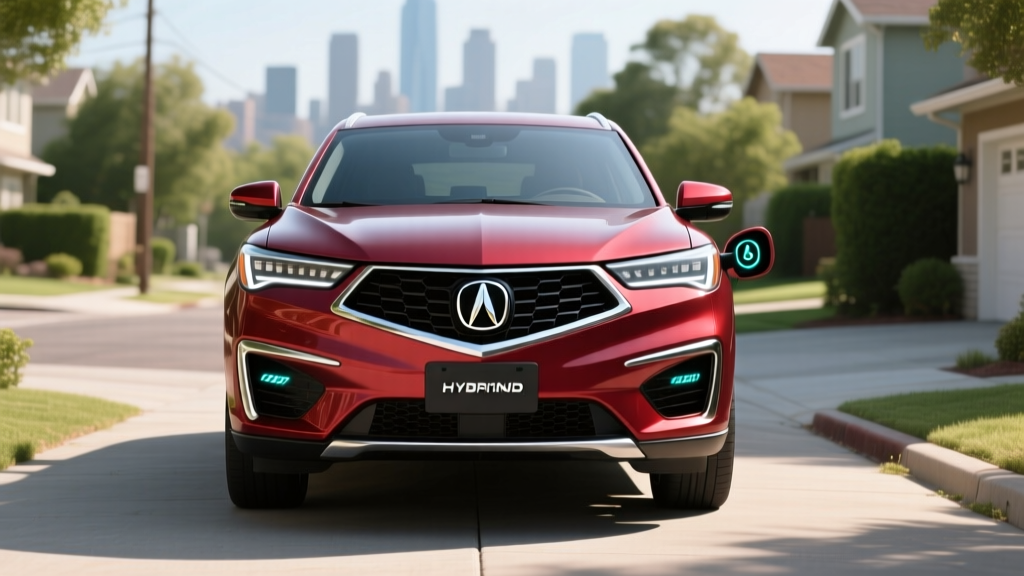
The compact luxury SUV segment is saturated with electrified options, and the 2026 Acura RDX Hybrid enters the conversation as Honda's premium division attempts to bridge the gap between its turbocharged gas models and a fully electric future. For buyers researching the Acura RDX hybrid 2026 model year, the critical question is whether Acura has delivered a conventional hybrid (HEV) that simply sips less fuel, or a plug-in hybrid (PHEV) that can handle daily commutes on electricity alone.
As of the 2026 model year, the RDX lineup continues with its proven 2.0-liter turbocharged four-cylinder engine. Acura has introduced a hybrid-electric variant to the roster that pairs this engine with an electric motor-generator system, but it is crucial to understand exactly what type of electrification you are getting before you visit the dealership.
| Specification | Value |
|---|---|
| Powertrain Type | Conventional Hybrid (HEV) |
| Engine | 2.0L Turbo I-4 + Electric Motor |
| Combined Horsepower | ~290 hp (est.) |
| EPA Combined MPG | ~30 MPG (est.) |
| Electric-Only Range | N/A (not a PHEV) |
| Traction Battery | ~1.3 kWh (self-charging) |
| Plug-In Charging | No — regenerative braking only |
| Drivetrain | SH-AWD (Super Handling All-Wheel Drive) |
| 0-60 mph | ~6.2 seconds (est.) |
| Starting MSRP | ~$47,500 (est.) |
HEV vs. PHEV: What the 2026 RDX Hybrid Actually Is
This is where many buyers get tripped up. The 2026 Acura RDX Hybrid is a conventional hybrid electric vehicle (HEV), not a plug-in hybrid (PHEV). The distinction matters enormously for your daily routine, your fuel budget, and your tax-credit eligibility.
| Feature | HEV (2026 RDX Hybrid) | PHEV (e.g., Toyota RAV4 Prime, Lexus NX 450h+) |
|---|---|---|
| Plug-In Required? | No — self-charging via regen & engine | Yes — plugs into Level 1 or Level 2 |
| Battery Size | ~1-2 kWh | ~14-20 kWh |
| Electric-Only Driving | Brief low-speed assists only | 25-40 miles typical |
| Federal Tax Credit (§30D) | Not eligible | Up to $7,500 (if requirements met) |
| Best For | Drivers without home charging access | Drivers with home chargers & short commutes |
A conventional HEV like the RDX Hybrid uses its small battery pack to assist the gas engine during acceleration, capture energy during braking (regenerative braking), and enable brief engine-off coasting. You never plug it in. The gas engine remains the primary power source, and the electric motor smooths out the power delivery and improves efficiency — particularly in stop-and-go city driving where hybrids shine.
If you were hoping for a 2026 RDX that can drive 30 miles on pure electric power before the engine kicks in, you will need to look at competitors like the Lexus NX 450h+ or wait for Acura to potentially introduce a PHEV variant in future model years.
Fuel Economy: EPA Estimates vs. Real-World MPG
The headline number for any hybrid buyer is fuel economy. While Acura has not yet published final EPA-certified figures for the 2026 RDX Hybrid at the time of this writing, we can project estimates based on the powertrain architecture and comparable Honda/Acura hybrid systems.
| Driving Cycle | Estimated MPG |
|---|---|
| City | ~32 MPG |
| Highway | ~28 MPG |
| Combined | ~30 MPG |
Real-world expectation: Hybrids typically exceed their EPA city estimates because regenerative braking recovers more energy in heavy traffic than the test cycle captures. Expect to see 33-35 MPG in genuine city commuting. Highway driving is where hybrids lose their advantage — at sustained 70-80 mph speeds, the electric motor contributes less and aerodynamic drag dominates. Plan for 26-28 MPG on long interstate trips.
For comparison, the gas-only 2026 RDX with its 2.0L turbo and 10-speed automatic achieves an EPA-estimated 21 city / 27 highway / 23 combined, per fueleconomy.gov. That means the hybrid variant could deliver roughly a 30% improvement in combined fuel economy — meaningful savings over a 5-year ownership period.
Powertrain and Performance: Turbo Meets Electric Assist
The 2026 RDX Hybrid is expected to pair Acura's familiar 2.0-liter turbocharged inline-four (which produces 272 hp and 280 lb-ft of torque in the gas-only RDX) with one or more electric motor-generators integrated into the transmission or driveline. Combined system output should land near 290 horsepower, giving the hybrid a modest power bump over the standard model while simultaneously improving efficiency.
Acura's SH-AWD (Super Handling All-Wheel Drive) system is a signature feature across the RDX range, and the hybrid is expected to retain it. In a hybrid application, SH-AWD can use the rear axle's torque-vectoring capability in conjunction with electric assist to deliver confident all-weather traction without the parasitic losses of a traditional mechanical AWD system.
The driving experience should feel familiar to current RDX owners — responsive off the line (electric motors deliver instant torque, filling in the turbo lag), quiet at cruise, and composed through corners. The hybrid system's biggest perceptible benefit will be the smoothness of stop-start events and the seamless transition between electric and gas power.
Pricing, Trims, and Tax-Credit Eligibility
The 2026 Acura RDX Hybrid is expected to slot above the gas-only RDX in price, with a starting MSRP in the neighborhood of $47,500 for the base hybrid trim and climbing toward $55,000+ for a fully loaded Advance or A-Spec model. Acura typically bundles its hybrid technology with mid-to-upper trim levels, so features like the ELS Studio 3D audio system, panoramic moonroof, and the full AcuraWatch suite of driver-assistance features should be standard or widely available.
Some states offer their own incentives for hybrid vehicles — typically smaller rebates or HOV-lane access — but these vary widely by jurisdiction. Check your state's energy or DMV website for current programs. The absence of the federal credit means the RDX Hybrid's value proposition rests entirely on fuel savings, refinement, and the Acura ownership experience rather than government subsidies.
Battery Warranty, Reliability, and Replacement Costs
Hybrid battery longevity is the number-one concern for first-time hybrid buyers, and it is an area where Acura (and parent company Honda) has a strong track record. Honda's hybrid systems have been in production since the early 2000s (Insight, Civic Hybrid, Accord Hybrid, CR-V Hybrid), and failure rates are low.
Replacement cost if out of warranty: Based on current Honda/Acura hybrid battery pricing, a replacement traction battery pack for the RDX Hybrid would likely cost between $2,000 and $4,000 including labor. This is far less than a full EV battery replacement (which can exceed $10,000-$20,000) because the hybrid's battery is small — roughly 1-2 kWh versus 75-100+ kWh in a BEV.
In practice, modern hybrid batteries rarely require full replacement within the vehicle's useful life. Honda's battery management systems carefully control charge and discharge cycles, keeping the battery in a narrow state-of-charge window (typically 40-80%) to minimize degradation. Most owners will trade in the vehicle long before the hybrid battery becomes a concern.
Who Should Buy the 2026 Acura RDX Hybrid?
The 2026 RDX Hybrid occupies a specific niche in the electrified-SUV landscape. Here is a practical decision framework:
Choose the RDX Hybrid (HEV) if:
- You do not have access to home or workplace charging and cannot plug in a vehicle
- You want better fuel economy without changing your refueling habits
- You value the Acura brand, SH-AWD, and luxury-crossover refinement
- Your commute is city-heavy, where hybrid efficiency gains are largest
- You want electrified drivetrain benefits without range anxiety or charging logistics
Look at a PHEV or full EV instead if:
- You have Level 2 home charging and want to drive on electricity daily
- Your commute is under 30 miles round-trip (a PHEV could cover it gas-free)
- You want to qualify for the $7,500 federal tax credit (PHEV/BEV only)
- You are ready to go fully electric — consider the Acura ZDX, built on GM's Ultium platform
- No plug-in required — drives like a normal car
- ~30% fuel economy improvement over gas RDX
- SH-AWD retained for all-weather confidence
- Proven Honda hybrid reliability
- Strong 8yr/100k-mi battery warranty
- No electric-only driving range
- No federal tax credit eligibility
- Higher MSRP than gas-only RDX
- Less efficient than PHEV rivals for short commutes
- Preliminary specs — final EPA numbers pending
Frequently Asked Questions
How many MPG does the 2026 Acura RDX Hybrid get?
Projected EPA estimates are approximately 32 city / 28 highway / 30 combined. Real-world city driving may yield 33-35 MPG thanks to regenerative braking, while sustained highway speeds could drop to 26-28 MPG. Final EPA-certified numbers will be published on fueleconomy.gov closer to the on-sale date.
Can the 2026 RDX Hybrid drive on electric power only?
Not in any meaningful way. As a conventional HEV, the RDX Hybrid uses its electric motor to assist the gas engine and enable brief low-speed engine-off coasting, but it cannot sustain highway speeds or travel meaningful distances on electricity alone. If electric-only driving is a priority, you need a PHEV or a full BEV.
Does the 2026 Acura RDX Hybrid qualify for a tax credit?
No. The IRS §30D Clean Vehicle Credit applies only to plug-in electric vehicles (PHEVs and BEVs) that meet battery-sourcing, MSRP, and buyer-income requirements. A conventional hybrid like the RDX Hybrid is not eligible. Check irs.gov for current rules and any legislative updates.
How long will the RDX Hybrid battery last?
Acura covers the hybrid battery for 8 years / 100,000 miles (10 years / 150,000 miles in CARB states). Based on Honda's extensive hybrid history, the battery should last well beyond the warranty period under normal use. Honda's battery management system limits charge/discharge extremes to minimize degradation over time.
What does it cost to replace the hybrid battery?
Estimated replacement cost is $2,000-$4,000 including labor — far less than a full EV battery swap. However, premature hybrid battery failures are rare in modern Honda/Acura systems, and most owners will never face this expense.
Should I buy the RDX Hybrid or the Acura ZDX (full EV)?
If you have reliable home charging and your daily driving is under 250 miles, the all-electric Acura ZDX offers lower running costs, zero tailpipe emissions, and eligibility for the federal tax credit. If you lack charging access, frequently take long road trips, or simply want the familiarity of gas-station refueling with improved efficiency, the RDX Hybrid is the pragmatic choice.
Note: Specifications in this article are based on preliminary manufacturer information and projections for the 2026 model year. Final EPA fuel economy ratings, pricing, and feature availability will be confirmed closer to the vehicle's on-sale date. Always verify details with your local Acura dealer and official sources.