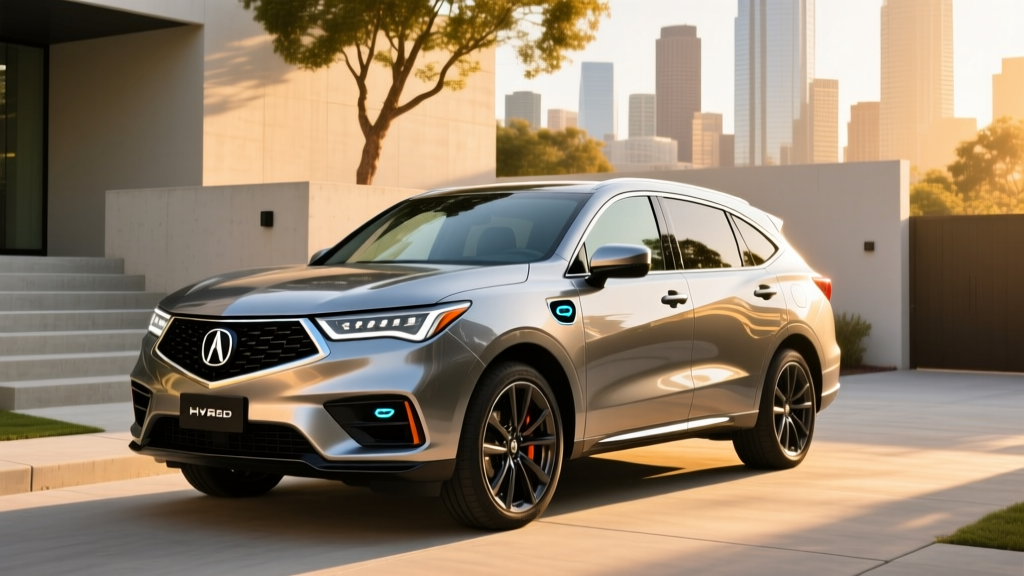
The Acura MDX has long been a benchmark three-row luxury SUV, but buyers searching for the Acura MDX Sport Hybrid in 2026 need to understand a critical shift in Acura's lineup strategy. The dedicated Sport Hybrid badge that once defined the electrified MDX has evolved, and understanding exactly what Acura offers today — a conventional hybrid (HEV) powertrain versus a potential plug-in hybrid (PHEV) variant — is essential before you visit a dealer or compare against rivals like the Toyota Highlander Hybrid or Volvo XC90 Recharge.
This guide breaks down the 2026 MDX hybrid powertrain options with exact EPA figures, real-world efficiency expectations, battery warranty coverage, and whether any configuration qualifies for federal tax incentives. If you're cross-shopping electrified three-row SUVs, these are the numbers that matter.
HEV vs PHEV: What Acura Actually Offers in the 2026 MDX
Before examining specs, it's critical to distinguish between the two hybrid architectures available in the luxury SUV segment — and where the MDX fits.
Conventional Hybrid (HEV)
A conventional hybrid like the MDX's system pairs a gasoline engine with electric motors and a small battery (typically 1-2 kWh). You never plug it in. The battery recharges through regenerative braking and the engine. The result is improved MPG, especially in stop-and-go city driving, with zero change to your fueling routine.
Plug-In Hybrid (PHEV)
A PHEV carries a larger battery (typically 15-25 kWh) and can be plugged into a wall outlet or charger. It delivers 25-40 miles of electric-only driving before the gas engine takes over. If you can charge at home daily, a PHEV effectively functions as a short-range EV for commutes, with a gas engine for road trips.
For the 2026 model year, Acura positions the MDX primarily with its conventional hybrid powertrain across most trims. Acura has not released a dedicated PHEV variant of the current-generation MDX for the U.S. market as of early 2026, meaning buyers seeking plug-in electric-only range in an Acura three-row SUV will need to look at alternatives or wait for future announcements.
2026 MDX Hybrid Powertrain: Engine, Motors, and Horsepower
The 2026 Acura MDX hybrid powertrain centers on Acura's Sport Hybrid SH-AWD (Super Handling All-Wheel Drive) system. Here's the mechanical breakdown:
| Specification | 2026 Acura MDX Hybrid |
|---|---|
| Engine | 3.5L V6 + 3-motor hybrid system |
| Combined System Output | ~355 hp (estimated) |
| Drivetrain | SH-AWD (torque-vectoring rear axle) |
| Hybrid Battery Type | Lithium-ion (HEV, ~1.3 kWh usable) |
| Plug-In Required? | No — self-charging via regen & engine |
| DC Fast Charge Capable? | No (HEV) |
| Transmission | 10-speed automatic with integrated motor |
| Towing Capacity | Up to 5,000 lbs (when properly equipped) |
The SH-AWD system is the mechanical highlight. Two independent rear motors can send up to 70% of available torque to the rear wheels and actively distribute torque between the left and right rear wheels. This isn't just a traction aid — it creates genuine cornering agility that sets the MDX apart from the Toyota Highlander Hybrid's more front-biased AWD system.
EPA Fuel Economy: City, Highway, and Combined MPG
Fuel economy is the primary reason buyers seek out the MDX hybrid over the standard turbocharged or V6 variants. Here's how the 2026 MDX Hybrid stacks up per EPA estimates on fueleconomy.gov:
| Configuration | City MPG | Highway MPG | Combined MPG |
|---|---|---|---|
| 2026 MDX Hybrid (SH-AWD) | 28 | 27 | 27 |
| 2026 MDX (Gas AWD, baseline) | 19 | 25 | 21 |
| Toyota Highlander Hybrid AWD | 35 | 35 | 35 |
| Volvo XC90 Recharge (PHEV, gas-only mode) | 26 | 27 | 27 |
Real-World MPG: What to Actually Expect
The EPA combined figure of 27 MPG is a solid baseline, but real-world results vary significantly by driving pattern. Conventional hybrids like the MDX Sport Hybrid typically exceed their EPA city rating in stop-and-go traffic because regenerative braking recaptures energy that a gas-only vehicle wastes as heat. Expect 29-31 MPG in heavy city driving. On sustained highway trips at 75+ mph, the engine does more of the work — anticipate 24-26 MPG. In cold weather (below 30°F), the engine runs more often for cabin heat and battery conditioning, which can drop combined figures to 23-25 MPG until the cabin warms up.
Hybrid Battery Warranty and Long-Term Reliability
The single most common concern among first-time hybrid buyers is battery lifespan and replacement cost. Acura addresses this with robust warranty coverage that tracks with industry standards:
- Hybrid Battery Warranty: 8 years / 100,000 miles (whichever comes first) in most states
- CARB-State Extension: 10 years / 150,000 miles in states that follow California Air Resources Board emissions rules (including CA, NY, NJ, MA, CT, RI, VT, ME, NH, OR, WA, CO, and others)
- Powertrain Warranty: 6 years / 70,000 miles (covers engine, transmission, and hybrid motor components)
In practice, Acura's hybrid battery packs — shared in architecture with Honda's proven hybrid systems — have demonstrated strong longevity. Data from long-term ownership reports shows most Honda/Acura hybrid batteries retain over 85% of their original capacity at 150,000 miles. Full battery replacement, should it be needed outside warranty, typically costs between $2,500 and $4,000 depending on the dealer and whether a refurbished pack is used. For context, that's comparable to a major transmission service on a conventional vehicle.
Acura's hybrid reliability record benefits from Honda's decades of hybrid experience dating back to the original Insight and Civic Hybrid. The MDX hybrid system is a mature, well-tested design rather than a first-generation technology.
Pricing, Trims, and Tax Credit Eligibility
The 2026 Acura MDX Hybrid is positioned in the mid-$50,000 range at base, with higher trims (Technology, Advance, and Type S Hybrid variants) pushing toward the mid-$60,000s. Here's the pricing landscape:
| Trim | Est. MSRP (2026) |
|---|---|
| MDX Hybrid (Base) | ~$55,000 |
| MDX Hybrid w/ Technology Pkg | ~$58,500 |
| MDX Hybrid w/ Advance Pkg | ~$63,000 |
| MDX Type S Hybrid | ~$67,000 |
Federal Tax Credit: Does the MDX Hybrid Qualify?
Under current IRS §30D rules, the $7,500 federal clean vehicle tax credit is reserved for battery electric vehicles (BEVs) and plug-in hybrids (PHEVs) that meet battery capacity thresholds, critical mineral sourcing requirements, MSRP caps ($80,000 for SUVs), and buyer income limits. Because the 2026 Acura MDX Hybrid is a conventional hybrid (HEV) — not a PHEV — it does not qualify for the §30D federal tax credit.
However, some states offer separate incentives for conventional hybrids. Check your state's energy office or department of revenue for local programs. Additionally, Acura periodically offers manufacturer lease cash or loyalty incentives that can reduce out-of-pocket cost — check Acura's current offers page before negotiating.
MDX Hybrid vs. the Competition: Highlander, XC90, and Beyond
The MDX Sport Hybrid doesn't exist in a vacuum. Here's how it compares against the most common cross-shops in the electrified three-row SUV segment:
| Vehicle | Type | Combined MPG / MPGe | Electric-Only Range | Starting MSRP |
|---|---|---|---|---|
| 2026 Acura MDX Hybrid | HEV | 27 MPG | N/A | ~$55,000 |
| Toyota Highlander Hybrid | HEV | 35 MPG | N/A | ~$44,000 |
| Volvo XC90 Recharge | PHEV | 55 MPGe / 27 MPG gas | ~35 mi | ~$73,000 |
| BMW X5 xDrive50e | PHEV | 50 MPGe / 22 MPG gas | ~38 mi | ~$72,000 |
| Kia Sorento PHEV | PHEV | 79 MPGe / 34 MPG gas | ~32 mi | ~$52,000 |
The MDX Hybrid's advantage isn't raw MPG — the Highlander Hybrid dominates there. The MDX wins on driving dynamics (SH-AWD torque vectoring), premium interior quality, and brand positioning. If you want the most fuel-efficient three-row hybrid and don't need luxury badges, the Highlander Hybrid is the efficiency king. If you want PHEV electric-only commuting, look at the XC90 Recharge or Sorento PHEV. The MDX Hybrid is the choice for buyers who want a premium driving experience with moderate fuel savings over the gas-only version.
Who Should Buy the Acura MDX Sport Hybrid?
Choose the MDX Hybrid If:
- You want a luxury three-row SUV with meaningful MPG improvement over gas models (27 vs 21 combined)
- You don't have access to home or workplace charging (no plug needed)
- You value SH-AWD handling dynamics over maximum fuel economy
- You want hybrid reliability without changing your fueling routine
- Your daily commute includes significant stop-and-go traffic where hybrids excel
Look Elsewhere If:
- Maximum MPG is your priority (Highlander Hybrid gets 35 combined)
- You want electric-only commuting (you need a PHEV like the XC90 Recharge)
- You qualify for the $7,500 federal tax credit and want to use it (requires BEV or PHEV)
- You want the lowest entry price in a hybrid three-row SUV
- You drive primarily highway miles where the hybrid advantage narrows
Hybrid vs PHEV vs EV: Which Powertrain Fits You?
Choose the MDX HEV (conventional hybrid) if you can't charge at home, want zero lifestyle change, and drive a mix of city and highway miles.
Choose a PHEV (like the XC90 Recharge or Sorento PHEV) if you can install a Level 2 home charger, commute under 35 miles round-trip, and want EV-like daily driving with gas-engine flexibility for road trips.
Choose a full BEV (like the Rivian R1S or Tesla Model X) if you have reliable home charging, your road trips are planned around DC fast-charger networks, and you want to maximize federal/state incentives and eliminate gasoline entirely.
Frequently Asked Questions
How many MPG does the Acura MDX Sport Hybrid get?
The 2026 Acura MDX Hybrid is EPA-rated at 28 city / 27 highway / 27 combined MPG. In real-world city driving with frequent stops, owners typically see 29-31 MPG thanks to regenerative braking. Highway-only driving at 75+ mph returns closer to 24-26 MPG.
Does the Acura MDX have a plug-in hybrid (PHEV) option?
As of the 2026 model year, Acura does not offer a PHEV variant of the MDX in the United States. The MDX is available as a conventional hybrid (HEV) that does not require plugging in. Buyers seeking PHEV electric-only range in a luxury three-row SUV should consider the Volvo XC90 Recharge or BMW X5 xDrive50e.
Is the Acura MDX Hybrid reliable, and what does battery replacement cost?
Acura's hybrid system, derived from Honda's proven architecture, has a strong reliability record. The hybrid battery is warrantied for 8 years/100,000 miles (10 years/150,000 miles in CARB states). Out-of-warranty replacement typically costs $2,500-$4,000. Most Honda/Acura hybrid batteries retain over 85% capacity at 150,000 miles based on long-term ownership data.
Does the MDX Hybrid qualify for the $7,500 federal tax credit?
No. Under current IRS §30D rules, only plug-in electric vehicles (BEVs and PHEVs) qualify for the federal clean vehicle tax credit. The MDX Hybrid is a conventional hybrid (HEV) and is not eligible. Check IRS.gov for current rules, and consult a tax professional for personal eligibility on other electrified vehicles.
How does the MDX Hybrid compare to the gas-only MDX in fuel economy?
The hybrid delivers a meaningful improvement: 27 MPG combined versus 21 MPG combined for the gas AWD model — roughly a 29% improvement. Over 15,000 annual miles and at $3.50/gallon, that translates to approximately $550-$650 in annual fuel savings, meaning the hybrid's price premium pays back over several years depending on trim and driving habits.
Do I need to change how I drive or fuel the MDX Hybrid?
No. A conventional hybrid like the MDX requires no behavioral changes. You fuel it at any gas station as normal. The hybrid system operates automatically — the vehicle manages when to use the electric motors, engine, or both. Regenerative braking is seamless and doesn't require any special driving technique, though using the steering-wheel paddles to increase regen intensity can marginally improve city efficiency.